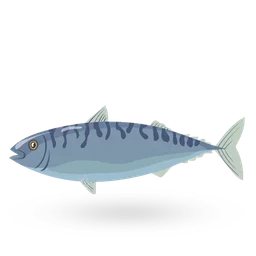
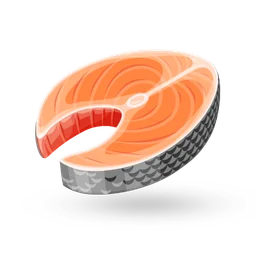
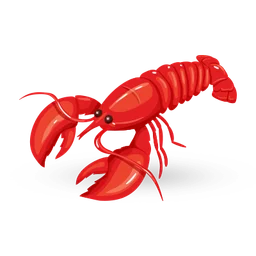
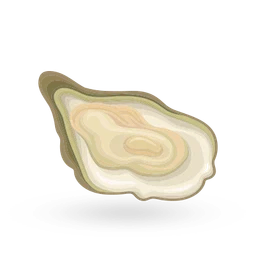
Akami is the lean, deep red meat of bluefin tuna, which makes up most of the fish. With the least fat of any cut it is cheaper than chūtoro or otoro yet has the strongest tuna savour, and it is the cut you usually get when ordering maguro as sashimi or nigiri.
Scallops of the Yesso species farmed and fished in the cold seas around Hokkaido, the most northerly of Japan's main islands. The prized part is the thick adductor muscle, known as kaibashira, which is sweet, firm yet tender and delicately briny.
Sea urchin gonads harvested in the cold coastal waters around Hokkaido, often loosely called roe. Several species are sold under this regional name, notably Ezo Bafun and Kita Murasaki, and the lobes are creamy, sweet and rich in umami.
A dried, smoked skipjack tuna product from Kagoshima Prefecture, regarded as the top grade of katsuobushi. After smoking and drying, the fillets are repeatedly coated with beneficial mould and matured, ending up rock-hard with intense umami and a refined smoky scent.
Salmon eggs separated from the sac into individual glossy orange beads and then cured in salt or brine. The Japanese adopted the practice from Russia and adapted it with marinades of soy sauce, sake and rice wine.
In Japan, kazunoko is salted herring roe, usually soaked to remove salt and then steeped in dashi flavoured with soy sauce, kelp and bonito flakes. The firm yellow eggs pop with a briny taste, and the dish is a traditional part of the New Year osechi meal.
A Japanese fish cake of the kamaboko type, made by rolling red-tinted surimi around plain white fish paste, steaming the log and slicing it. Each slice shows a pink spiral named after the Naruto whirlpools, and it is a familiar ramen topping with a chewy texture.
In Japan, uni refers to the gonads of the sea urchin, the one part of the creature that people eat. Good uni is firm, creamy and smooth with a rich, briny taste, and it should be eaten very fresh, often raw straight from the shell with a squeeze of lemon.
The Norway lobster, sold as scampi, is caught year-round along the Norwegian coast up to Lofoten, in the Skagerrak strait and the North Sea. It lives in burrows on the dark seabed, and its firm white meat, found in the tail, claws and head, tastes mild and sweet.
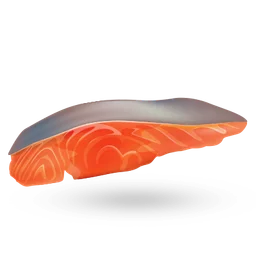
Farmed Atlantic salmon accounts for around 40% of Norway's seafood exports, raised in large pens moored off the coast. It is shipped fresh and frozen, whole or as fillets, and is valued for its versatility and nutritional value.
Norwegian smoked salmon, usually from farmed Atlantic salmon. The fish is wet- or dry-cured, then smoked, today mostly by the cold method. It is bright pink, tender and flaky with a mild flavour and a gentle smoky note.
The American lobster lives along North America's Atlantic coast and grows to around 20 to 60 cm, usually blue-green or brown-red in colour. Its white meat is juicy and tender, and it is typically boiled, steamed or grilled and served with melted butter and lemon.
An umbrella name for smoked salmon from Pacific species, caught mainly off Alaska and Canada. Types include chum, king, sockeye with deep red-orange flesh, small and plentiful pink salmon, and red-fleshed coho, each giving a different colour and richness once smoked.
Five wild salmon species are caught in Alaska: king, coho, sockeye, pink and chum. King is popular for sushi, sockeye is full-flavoured, chum is valued for its roe and pink often goes into cans; all can be baked, grilled, smoked or added to fish cakes.
Australia's first farmed shellfish, raised in sheltered bays, inlets and estuaries along the New South Wales coast. Its thick, smooth shell holds silky flesh with a bold flavour; eat it raw with lemon and pepper, or steam, poach, grill or fry it.
Atlantic salmon introduced to Tasmania and farmed in open-sea pens off the island's west coast, chiefly in Macquarie Harbour. It is one of Australia's most valuable seafoods, rich in omega-3 fats and protein, with silky flesh suited to many cooking methods.
A mild, lightly smoked salmon, usually farmed, that is first soaked for several days in a brine of salt, sugar and water. Cold smoking follows, leaving firm flesh that is not very salty. The name recalls the wild Atlantic salmon of Nova Scotia, though today's fish can come from anywhere.
Lobster caught in the cold Atlantic waters around Nova Scotia, on Canada's eastern seaboard. A hard shell signals a well-filled animal, and the meat is sweet, tender and delicate. The lobsters have large claws and dark shells ranging from bluish green to greenish brown.
King scallops (Pecten maximus) dredged in winter from the seabed off Côtes-d'Armor in Brittany and sold whole in the shell, fresh or frozen. The meat tastes both sweet and briny with a delicate, creamy texture, and is very adaptable in the kitchen.
PDO · AOPProtected Designation of Origin (locally AOP)Mussels
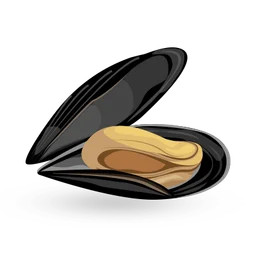
Mussels farmed on tall wooden stakes, or bouchots, in the bay below Mont-Saint-Michel, straddling Ille-et-Vilaine and Manche. They have hard black shells and plump orange flesh that is soft and creamy, and are harvested from July to February.
A red prawn fished from deep Mediterranean waters, around 500 to 800 metres down, off Dénia in Alicante. It has vivid red colour, sweet, firm flesh and a thin shell, and much of its flavour sits in the juices of its large head.
Mediterranean mussels farmed on rafts in the Galician rías of A Coruña and Pontevedra, growing on ropes hung up to 12 metres deep. They have bright orange, flavourful flesh and are inspected under strict rules before being packed.
Atlantic salmon raised in Scottish waters, where strong currents keep the fish swimming and their silvery flesh firm. Rapid chilling after harvest keeps the flavour consistent, and it is a good source of omega-3 fats; serve it with lemon, crème fraîche or a single malt.
Atlantic salmon, wild or farmed, that is dry-cured with salt, sugar or spices and then cold-smoked in Scotland. Oak chips from old sherry or whisky casks are common, sometimes with birch, beech, peat or heather, giving tender orange-pink flesh with a mild taste.
A salmonid fish native to Lake Ohrid, which Albania shares with North Macedonia, and to the rivers feeding and draining it. Its pink flesh has a delicate taste, but overfishing and poaching have left it endangered. Where eaten, it is served simply or in hearty fish soups.
Slow Food Ark of TasteSlow Food Ark of TasteSaltwater Crab
A small mangrove crab of the Grapsidae family found in the salty waters of Sergipe in Brazil, prized for its delicate, tasty meat. Catching it has long been women's work, using wooden traps, and the species is now considered at risk.
Dried abalone is made by taking the shellfish out of its shell and dehydrating the muscle to concentrate flavour and keep it for long periods. Prized in Cantonese cooking, it turns golden-brown, and after long soaking and slow cooking it becomes tender, slightly springy and deeply savoury.
Tuna caught around the Greek island of Alonnisos, mostly albacore and yellowfin, and preserved straight after landing. The fish is cleaned, cooked in seawater or brine and jarred under olive or sunflower oil, or in water, keeping its natural taste.
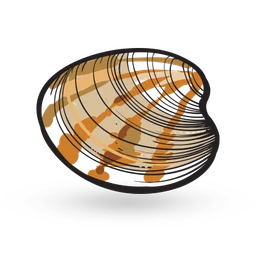
Also called the mangrove cockle, this saltwater clam lives along the Pacific coast from Baja California down to Peru. Its blood is red because it holds unusually high levels of haemoglobin, which is why it is sometimes known as the blood cockle.
Milkfish, the national fish of the Philippines, is widely farmed because it is hardy and copes well in confined waters. Its mild, distinctive flesh is fried, grilled, stuffed, simmered in soups or stewed with ginger and vinegar, as in dishes like rellenong bangus.
Roe of the Russian sturgeon, a fish native to the Caspian, Black and Azov seas and their rivers. Because the species is critically endangered, most osetra now comes from farms. The medium-sized eggs vary in colour between olive and deep brown, and in flavour and texture too.
What PDO, PGI and TSG mean
These are the European Union’s protected food names (the UK and Switzerland run matching schemes). A registered name can only go on products made the registered way — so “Parmigiano Reggiano” on a label is a promise about place and method, not just a style.
PDOProtected Designation of OriginProtected Designation of Origin
Every stage — producing the raw material, processing and preparing it — happens in one defined area, following a registered method. The strongest link between a food and its place.
At least one stage of making the food happens in the named area, and its reputation or character comes from that place. Raw materials may come from elsewhere.
Protects a traditional recipe or method rather than a place: it can be made anywhere, as long as the registered method is followed.
On packs you will often see the local abbreviation instead: DOP (Italy, Spain, Portugal), AOP or AOC (France, Switzerland), IGP for PGI, and wine terms such as DOC and DOCG. We show both. Slow Food Presidia and the Ark of Taste are listed too: they mark endangered traditional foods, not legal name protection.