
Ajitsuke tamago (ramen eggs)
Contains egg (no meat or fish)
味付け玉子 · ajitsuke tamago
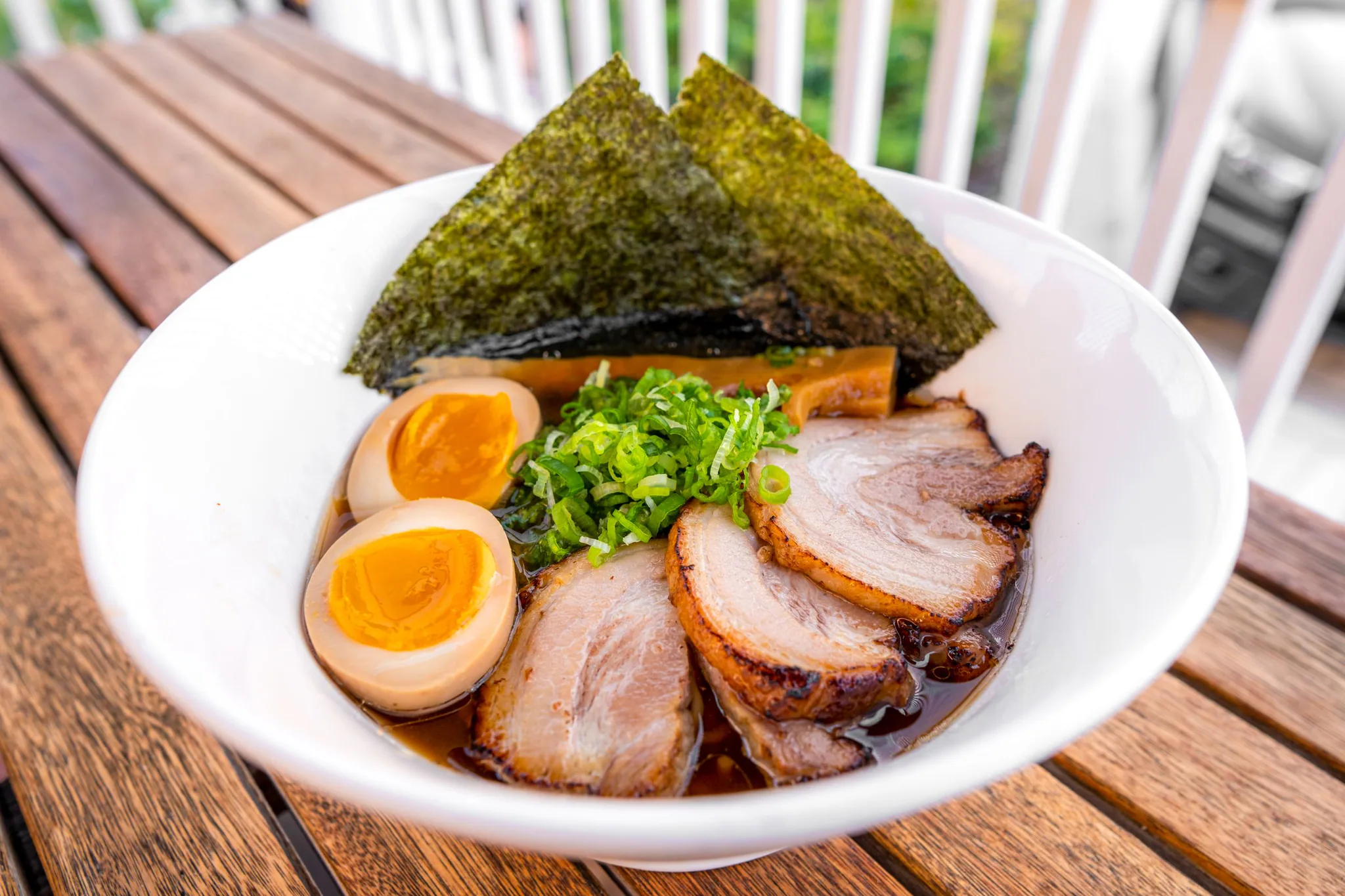
Soft-boiled eggs with jammy, deep-orange yolks, marinated in soy sauce, mirin and sake until the whites turn amber — the classic ramen topping.
Ajitsuke tamago (ramen eggs) is a Japanese egg dish, ready in about 6 hours 20 minutes and made with egg, soy sauce and mirin. It serves 6 and is rated easy to cook.
- Prep
- 10 min
- Cook
- 10 min
- Rest
- 6 h
- Total
- 6 h 20 min
- Serves
- 6
- Level
- Easy
- Calories
- 116
Marinate at least 6 hours; overnight is ideal.
Method
Step 1
Bring the soy sauce (opens in a new tab), mirin (opens in a new tab), sake (opens in a new tab), water and sugar (opens in a new tab) to the boil in a small pan, simmer 1 minute to cook off the alcohol and cool completely.
- 3 min
- medium heat
- Saucepan (opens in a new tab)
How it looks · Photo: Bachir Mamud on Pexels Step 2
Bring a pan of water to a rolling boil. Lower the cold eggs (opens in a new tab) in gently with a slotted spoon (opens in a new tab) and boil for exactly 6½ minutes, stirring for the first minute so the yolks set centred.
- 7 min
- high heat
- Slotted spoon (opens in a new tab)
Prick the round end with a pin first to help them peel cleanly.
Step 3
Plunge the eggs (opens in a new tab) into a bowl of iced water for 5 minutes to stop the cooking, then peel carefully under the water.
Step 4
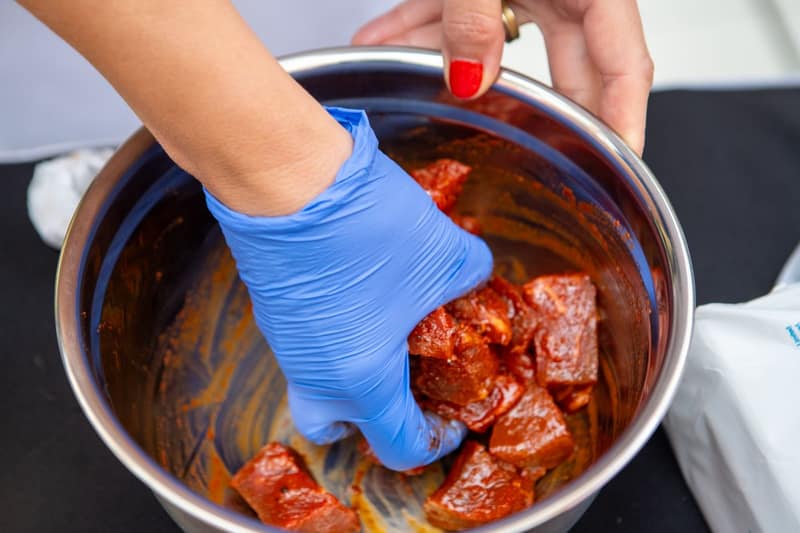
Put the eggs (opens in a new tab) in a zip bag or small container, pour in the cooled marinade so they are submerged (press out the air or cover with a paper towel) and refrigerate 6–12 hours.
How it looks · Photo: Ip Photographer on Pexels Step 5
Halve lengthways with a thread or a wet knife and serve on ramen, rice bowls or as a snack.
About this dish
- Origin
- Japan · Commonly attributedA standard topping in Japanese ramen shops; when it first appeared is not recorded.More food from Japan
- Dish
- Lunch · Dinner · Snack · Egg dishes · Side dishes
- Cooking method
- Boiled, Marinated / cured
- Taste
- umami, salty, sweet & savoury
- Diet
- Vegetarian (lacto-ovo) · Dairy-free · No nut ingredients · Low-carbWorked out from the ingredients. How labels work
All labels
Vegetarian (lacto-ovo) · Eggetarian · Ovo-vegetarian · Pescatarian · Flexitarian-friendly · Dairy-free · No nut ingredients · Pork-free · Beef-free · Low-carb · Low-fat - Good for
- Make-ahead · Meal-prep friendly
- Techniques
- Boiling · Simmering · Marinating · Curing
Allergens
- Contains: Eggsfrom egg
- Contains: Wheatfrom soy sauce
- Contains: Glutenfrom soy sauce
- Contains: Soyfrom soy sauce
Based on typical versions of these ingredients and not verified allergen-free. Brands differ and cross-contact happens, so always check labels. For severe allergies, follow your clinician’s advice.
Nutrition
116 kcal per serving
Estimated1 serving ≈ 195 g · recipe makes 6
Where the energy comes from
- Protein 37%
- Carbohydrate 12%
- Fat 51%
| Nutrient | Per serving | Per 100 g* |
|---|---|---|
| Energy | 116 kcal | 60 kcal |
| Protein | 8 g | 4.1 g |
| Carbohydrate | 2.6 g | 1.3 g |
| Net carbohydrate | 2.4 g | 1.3 g |
| Sugars | 0.3 g | 0.1 g |
| Added sugars | — | — |
| Fibre | 0.2 g | 0.1 g |
| Fat | 4.9 g | 2.5 g |
| Saturated fat | 1.6 g | 0.8 g |
| Trans fat | 0 g | 0 g |
| Cholesterol | 186 mg | 95 mg |
| Sodium | 1126 mg | 578 mg |
| Salt equivalent | 2.8 g | 1.4 g |
Vitamins & minerals per serving
- Potassium
- 159 mg
- Calcium
- 46 mg
- Iron
- 1.2 mg
- Magnesium
- 24 mg
- Vitamin A (RAE)
- 80 µg
- Vitamin C
- 0 mg
- Vitamin D
- 1 µg
- Vitamin B12
- 0.4 µg
- Folate (DFE)
- 26 µg
How these numbers were made
- Calculated from USDA FoodData Central (SR Legacy) per-100 g values and the listed quantities.
- *Per 100 g of combined raw ingredients; the cooked dish may weigh more or less.
- Optional ingredients are not included: sugar.
- Mirin: Sake (FDC 167723) used as a stand-in; true mirin is sweeter, so sugar is underestimated.
- Ice: Frozen water; same composition as water.
- “—” means the value isn’t known for enough of the ingredients; it is never zero by default.
- Values are estimates for guidance, not for medical dosing. U.S. Department of Agriculture, Agricultural Research Service. FoodData Central, 2019. fdc.nal.usda.gov.
Good to know
Tips
- The marinade can be reused once within 3 days for another batch.
Common mistakes
- Marinating more than a day — the whites turn rubbery and too salty.
Food safety
- Runny or lightly cooked eggs: the UK Food Standards Agency says hen eggs with the British Lion mark or from the Laid in Britain scheme can be eaten lightly cooked by everyone, including young children, pregnant people and older adults (but not people who are severely immunocompromised). Otherwise — and following USDA advice in the US — cook eggs until white and yolk are firm for vulnerable groups, or use pasteurised eggs. Duck, goose and quail eggs should always be cooked through.
- Keep eggs refrigerated (below 5 °C / 40 °F) and refrigerate cooked egg dishes within 2 hours.
Storage
- Keep in the marinade, refrigerated, for up to 3 days.
Original editorial recipe · FriendsPantry editorial · Not yet independently reviewed · Added · Updated
Recipe DNA
How this dish is built
Reviews & corrections
Reviews come from signed-in cooks and appear after a moderator checks them. We never show made-up ratings.
You might also like
Shoyu ramen (home-style)
 Japanese · 40 min · 751 kcal
Onsen tamago (hot-spring eggs)
Japanese · 50 min · 81 kcal
Boiled Eggs (Soft or Hard)
International · 17 min · 143 kcal · Contains egg
Tamagoyaki
Japanese · 15 min · 228 kcal