Also called doppio zero, this Italian flour is milled to an exceptionally fine, silky powder, with most of the bran and germ taken out. It is the classic choice for Neapolitan pizza, where it bakes into a crisp, airy crust that is less chewy than one made with coarser flours.
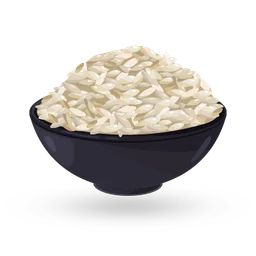
Named after a town in the Po Valley, Arborio is a short, round Italian rice rich in starch. It should not be rinsed, since that starch gives risotto and rice pudding their creamy, slightly chewy texture, and it is best cooked al dente. It also turns up in arancini and minestrone.
An Italian short-grain rice grown in the provinces of Novara, Vercelli and Pavia, bred from Lencino and Vialone Nano. Its grains are smaller than Arborio's and high in starch, so they take up stock without turning soft, giving risotto a creamy finish.
Short-grain Koshihikari rice grown in the Uonuma area of Niigata Prefecture, Japan. When cooked it is glossy, naturally sweet and sticky with a soft but chewy bite, and its place of origin sets it apart from Koshihikari grown in other parts of the country.
Ordinary Japanese short-grain rice, a japonica cultivar and the foundation of Japanese cooking. Its plump, starchy grains cook up moist and sticky; it is mostly eaten plain or with seafood, vegetables and soy sauce, and is also used for sake, shochu and rice vinegar.
A short-grain Spanish rice with pearly white kernels, now grown mainly in the wetlands south of Valencia. It soaks up two to three times its volume in liquid, swelling outwards into round grains that stay separate and firm rather than sticky, which is why it suits paella.
PDO · DOPProtected Designation of Origin (locally DOP)White Beans
These white ganxet beans are grown in Catalonia's Vallès Occidental, Vallès Oriental, Maresme and La Selva districts. They have very thin skins and little starch, so they cook quickly and turn notably creamy.
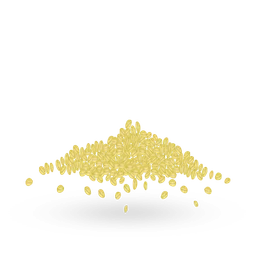
Grown only on Santorini and neighbouring Cycladic islets, this yellow split pulse comes from the plant Lathyrus clymenum. Hot, dry weather and volcanic soil shape its character; the seeds are dried, husked and split into flat yellowish discs, then packed to keep out moisture.
A long-grain rice first grown in India and Pakistan, with Haryana and Punjab the main growing areas today. Its name means 'fragrant' in Hindi, reflecting a nutty, floral aroma. When cooked the grains stay separate, so curries and sauces cling to each one.
Across the Andes, choclo means a large-kernelled corn whose white or pale yellow grains are far bigger than those of North American sweetcorn. It is starchy, a little chewy and earthy rather than sweet, and is usually boiled or steamed and eaten from the cob.
Thai jasmine rice is a fragrant long-grain variety with a soft texture and slightly sweet taste. It grows mainly in north-eastern and central Thailand, in provinces such as Surin, Yasothon, Roi Et and Ubon Ratchathani, and its name refers to its floral scent.
What PDO, PGI and TSG mean
These are the European Union’s protected food names (the UK and Switzerland run matching schemes). A registered name can only go on products made the registered way — so “Parmigiano Reggiano” on a label is a promise about place and method, not just a style.
PDOProtected Designation of OriginProtected Designation of Origin
Every stage — producing the raw material, processing and preparing it — happens in one defined area, following a registered method. The strongest link between a food and its place.
At least one stage of making the food happens in the named area, and its reputation or character comes from that place. Raw materials may come from elsewhere.
Protects a traditional recipe or method rather than a place: it can be made anywhere, as long as the registered method is followed.
On packs you will often see the local abbreviation instead: DOP (Italy, Spain, Portugal), AOP or AOC (France, Switzerland), IGP for PGI, and wine terms such as DOC and DOCG. We show both. Slow Food Presidia and the Ark of Taste are listed too: they mark endangered traditional foods, not legal name protection.