
Indian techniques · intermediate
Bhunao
Also: bhuna, bhunna, bhuno, kosha (Bengali)
Slowly frying an onion, ginger-garlic, tomato and spice base, stirring and scraping, until the oil separates and the masala turns deep, glossy and aromatic.
What it is
Bhunao is the patient frying stage at the heart of most north Indian and many other Indian curries. The base, typically onions, then ginger-garlic paste, then ground spices, then tomatoes or yogurt (and often the meat itself), is fried in fat over medium heat with constant stirring and small splashes of water, until all the raw moisture has cooked off, the masala darkens and thickens, and the fat separates and glistens at the edges. A 'bhuna' dish is one where this stage is taken far enough that little sauce remains.
Why cooks use it: It cooks out the raw, sharp taste of onion, garlic, ginger, tomato and ground spices and develops deep, savoury, roasted flavour. Skipping or rushing it is the most common reason a home curry tastes 'raw' or flat compared with a restaurant one.
The science
While the masala contains free water it stays near 100 °C and the spices mostly stew. As the water evaporates the mixture gets hotter, browning reactions (Maillard and caramelisation of onion and tomato sugars) begin, and ground spices fry in the fat, releasing fat-soluble aromas. The oil separating is a visible sign that most water has gone: with no water left to keep it emulsified in the paste, the fat pools out at the edges.
The Maillard reactionCaramelisationEvaporation and reductionEmulsionsAroma compounds and flavour
Step by step
Heat oil or ghee in a heavy kadhai or pot over medium heat; add whole spices if using and let them sizzle.
Add finely chopped or sliced onions with a pinch of salt and cook, stirring often, through translucent to golden or deep brown as the recipe needs (10–20 minutes).
Add ginger-garlic paste and fry 1–2 minutes until the raw smell goes.
Lower the heat, add the ground spices (turmeric, coriander, chilli, cumin) with a splash of water so they do not scorch, and fry 1–2 minutes.
Add tomatoes (or whisked yogurt off the heat, stirring) and cook, stirring and scraping the base; add a tablespoon of water whenever it sticks.
Keep frying until the masala is thick, darker, glossy and pulls together, and the oil separates and pools at the edges (10–20 minutes).
Add the meat or main ingredient and continue to bhuno, stirring, until it is well coated and seared before any liquid goes in.
Heat and timing
- Bhunao 100–160 °C · The masala hovers near 100 °C while wet; it climbs as moisture leaves and browning starts. Medium heat, never high.
Time: Typically 20–45 minutes for a full onion-tomato bhunao; longer for meat bhuna.
How you know it’s right
- Oil separates and glistens at the edges and on the surface
- Masala turns from bright red-orange to deep brick red or brown
- Paste leaves the sides of the pan and comes together as a mass
- Raw onion, garlic and tomato smell replaced by a rich, roasted aroma
- Spatula leaves a clean trail across the base
Common mistakes
- High heat: the outside burns while the inside is still raw
- Adding water in large amounts, which turns it into boiling, not frying
- Adding the main liquid before the oil separates
- Adding ground spices to a dry, very hot pan
- Adding yogurt cold to a hot pan so it splits
Troubleshooting
- Masala sticking and catching
- Add 1–2 tablespoons of water, scrape the base and lower the heat slightly.
- Oil will not separate
- There is still too much water, or not enough fat; keep cooking, uncovered, or add a little more oil.
- Curry tastes raw or harsh
- The bhunao was too short; return the gravy to the pan and fry it down further before adding liquid.
- Yogurt curdled
- Whisk yogurt with a spoon of besan or at room temperature, add it off the heat, then return to low heat stirring constantly.
Restaurant DNA
How professionals do it
Many Indian restaurants prepare large batches of base gravies ahead (a common pattern is an onion-tomato base and a cashew or onion white base) by bhuno-ing for a long time in big pots, then build individual dishes from them to order. Exact recipes vary by kitchen and are not standardised.
At home
Give the bhunao the time it needs, use a heavy pot, and make a double batch of onion-tomato masala to freeze in portions.
General professional practice — not any particular restaurant’s recipe.
Food safety
- Thick masala spits; use a long spoon and partly cover the pan between stirs.
Practise it
Aloo gosht
 Pakistani · 2 h · 430 kcal
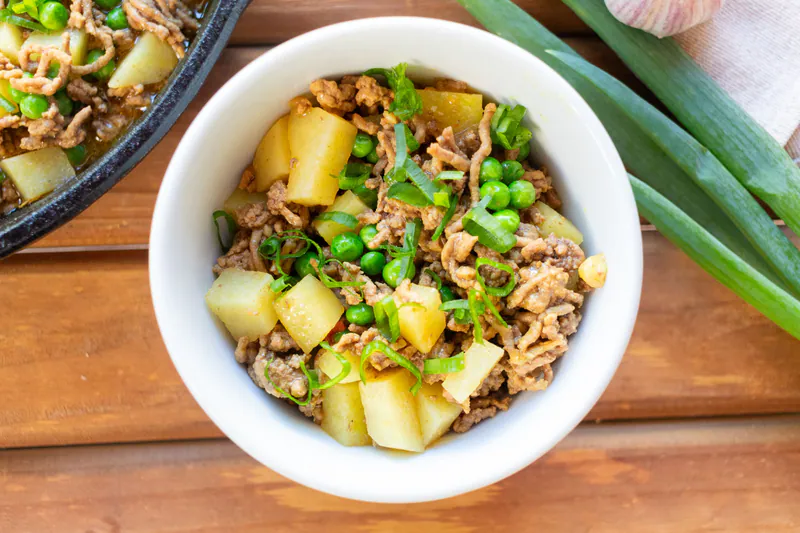
Aloo keema
Pakistani · 1 h · 495 kcal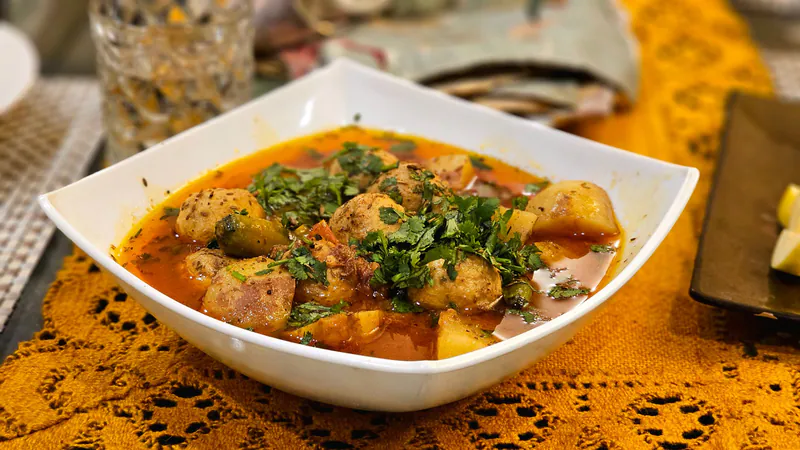
Aloo rasedar
 Indian · 35 min · 242 kcal · Vegan
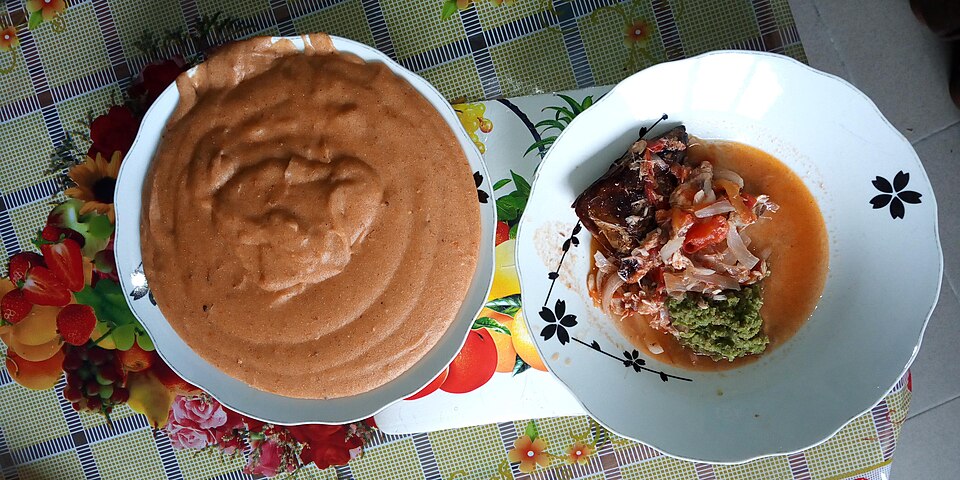
Amiwo
 Beninese · 1 h 20 min · 649 kcal
Anda curry
Indian · 55 min · 292 kcal · Contains egg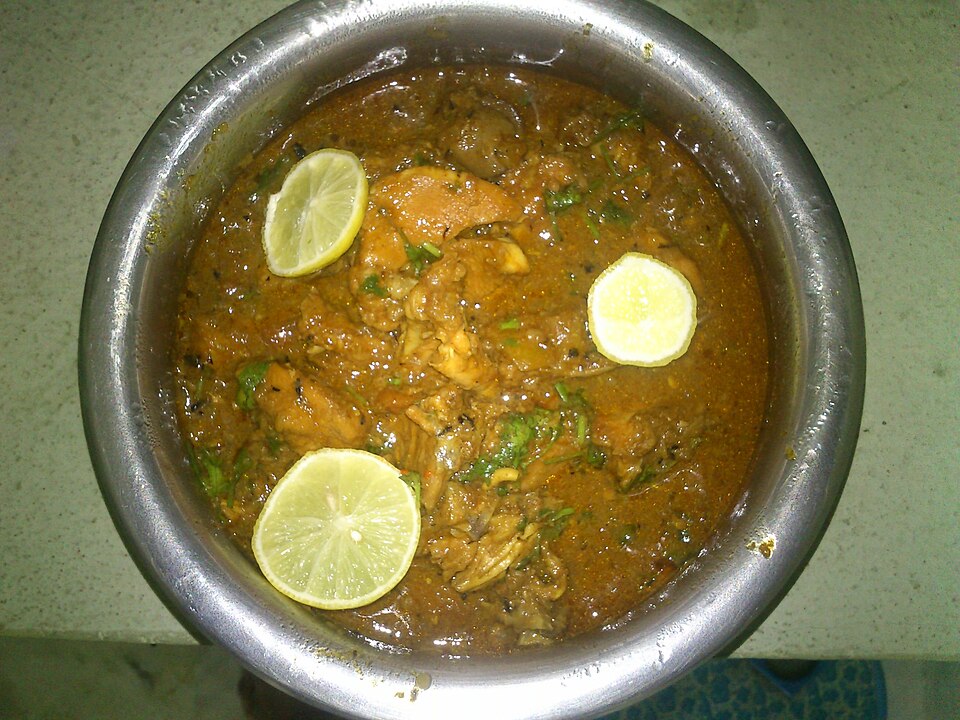
Andhra chicken curry
South Indian · 1 h · 351 kcal
Arroz con coco
 Colombian · 1 h · 478 kcal · Vegan
Ayam masak merah
 Malaysian · 1 h 10 min · 574 kcal
Bagara baingan
Indian · 55 min · 314 kcal · Vegan
50 more
- Bangladeshi beef bhuna · Bangladeshi
- Beef tehari · Bangladeshi
- Burmese chicken curry · Burmese
- Chana samosa (Chhattisgarh street-style) · Indian
- Chicken balti · British
- Chicken karahi · Pakistani
- Chicken tikka masala · Indian
- Chingri bhuna · Bangladeshi
- Chole bhature · Punjabi
- Curry channa and aloo · Trinidadian
- Curry laksa · Malaysian
- Efo riro · Nigerian
- Ewa agoyin · Nigerian
- Ghugni (Jharkhand-style) · Indian
- Groundnut soup (nkatenkwan) · Ghanaian
- Hyderabadi dalcha · Indian
- Jollof rice · West African
- Kari ayam · Malaysian
- Keema matar · Indian
- Khao soi gai · Thai
- Kolhapuri chicken curry · Indian
- Kosha mangsho · Bengali
- Laal maas · Indian
- Massaman curry paste · Thai
- Massaman curry with beef · Thai
- Matar paneer · Punjabi
- Mirchi ka salan · Indian
- Misal pav · Indian
- Nasi katok · Bruneian
- Nasi lemak · Malaysian
- Ofada stew with ofada rice · Nigerian
- Ohn no khao swe · Burmese
- Onion-tomato masala base · Indian
- Panang curry paste · Thai
- Panang curry with beef · Thai
- Pici all'aglione · Italian
- Prawn balchão · Goan
- Rajma · Punjabi
- Red red · Ghanaian
- Rempah for rendang · Malaysian
- Rogan josh · Indian
- Shahi paneer · Indian
- Shito · Ghanaian
- Sindhi biryani · Pakistani
- Soya chunk and chickpea curry · Indian
- Thai red curry with chicken and bamboo shoots · Thai
- Thai satay peanut sauce · Thai
- Tomato thokku · South Indian
- Trinidad curry duck · Trinidadian
- Zhajiangmian (Beijing fried sauce noodles) · Chinese