
Heat and cooking · beginner
Evaporation and reduction
Boiling off water concentrates flavour, salt and body, which is how sauces, gravies and syrups thicken.
What happens
Water molecules escape from the surface of a hot liquid as vapour. Evaporation happens at any temperature, but it speeds up enormously near boiling. Dissolved substances like salt, sugar, acids, gelatin and flavour compounds stay behind, so the liquid becomes stronger in taste and thicker in body. The rate depends on the surface area, the heat input and air movement: a wide, open pan reduces far faster than a deep, covered pot. Some aromas also evaporate, so long reduction makes flavours deeper but can flatten the bright, fresh notes.
Why it matters in the kitchen
Reduction is how cooks build sauces without flour, finish a curry to the right consistency, make syrups and concentrate stocks. It also explains why a dish that was well salted at the start can end up too salty.
Temperatures and conditions
- Gentle simmer 85–95 °C · Small bubbles; reduces slowly and keeps stocks clear.
- Rolling boil (sea level) from 100 °C · Fastest reduction for water-based liquids.
- Sugar syrups: boiling point rises as water leaves 103–160 °C · See sugar behaviour for stages.
In practice
- Reducing milk for basundi, rabri or khoa.
- Cooking a tomato-onion masala until oil separates.
- A pan sauce: deglazing with wine or stock, then reducing until glossy.
- Reducing a balsamic or tamarind mixture to a syrup.
Myths and facts
Myth: All the alcohol cooks off when you add wine or spirits to a dish.
Fact: USDA data show about 40% of the alcohol can remain after 15 minutes of baking or simmering, about 25% after an hour and about 5% after two and a half hours. Flambéing burns off only about a quarter.
Myth: Adding salt makes water boil faster.
Fact: Salt very slightly raises the boiling point, by far less than a degree at cooking amounts. It doesn't make water boil sooner.
Myth: Covering the pot slows down cooking.
Fact: A lid helps water come to the boil faster and saves fuel. It slows reduction, which is a separate goal.
Use it to cook better
- Use a wide pan to reduce quickly and a deep pot with a lid when you want to keep liquid.
- Season sauces and stocks at the end, after reducing, so the salt doesn't concentrate too far.
- Make stocks for reduction with little or no salt.
- Reduce milk in a heavy pan over medium heat and scrape the sides and bottom often to stop scorching.
- Add fresh herbs, citrus juice and delicate aromatics after reducing, as they fade with long cooking.
- Judge by coating: a sauce that coats the back of a spoon and leaves a clean line when you draw a finger through is usually ready.
Try it at home
Reduce and taste
You need: 500 ml lightly salted stock, A wide pan, A measuring jug, 4 small cups
- Taste the stock and pour a little into the first cup.
- Simmer it, pouring off a sample when it has reduced to three-quarters, half and a quarter of its volume.
- Let the samples cool slightly, then taste and feel each between your fingers.
What you’ll see: Each stage tastes saltier and more intense; the last is noticeably sticky if the stock contained gelatin.
Going deeper
Gelatin from bones and skin gives reduced stock its sticky, glossy body; a gelatin-rich stock reduced to a demi-glace sets firm when cold. Dairy proteins and sugars in reduced milk brown (Maillard) and catch easily because a thin film of concentrated solids sits on the pan bottom. As a sugar solution reduces, its boiling point rises above 100 °C, so a thermometer reading tells you how much water is left.
Ingredients it affects most
Techniques that rely on it
Worth double-checking
- Alcohol-retention figures are from the USDA Table of Nutrient Retention Factors (2007) and vary with pan size, heat and recipe.
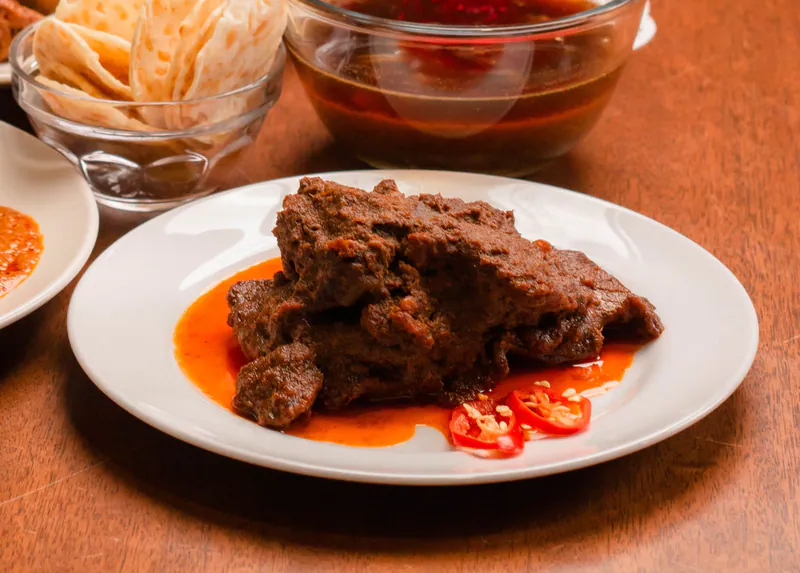
 Indonesian · 4 h · 672 kcal
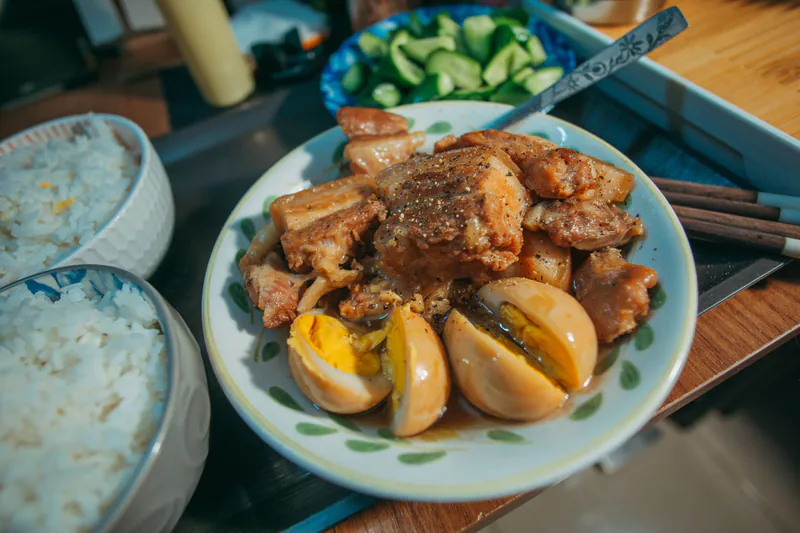
 Filipino · 1 h 30 min · 529 kcal
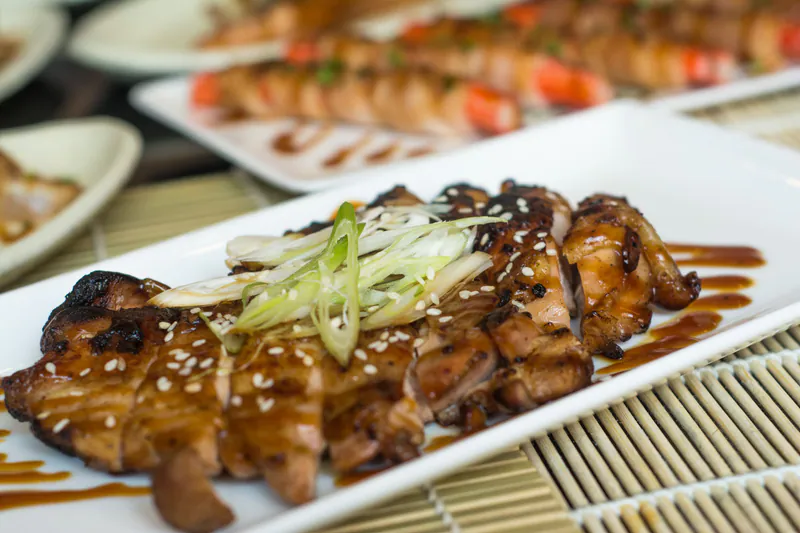
 Japanese · 25 min · 188 kcal
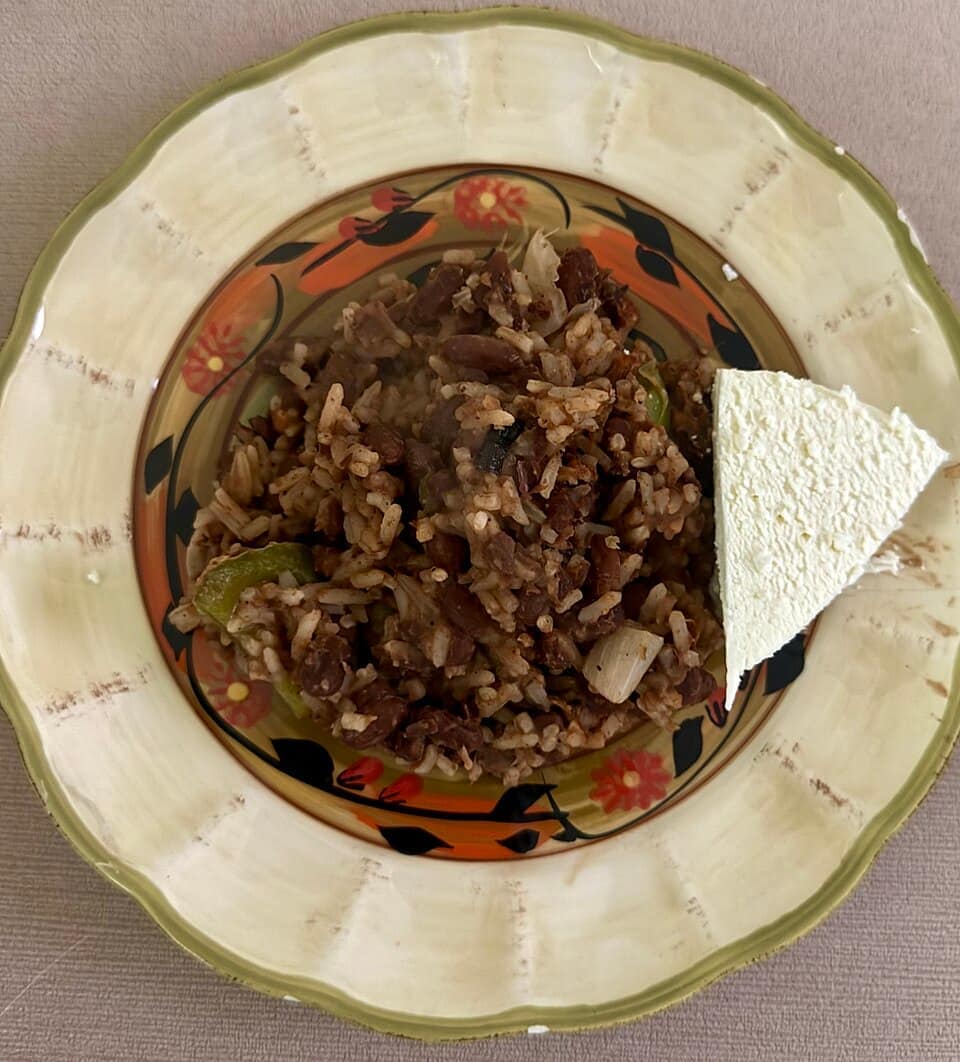
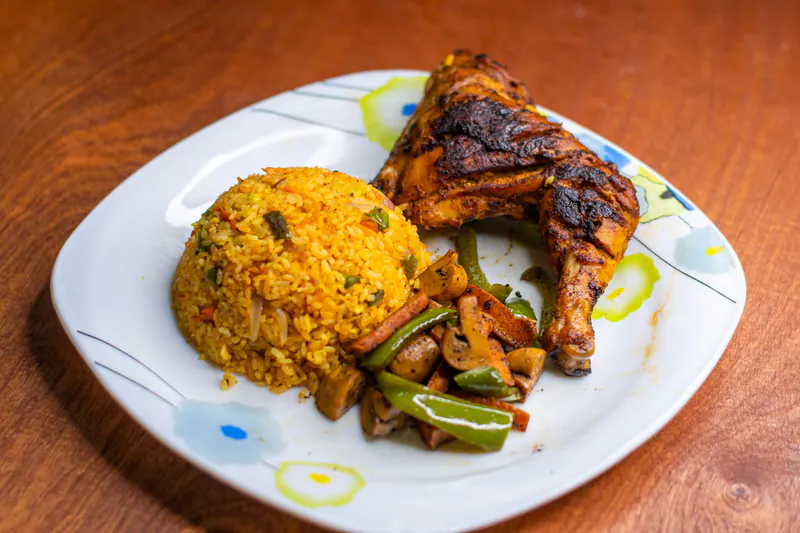
 Afghan · 2 h 45 min · 784 kcal
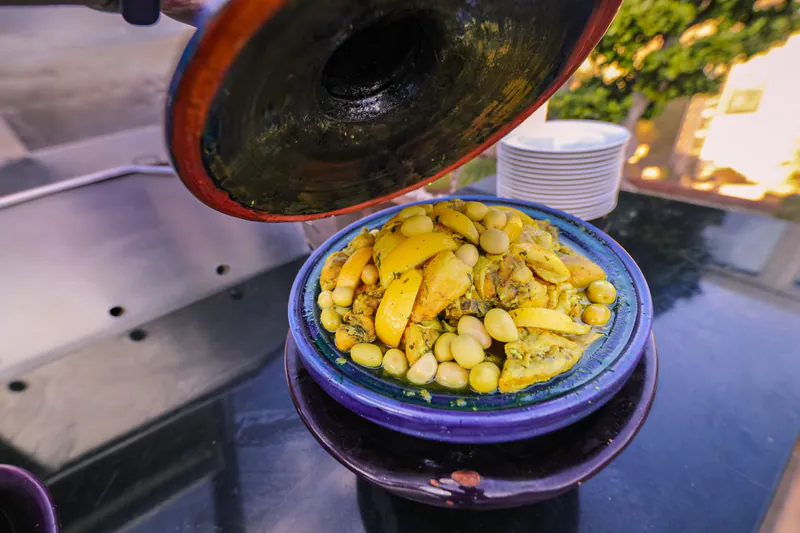
 Moroccan · 1 h 30 min · 718 kcal
 Taiwanese · 40 min · 368 kcal