Ingredients and chemistry · intermediate
Emulsions
Fine droplets of one liquid held in another, such as oil in water, kept stable by emulsifiers like egg yolk and mustard.
What happens
Oil and water don't mix: shaken together, they quickly separate. An emulsion breaks one into tiny droplets dispersed through the other. Mayonnaise and hollandaise are oil-in-water emulsions: oil droplets suspended in a little water from yolk and lemon. Butter is the reverse, water droplets in fat. To keep droplets from merging, emulsifiers coat their surface, with one end that likes water and one end that likes fat. Egg yolk is rich in such molecules (lecithin and proteins), and mustard, garlic, honey and finely ground nuts or seeds also help. Emulsions break when droplets are added too fast to coat, when there is too little water for too much oil, or when heat curdles the egg proteins.
Why it matters in the kitchen
Many sauces, dressings and creamy gravies are emulsions, and knowing how they work turns a split sauce from a disaster into a quick fix.
Temperatures and conditions
- Butter sauces such as beurre blanc hold best 50–60 °C · Too cool and the butter firms; too hot and it splits.
- Egg-yolk sauces like hollandaise: keep below up to 70 °C · Above this the yolk proteins start to scramble.
- Mayonnaise ingredients 15–25 °C · Room temperature emulsifies most easily.
In practice
- Mayonnaise, aioli and hollandaise.
- Vinaigrette: a temporary emulsion that separates on standing unless mustard or honey is added.
- Pan sauces mounted with cold butter.
- Makhani gravy and kormas, where cashew paste, cream and butter are emulsified into a smooth sauce.
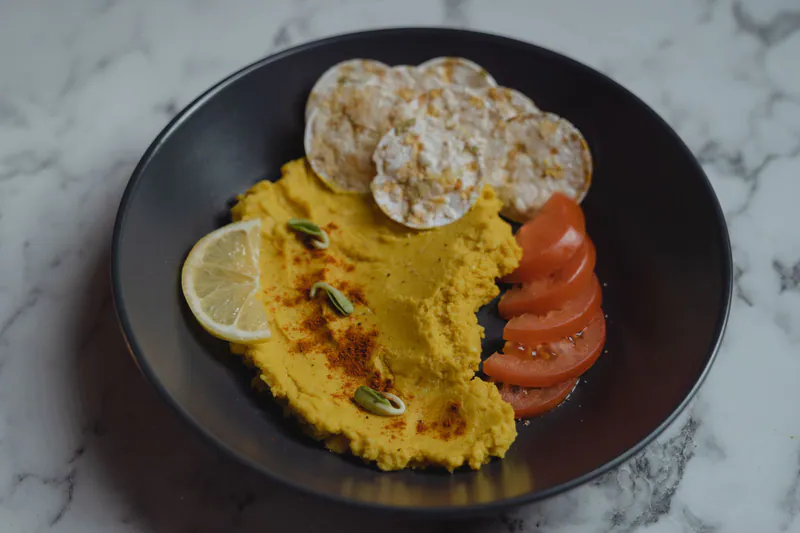
- Tahini sauce becoming thick and pale when water and lemon are whisked in.
Myths and facts
Myth: You must add oil drop by drop for the whole of a mayonnaise.
Fact: Drops are needed only at the start, until the emulsion forms. Once thick, the oil can go in as a thin, steady stream.
Myth: A split mayonnaise or hollandaise has to be thrown away.
Fact: Start again with a fresh yolk (or a spoonful of water or mustard) in a clean bowl and whisk the split sauce into it slowly. For a hollandaise that has overheated slightly, whisking in a spoonful of cold water can bring it back.
Myth: Oil-free gravies can't be creamy.
Fact: Nut, seed and coconut pastes and yogurt create creaminess by holding tiny fat droplets and proteins in suspension; blending well matters as much as fat.
Use it to cook better
- Start an emulsion with all the water-based ingredients (yolk, lemon, mustard, a splash of water), then add fat slowly while whisking hard.
- If a mayonnaise gets too thick and greasy-looking, whisk in a few drops of water or lemon before adding more oil.
- Keep egg-yolk sauces warm, not hot: use a bowl over barely simmering water and take it off the heat often.
- Finish pan sauces off the heat by swirling in cold butter, a few pieces at a time.
- Blend cashew or melon-seed paste very smoothly for kormas and makhani gravies, and add cream near the end over low heat.
- Raw-egg sauces: use pasteurised eggs if serving anyone pregnant, very young, elderly or unwell, and refrigerate homemade mayonnaise.
Try it at home
Does mustard help?
You need: 2 clean jars with lids, 6 tbsp oil, 2 tbsp vinegar, 1 tsp mustard, A pinch of salt
- Put 3 tbsp oil and 1 tbsp vinegar into each jar, with salt.
- Add the mustard to one jar only.
- Close both and shake hard for 20 seconds, then set them side by side.
- Check every minute for 10 minutes.
What you’ll see: The plain dressing separates within a minute or two; the mustard one stays creamy far longer.
Going deeper
Emulsifiers lower the tension between oil and water and form a barrier that stops droplets merging. Smaller droplets make a thicker, more stable emulsion, which is why blenders and immersion blenders make mayonnaise easily. Proteins (from yolk, milk or seeds) stabilise by unfolding at the droplet surface. Mustard's seed-coat mucilage thickens the water around the droplets, slowing separation. Butter itself is an emulsion, so melting it gently and whisking it into a little liquid keeps it creamy, while melting it alone separates the fat, water and milk solids.
Ingredients it affects most
Techniques that rely on it
Worth double-checking
- Holding temperatures for butter and egg-yolk sauces vary between sources by a few degrees; the markers are practical guides.
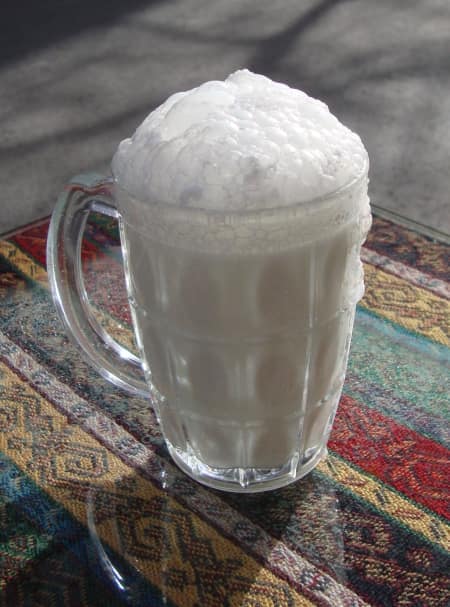
 Turkish · 3 min · 92 kcal ·
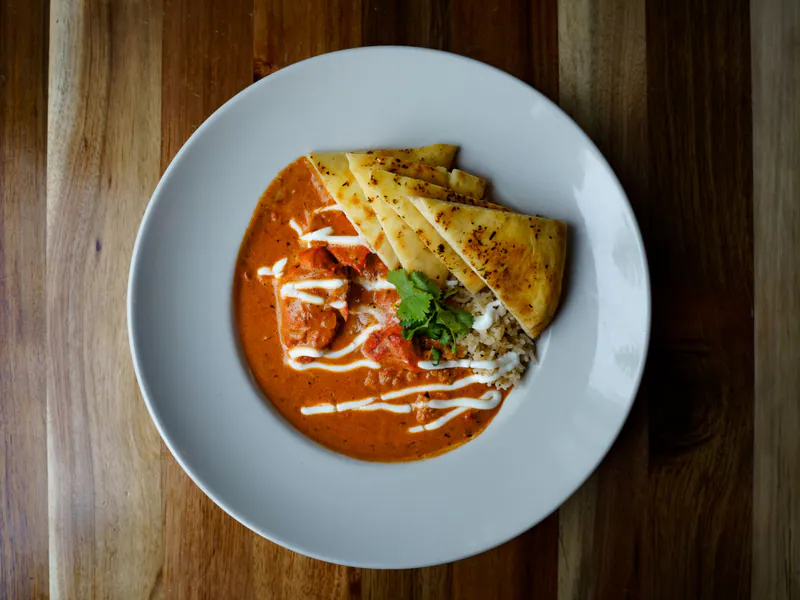
 Punjabi · 2 h 5 min · 559 kcal