
Seeds
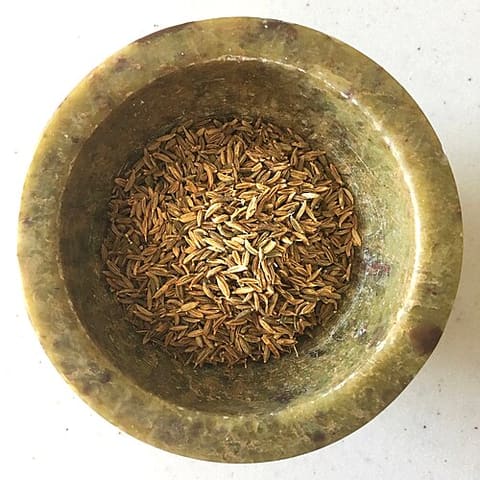
Cumin seeds
Cuminum cyminum
Whole cumin seeds, crackled in hot oil for tadka or dry-roasted and ground for a toasty flavour.
Also called: whole cumin, jeera seeds, zeera
- Earthy
- Warm & sweet
- Nutty & toasty
- No heat
Photo: Misterneedlemouse, via Wikimedia Commons (CC0-1.0)
Flavour and aroma
earthy, warm, slightly bitter, nutty when fried. Nutty and earthy when fried; bitter if burnt.
- Heat
- No heat
- Forms
- whole, ground
How to use it
bloom in fat · Tadka (tempering) technique
For jeera tadka, heat oil or ghee until a test seed sizzles at once (about 170–180 °C). Add the seeds and stir for 20–40 seconds, until they crackle and turn one shade darker, then add the next ingredient. Black seeds taste bitter.
dry roast · Spice roasting (dry-roasting) technique
For bhuna jeera, shake the seeds in a dry pan over medium-low heat for 1–2 minutes until a shade darker and fragrant. Cool on a plate.
grind · Dry grinding technique
Grind roasted seeds once cool for raita, chaas and chaat; grind small batches, the aroma fades within weeks.
- Jeera tadka for dal and jeera rice
- Starting a curry before the onions
- Dry-roasted and crushed over raita and chaat
- Breads, pickles and Mexican rubs
Identifying good quality
Slim, ridged, greenish-brown to grey-brown seeds about 5 mm long, often with a tiny stalk. Good cumin smells strong when rubbed between the fingers and has little dust or chaff.
- Not to be confused with Shahi jeera (black cumin): Shahi jeera is darker, thinner, more curved and sweeter.
- Not to be confused with Fennel seeds: Fennel is fatter, greener and tastes of anise.
- Not to be confused with Ajwain: Ajwain is much smaller, rounder and tastes of thyme.
- Not to be confused with Caraway seeds: Caraway is darker brown, curved and tastes sweeter.
Origin and history
Origin: South-west Asia and the eastern Mediterranean.. Grown and used: India grows and uses most of the world's cumin, mainly in Gujarat and Rajasthan; also grown in Syria, Turkey, Iran and China..
Cumin was used in ancient Egypt and by the Greeks and Romans, and it has been part of Indian cooking for well over two thousand years. It is the most common tempering seed of North and West India and a base spice of garam masala and many curry powders.
Well documented
In masalas, pastes and sauces
- Punjabi garam masalaMasala25 g per batch
- Chaat masalaMasala15 g per batch
- Tandoori masalaMasala12 g per batch
- Kadai masalaMasala8 g per batch
- Chole masalaMasala10 g per batch
- Pav bhaji masalaMasala10 g per batch
- Sambar powderMasala8 g per batch
- Rasam powderMasala20 g per batch
- Chettinad masalaMasala5 g per batch
- Madras curry powderMasala15 g per batch
- Goda masalaMasala10 g per batch
- Kolhapuri kanda-lasun masalaMasala8 g per batch
- Malvani masalaMasala6 g per batch
- Goan vindaloo pasteMasala6 g per batch
- Xacuti masalaMasala3 g per batch
- Panch phoronMasala20 g per batch
- Hariyali green masalaMasala3 g per batch
- Onion-tomato masala baseMasala4 g per batch
- Everyday curry powder (British-style)Masala15 g per batch
- Sri Lankan roasted curry powderMasala20 g per batch
- Thai red curry pasteMasala1 g per batch
- Thai green curry pasteMasala1 g per batch
- Thai yellow curry pasteMasala2 g per batch
- Massaman curry pasteMasala2 g per batch
- Panang curry pasteMasala1.5 g per batch
- Ras el hanoutMasala8 g per batch
- Egyptian dukkahMasala10 g per batch
- Tex-Mex chili powderMasala8 g per batch
- Recado rojo (Yucatecan achiote paste)Masala2 g per batch
- Cucumber raitaSauce2.1 g per batch
- Rajasthani garlic chutney (lehsun ki chutney)Sauce1.1 g per batch
- Aam ki launji (sweet-sour raw mango chutney)Sauce1.1 g per batch
- Tadka (tempered ghee with cumin, garlic and chilli)Sauce2.1 g per batch
- Thecha (Maharashtrian green chilli and garlic relish)Sauce1.1 g per batch
- Recheado masala (Goan red chilli paste)Sauce2.1 g per batch
- Bengali tomato-date chutney (tomato khejur chutney)Sauce0.5 g per batch
- Peanut chutney (palli pachadi)Sauce1.1 g per batch
- Gongura pachadi (Andhra sorrel-leaf chutney)Sauce1.1 g per batch
- Allam pachadi (Andhra ginger chutney)Sauce1.1 g per batch
- Andhra tomato pachadiSauce2 g per batch
- Kobbari pachadi (Andhra coconut chutney)Sauce2 g per batch
- Beerakaya pachadi (ridge gourd chutney)Sauce2 g per batch
- Paruppu podi (lentil powder for rice)Sauce3 g per batch
- Karuveppilai podi (curry leaf powder)Sauce2 g per batch
- Kancha aamer chutney (Bengali green mango chutney)Sauce1.6 g per batch
- Tomato khajuri khatta (Odia tomato-date chutney)Sauce1.8 g per batch
- Hari mirch chutney (green chilli chutney)Sauce2 g per batch
- Aloo bukhara chutney (sweet-sour plum chutney)Sauce1 g per batch
- Bhang ki chutney (Kumaoni hemp seed chutney)Sauce4 g per batch
- Gujarati lili chutney (coriander-peanut chutney)Sauce1 g per batch
- Shengdana chutney (Maharashtrian dry peanut chutney)Sauce2 g per batch
- Tilachi chutney (Maharashtrian dry sesame chutney)Sauce2 g per batch
- Javas chutney (Maharashtrian flaxseed chutney)Sauce2 g per batch
- Olya naralachi chutney (Maharashtrian fresh coconut chutney)Sauce2 g per batch
- Kolhapuri lal thecha (red chilli-garlic thecha)Sauce2 g per batch
- Burani raita (Hyderabadi garlic raita)Sauce1 g per batch
- Lauki raita (bottle gourd raita)Sauce1 g per batch
- Dukkah with bread and olive oilSauce8 g per batch
- Mojo picón (Canarian red mojo)Sauce2.1 g per batch
- HarissaSauce1.1 g per batch
Recipes with cumin seeds
Aam ki launji (sweet-sour raw mango chutney)
 Indian · 40 min · 85 kcal · Vegan
Akki roti
South Indian · 55 min · 257 kcal · VeganAllam pachadi (Andhra ginger chutney)
South Indian · 35 min · 56 kcal · VeganAloo bukhara chutney (sweet-sour plum chutney)
Indian · 1 h 10 min · 65 kcal · Vegan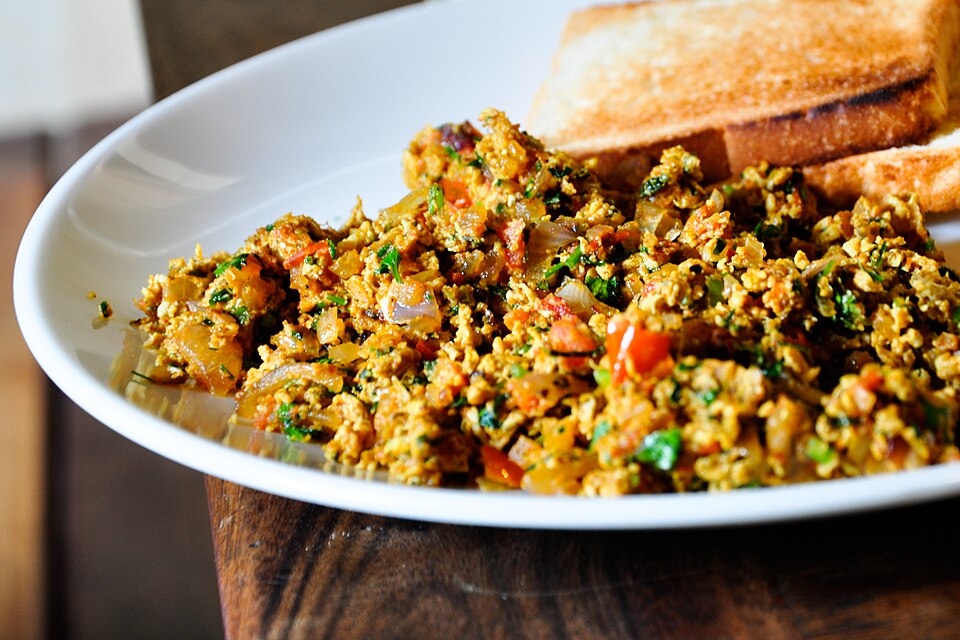
Anda bhurji (Indian spiced scrambled eggs)
Indian · 22 min · 254 kcal · Contains eggAndhra tomato pachadi
South Indian · 50 min · 56 kcal · VeganBeerakaya pachadi (ridge gourd chutney)
South Indian · 41 min · 69 kcal · VeganBengali tomato-date chutney (tomato khejur chutney)
Bengali · 35 min · 100 kcal · VeganBhang ki chutney (Kumaoni hemp seed chutney)
Indian · 21 min · 62 kcal · Vegan
32 more
- Borhani · Bangladeshi
- Burani raita (Hyderabadi garlic raita) · Indian
- Cucumber raita · Indian
- Dal paratha · Indian
- Dukkah with bread and olive oil · Egyptian
- Gongura pachadi (Andhra sorrel-leaf chutney) · South Indian
- Gujarati lili chutney (coriander-peanut chutney) · Gujarati
- Hari mirch chutney (green chilli chutney) · Indian
- Harissa · Tunisian
- Javas chutney (Maharashtrian flaxseed chutney) · Indian
- Kancha aamer chutney (Bengali green mango chutney) · Bengali
- Karuveppilai podi (curry leaf powder) · South Indian
- Khari biscuit · Indian
- Kobbari pachadi (Andhra coconut chutney) · South Indian
- Kolhapuri lal thecha (red chilli-garlic thecha) · Indian
- Lauki raita (bottle gourd raita) · Indian
- Masala chaas · Gujarati
- Matar paratha · Indian
- Mojo picón (Canarian red mojo) · Spanish
- Namkeen lassi · Pakistani
- Nimbu pani · Indian
- Olya naralachi chutney (Maharashtrian fresh coconut chutney) · Indian
- Paruppu podi (lentil powder for rice) · South Indian
- Peanut chutney (palli pachadi) · South Indian
- Ragi roti · South Indian
- Rajasthani garlic chutney (lehsun ki chutney) · Indian
- Recheado masala (Goan red chilli paste) · Goan
- Shengdana chutney (Maharashtrian dry peanut chutney) · Indian
- Tadka (tempered ghee with cumin, garlic and chilli) · Indian
- Thecha (Maharashtrian green chilli and garlic relish) · Indian
- Tilachi chutney (Maharashtrian dry sesame chutney) · Indian
- Tomato khajuri khatta (Odia tomato-date chutney) · Indian