
Seeds
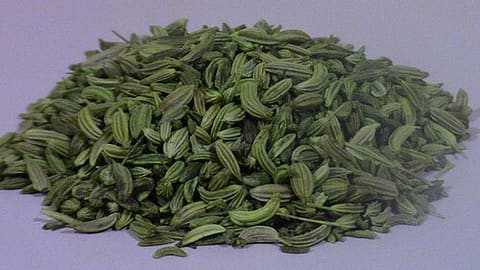
Fennel seeds
Foeniculum vulgare
Pale green, ridged seeds with a sweet anise flavour; tempered, ground into masalas or chewed after meals.
Also called: saunf, rezene tohumu
- Anise & liquorice
- Warm & sweet
- Herbal & green
- No heat
Photo: NanaYawBotar, via Wikimedia Commons (CC-BY-SA-4.0)
Flavour and aroma
sweet, anise-like, fresh. Sweet, anise, slightly woody.
- Heat
- No heat
- Forms
- whole, ground
How to use it
bloom in fat · Tadka (tempering) technique
Fry in hot oil for 15–20 seconds until a shade darker, for panch phoron and pickles.
dry roast · Spice roasting (dry-roasting) technique
Roast lightly over low heat for 1–2 minutes before grinding for garam masala or Kashmiri saunf powder.
use raw
Chew raw after meals, or sugar-coat for mukhwas.
- Panch phoron and Bengali tempering
- Kashmiri curries and Chettinad masala
- Italian sausages and pork
- Breads and pickles
- Mukhwas after meals
Identifying good quality
Oval, ridged seeds 4–8 mm long, green to greenish-tan. Greener seeds are fresher and sweeter. Lucknowi saunf is smaller and brighter green.
- Not to be confused with Cumin seeds: Cumin is smaller, browner and earthy.
- Not to be confused with Anise seed: Anise is smaller, grey-green and sweeter; Indian shops sometimes call both saunf.
Origin and history
Origin: The Mediterranean.. Grown and used: India is a major producer (Gujarat, Rajasthan); also grown in Egypt, China, Turkey and Europe..
Fennel seed (saunf) is chewed after meals across India as a breath freshener, and it is a key spice in Kashmiri Pandit cooking, Bengali panch phoron and Rajasthani and Lucknowi dishes. The small, bright green Lucknowi saunf is prized for chewing.
Well documented
In masalas, pastes and sauces
- Punjabi garam masalaMasala8 g per batch
- Mughlai (shahi) garam masalaMasala5 g per batch
- Kerala (Malabar) garam masalaMasala20 g per batch
- Biryani masalaMasala6 g per batch
- Kadai masalaMasala3 g per batch
- Pav bhaji masalaMasala5 g per batch
- Chettinad masalaMasala12 g per batch
- Madras curry powderMasala4 g per batch
- Malvani masalaMasala4 g per batch
- Xacuti masalaMasala2 g per batch
- Panch phoronMasala20 g per batch
- Sri Lankan roasted curry powderMasala10 g per batch
- Chinese five-spice powderMasala8 g per batch
- Saunth (sweet tamarind-date chutney)Sauce1 g per batch
- Aam ki launji (sweet-sour raw mango chutney)Sauce2 g per batch
- Punjabi mango pickle (aam ka achaar)Sauce17.7 g per batch
- Bengali tomato-date chutney (tomato khejur chutney)Sauce0.5 g per batch
- Kancha aamer chutney (Bengali green mango chutney)Sauce0.6 g per batch
- Tomato khajuri khatta (Odia tomato-date chutney)Sauce0.8 g per batch
- Aloo bukhara chutney (sweet-sour plum chutney)Sauce2 g per batch
Recipes with fennel seeds
Aam ki launji (sweet-sour raw mango chutney)
 Indian · 40 min · 85 kcal · Vegan
Aloo bukhara chutney (sweet-sour plum chutney)
Indian · 1 h 10 min · 65 kcal · Vegan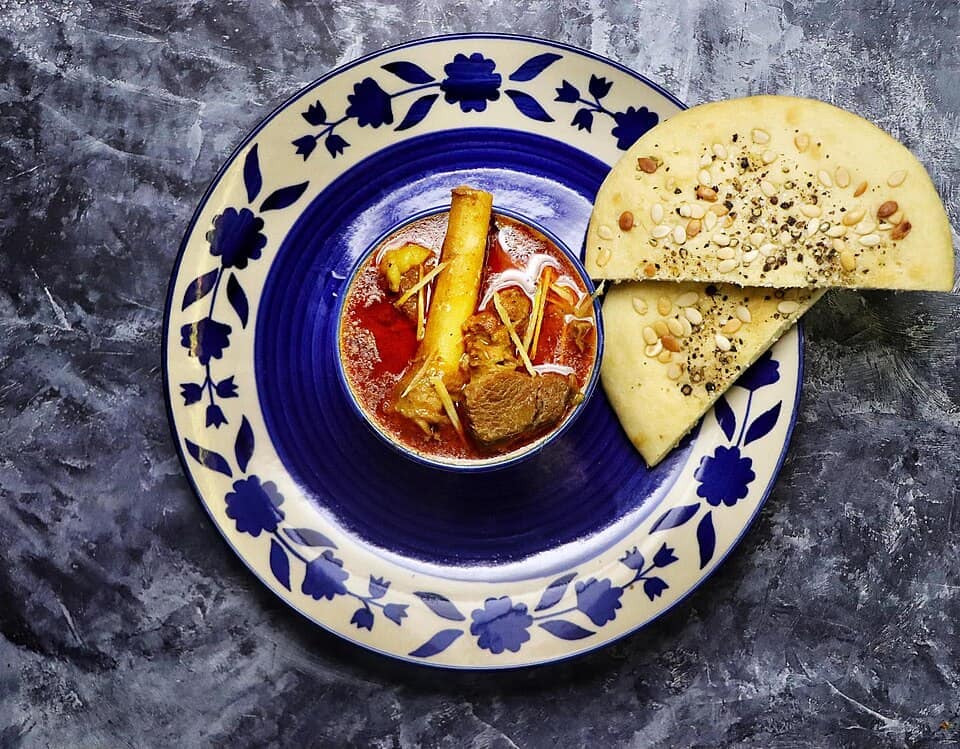
Beef nihari
 Pakistani · 4 h 40 min · 375 kcal
Bengali tomato-date chutney (tomato khejur chutney)
Bengali · 35 min · 100 kcal · VeganBolo de fubá (Brazilian cornmeal cake)
 Brazilian · 1 h 25 min · 261 kcal · Contains egg
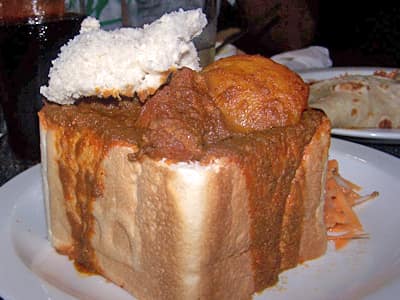
Bunny chow
 South African · 2 h · 1074 kcal
Cape Malay chicken curry
Cape Malay · 1 h 15 min · 355 kcal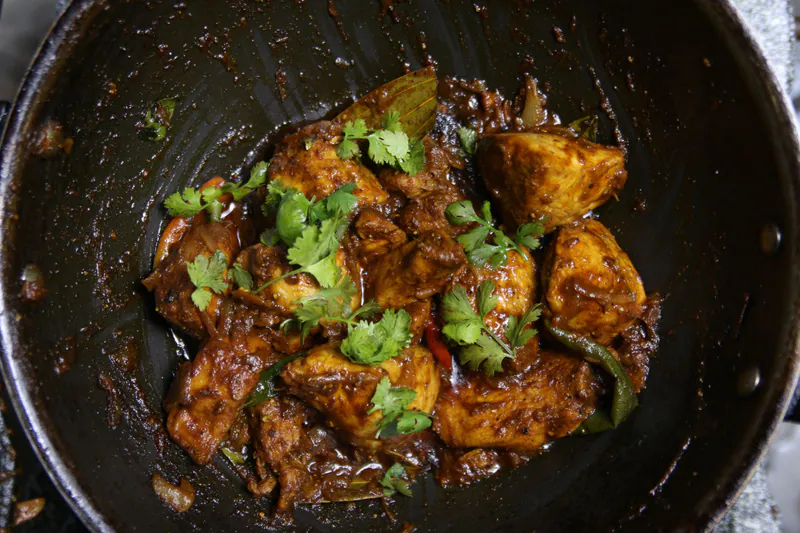
Chettinad chicken curry
South Indian · 1 h 5 min · 435 kcal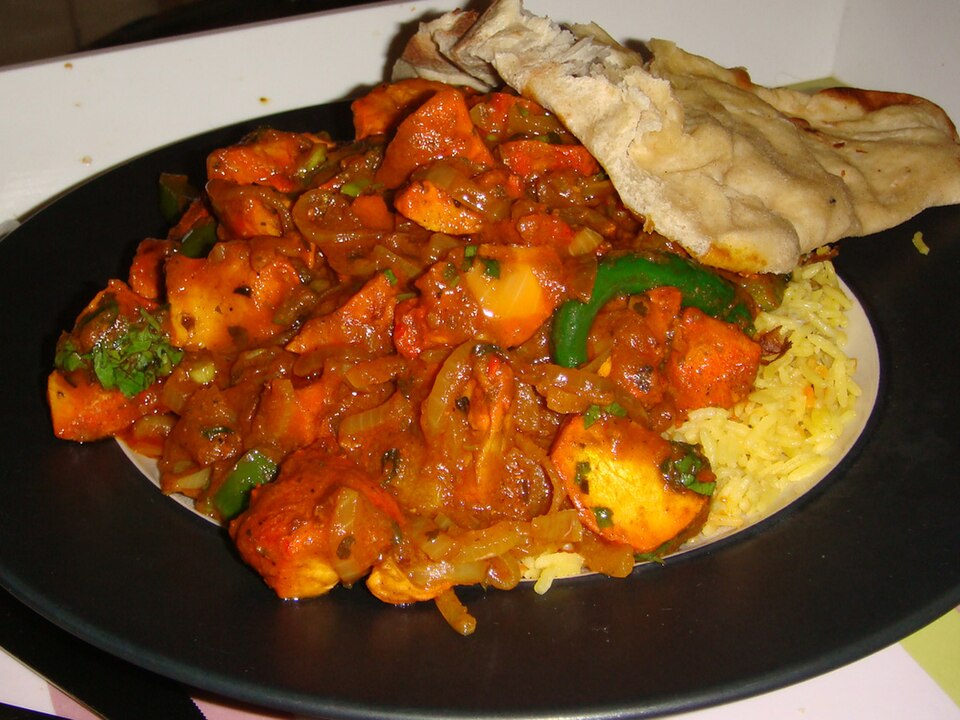
Chicken balti
 British · 40 min · 338 kcal
25 more
- Chicken yakhni pulao · Pakistani
- Dal paratha · Indian
- Dalma · Indian
- Gur paratha · Punjabi
- Kadala curry · South Indian
- Kancha aamer chutney (Bengali green mango chutney) · Bengali
- Kashmiri mutton yakhni · Indian
- Kerala egg roast · South Indian
- Macher jhol · Bengali
- Machha besara · Indian
- Matar paratha · Indian
- Mutton yakhni shorba · Indian
- Nadru yakhni · Indian
- Nandu rasam · South Indian
- Pasta con le sarde · Italian
- Punjabi dum aloo · Punjabi
- Punjabi mango pickle (aam ka achaar) · Punjabi
- Rogan josh · Indian
- Saunth (sweet tamarind-date chutney) · Indian
- Sri Lankan black pork curry · Sri Lankan
- Sup kambing · Malaysian
- Taralli pugliesi · Italian
- Thandai · Indian
- Thekua · Indian
- Tomato khajuri khatta (Odia tomato-date chutney) · Indian