Cuisine
Gulf Arab (Khaleeji)
The cooking of the Arabian Peninsula: spiced rice with meat or fish (kabsa, machboos, mandi), dates, cardamom coffee and dishes shaped by Bedouin life and Indian Ocean trade.
Flavour character: Warm and aromatic rather than hot: baharat, cardamom, saffron, rose water and loomi (dried lime) sourness; ghee and slow-cooked meat; date sweetness; heat from hawaij and zhug in Yemen.
History
Bedouin herders lived on dates, camel and goat milk, and meat for special occasions, while coastal towns depended on fish and pearl diving. Centuries of Indian Ocean trade with India, Persia and East Africa brought rice, black pepper, cardamom and other spices, and dishes such as machboos resemble Indian biryani. Arabic coffee (gahwa) as a symbol of hospitality was inscribed by UNESCO in 2015 for the UAE, Saudi Arabia, Oman and Qatar. Yemen's Hadhrami cooks spread mandi across the region.
Well documented
Geography and influences
Desert interior with oases of date palms, mountain terraces in Yemen and Oman, and long coasts on the Red Sea, Arabian Sea and Persian Gulf.
- Bedouin traditions
- Indian and Persian traders
- East African (Zanzibar) links with Oman
- Ottoman Hejaz
Regional variations
- Saudi Arabia (Najd and Hejaz)
- Kabsa and jareesh in the Najd; the Hejaz is more cosmopolitan, shaped by pilgrims.
- UAE, Qatar, Bahrain, Kuwait
- Machboos, fish dishes and Indian-influenced spice mixes.
- Oman
- Shuwa, halwa and strong ties to Zanzibar and India.
- Yemen
- Hotter: saltah with fenugreek froth, zhug, mandi and honey-drenched bint al-sahn.
Festive and seasonal food
- Harees and thareed during Ramadan
- Luqaimat at iftar
- Whole lamb (ouzi) for weddings and Eid
- Omani shuwa (pit-roasted meat) at Eid
Signature dishes
- Chicken kabsa
- Lamb machboos
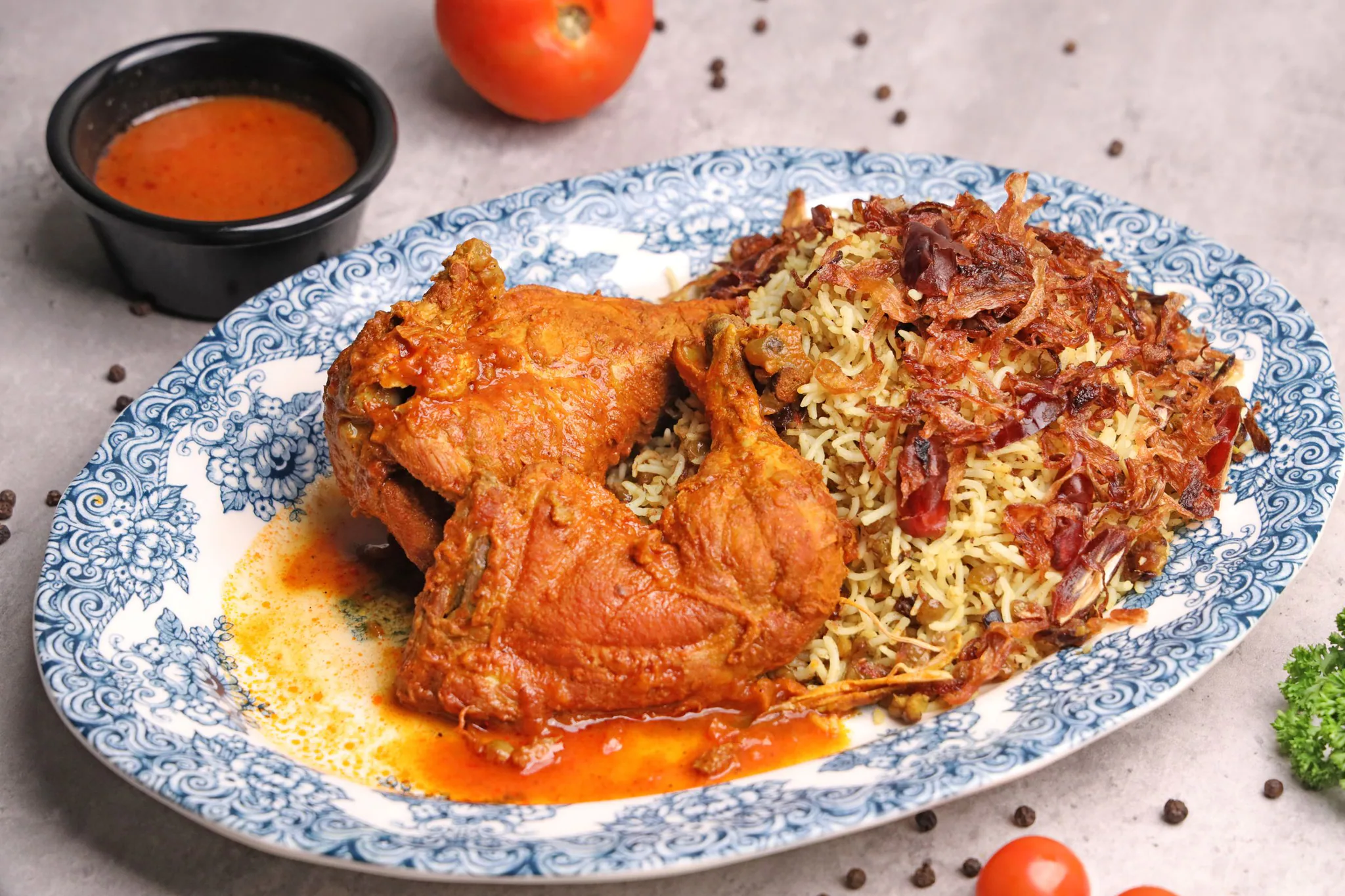
- Machboos ala dajaj
- Chicken mandi
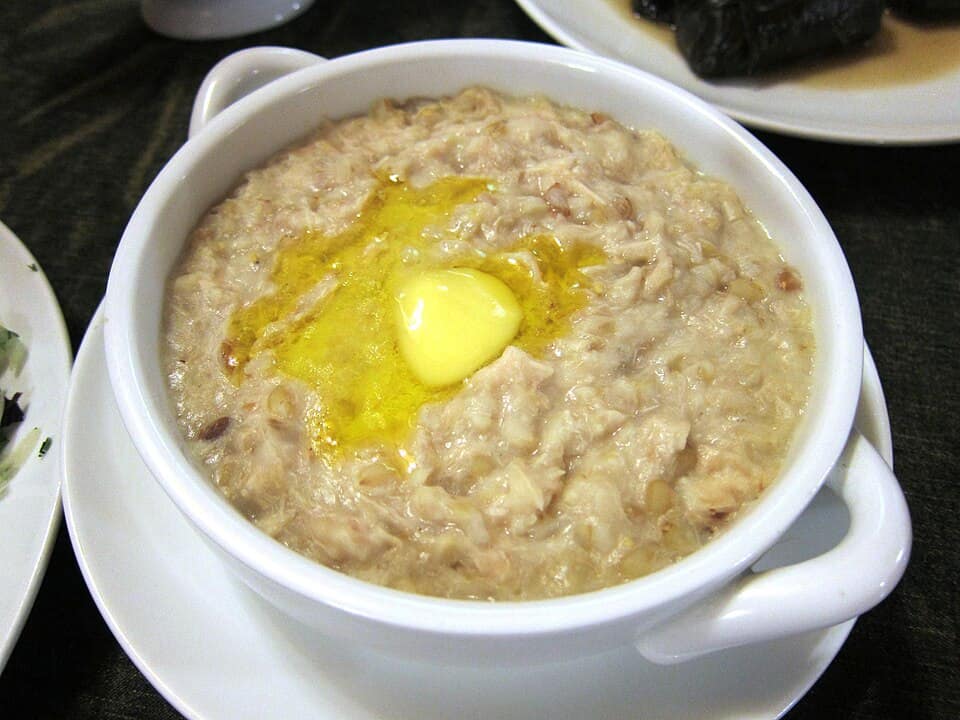
- Harees
- Thareed
- Luqaimat
- Balaleet
- Omani shuwa-style slow-roast lamb
- Mutabbaq samak
- Machboos rubyan
- Saltah
- Fahsa
- Arabic coffee (gahwa)
- Karak chai
Not on the site yet: Madfoon, Haneeth, Jareesh, Sambousek
 Saudi Arabian · 23 min · 12 kcal ·
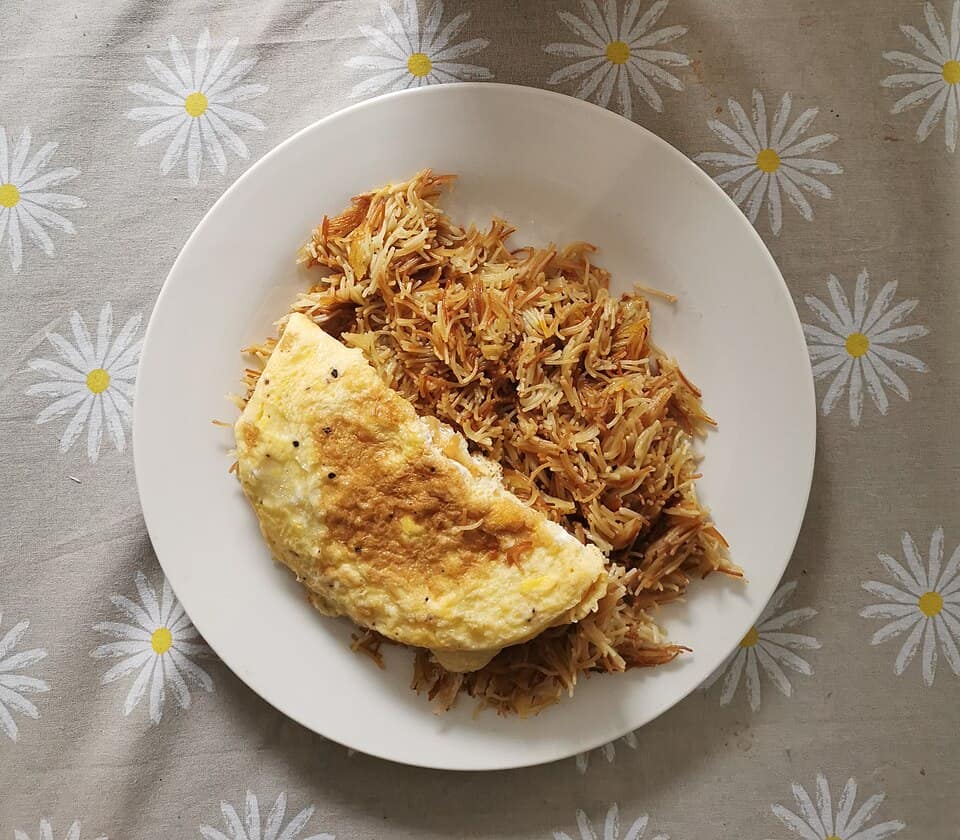
 Yemeni · 2 h 35 min · 474 kcal ·
 Emirati · 1 h 15 min · 361 kcal ·
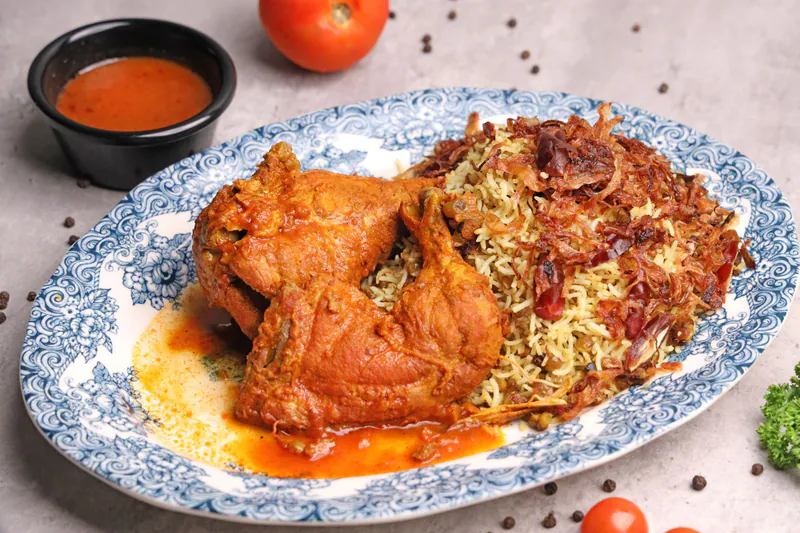
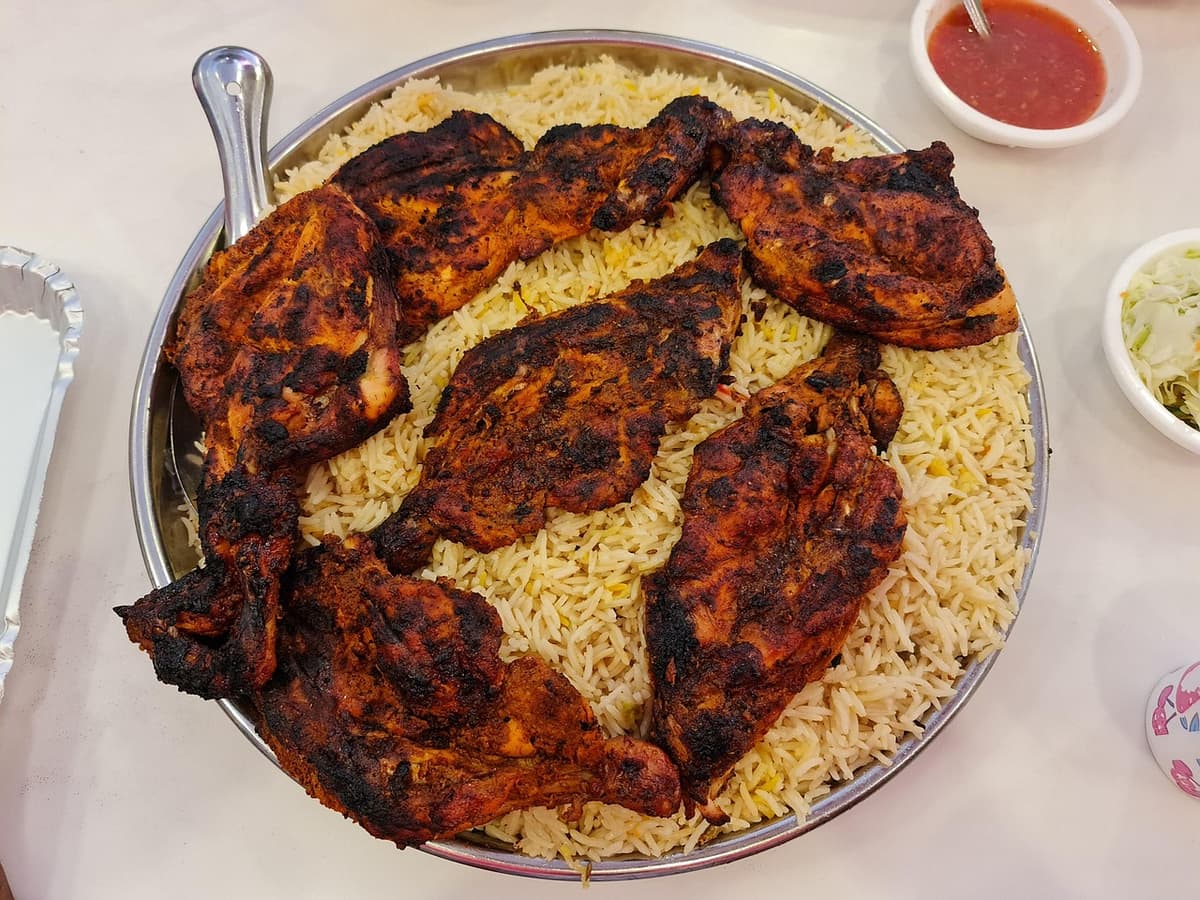
 Kuwaiti · 1 h 30 min · 579 kcal
 Bahraini · 1 h 10 min · 181 kcal ·