Cuisine
Indonesian
The cooking of more than 17,000 islands, unified by rice, pounded spice pastes (bumbu), sambal and coconut, with strong differences between Sumatra, Java, Bali and the east.
Flavour character: Rich, aromatic and often hot: shallot-garlic-chilli bumbu, candlenut and coconut richness, sweet soy (kecap manis) on Java, sourness from tamarind, and sambal at every meal.
History
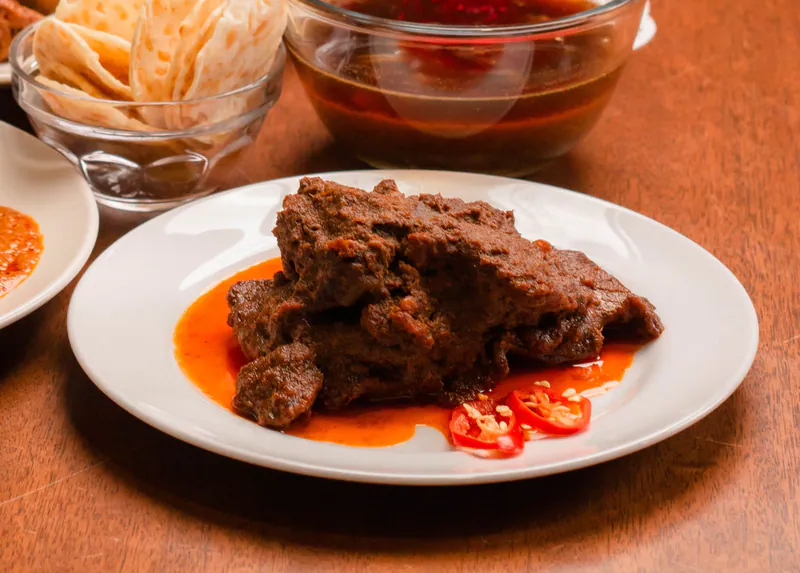
The Maluku (Spice) Islands were the world's only source of cloves and nutmeg until the 18th century, drawing Arab, Indian, Chinese, Portuguese and Dutch traders. Indian and Arab merchants influenced curries (gulai) and Islamic food customs; Chinese settlers brought noodles, tofu, soy sauce and bakso. Tempeh is documented in Java by at least the early 19th century. Dutch colonial rule produced the rijsttafel, a banquet of many Indonesian dishes. Rendang is a Minangkabau (West Sumatra) tradition.
Well documented
Geography and influences
An equatorial archipelago of volcanic islands: rice terraces on Java and Bali, sago and tubers in the east, coconut and seafood everywhere.
- Indian and Arab traders
- Chinese settlers
- Portuguese and Dutch colonial periods
- Islamic, Hindu-Balinese and local traditions
Regional variations
- West Sumatra (Minangkabau, Padang)
- Hot, coconut-rich, long-cooked dishes such as rendang and gulai.
- Java
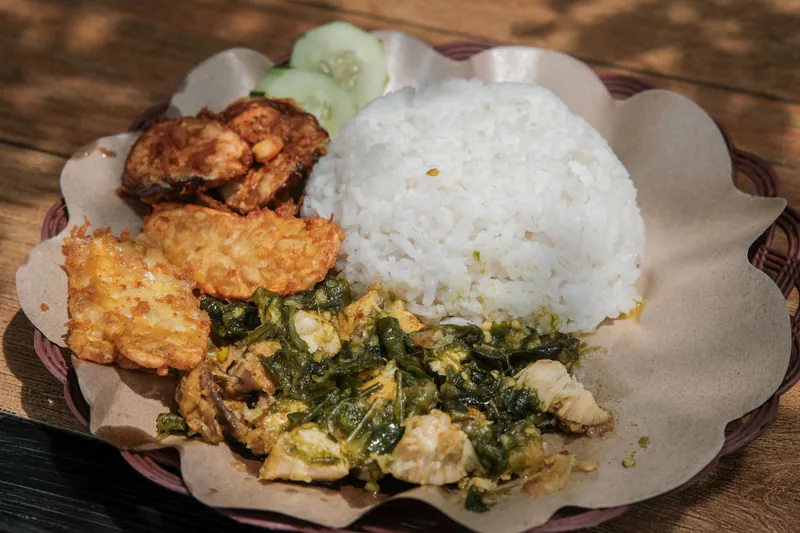
- Sweeter, with kecap manis and palm sugar; tempeh, gudeg, soto and satay.
- Bali
- Hindu island cooking with pork, base genep spice paste and sambal matah.
- Eastern islands (Maluku, Sulawesi, Papua)
- Seafood, sago and fiery fresh sambals; Manado's tinutuan and rica-rica.
Festive and seasonal food
- Ketupat and opor ayam at Lebaran (Eid al-Fitr)
- Rendang for weddings and Eid
- Tumpeng (cone of yellow rice) for celebrations
- Babi guling at Balinese ceremonies
Signature dishes
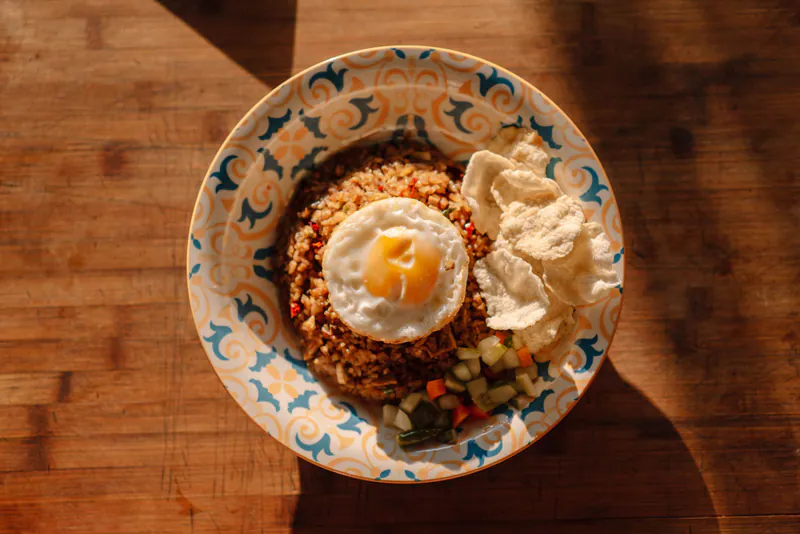
- Nasi goreng
- Beef rendang
- Sate ayam (chicken satay)
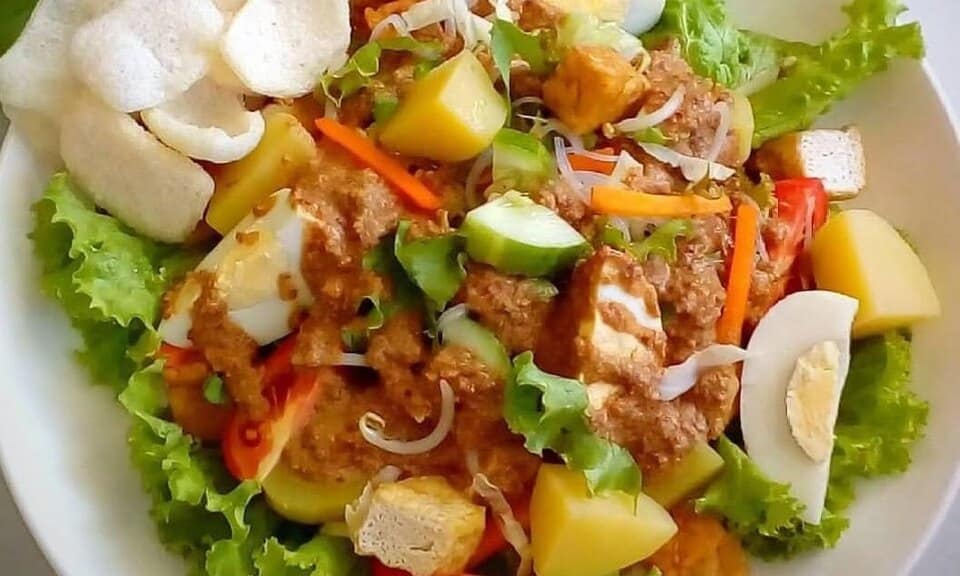
- Gado-gado
- Soto ayam
- Opor ayam
- Tempe bacem
- Gulai kambing
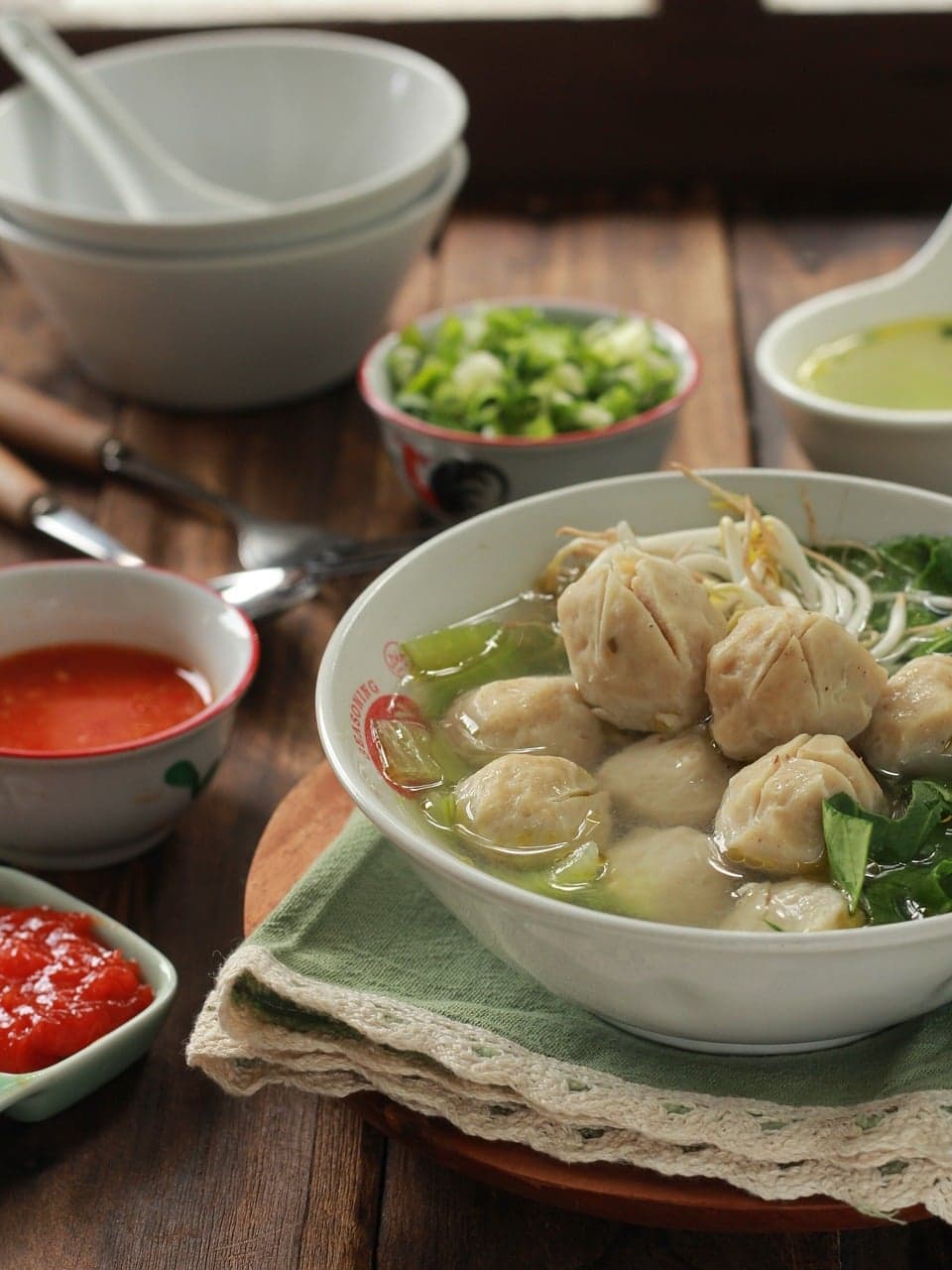
- Bakso
- Ayam goreng kuning
- Sayur lodeh
- Martabak manis
Not on the site yet: Babi guling (Bali), Nasi Padang, Gudeg (Yogyakarta), Rawon (East Java), Papeda (Maluku and Papua)
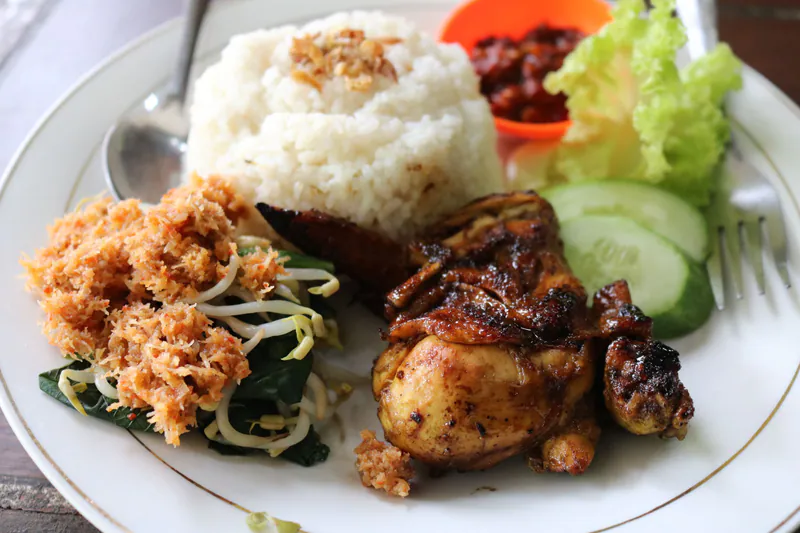
 Indonesian · 1 h 15 min · 716 kcal