
Spices & seasonings · Aromatic leaves
Salam leaves (Indonesian bay leaves)
Aromatic Indonesian 'bay' leaves with a subtle, earthy scent; simmered whole in tempeh, rendang, opor and sayur.
Also called: daun salam, indonesian bay leaf, salam leaf
Around the world: daun salam (id)
A kind of bay leaves
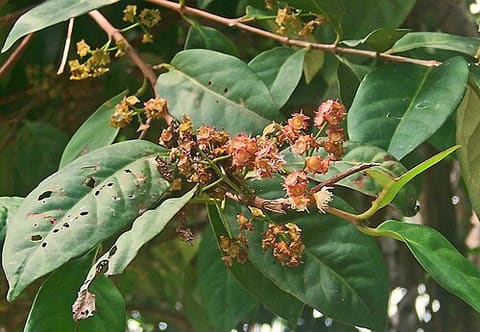
Photo: W.A. Djatmiko ( Wie146 ), via Wikimedia Commons (CC-BY-SA-4.0)
What it is
Leaves of Syzygium polyanthum, a tree in the myrtle family. Despite the name 'Indonesian bay leaf' they are unrelated to European bay and taste quite different: mild, woody and slightly sour. They are used fresh or dried, almost always together with galangal and lemongrass.
Syzygium polyanthum
How it’s used
- Simmered with tempeh or tofu for bacem
- Added to rendang, opor and gulai
- Cooked into nasi uduk and other rice dishes
Characteristics
- Taste
- Mild, earthy and faintly sour.
- Aroma
- Woody and subtly spiced.
- Sold as
- dried, fresh
- Cooking uses
- Commonly cooked, Mainly a seasoning
- Common in
- Indonesian, Malaysian
Storage
Cool, dry and dark. Keep dried leaves in an airtight bag; freeze fresh leaves.
Diet, allergens and safety
No major allergens in typical versions.
- Vegetarian
- Vegan
- Dairy-free
- Egg-free
- Gluten-free
- Nut-free
- Soy-free
- Caffeine-free
Substitutes
Optional — what works if you don’t have it, and how it changes the dish.
- Bay leaves — Use fewer; it is stronger. Or simply leave out.
Related ingredients
Recipes with salam leaves (indonesian bay leaves)
Tempe bacem
 Indonesian · 55 min · 413 kcal · Vegan