
Aromatic leaves
Makrut lime leaves
Citrus hystrix
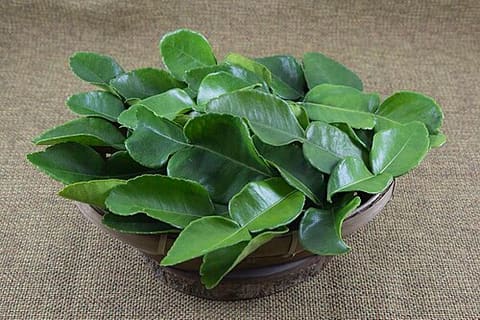
Glossy double-lobed citrus leaves with an intense floral-lime aroma, used in Thai and Indonesian dishes.
Also called: kaffir lime leaves, bai makrut, daun jeruk
- Citrus & bright
- Floral
- Herbal & green
- No heat
Photo: Herusutimbul, via Wikimedia Commons (CC-BY-SA-4.0)
Flavour and aroma
intense lime zest, floral, fresh.
- Heat
- No heat
- Forms
- fresh, frozen, dried
How to use it
infuse · Simmering technique
Tear or crush whole leaves and add to curries and soups for the last 5–10 minutes; remove before serving or leave as a garnish not meant to be eaten.
use raw
For salads, fishcakes and stir-fries, strip out the central rib, stack the leaves, roll tightly and slice into hair-thin shreds; thick pieces are tough.
crush · Dry grinding technique
Pound finely sliced leaf into curry pastes.
- Thai curries and curry pastes
- Tom yum and tom kha soups
- Shredded into fishcakes and salads
- Indonesian rendang and sambals
Identifying good quality
Glossy, dark green leaves shaped like two leaves joined end to end (a figure-of-eight). Crushed, they smell intensely of lime peel. Fresh or frozen leaves are much better than dried.
- Not to be confused with Bay leaves: Bay leaves are single, matt and smell of eucalyptus; makrut leaves are double, glossy and smell of lime.
Origin and history
Origin: Southeast Asia (Citrus hystrix).. Grown and used: Grown across Thailand, Indonesia, Malaysia, Laos and Cambodia; used in their cooking and sold fresh, frozen and dried elsewhere..
Makrut lime leaves are a traditional aromatic of Thai, Lao, Cambodian and Indonesian cooking, used in curries, soups such as tom yum and tom kha, and fishcakes. The older English name 'kaffir lime' is now widely avoided because 'kaffir' is a racial slur in South Africa; 'makrut' is the Thai name.
Well documented
In masalas, pastes and sauces
Recipes with makrut lime leaves
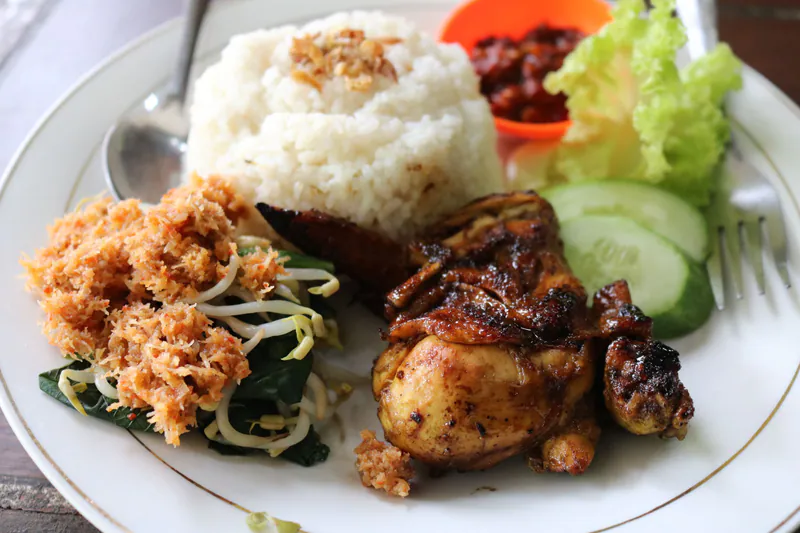
Ayam bakar
 Indonesian · 1 h 15 min · 716 kcal
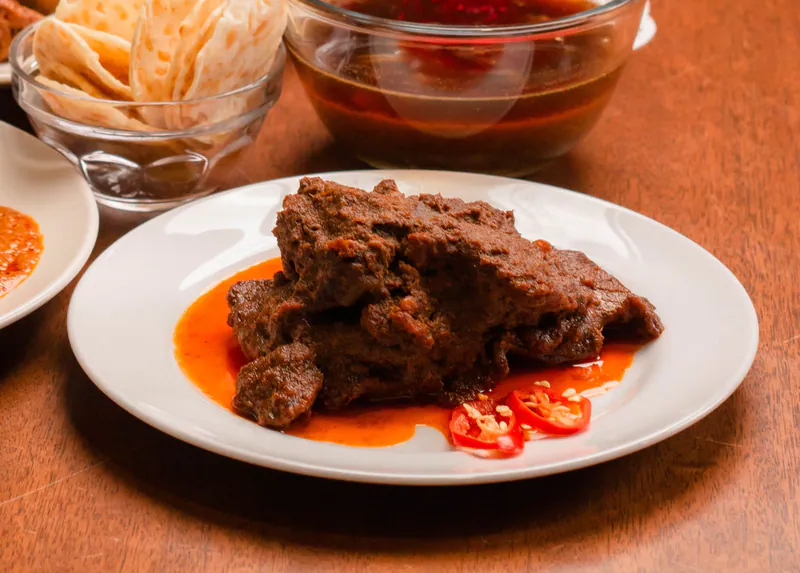
Beef rendang
Indonesian · 4 h · 672 kcalBumbu kacang (peanut satay sauce)
Indonesian · 30 min · 164 kcal · Vegan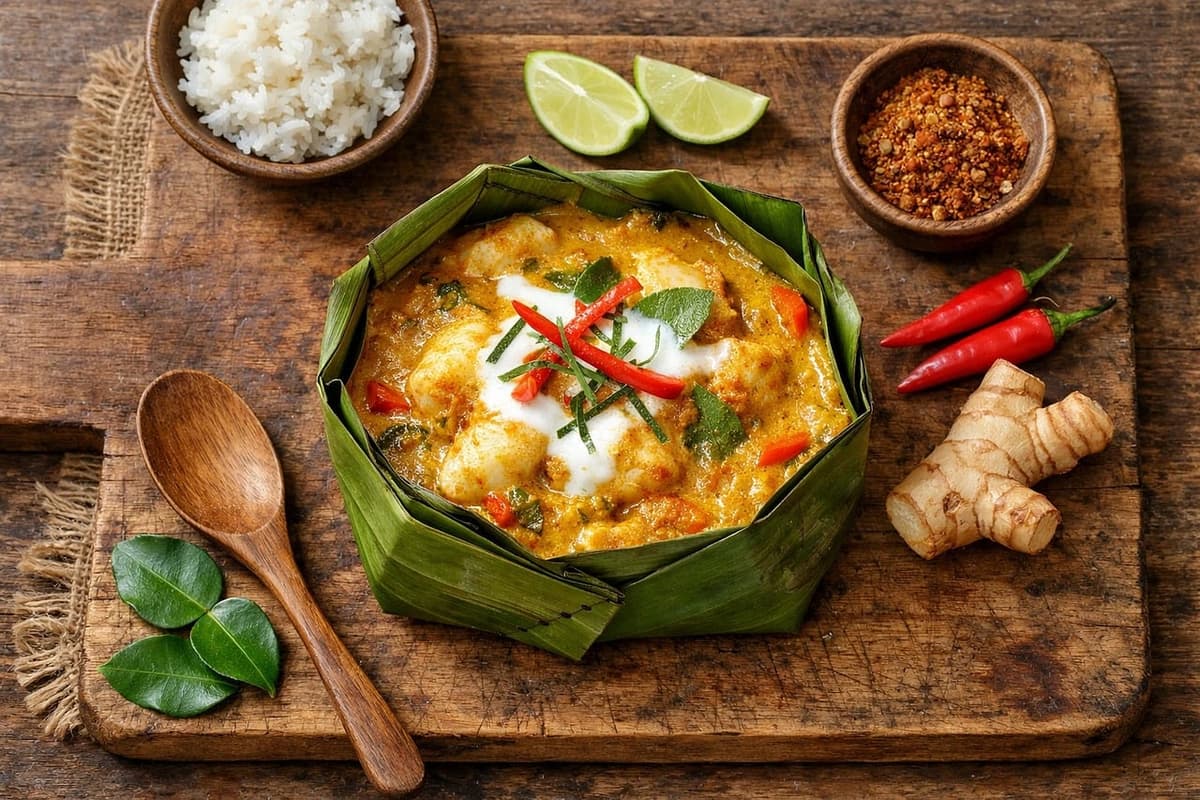
Fish amok
 Cambodian · 55 min · 433 kcal
Gulai kambing
Indonesian · 2 h · 500 kcalLao beef larb
 Lao · 30 min · 322 kcal
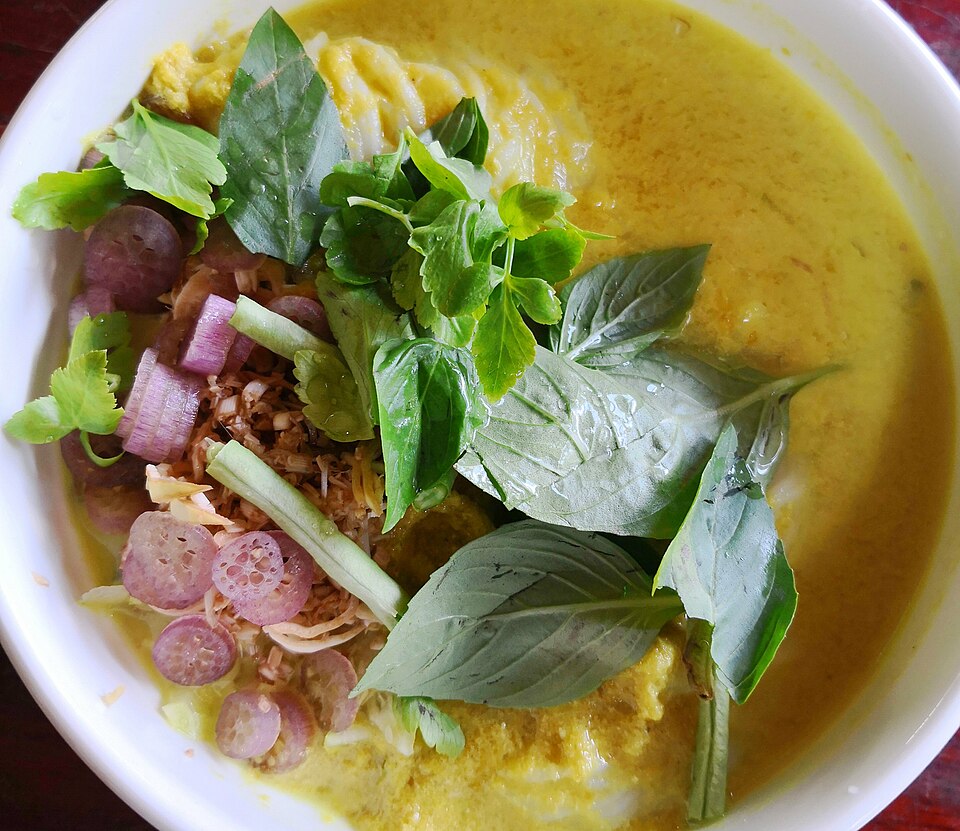
Nom banh chok
Cambodian · 1 h · 714 kcalOpor ayam
Indonesian · 1 h 10 min · 799 kcal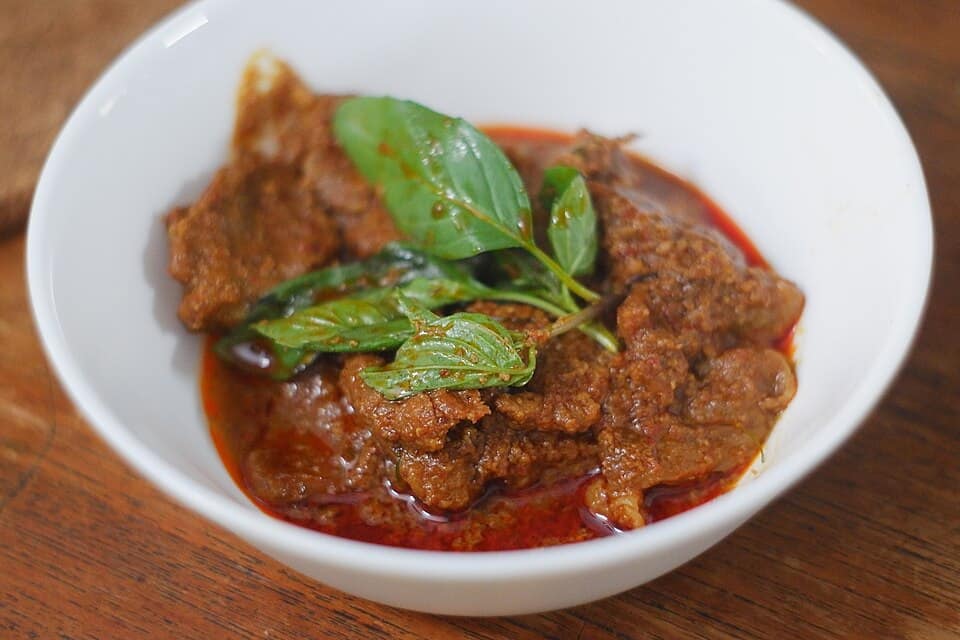
Panang curry with beef
 Thai · 50 min · 569 kcal
9 more
- Phở gà · Vietnamese
- Sambal matah · Indonesian
- Soto ayam · Indonesian
- Thai green curry with chicken · Thai
- Thai red curry with chicken and bamboo shoots · Thai
- Tom kha gai · Thai
- Tom saep · Thai
- Tom yum goong · Thai
- Urap sayur · Indonesian