
Roots and rhizomes
Galangal
Alpinia galanga
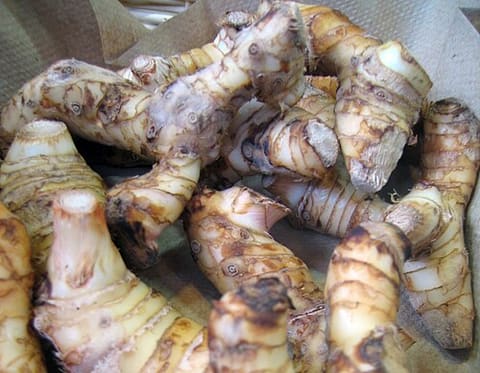
Hard, pale rhizome with a peppery, piney citrus flavour; a key aromatic in Thai and Indonesian cooking.
Also called: kha, lengkuas, blue ginger
- Citrus & bright
- Resinous & piney
- Hot & numbing
- Very mild
Photo: Ruth Hartnup from Vancouver, Canada, via Wikimedia Commons (CC-BY-2.0)
Flavour and aroma
piney, citrusy, peppery, camphor. Peppery, citrusy and piney.
- Heat
- Very mild
- Forms
- fresh, frozen, dried, ground
How to use it
infuse · Simmering technique
For soups, slice into thin coins (2–3 mm) and simmer from the start; the slices are woody and are not eaten.
crush · Dry grinding technique
For curry pastes, peel, slice thinly across the fibres, then pound in a mortar or blend with the other paste ingredients; large chunks will not break down.
soak
Dried galangal slices: soak in hot water for 30 minutes before using; the flavour is flatter than fresh.
- Sliced into tom kha and tom yum
- Pounded into curry pastes and rendang
- Simmered in soups and braises
- Infused in Indonesian and Malaysian sauces
Identifying good quality
Rhizomes with smooth, pale cream to pinkish skin marked by dark rings, harder and woodier than ginger. The flesh is pale and smells sharply of pine and citrus. Young galangal is pinker and more tender.
- Not to be confused with Fresh ginger: Ginger has thinner, beige skin, is juicier and tastes hot-sweet; galangal is harder, pinkish-ringed and tastes of pine and citrus. They are not interchangeable in Thai soups.
Origin and history
Origin: Southeast Asia, probably Indonesia (greater galangal, Alpinia galanga).. Grown and used: Grown across Thailand, Indonesia, Malaysia, Cambodia and Laos; used fresh in Southeast Asian cooking and sold frozen, dried and powdered elsewhere..
Galangal is a long-established aromatic of Thai, Indonesian, Malaysian and Cambodian cooking, especially in curry pastes and soups such as tom kha and tom yum. It was also traded to medieval Europe, where 'galingale' appears in English and French recipe collections.
Well documented
In masalas, pastes and sauces
Recipes with galangal
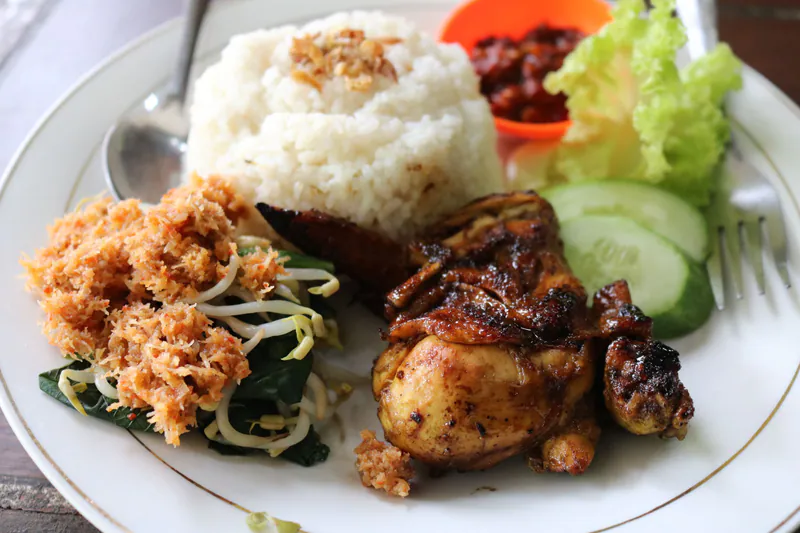
Ayam bakar
 Indonesian · 1 h 15 min · 716 kcal
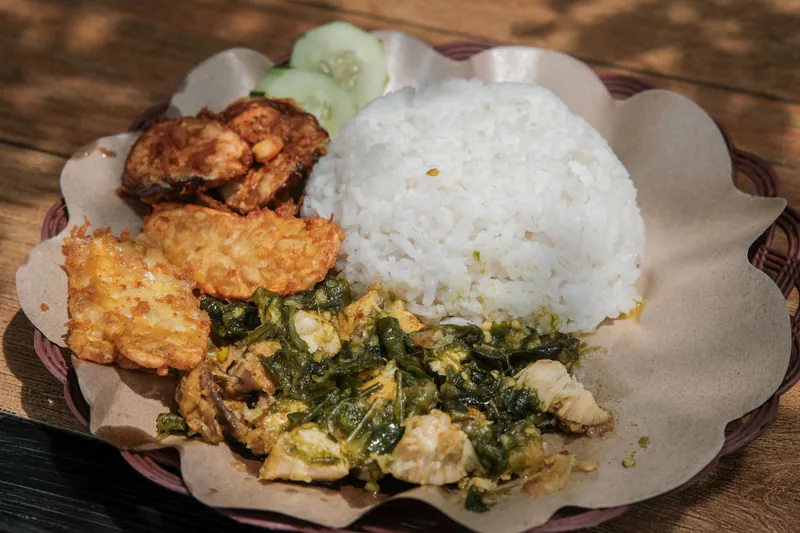
Ayam goreng kuning
Indonesian · 1 h 10 min · 639 kcal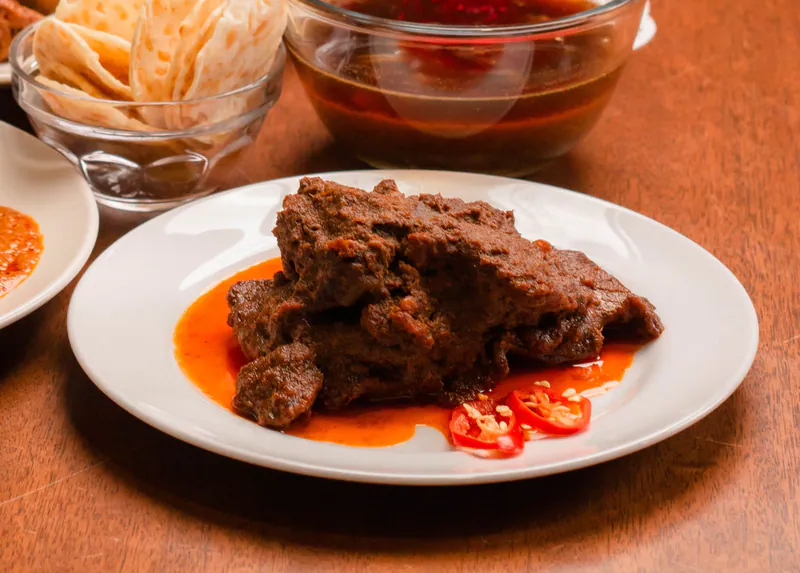
Beef rendang
Indonesian · 4 h · 672 kcal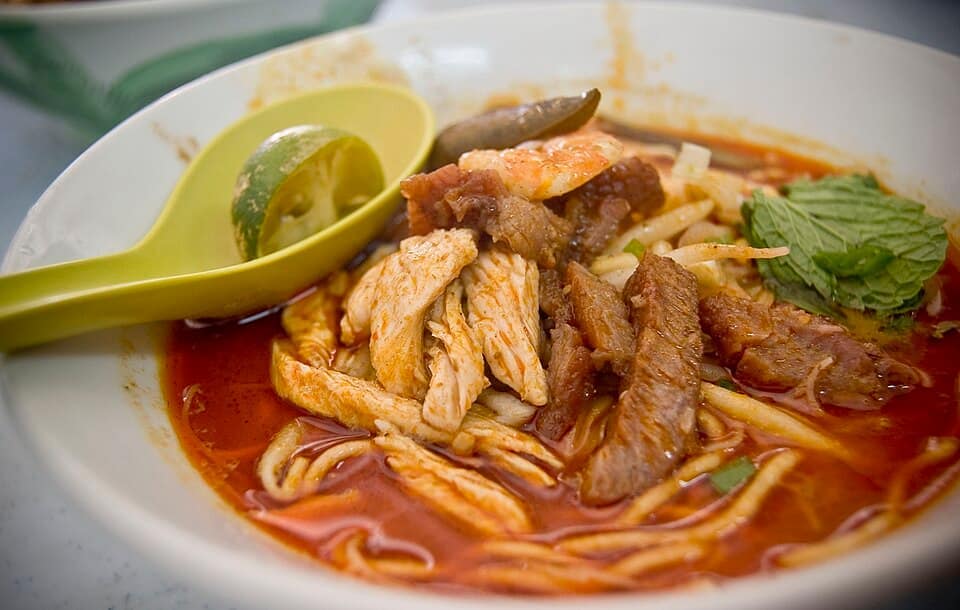
Curry laksa
 Malaysian · 1 h 5 min · 950 kcal
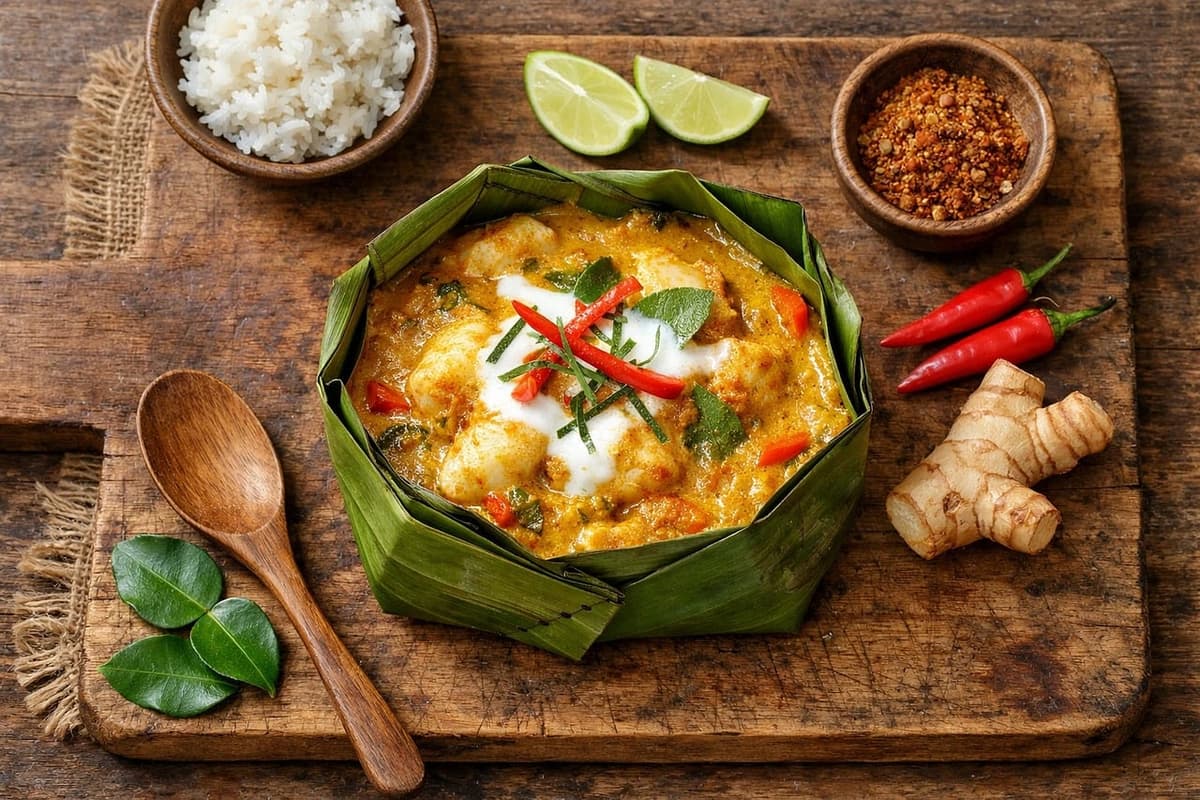
Fish amok
 Cambodian · 55 min · 433 kcal
Khao piak sen
 Lao · 1 h 55 min · 715 kcal
Lao beef larb
Lao · 30 min · 322 kcalMassaman curry with beef
 Thai · 2 h 55 min · 741 kcal
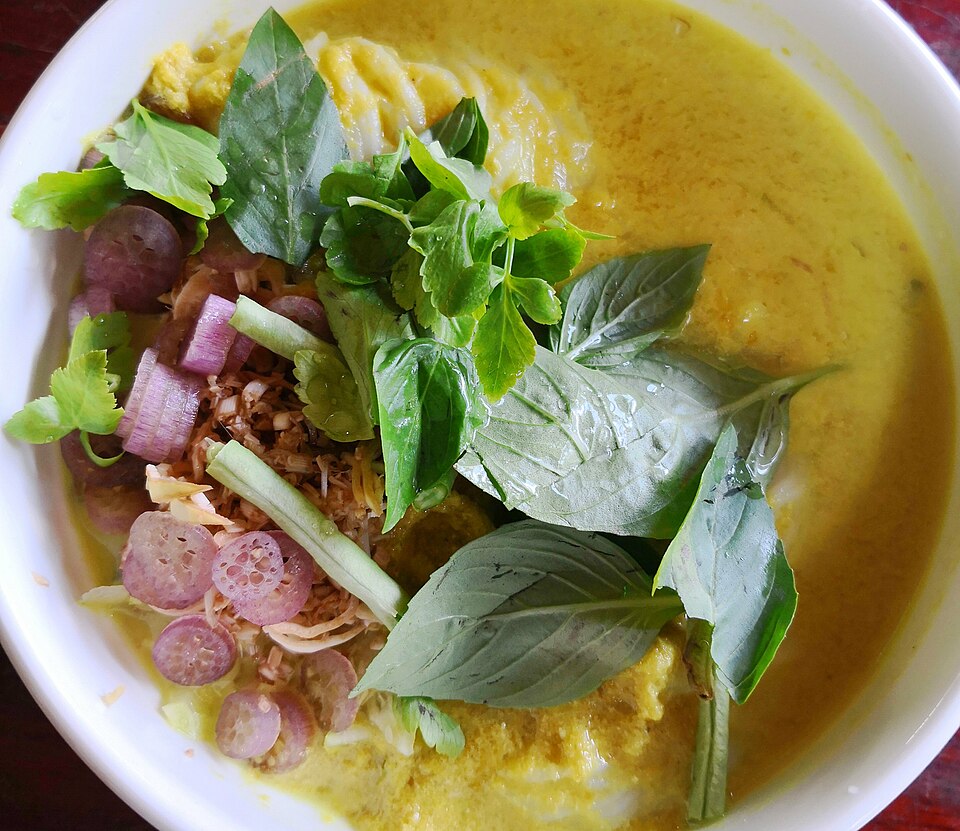
Nom banh chok
Cambodian · 1 h · 714 kcal
13 more
- Opor ayam · Indonesian
- Panang curry with beef · Thai
- Penang assam laksa · Malaysian
- Sayur lodeh · Indonesian
- Soto ayam · Indonesian
- Tempe bacem · Indonesian
- Thai green curry with chicken · Thai
- Thai red curry with chicken and bamboo shoots · Thai
- Thai yellow chicken curry · Thai
- Tom kha gai · Thai
- Tom saep · Thai
- Tom yum goong · Thai
- Urap sayur · Indonesian