Cuisine
Vietnamese
A fresh, herb-heavy rice cuisine seasoned with fish sauce, known for noodle soups, rice-paper rolls and a table of raw herbs and dipping sauces at every meal.
Flavour character: Light and aromatic: fish-sauce saltiness balanced with lime, sugar and chilli; clear, spiced broths; lots of fresh mint, coriander, perilla and Thai basil; crunchy raw vegetables.
History
Around a thousand years of Chinese rule left chopsticks, noodles, soy and many techniques, while the south absorbed Khmer and Cham influences. The Nguyen dynasty's court at Hue developed an elaborate imperial cuisine. French colonial rule (from the mid-19th century to 1954) introduced baguettes, coffee, butter and pâté, which fed into banh mi and ca phe sua da. Pho is generally traced to northern Vietnam (around Nam Dinh and Hanoi) in the early 20th century and spread south after 1954.
Commonly told; not firmly documented
Geography and influences
A long S-shaped country between the Red River delta in the north and the Mekong delta in the south, joined by a narrow central coast.
- Chinese cooking
- Khmer and Cham cooking in the south and centre
- Hue imperial court
- French colonial period
Regional variations
- North (Hanoi)
- Subtler and less sweet; the home of pho and bun cha.
- Centre (Hue)
- Spicier, with imperial court dishes and lemongrass-chilli bun bo Hue.
- South (Saigon, Mekong)
- Sweeter, with coconut, abundant herbs, tropical fruit and caramelised clay-pot dishes.
Festive and seasonal food
- Banh chung and banh tet (sticky rice cakes) at Tet
- Thit kho trung (braised pork and eggs) at Tet in the south
- Mooncakes at the Mid-Autumn Festival
Signature dishes
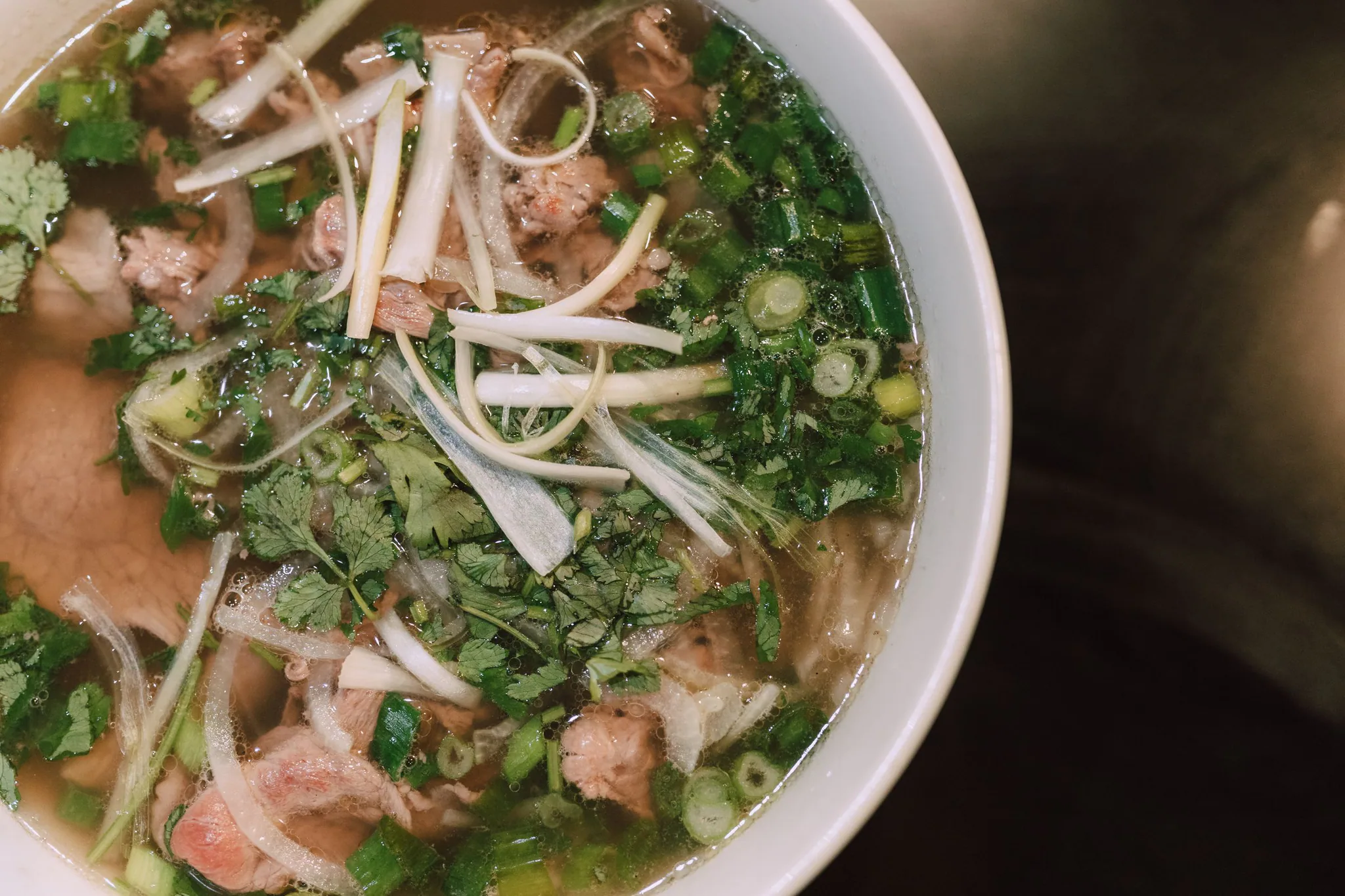
- Phở bò (beef pho)
- Phở gà
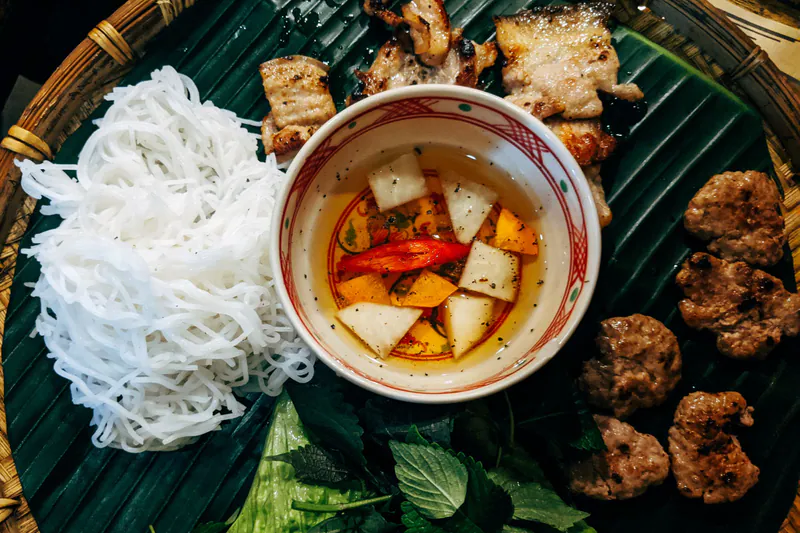
- Bún chả
- Gỏi cuốn (fresh spring rolls)
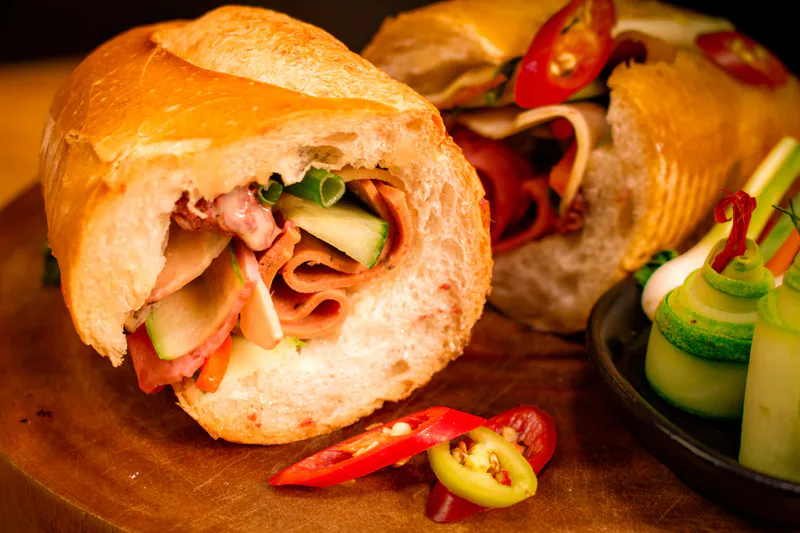
- Bánh mì thịt nướng
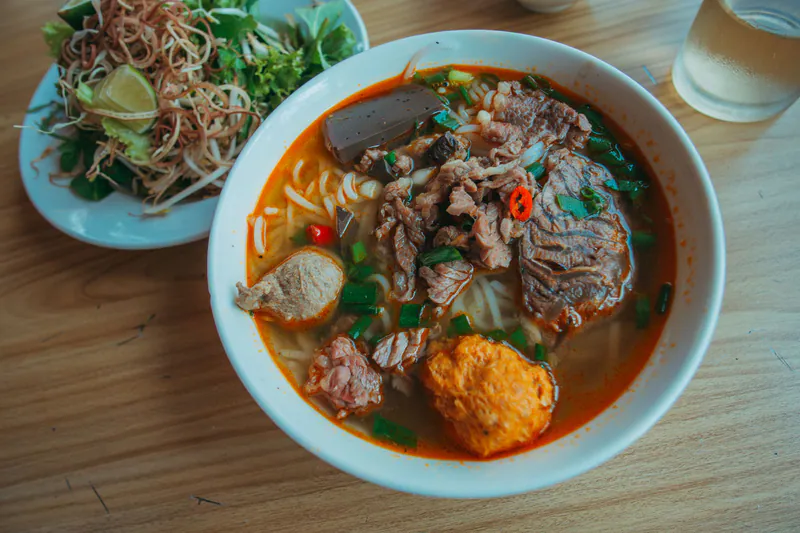
- Bún bò Huế
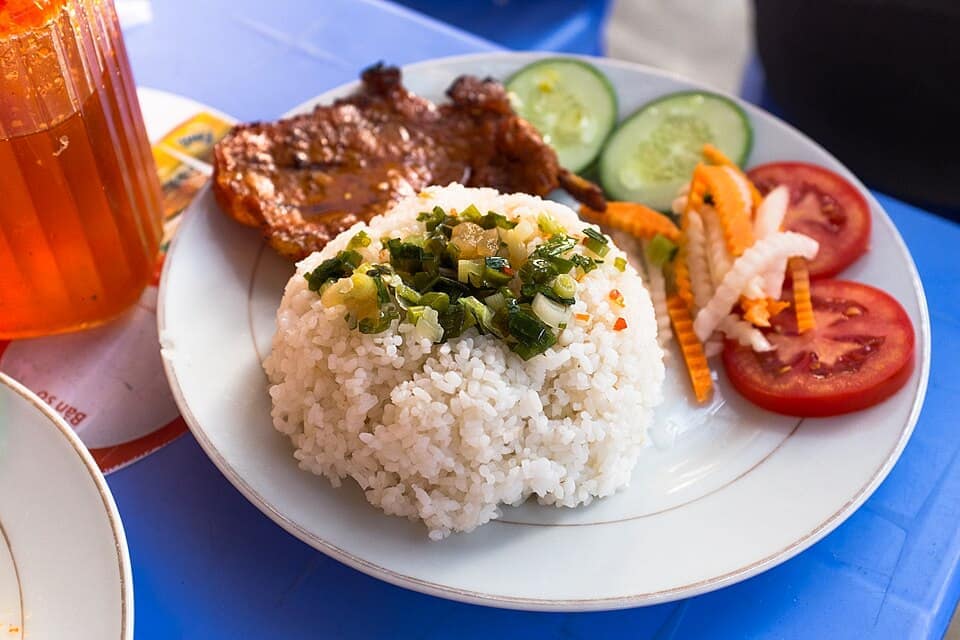
- Cơm tấm sườn nướng
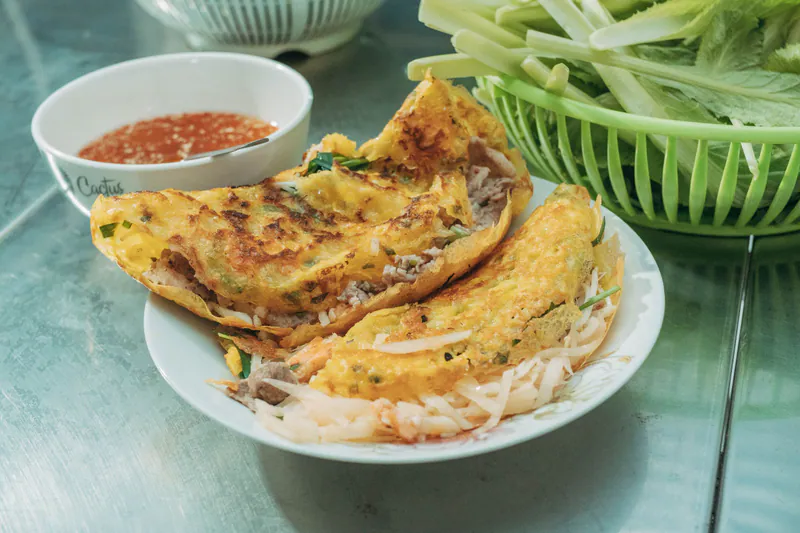
- Bánh xèo
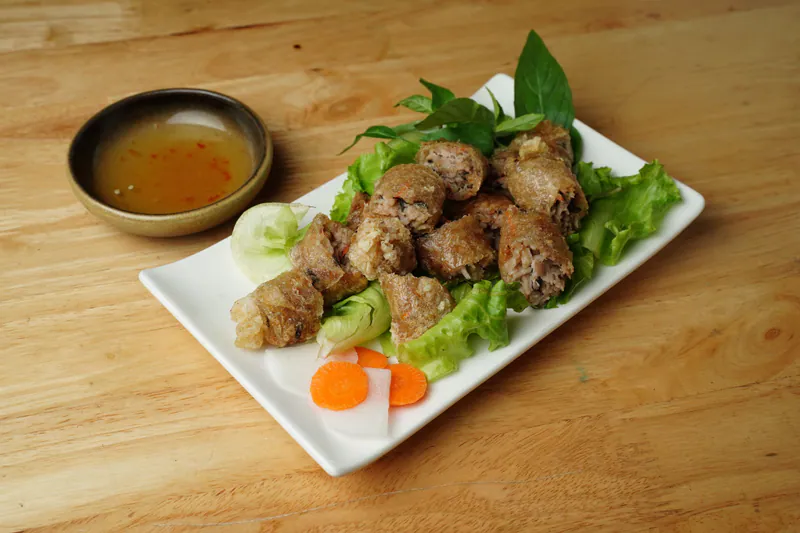
- Chả giò (fried spring rolls)
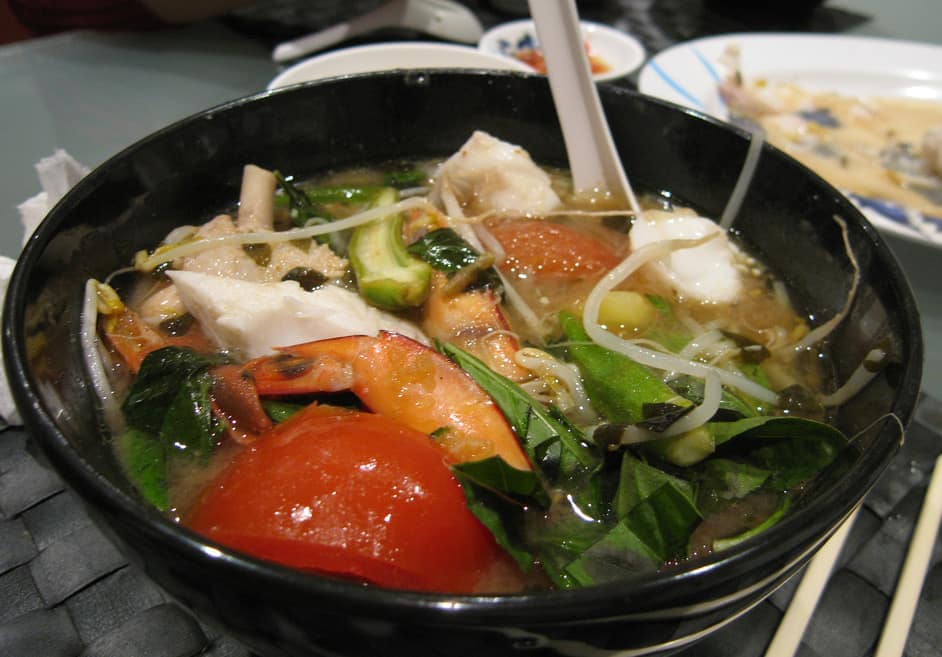
- Canh chua cá
- Cá kho tộ
- Thịt kho trứng
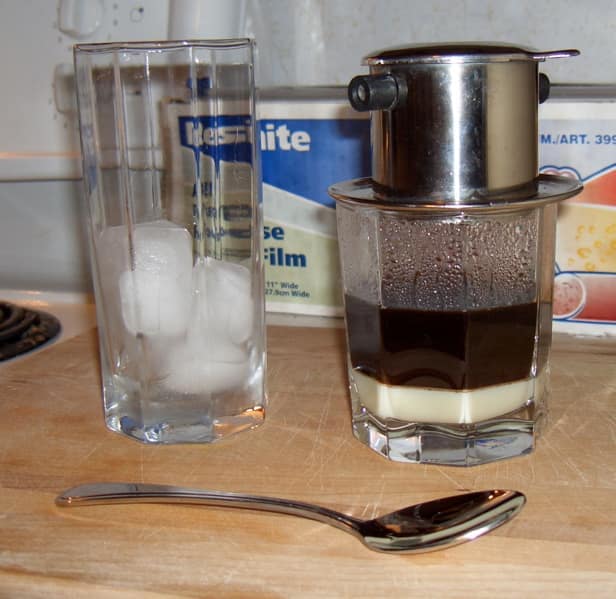
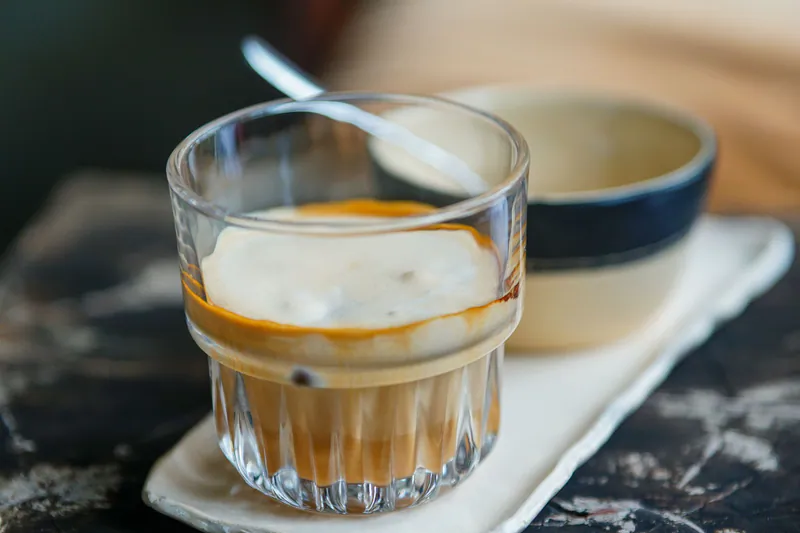
- Cà phê sữa đá (Vietnamese iced coffee)
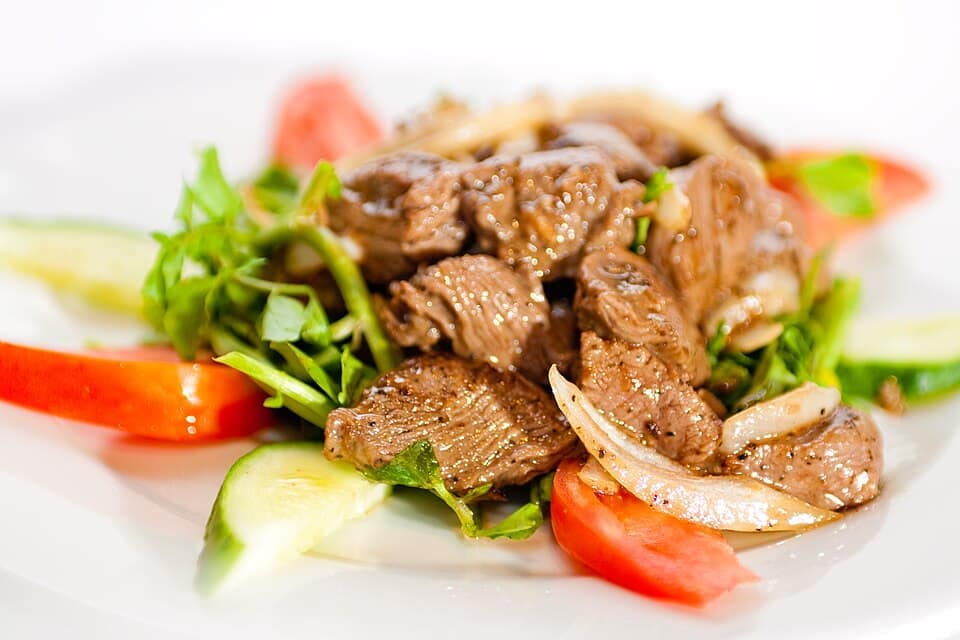
- Bò lúc lắc (shaking beef)
Not on the site yet: Cao lau (Hoi An), Mi Quang, Bun rieu, Cha ca La Vong (Hanoi)
 Vietnamese · 1 h 40 min · 656 kcal