
Döner kebab (home oven method)
Non-vegetarian
Döner kebap · döner kebap
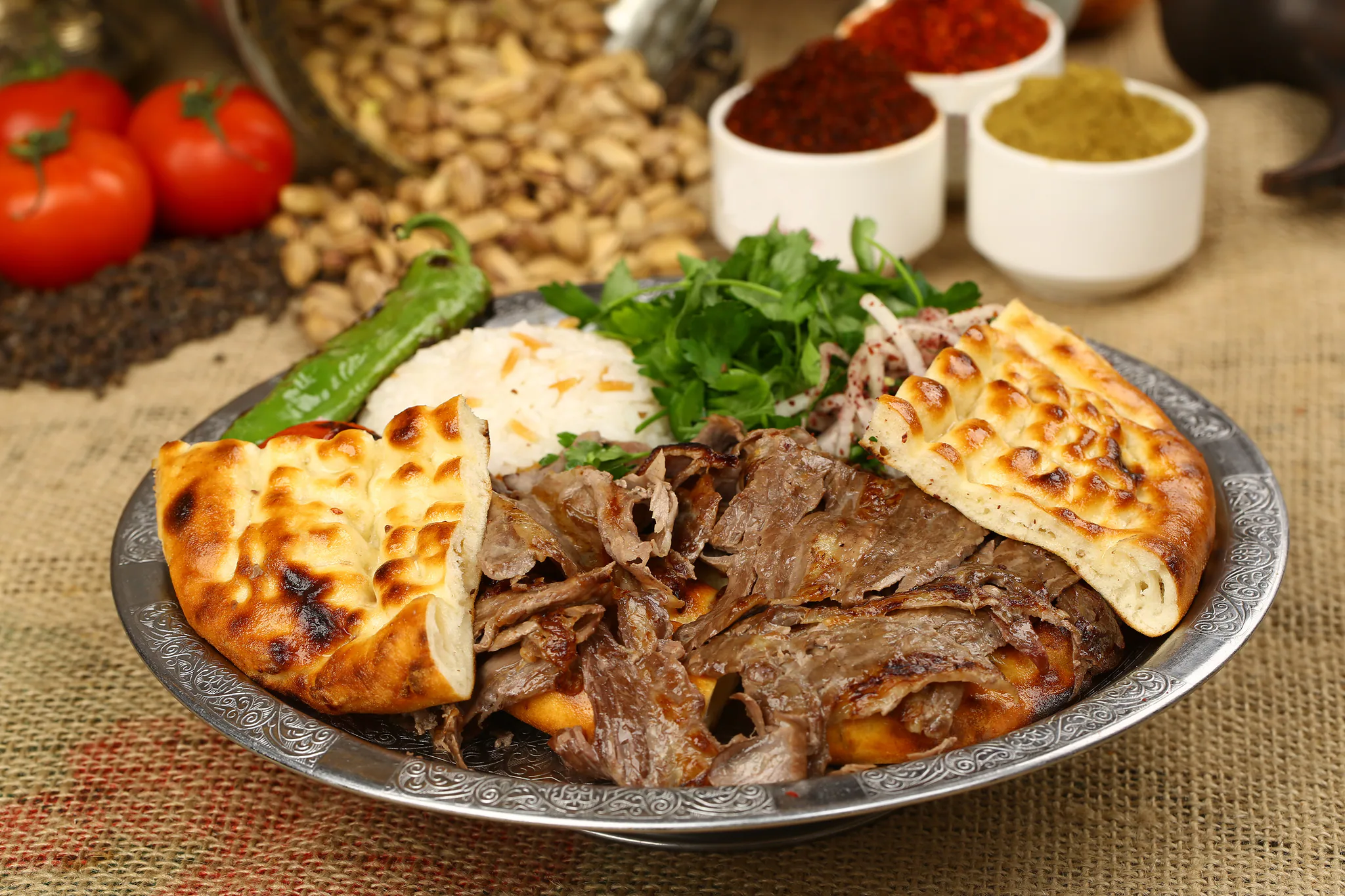
Thin slices of lamb marinated in yoghurt, milk, onion juice and spices, stacked tightly, roasted and then shaved off in crisp-edged ribbons. This home version replaces the vertical rotisserie with a pressed loaf that is sliced thinly and seared, served in bread with salad and yoghurt sauce.
Döner kebab (home oven method) is a Turkish street food from Türkiye, ready in about 2 hours 25 minutes and made with leg of lamb and lamb shoulder. It serves 4 and is rated intermediate to cook.
- Prep
- 40 min
- Cook
- 1 h 30 min
- Rest
- 15 min
- Total
- 2 h 25 min
- Serves
- 4
- Level
- Intermediate
- Calories
- 931
Plus at least 8 hours (ideally overnight) marinating.
Main ingredients
Ingredients
For the meat
For the marinade
For searing
To serve
For the yoghurt sauce
Method
Marinade
1 h 50 minStep 1
Whisk the onion (opens in a new tab) juice, 150 g yoghurt (opens in a new tab), milk (opens in a new tab), olive oil (opens in a new tab), paprika (opens in a new tab), oregano (opens in a new tab), thyme (opens in a new tab), pepper (opens in a new tab), cumin and 2 tsp salt in a large bowl. Add the lamb slices and massage the marinade into every piece. Cover and refrigerate for at least 8 hours or overnight.
Food safety: Wash hands, boards and knives after handling raw meat, and keep it apart from salad and other ready-to-eat food.
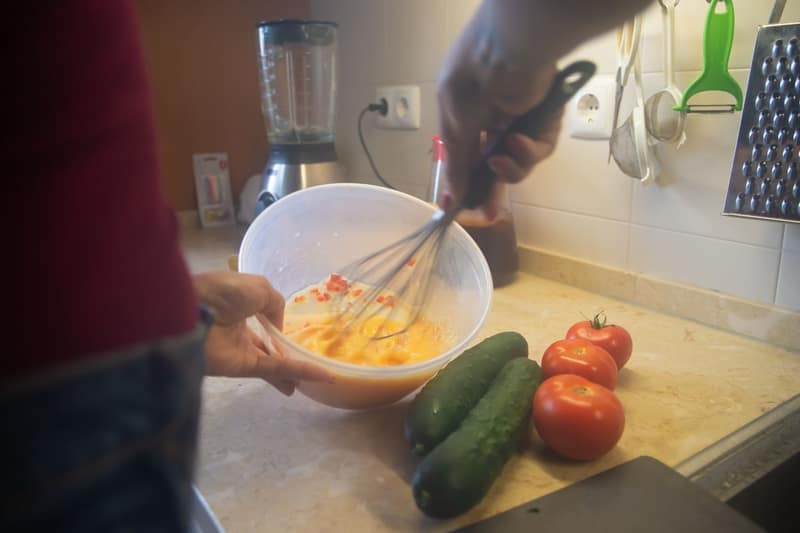
How it looks · Photo: Kampus Production on Pexels Step 2
Heat the oven (opens in a new tab) to 180 °C. Line a loaf tin (opens in a new tab) with baking paper. Layer the slices flat in the tin, alternating leg and shoulder, pressing each layer down firmly so the stack holds together as one block.
Press hard; tight layers are what let you shave thin, even ribbons later.
Step 3
Cover with foil and roast for 60 minutes, then uncover and roast for 25–30 minutes more until the top is browned and the centre reaches 75 °C. Pour off and keep the juices. Rest for 15 minutes, weighed down with a second tin.
- 90 min
- 180°C
- Oven (opens in a new tab)
Yoghurt sauce
10 minStep 4
Meanwhile, stir the 200 g yoghurt (opens in a new tab) with the garlic (opens in a new tab) and ¼ tsp salt. Toss the red onion (opens in a new tab) with the sumac (opens in a new tab) and parsley (opens in a new tab).
- 5 min
Step 5
Turn the block out and stand it on one end. Shave it from top to bottom into the thinnest slices you can with a long, sharp knife.
Searing
8 minStep 6
Heat a heavy pan until very hot, melt a little butter (opens in a new tab) and sear the slices in batches for 1–2 minutes, without stirring, until the edges crisp. Splash in a spoon of the roasting juices at the end of each batch.
- 8 min
- high heat
- Cast-iron skillet (opens in a new tab)
Crowding the pan steams the meat; work in small batches.
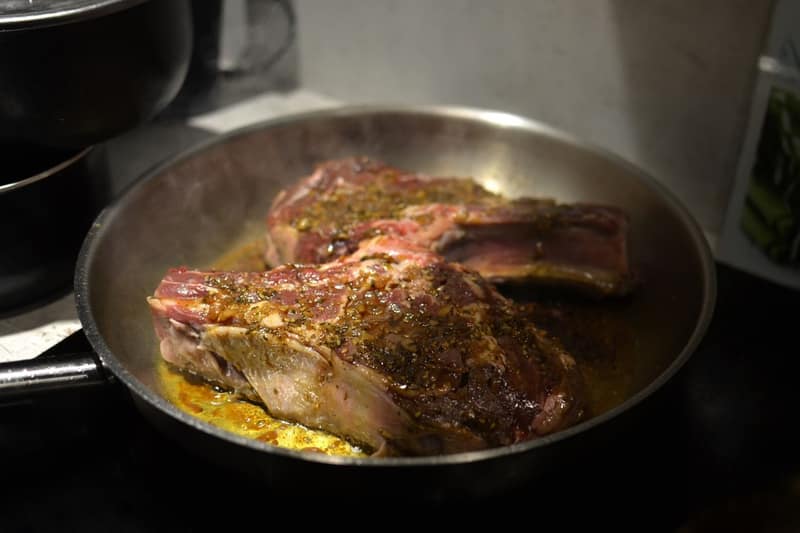
How it looks · Photo: Skylar Kang on Pexels
To serve
5 minStep 7
Warm the bread, fill with lettuce (opens in a new tab), tomato (opens in a new tab), the sumac (opens in a new tab) onions (opens in a new tab) and plenty of meat. Spoon over the yoghurt (opens in a new tab) sauce and finish with pul biber (opens in a new tab).
- 5 min
At a glance
1 · Marinade in a bowl
 Onion
 Yogurt
 Milk
 Olive oil
 Paprika
 Dried oregano
- Dried thyme
 Black pepper
 Ground cumin
 Salt
then stir
2 · Yoghurt sauce in a bowl
- Yogurt
 Garlic
- Salt
then heat
3 · Searing in a pan
 Butter
then warm
4 · To serve in a bowl
 Pita bread
 Tomato
 Red onion
 Sumac
 Parsley
 Lettuce
 Aleppo pepper
About this dish
- Origin
- Bursa (Ottoman Anatolia), Türkiye · Commonly attributedThe vertical spit is usually credited to cooks in 19th-century Bursa; lamb was the original meat, and Istanbul döner today is often lamb mixed with beef. Germany's Turkish community made the bread-pocket döner a world street food.Also popular in Germany, Austria, Netherlands, United KingdomMore food from Türkiye
Türkiye - Dish
- Lunch · Dinner · Street food · Sandwiches · Main courses
- Cooking method
- Marinated / cured, Roasted, Pan-fried
- Taste
- savoury, smoky, aromatic / warmly spiced, tangy
- Diet
- No nut ingredients · High-proteinWorked out from the ingredients. How labels work
All labels
Non-vegetarian · Egg-free · No nut ingredients · No added sugar · Alcohol-free · Pork-free · Beef-free · High-protein - Good for
- Street food · Make-ahead
- Cook more with
- Leg of lamb · Lamb shoulder · Onion · Yogurt · Milk · Paprika
- Techniques
- Roasting · Searing · Pan-frying · Marinating · Curing
Allergens
- Contains: Milkfrom yogurt, milk, butter
- Contains: Wheatfrom pita bread
- Contains: Glutenfrom pita bread
- May contain: Sesamefrom pita bread
Based on typical versions of these ingredients and not verified allergen-free. Brands differ and cross-contact happens, so always check labels. For severe allergies, follow your clinician’s advice.
Nutrition
931 kcal per serving
Estimated1 serving ≈ 586 g · recipe makes 4
Where the energy comes from
- Protein 24%
- Carbohydrate 21%
- Fat 55%
| Nutrient | Per serving | Per 100 g* |
|---|---|---|
| Energy | 931 kcal | 159 kcal |
| Protein | 55.9 g | 9.5 g |
| Carbohydrate | 48.9 g | 8.4 g |
| Net carbohydrate | 44.6 g | 7.6 g |
| Sugars | — | — |
| Added sugars | 0 g | 0 g |
| Fibre | 4.4 g | 0.7 g |
| Fat | 56.5 g | 9.6 g |
| Saturated fat | 23.6 g | 4 g |
| Trans fat | — | — |
| Cholesterol | 187 mg | 32 mg |
| Sodium | 1876 mg | 320 mg |
| Salt equivalent | 4.7 g | 0.8 g |
Vitamins & minerals per serving
- Potassium
- 1250 mg
- Calcium
- 258 mg
- Iron
- 7 mg
- Magnesium
- 106 mg
- Vitamin A (RAE)
- 274 µg
- Vitamin C
- 18 mg
- Vitamin D
- —
- Vitamin B12
- 6.2 µg
- Folate (DFE)
- —
How these numbers were made
- Calculated from USDA FoodData Central (SR Legacy) per-100 g values and the listed quantities.
- *Per 100 g of combined raw ingredients; the cooked dish may weigh more or less.
- Optional ingredients are not included: ground cumin, aleppo pepper.
- Sumac: Paprika (FDC 171329) as a stand-in dried ground red spice; values are approximate.
- “—” means the value isn’t known for enough of the ingredients; it is never zero by default.
- Values are estimates for guidance, not for medical dosing. U.S. Department of Agriculture, Agricultural Research Service. FoodData Central, 2019. fdc.nal.usda.gov.
Good to know
Tips
- Ask the butcher to slice the lamb thinly, as for stir-fry or carpaccio; it saves most of the prep.
- A mixture of lamb and beef (or all beef) works the same way, as is common in Istanbul today.
Common mistakes
- Cutting thick slices from the cooked block: it then tastes like roast lamb rather than döner.
- Skipping the final sear; the crisp edges are the point of döner.
Serve with
- As a plate (porsiyon) with buttered rice pilaf, grilled peppers and salad.
- With ayran to drink.
Food safety
- Wash hands, boards and knives after handling raw meat, and keep it apart from salad and other ready-to-eat food.
Storage
- The roasted block keeps 3 days refrigerated; slice and sear only what you need. It also freezes well for 2 months.
Reheating
- Slice from cold and sear in a very hot pan until crisp and steaming hot.
Variations
- İskender kebap: Döner over cubes of pide with tomato sauce, browned butter and yoghurt, from Bursa.
- Tavuk döner: Chicken thighs in the same kind of marinade, a cheaper and very popular version.
- Berlin-style döner (Germany): Stuffed into a thick, toasted bread pocket with cabbage salad, garlic and herb sauces.
Original editorial recipe · FriendsPantry editorial · source: TasteAtlas (dish facts) · Not yet independently reviewed · Added
Sauces, chutneys & dips for this dish
Recipe DNA
How this dish is built
Built from the recipe’s own sections. Each band’s width is its share of the dish by weight. Choose a component to see what it does.
What the dish is built around
For the meat
- Leg of lamb, boneless, trimmed of sinew and cut across the grain into 3–4 mm slices700 g
- Lamb shoulder, boneless, sliced 3–4 mm thick300 g
Reviews & corrections
Reviews come from signed-in cooks and appear after a moderator checks them. We never show made-up ratings.
You might also like
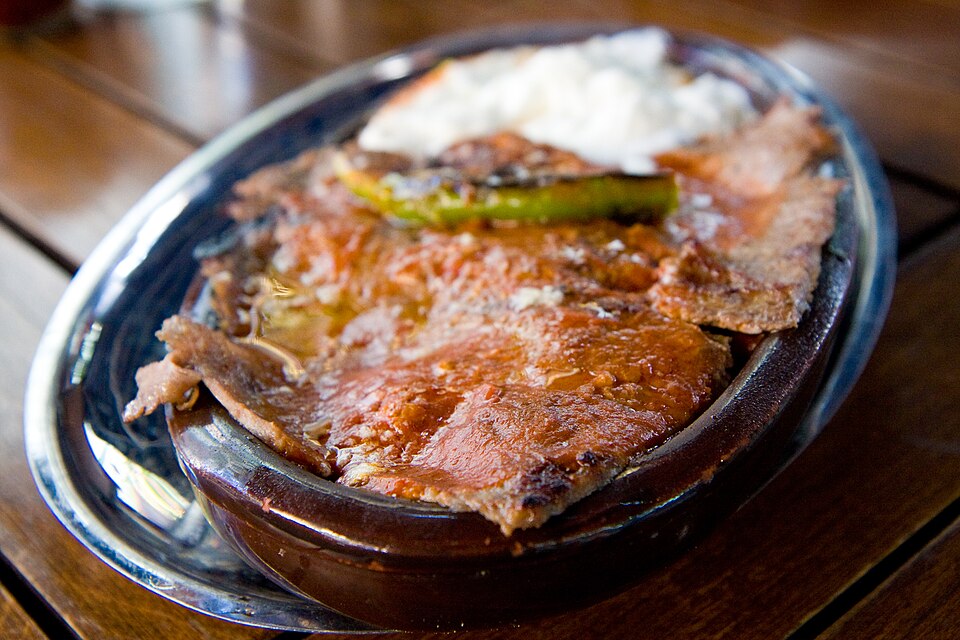
İskender kebap
 Turkish · 45 min · 764 kcal
Adana kebab
Turkish · 1 h 7 min · 438 kcal
Pork gyros pita
 Greek · 2 h 40 min · 627 kcal
Ayran
Turkish · 3 min · 92 kcal · Vegetarian