
Cookware & bakeware · Bakeware
Loaf tin
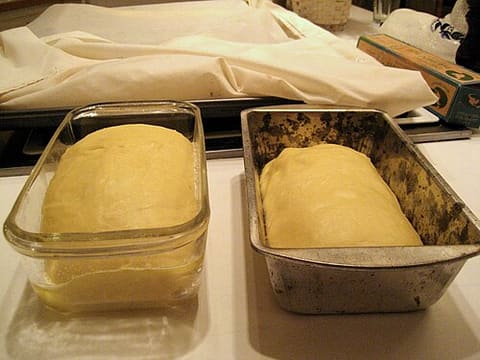
A deep, narrow rectangular tin for baking sandwich loaves, banana bread and pound cakes.
Useful to have · No power needed · 22 recipes
Photo: May be Предположительно Nleamy, via Wikimedia Commons (public-domain)
What it is
A rectangular metal tin with tall, often slightly flared sides, commonly sold by capacity such as 450 g (1 lb) or 900 g (2 lb). It gives bread and cakes the familiar sliceable loaf shape. It is a specific kind of cake tin; the catalogue's 'cake / loaf tin' is the broader term.
What it’s for: Shaping and supporting tall loaves of bread or cake so they rise upwards and slice neatly.
How to use it
- Grease the tin and line with a strip of baking paper overhanging the long sides.
- Fill with batter or shaped dough to about two-thirds full.
- Bake in a preheated oven until a skewer comes out clean or bread sounds hollow.
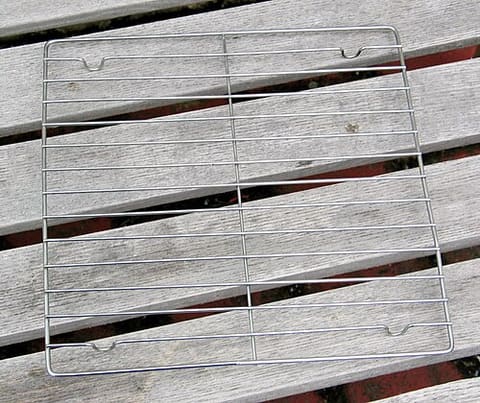
- Lift out using the paper and cool on a rack.
Good to know
- Tasks
- baking sandwich bread, baking banana bread and pound cake, making meatloaf, setting terrines and frozen desserts
- Cooking methods
- Oven-baked
- Materials
- aluminium, non-stick steel, glass, silicone
- Care and cleaning
- Wash and dry thoroughly. A paper liner keeps it clean and makes release easier.
- Limitations
- Deep batters take longer and can sink if underbaked; the size given in a recipe matters.
Safety
- Use oven gloves; edges heat fast.
If you don’t have one
- Cake tin — A square tin bakes the same batter flatter and faster.
- Baking tray / sheet — For free-form bread loaves.
Equipment guide
How it works: Narrow walls support the dough or batter so it rises upwards and holds a loaf shape. The tin conducts heat into the sides and base so the crust sets around the loaf while the centre bakes.
| Material | Good | Watch out |
|---|---|---|
| Aluminised or carbon steel | Rigid, good browning. | Can rust when the coating chips. |
| Aluminium (plain or hard-anodised) | Light, conducts heat about 15 times better than stainless steel and heats quickly; anodising hardens the surface and stops reaction with acids. | Plain aluminium reacts with acidic and alkaline foods and can discolour them; thin gauges warp; not magnetic, so it needs a steel base for induction. |
| Non-stick (PTFE or ceramic sol-gel coating on aluminium) | Eggs, fish and pancakes release with little fat; easy to clean; forgiving for beginners. | Coatings wear out (ceramic often faster than PTFE); PTFE should not be heated empty or above about 260 °C; poor at building fond; needs non-metal utensils. |
| Silicone | Flexible, so bakes pop out; non-stick; does not rust. | Poor heat conductor, so browning is weak; floppy when full and needs a tray underneath. |
| Borosilicate or tempered glass | Non-reactive, lets you see the browning on the sides and base; holds heat well once hot. | Slow to heat; can shatter with sudden temperature changes (e.g. cold liquid into a hot dish, or from fridge to hot oven). |
- Standard loaf tin (about 900 g / 2 lb)
- Around 23 × 13 cm; sandwich loaves and loaf cakes.
- Small loaf tin (about 450 g / 1 lb)
- Smaller cakes and loaves.
- Pullman tin
- Lidded, for square-sided sandwich bread.
Buying guidance
Starting out: A 900 g (2 lb) metal loaf tin.
- Capacity stated by loaf weight or dimensions
- Straight, rigid sides
- Rolled edges
- Lid if you want Pullman-style bread
No brands or prices — check current reviews before buying.
Techniques:Baking
Related tools
Recipes that use it
Agege bread
 Nigerian · 3 h 35 min · 210 kcal · Vegetarian
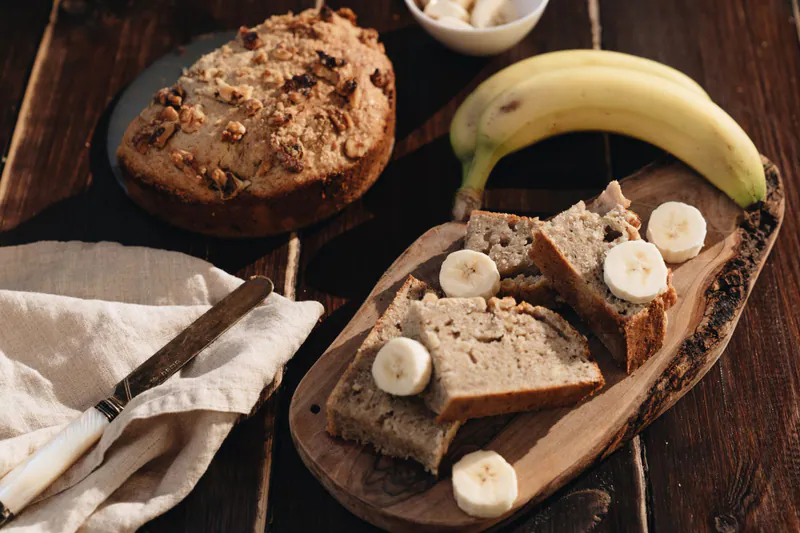
Banana bread
 American · 1 h 45 min · 278 kcal · Contains egg
Bara brith (Welsh tea loaf)
 British · 14 h 30 min · 218 kcal · Contains egg
Barmbrack
 Irish · 1 h 45 min · 230 kcal · Contains egg
Brioche Nanterre
 French · 17 h 45 min · 274 kcal · Contains egg
Castella (Nagasaki honey sponge)
 Japanese · 2 h 15 min · 150 kcal · Contains egg
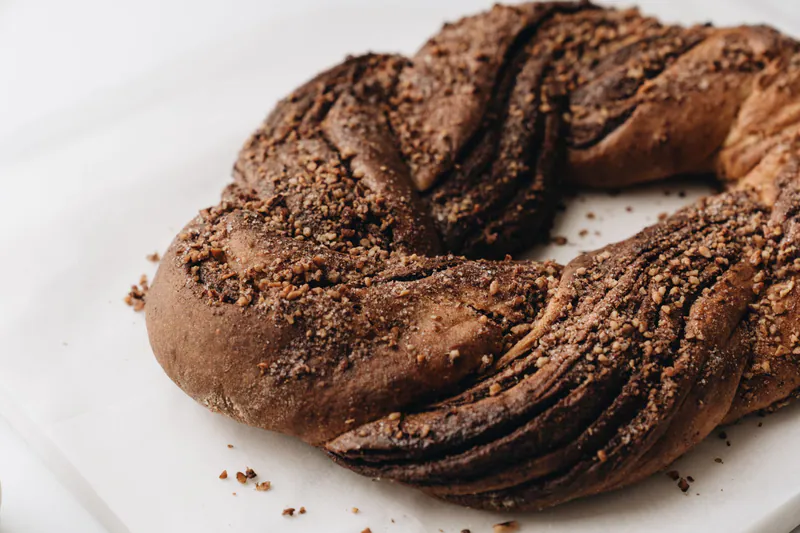
Chocolate babka
 Polish · 15 h 25 min · 349 kcal · Contains egg
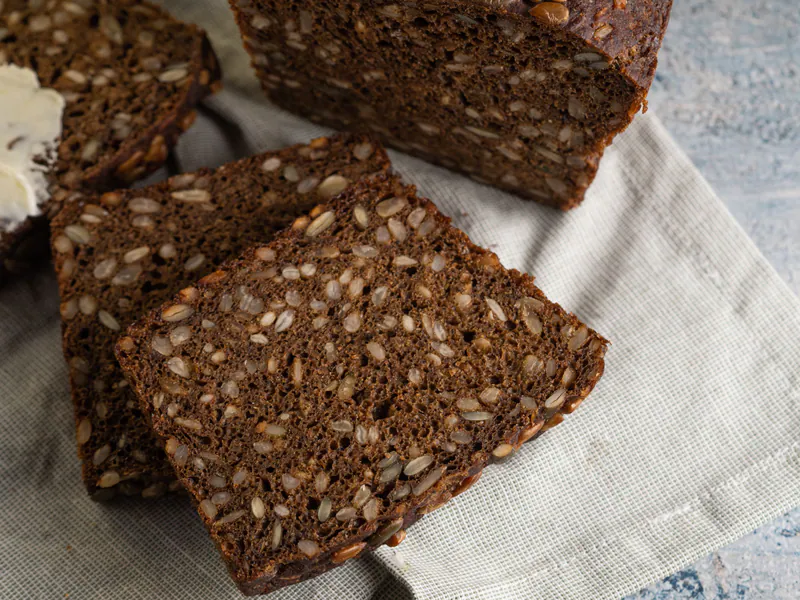
Danish rye bread (rugbrød)
 Danish · 42 h 40 min · 123 kcal · Vegetarian
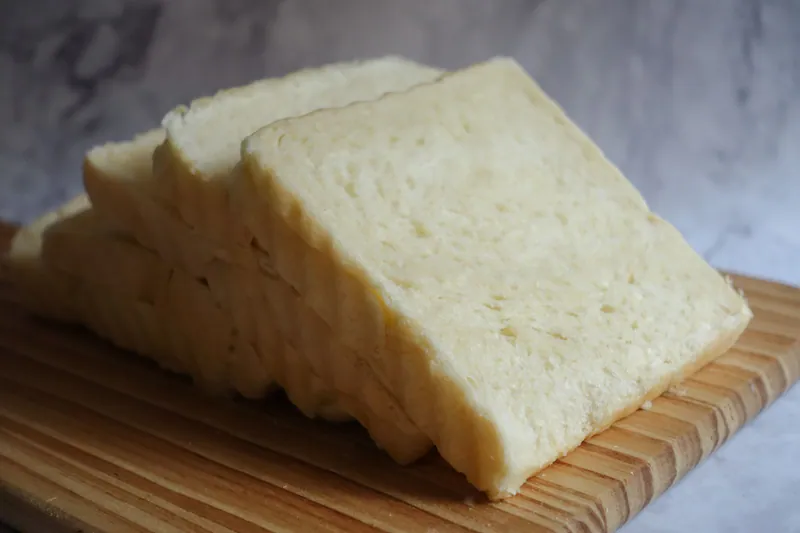
Easy White Sandwich Loaf
International · 2 h 52 min · 172 kcal · Vegetarian
Gluten-free psyllium sandwich loaf
International · 4 h 10 min · 132 kcal · Vegan
Higher-protein Greek yoghurt bread
International · 3 h 45 min · 140 kcal · Vegetarian
Irish wheaten bread
Irish · 2 h · 175 kcal · Vegetarian
10 more
- Japanese milk bread (tangzhong shokupan) · Japanese
- Kerala plum cake (alcohol-free) · Indian
- Lemon drizzle cake · British
- Pound cake · British
- Seeded buckwheat gluten-free loaf · International
- Seeded multigrain loaf · British
- Vegan soft sandwich loaf · International
- Westphalian pumpernickel · German
- Wholegrain sourdough tin loaf · International
- Wholemeal tin loaf · British