
 Singaporean · Malaysian · Noodles
Beef kway teow (Singapore beef hor fun in gravy)
Non-vegetarian
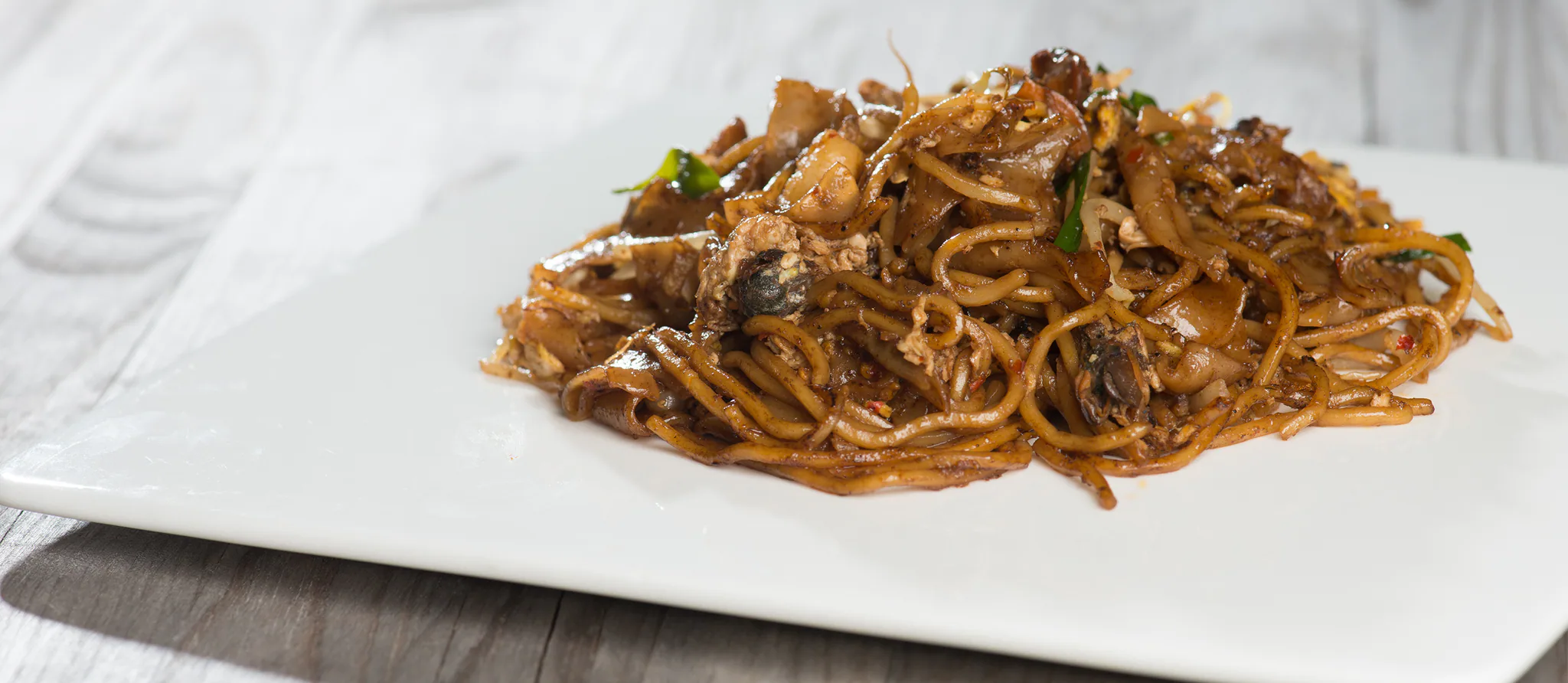
Broad, silky rice noodles seared in a smoking wok with dark soy, then smothered in tender slices of beef and a glossy gravy of garlic, ginger, oyster sauce and stock, with bean sprouts and chives. A Singapore and Malaysian hawker favourite; Indonesia's kwetiau sapi is a close cousin.
Beef kway teow (Singapore beef hor fun in gravy) is a Singaporean noodle dish, ready in about 55 minutes and made with beef flank steak, fresh wide rice noodles (ho fun) and oyster sauce. It serves 3 and is rated intermediate to cook.
- Prep
- 20 min
- Cook
- 15 min
- Rest
- 20 min
- Total
- 55 min
- Serves
- 3
- Level
- Intermediate
- Calories
- 658
Main ingredients
Ingredients
For the beef
For the noodles
For the gravy
To serve
Method
Beef
3 minStep 1
Mix the beef with the soy sauce (opens in a new tab), oyster sauce (opens in a new tab), cornstarch (opens in a new tab), baking soda (opens in a new tab) and sesame oil (opens in a new tab) and leave for 20 minutes.
Noodles
5 minStep 2
Heat the wok (opens in a new tab) until smoking, add 1½ tbsp oil and the noodles. Spread them out and leave for 30 seconds to char lightly, then toss with the soy sauce (opens in a new tab) and bean sprouts (opens in a new tab) for 1–2 minutes until evenly coloured. Divide between plates.
- 3 min
- high heat
- Wok (opens in a new tab)
- Spatula (opens in a new tab)
Toss gently and not too often; fresh rice noodles break when over-handled.
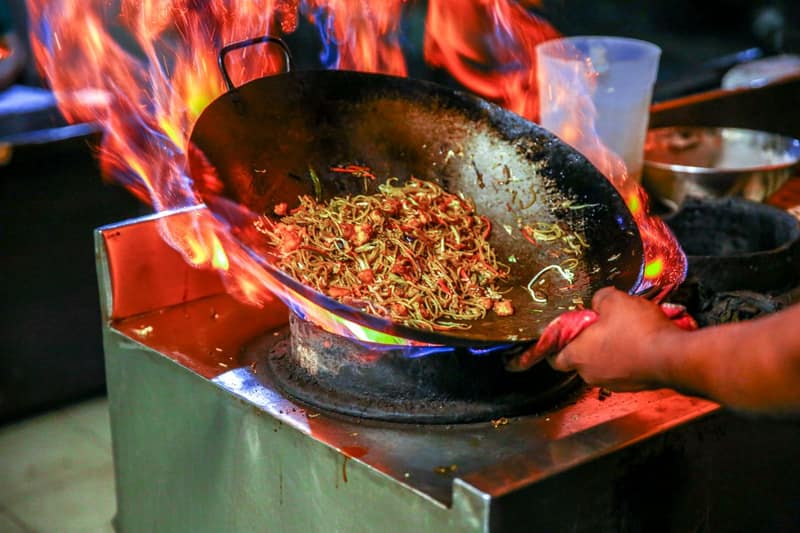
How it looks · Photo: Aesthos AR. Photography on Pexels Step 3
Wipe the wok (opens in a new tab), heat the remaining oil until very hot and sear the beef in one layer for 1 minute, turning once, until just browned. Lift out.
- 2 min
- high heat
Gravy
5 minStep 4
Fry the garlic (opens in a new tab) and ginger for 20 seconds, add the gai lan (opens in a new tab) and toss for 1 minute. Pour in the stock, oyster sauce (opens in a new tab), soy sauce (opens in a new tab), sugar (opens in a new tab) and white pepper (opens in a new tab) and bring to the boil.
- 3 min
- high heat
Step 5
Stir in the cornstarch (opens in a new tab) slurry and cook until thick and glossy. Turn off the heat, swirl in the beaten egg (opens in a new tab) in ribbons, then return the beef with the chives (opens in a new tab) and sesame oil (opens in a new tab) and stir once.
- 2 min
- medium heat
To serve
1 minStep 6
Ladle the beef and gravy over the noodles and serve at once with sliced chilli in soy sauce (opens in a new tab).
- 1 min
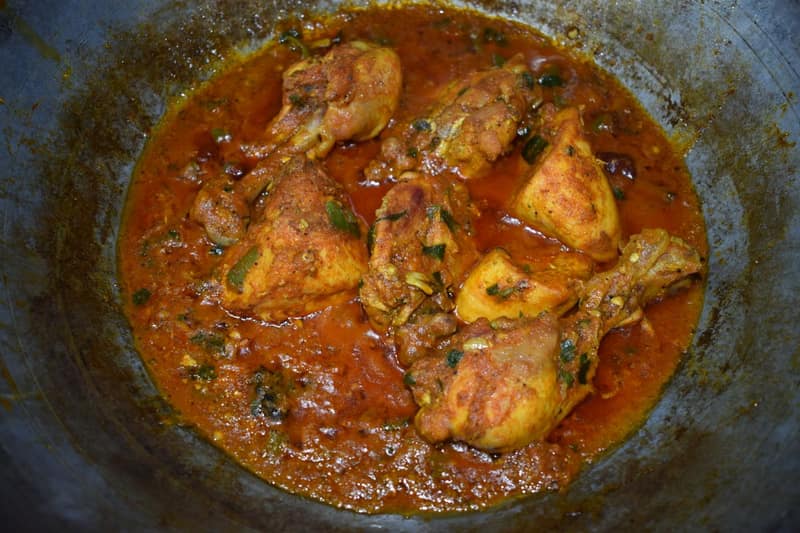
How it looks · Photo: Bachir Mamud on Pexels
At a glance
1 · Beef in a pan
 Beef flank steak
 Soy sauce
 Oyster sauce
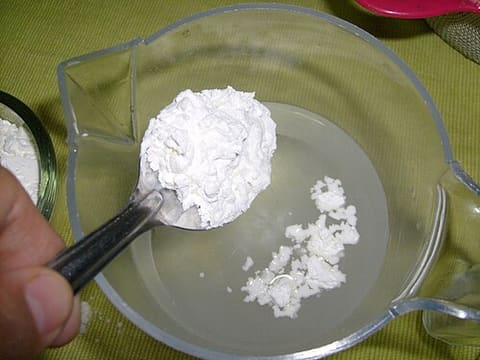 Cornstarch
 Baking soda
 Toasted sesame oil
then heat
2 · Noodles in a pot
 Fresh wide rice noodles (ho fun)
 Neutral vegetable oil
- Soy sauce
 Bean sprouts
then fry
3 · Gravy in a pan
 Garlic
 Fresh ginger
 Chinese broccoli (gai lan)
 Chicken stock
- Oyster sauce
- Soy sauce
 Sugar
 White pepper
- Cornstarch
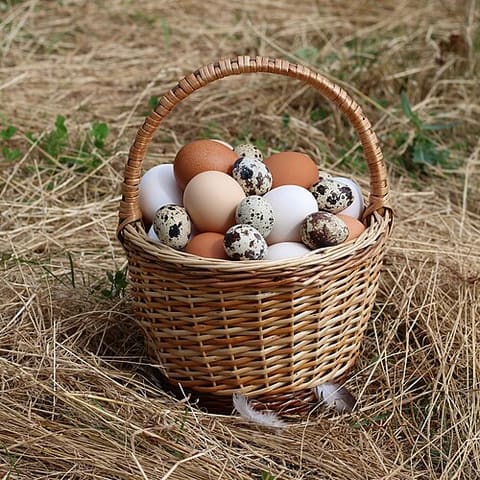 Egg
 Chives
- Toasted sesame oil
then ladle
4 · To serve in a pot
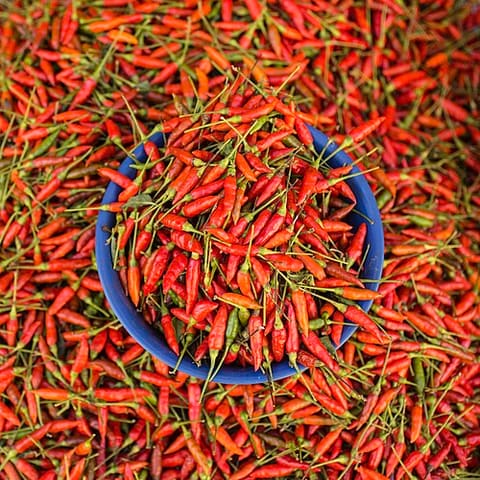 Fresh red chilli
About this dish
- Origin
- Singapore and Malaysia, Singapore · Commonly attributedA Cantonese-rooted zi char dish; Indonesian kwetiau sapi often adds beef meatballs, cabbage and more black pepper.Also popular in Malaysia, IndonesiaMore food from Singapore
- Dish
- Lunch · Dinner · Noodles · Main courses · Street food
- Cooking method
- Stir-fried, Marinated / cured
- Taste
- savoury, umami, smoky, mild
- Diet
- Dairy-free · No nut ingredients · High-proteinWithout the optional extras: Egg-freeWorked out from the ingredients. How labels work
All labels
Non-vegetarian · Dairy-free · No nut ingredients · Alcohol-free · Pork-free · High-protein - Good for
- Everyday · Street food
- Cook more with
- Beef flank steak · Fresh wide rice noodles (ho fun) · Oyster sauce · Soy sauce · Cornstarch · Baking soda
- Techniques
- Searing · Stir-frying · Boiling · Marinating · Curing
Allergens
- Contains, can be adapted: Eggsfrom egg
- May contain: Crustaceansfrom oyster sauce
- Contains: Molluscsfrom oyster sauce
- Contains: Wheatfrom soy sauce, oyster sauce
- Contains: Glutenfrom soy sauce, oyster sauce
- Contains: Soyfrom soy sauce, oyster sauce
- Contains: Sesamefrom toasted sesame oil
- May contain: Celeryfrom chicken stock
Based on typical versions of these ingredients and not verified allergen-free. Brands differ and cross-contact happens, so always check labels. For severe allergies, follow your clinician’s advice.
Nutrition
658 kcal per serving
Estimated1 serving ≈ 573 g · recipe makes 3
Where the energy comes from
- Protein 20%
- Carbohydrate 42%
- Fat 38%
| Nutrient | Per serving | Per 100 g* |
|---|---|---|
| Energy | 658 kcal | 115 kcal |
| Protein | 32.5 g | 5.7 g |
| Carbohydrate | 69.4 g | 12.1 g |
| Net carbohydrate | 65.6 g | 11.4 g |
| Sugars | 6.3 g | 1.1 g |
| Added sugars | — | — |
| Fibre | 3.8 g | 0.7 g |
| Fat | 27.4 g | 4.8 g |
| Saturated fat | 5.4 g | 0.9 g |
| Trans fat | — | — |
| Cholesterol | 72 mg | 13 mg |
| Sodium | 1970 mg | 344 mg |
| Salt equivalent | 4.9 g | 0.9 g |
Vitamins & minerals per serving
- Potassium
- 743 mg
- Calcium
- 82 mg
- Iron
- 3.3 mg
- Magnesium
- 70 mg
- Vitamin A (RAE)
- 33 µg
- Vitamin C
- 22 mg
- Vitamin D
- 0.1 µg
- Vitamin B12
- 1.3 µg
- Folate (DFE)
- 72 µg
How these numbers were made
- Calculated from USDA FoodData Central (SR Legacy) per-100 g values and the listed quantities.
- *Per 100 g of combined raw ingredients; the cooked dish may weigh more or less.
- Optional ingredients are not included: chinese broccoli (gai lan), egg.
- Fresh wide rice noodles (ho fun): Cooked rice noodles (FDC 168914) used as a stand-in for fresh flat rice noodles; fresh ho fun usually contain a little more oil.
- “—” means the value isn’t known for enough of the ingredients; it is never zero by default.
- Values are estimates for guidance, not for medical dosing. U.S. Department of Agriculture, Agricultural Research Service. FoodData Central, 2019. fdc.nal.usda.gov.
Good to know
Tips
- If the noodles come refrigerated and stiff, microwave them for 30 seconds or pour hot water over them, then drain well before frying.
Common mistakes
- Overcrowding the wok, which steams the noodles instead of giving them wok hei.
Serve with
- Serve with pickled green chillies or sambal on the side.
Storage
- Best eaten freshly cooked; leftovers keep 1 day in the fridge.
Reheating
- Reheat in a hot wok with a splash of stock.
Variations
- Dry beef kway teow: The noodles and beef are fried together without gravy, seasoned with dark soy and chilli.
- Beef kway teow soup: The noodles are served in a clear beef broth with slices of beef and beef balls, similar to Thai beef noodle soup.
- Kwetiau sapi (Indonesia): The Indonesian version with beef meatballs, cabbage, garlic and plenty of black pepper.
Original editorial recipe · FriendsPantry editorial · source: TasteAtlas (dish facts) · Not yet independently reviewed · Added
Recipe DNA
How this dish is built
Built from the recipe’s own sections. Each band’s width is its share of the dish by weight. Choose a component to see what it does.
What the dish is built around
For the beef
- Beef flank steak, sliced thinly across the grain300 g
- Soy sauce1 tbsp · 17 g
- Oyster sauce1 tbsp · 18 g
- Cornstarch1 tsp · 2.7 g
- Baking soda0.25 tsp · 1.2 g
- Toasted sesame oil1 tsp · 4.5 g
Reviews & corrections
Reviews come from signed-in cooks and appear after a moderator checks them. We never show made-up ratings.
You might also like
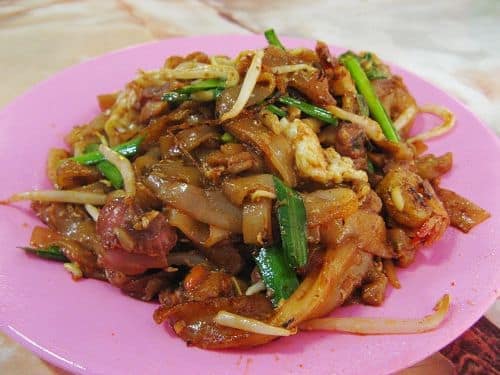
Char kway teow
 Malaysian · 35 min · 886 kcal
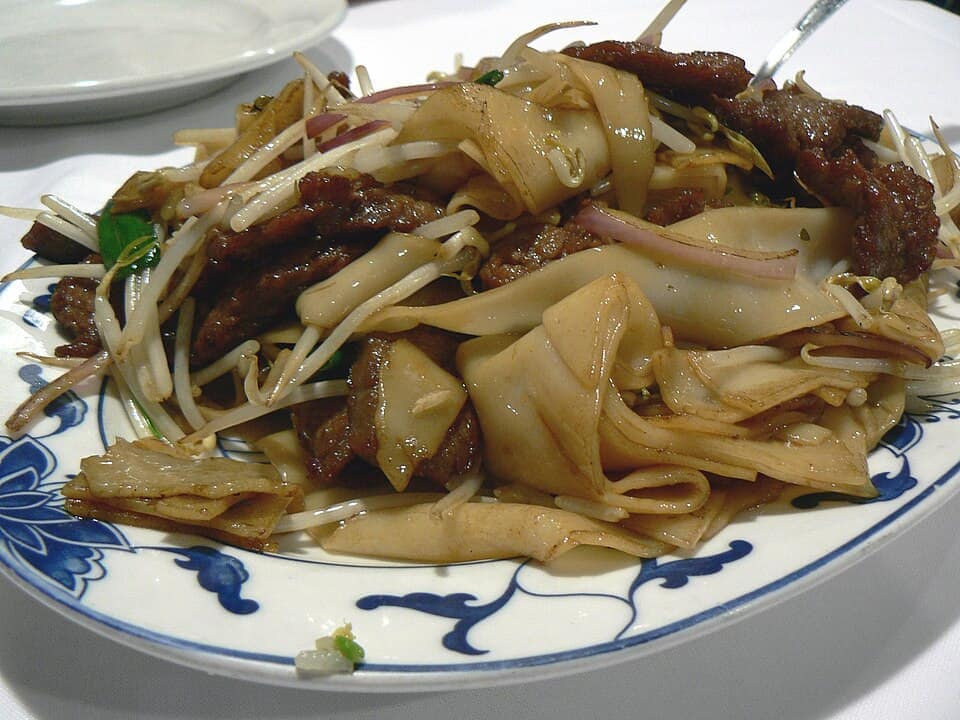
Beef chow fun
 Cantonese · 30 min · 772 kcal
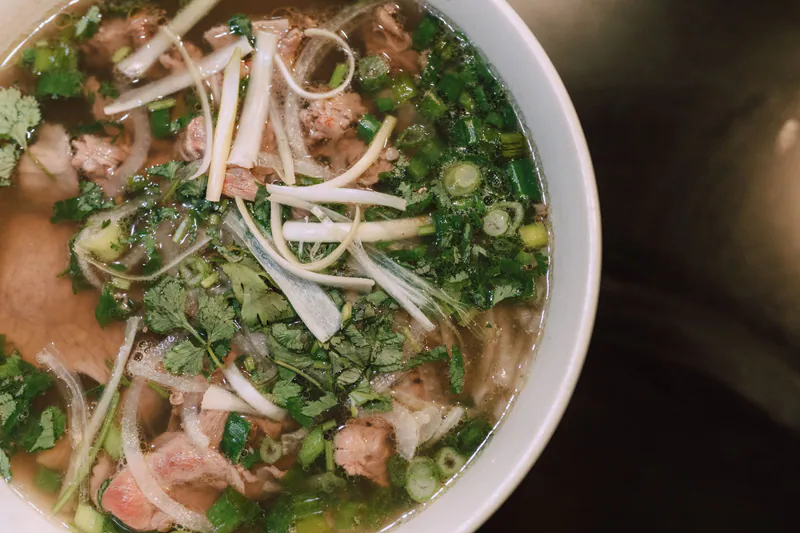
Phở bò (beef pho)
 Vietnamese · 1 h 15 min · 624 kcal
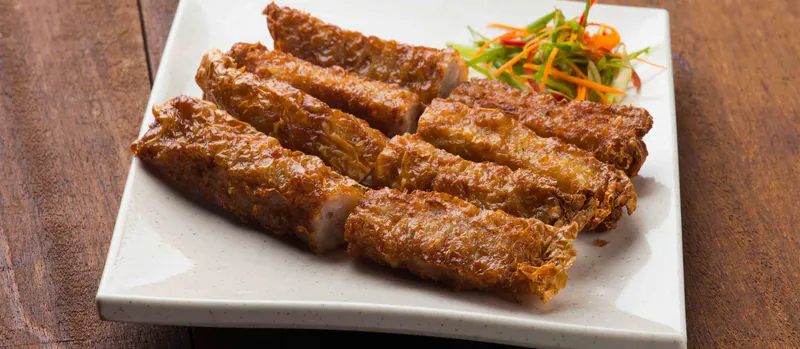
Ngoh hiang (five-spice pork and prawn rolls)
Singaporean · 1 h 20 min · 370 kcal