
 Singaporean · Malaysian · Chinese · Wraps & rolls
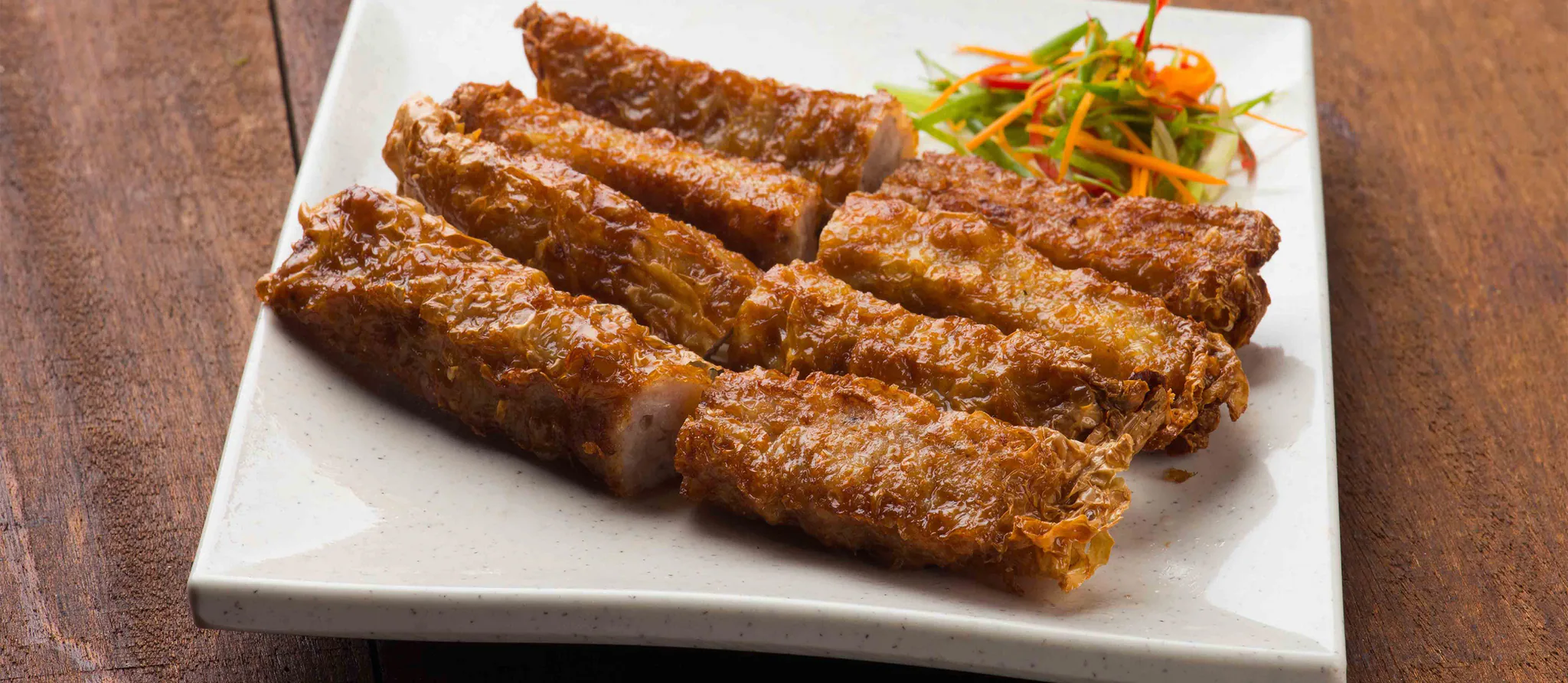
Ngoh hiang (five-spice pork and prawn rolls)
Non-vegetarian
五香 · ngó͘-hiong
Minced pork and prawns seasoned with five-spice powder, rolled in thin sheets of bean curd skin, steamed and then deep-fried until crisp and sliced. A Hokkien and Teochew favourite at Singapore and Malaysian hawker stalls, eaten with a sweet brown sauce and chilli.
Ngoh hiang (five-spice pork and prawn rolls) is a Singaporean wrap, ready in about 1 hour 20 minutes and made with ground pork, five-spice powder and dried bean curd skin (yuba sheets). It serves 6 and is rated intermediate to cook.
- Prep
- 35 min
- Cook
- 30 min
- Rest
- 15 min
- Total
- 1 h 20 min
- Serves
- 6
- Level
- Intermediate
- Calories
- 370
Main ingredients
Ingredients
For the filling
For wrapping
For frying
For the dipping sauces
Method
Filling
8 minStep 1
Mix all the filling ingredients – pork, prawns (opens in a new tab), jicama (opens in a new tab), onion (opens in a new tab), spring onion (opens in a new tab), garlic (opens in a new tab), five-spice, soy sauce (opens in a new tab), oyster sauce (opens in a new tab), sugar (opens in a new tab), sesame oil (opens in a new tab), white pepper (opens in a new tab), salt, egg (opens in a new tab) and cornflour (opens in a new tab) – and stir hard in one direction for 2 minutes until sticky.
Food safety: Wash hands, boards and knives after handling raw meat, and keep it apart from salad and other ready-to-eat food.
Wrapping
28 minStep 2
Wipe both sides of each bean curd sheet (opens in a new tab) with a damp cloth to soften it and remove excess salt. Mix the flour and water to a sealing paste.
- 4 min
Dried skin cracks easily; work with one sheet at a time and keep the rest covered.
Step 3
Spread a sixth of the filling in a log along the long edge of a sheet, leaving 2 cm at the ends. Fold in the sides and roll up firmly, sealing the edge with the paste. Repeat to make 6 rolls.
- 12 min
Step 4
Steam the rolls seam-side down over boiling water for 12 minutes until firm. Cool for 15 minutes; they can now be chilled or frozen.
- 12 min
- high heat
- Steamer (opens in a new tab)
Food safety: Cook minced meat until it reaches 71 °C in the centre with no pink juices, and refrigerate leftovers within 2 hours.
Frying
12 minStep 5
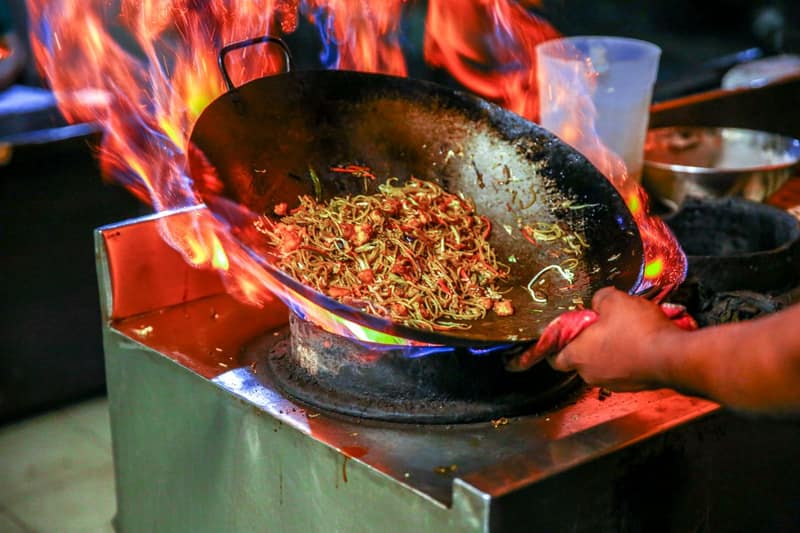
Heat the oil in a wok (opens in a new tab) to 170 °C. Fry the rolls 2–3 at a time, turning, until deep golden and crisp, 4–5 minutes. Drain well.
- 12 min
- 170°C
- Wok (opens in a new tab)
- Food thermometer (opens in a new tab)
- Slotted spoon (opens in a new tab)
Food safety: Never leave hot oil unattended; keep the pan's handle turned inwards and lower food in gently, away from you.
How it looks · Photo: Aesthos AR. Photography on Pexels
Dipping sauces
3 minStep 6
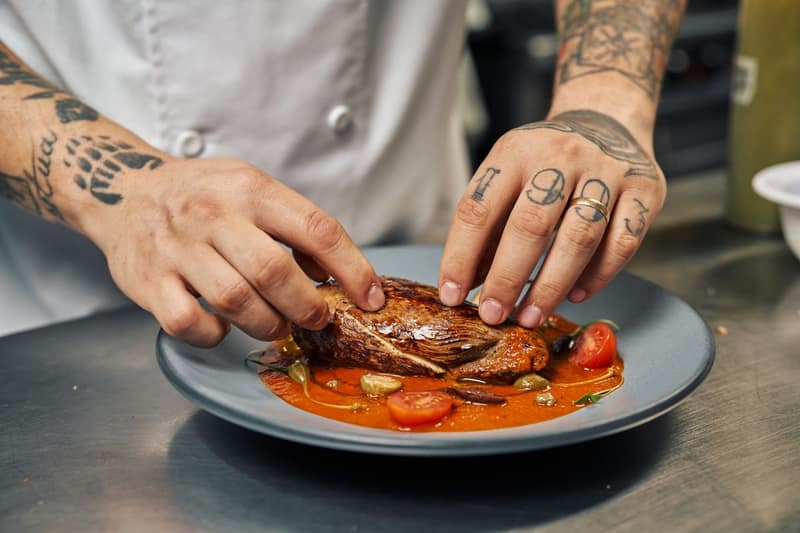
Slice each roll diagonally into 2 cm pieces and serve hot with the thinned hoisin (opens in a new tab) and the chilli sauce (opens in a new tab).
How it looks · Photo: Willians Huerta on Pexels
At a glance
1 · Filling in a bowl
 Ground pork
 Prawns / shrimp
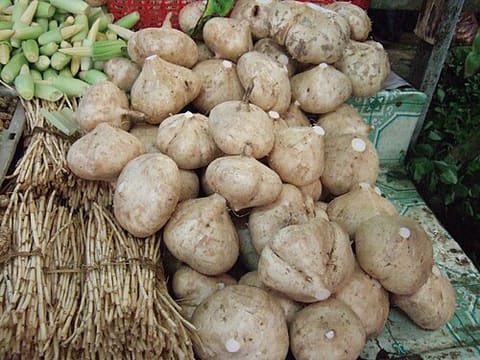 Jicama
 Onion
- Spring onion
 Garlic
 Five-spice powder
 Soy sauce
 Oyster sauce
 Sugar
 Toasted sesame oil
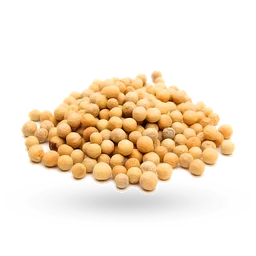 White pepper
 Salt
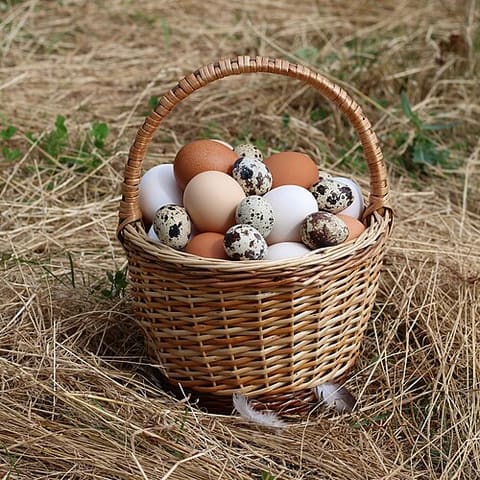 Egg
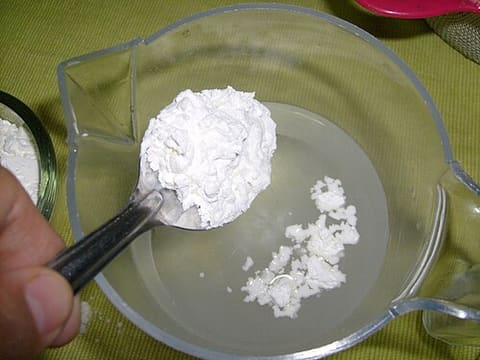 Cornstarch
then wipe
2 · Wrapping in a bowl
 Dried bean curd skin (yuba sheets)
 All-purpose flour
then heat
3 · Frying in a pan
 Neutral vegetable oil
then slice
4 · Dipping sauces in a bowl
 Hoisin sauce
 Chilli sauce (sriracha-style)
About this dish
- Origin
- Singapore, Penang and the Hokkien–Teochew diaspora, Singapore · Commonly attributedThe dish traces back to Fujian and the Chaoshan area of southern China; the name comes from the Hokkien word for five-spice powder. It is called lor bak in Penang, kikiam in the Philippines and ngohiong in Cebu, where it became a spring-roll-like snack.Also popular in Malaysia, Indonesia, Thailand, PhilippinesMore food from Singapore
- Dish
- Lunch · Dinner · Snack · Wraps & rolls · Street food · Appetizers & starters
- Cooking method
- Steamed, Deep-fried
- Taste
- aromatic / warmly spiced, savoury, umami, sweet
- Diet
- Dairy-free · No nut ingredients · High-proteinWorked out from the ingredients. How labels work
All labels
Non-vegetarian · Dairy-free · No nut ingredients · Alcohol-free · Beef-free · High-protein · Calorie-conscious - Good for
- Street food · Make-ahead · Freezer-friendly · Festive & celebration
- Cook more with
- Ground pork · Five-spice powder · Prawns / shrimp · Jicama · Onion · Spring onion
- Techniques
- Deep-frying · Boiling · Steaming
Allergens
- Contains: Eggsfrom egg
- Contains: Crustaceansfrom prawns / shrimp, oyster sauce
- Contains: Molluscsfrom oyster sauce
- Contains: Wheatfrom soy sauce, oyster sauce, all-purpose flour, hoisin sauce
- Contains: Glutenfrom soy sauce, oyster sauce, all-purpose flour, hoisin sauce
- Contains: Soyfrom soy sauce, oyster sauce, dried bean curd skin (yuba sheets), hoisin sauce
- Contains: Sesamefrom toasted sesame oil, hoisin sauce
Based on typical versions of these ingredients and not verified allergen-free. Brands differ and cross-contact happens, so always check labels. For severe allergies, follow your clinician’s advice.
Nutrition
370 kcal per serving
Estimated1 serving ≈ 198 g · recipe makes 6
Where the energy comes from
- Protein 24%
- Carbohydrate 18%
- Fat 58%
| Nutrient | Per serving | Per 100 g* |
|---|---|---|
| Energy | 370 kcal | 187 kcal |
| Protein | 22.3 g | 11.2 g |
| Carbohydrate | 16.3 g | 8.2 g |
| Net carbohydrate | — | — |
| Sugars | — | — |
| Added sugars | — | — |
| Fibre | — | — |
| Fat | 24 g | 12.1 g |
| Saturated fat | — | — |
| Trans fat | — | — |
| Cholesterol | — | — |
| Sodium | 848 mg | 428 mg |
| Salt equivalent | 2.1 g | 1.1 g |
Vitamins & minerals per serving
- Potassium
- 450 mg
- Calcium
- 125 mg
- Iron
- 1.9 mg
- Magnesium
- 44 mg
- Vitamin A (RAE)
- —
- Vitamin C
- —
- Vitamin D
- —
- Vitamin B12
- —
- Folate (DFE)
- —
How these numbers were made
- Calculated from USDA FoodData Central (SR Legacy) per-100 g values and the listed quantities.
- *Per 100 g of combined raw ingredients; the cooked dish may weigh more or less.
- Not counted (tiny amounts or “to taste”): five-spice powder.
- Dried bean curd skin (yuba sheets): Firm tofu (FDC 172475) scaled ×2 (the maximum factor) as a stand-in; dried bean curd skin is the skin lifted from heated soy milk and dried, so it is roughly three times as concentrated in protein and fat as tofu and this still understates it.
- “—” means the value isn’t known for enough of the ingredients; it is never zero by default.
- Values are estimates for guidance, not for medical dosing. U.S. Department of Agriculture, Agricultural Research Service. FoodData Central, 2019. fdc.nal.usda.gov.
Good to know
Tips
- Steaming first sets the filling so the rolls do not split or stay raw inside when fried.
- Pricking the rolls a few times with a toothpick before frying stops the skin from bubbling and bursting.
Common mistakes
- Rolling too loosely, which lets oil seep in and makes the rolls greasy.
Serve with
- Serve as part of a ngoh hiang platter with fried prawn fritters, fish cakes, sausage, tofu and century egg, with cucumber slices.
Food safety
- Wash hands, boards and knives after handling raw meat, and keep it apart from salad and other ready-to-eat food.
- Cook minced meat until it reaches 71 °C in the centre with no pink juices, and refrigerate leftovers within 2 hours.
- Never leave hot oil unattended; keep the pan's handle turned inwards and lower food in gently, away from you.
Storage
- Steamed, unfried rolls keep 2 days refrigerated or 2 months frozen. Fried rolls are best eaten at once.
Reheating
- Fry from chilled (or thawed) until piping hot in the centre, or re-crisp fried slices in a 200 °C oven for 8 minutes.
Variations
- Penang lor bak (Malaysia): Served with a thick, starchy five-spice gravy (lor) and chilli sauce.
- Kikiam (Philippines): The Filipino version, often with fish paste or chicken, sold sliced on skewers with sweet-sour sauce.
- Ngohiong (Cebu) (Philippines): Wrapped in a spring-roll wrapper with a vegetable and pork filling and served with chilli sauce.
Original editorial recipe · FriendsPantry editorial · source: TasteAtlas (dish facts) · Not yet independently reviewed · Added
Sauces, chutneys & dips for this dish
Recipe DNA
How this dish is built
Built from the recipe’s own sections. Each band’s width is its share of the dish by weight. Choose a component to see what it does.
The body of the dish
For the dipping sauces
- Hoisin sauce4 tbsp · 71 g
- Chilli sauce (sriracha-style)4 tbsp · 65 g
Masalas in this recipe
Make the masala first, then come back to finish the dish.
Dry spice blend
Chinese five-spice powder
This recipe uses 1½ tsp (3.3 g for 6 servings (6 rolls)).
Reviews & corrections
Reviews come from signed-in cooks and appear after a moderator checks them. We never show made-up ratings.
You might also like
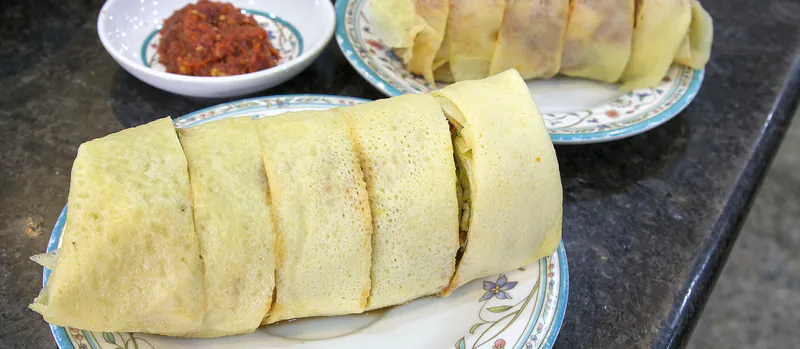
Popiah (Singapore fresh spring rolls)
Singaporean · 1 h 35 min · 403 kcal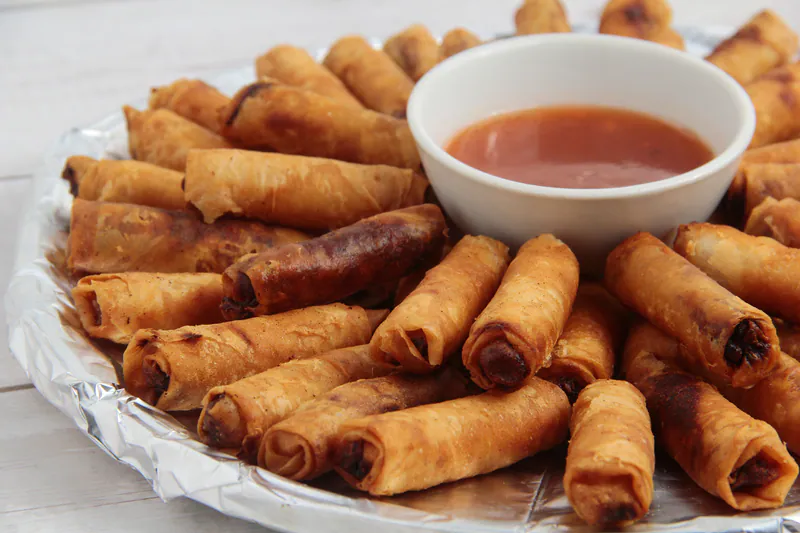
Lumpia shanghai
 Filipino · 1 h 10 min · 512 kcal
Char kway teow
 Malaysian · 35 min · 886 kcal
Gobi manchurian
 Indian · 45 min · 349 kcal · Vegan