Heat and cooking · beginner
Starch gelatinisation
Starch granules swell with water when heated, which is how rice softens, sauces thicken and batters set.
What happens
Starch sits in plants as tiny, tightly packed granules that don't dissolve in cold water. Heated in water, the granules absorb liquid and swell many times over, and some of their starch molecules (amylose) leak out. This is gelatinisation. The swollen granules and loose starch molecules make the liquid thick and the food soft. Each starch has its own range: wheat starts at roughly 52–60 °C and potato at about 58–65 °C, while corn and rice starch need more like 62–80 °C. Full thickening usually needs the liquid to get close to boiling. When cooked starch cools, its molecules slowly regroup into a more ordered structure (retrogradation), which makes bread stale, rice hard and sauces set firm.
Why it matters in the kitchen
It explains how to thicken a gravy without lumps, why rice needs the right amount of water, why custard pies sometimes turn runny and why bread stales faster in the fridge.
Temperatures and conditions
- Wheat starch starts to gelatinise 52–60 °C
- Potato and tapioca starch 58–70 °C
- Corn and rice starch 62–80 °C
- Sauces reach full thickness 90–100 °C · Cornflour slurries need a brief boil to lose their raw, cloudy taste.
- Fastest staling (retrogradation) 0–5 °C · Fridge temperatures speed staling of bread and rice.
In practice
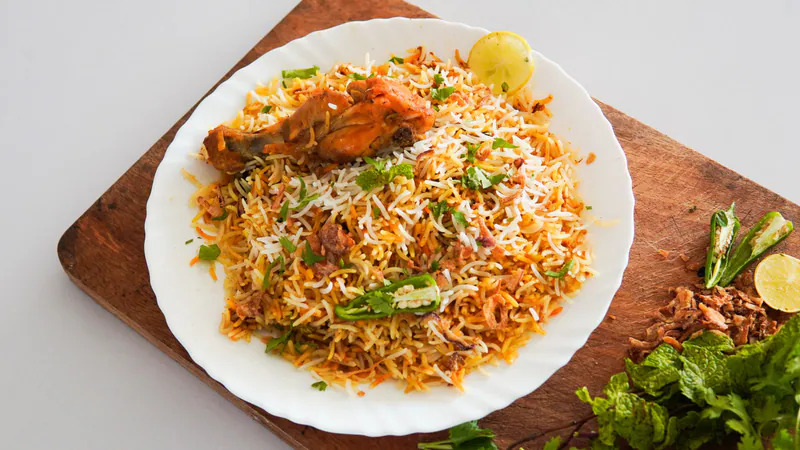
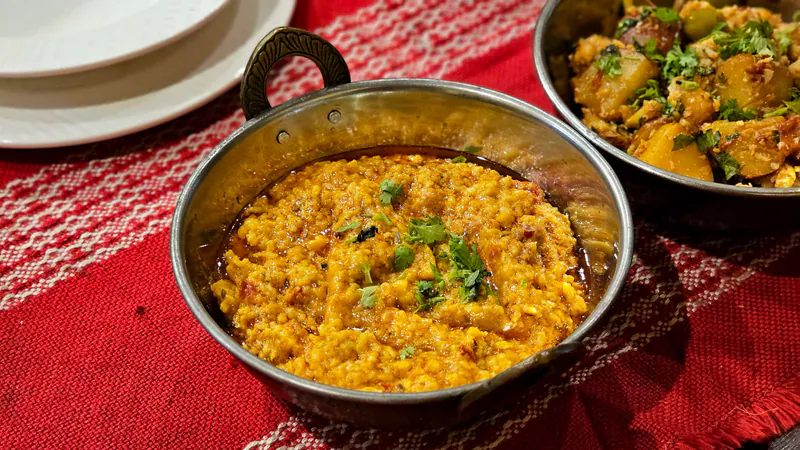
- Cooking rice and making khichdi or congee.
- Thickening a soup or Indo-Chinese gravy with a cornflour slurry.
- Besan kadhi thickening as it simmers.
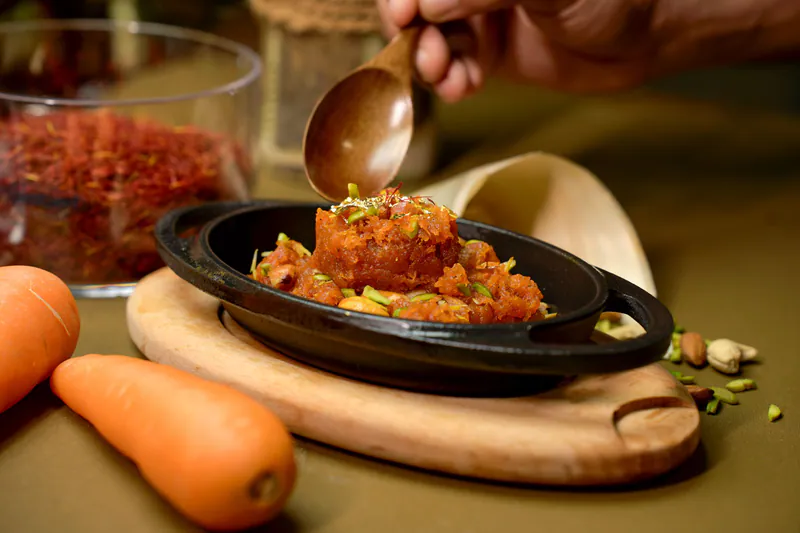
- Upma and halwa: semolina swelling in hot liquid.
- Bread and roti staling; leftover rice going hard in the fridge.
Myths and facts
Myth: Stale bread is bread that has dried out.
Fact: Staling is mostly starch retrogradation, which happens even in a sealed bag. Warming bread briefly reverses much of it, which is why stale bread softens in a hot oven or on a tawa.
Myth: Cornflour and plain flour are interchangeable thickeners, spoon for spoon.
Fact: Cornflour is almost pure starch and thickens roughly twice as much as plain flour, which also contains protein. Flour gives an opaque, matt sauce; cornflour gives a glossy, translucent one.
Myth: Rinsing rice washes away all its nutrients.
Fact: Rinsing removes loose surface starch (which makes grains sticky) and some water-soluble vitamins in enriched rice. Whether to rinse depends on the texture you want: rinse for separate basmati grains, don't for risotto.
Use it to cook better
- Mix cornflour or arrowroot with cold liquid before adding to a hot pan, so the granules separate before they swell and don't form lumps.
- Bring a starch-thickened sauce to a boil briefly, then stop: long hard boiling or vigorous stirring breaks swollen granules and thins it again.
- Acid (tomato, tamarind, lemon) weakens starch thickening; add it towards the end or allow more starch.
- Raw egg yolk contains an enzyme (amylase) that digests starch; for custard fillings thickened with starch, bring the mixture to a boil to inactivate it, or the filling may turn runny overnight.
- Store bread at room temperature or freeze it; don't refrigerate it.
- Cool cooked rice quickly and refrigerate within 1 hour (see food safety).
Try it at home
Three thickeners side by side
You need: 3 cups of water, 1 tbsp each of cornflour, plain flour and arrowroot (or potato starch), 3 small pans, A spoon
- Mix each starch with 3 tbsp cold water, then stir into a cup of cold water in its own pan.
- Heat each slowly, stirring, and note when it starts to thicken.
- Boil each for 1 minute, then let them cool to room temperature.
What you’ll see: Each thickens at a different point; flour is opaque, cornflour cloudy-glossy, arrowroot or potato starch clearer. As they cool, the cornflour one sets firmest.
Stir carefully; thick starch mixtures bubble and spit when they boil.
Going deeper
Starch is made of two molecules: amylose (long, mostly straight chains) and amylopectin (highly branched). High-amylose starches such as long-grain rice give firm, separate grains and set into firm gels; waxy, almost pure amylopectin starches such as glutinous rice give sticky, clear and freeze-stable results. Gelatinisation temperature also rises when sugar or fat competes for water, which is why cakes set later than plain batters. Retrogradation of cooled cooked starch forms some resistant starch that isn't digested in the small intestine.
Ingredients it affects most
Techniques that rely on it
Worth double-checking
- Gelatinisation ranges vary between varieties and studies by several degrees; treat each range as approximate.
 Indian · 55 min · 292 kcal ·