
 Jordanian · Levantine · Lebanese · Pastries
Warbat (Levantine cream-filled filo pastries)
Vegetarian
وربات · warbāt
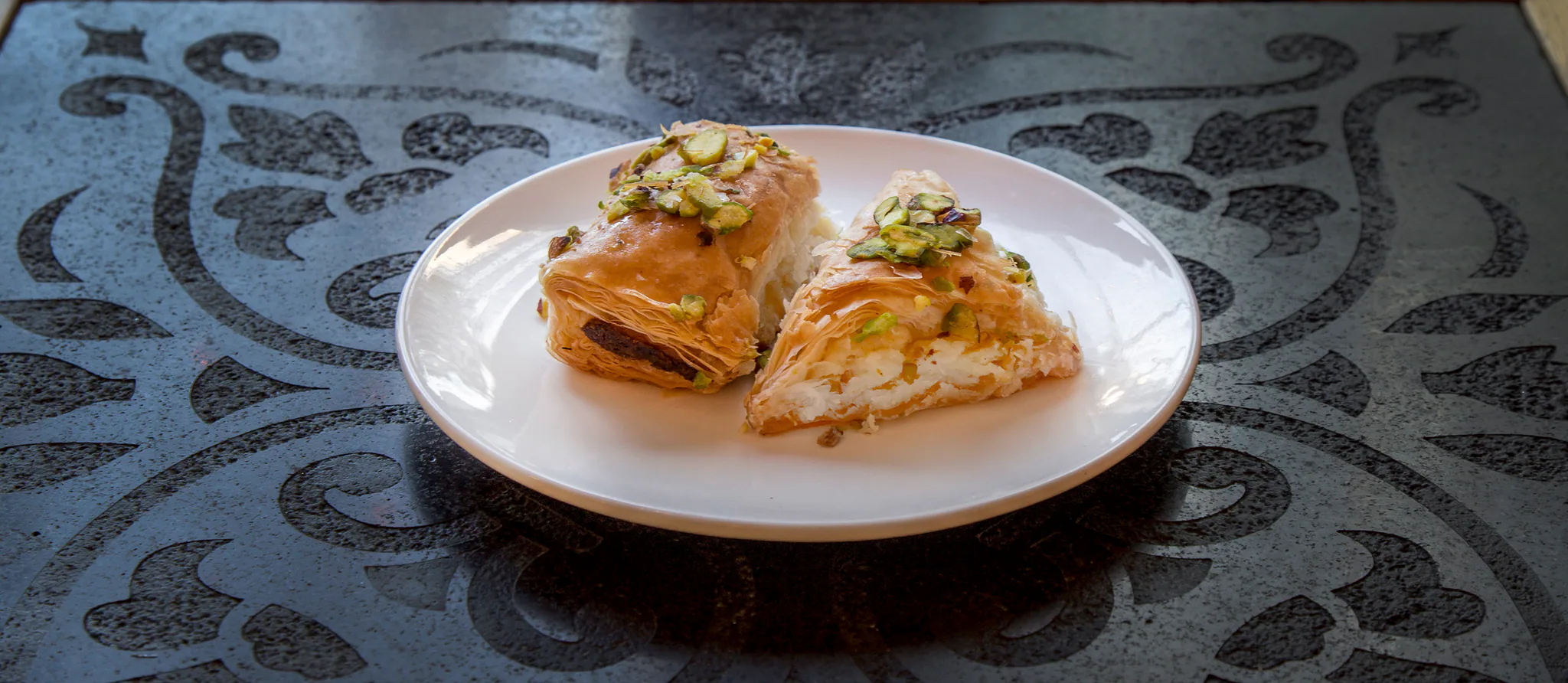
Crisp filo triangles brushed with ghee and filled with ashta, a thick milk cream scented with rose and orange blossom water, baked golden and soaked in cool syrup. Sprinkled with ground pistachios, they are a favourite Ramadan sweet in Jordan, Lebanon and Syria.
Warbat (Levantine cream-filled filo pastries) is a Jordanian pastry, ready in about 2 hours 20 minutes and made with milk, filo pastry and ghee. It serves 10 and is rated intermediate to cook.
- Prep
- 40 min
- Cook
- 40 min
- Rest
- 1 h
- Total
- 2 h 20 min
- Serves
- 10
- Level
- Intermediate
- Calories
- 550
Main ingredients
Ingredients
For the syrup
For the ashta cream
For the pastry
To finish
Method
Syrup
10 minStep 1
Make the syrup first: boil the sugar (opens in a new tab) and water for 8 minutes, add the lemon juice (opens in a new tab), then take off the heat and stir in the orange blossom and rose water (opens in a new tab). Leave to cool completely.
- 10 min
- medium heat
- Saucepan (opens in a new tab)
Ashta cream
10 minStep 2
For the ashta, whisk (opens in a new tab) the cold milk (opens in a new tab), cream, cornstarch (opens in a new tab), semolina (opens in a new tab) and sugar (opens in a new tab) in a saucepan (opens in a new tab) until smooth. Cook over medium heat, whisking constantly, until it boils and becomes a very thick cream, 8–10 minutes. Stir in the rose and orange blossom water (opens in a new tab), press cling film onto the surface and cool for at least 1 hour.
- 10 min
- medium heat
- Saucepan (opens in a new tab)
- Whisk (opens in a new tab)
The cream must be thick enough to hold its shape on a spoon, or it will leak while baking.
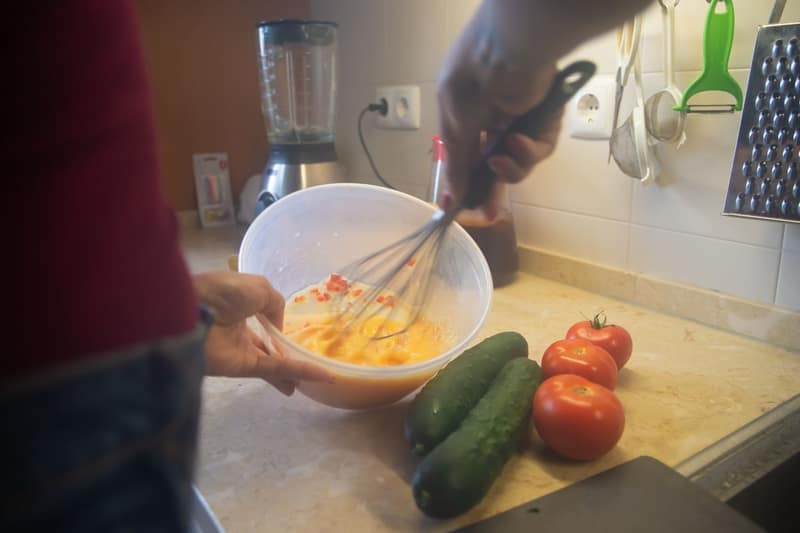
How it looks · Photo: Kampus Production on Pexels
Pastry
55 minStep 3
Heat the oven (opens in a new tab) to 180 °C. Lay one sheet of filo (opens in a new tab) on the work surface, brush with ghee (opens in a new tab), top with a second sheet and brush again. Cut lengthways into strips about 8 cm wide.
- 8 min
- 180°C
- Pastry brush (opens in a new tab)
Step 4
Put a heaped tablespoon of cold ashta at the end of each strip and fold the corner over to make a triangle, then keep folding along the strip like a flag. Place seam down on a baking tray and brush the tops with ghee (opens in a new tab). Repeat with the rest of the filo (opens in a new tab) and cream.
To finish
3 minStep 6
As soon as they come out of the oven (opens in a new tab), spoon the cool syrup over the hot pastries so it sizzles and soaks in. Sprinkle with ground pistachios (opens in a new tab) and serve warm or at room temperature.
- 3 min
How it looks · Photo: Klaus Nielsen on Pexels
At a glance
1 · Syrup in a pot
 Sugar
 Lemon juice
 Orange blossom water
 Rose water
then whisk
2 · Ashta cream in a bowl
 Milk
 Heavy cream
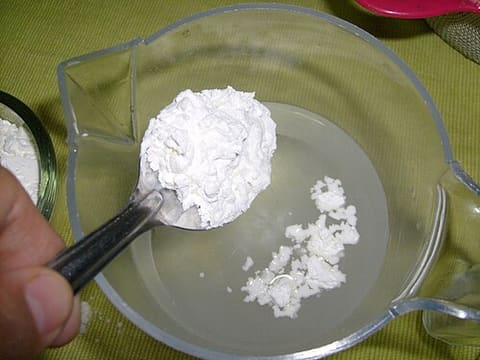 Cornstarch
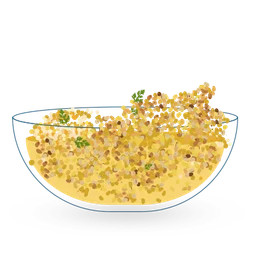 Semolina
- Sugar
- Rose water
- Orange blossom water
then heat
3 · Pastry in a bowl
- Filo pastry
 Ghee
then spoon
4 · To finish in a bowl
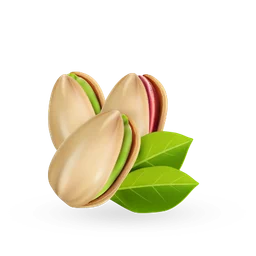 Pistachios
About this dish
- Origin
- Jordan · Commonly attributedMade across the Levant, especially in Jordan, Lebanon and Syria; it belongs to the Ottoman family of layered filo pastries. The square or triangular shape gives the alternative name shaabiyat.Also popular in Lebanon, Syria, PalestineMore food from Jordan
Jordan - Dish
- Dessert · Snack · Pastries · Desserts
- Cooking method
- Simmered, Oven-baked
- Taste
- sweet, creamy, aromatic / warmly spiced, buttery
- Diet
- Vegetarian (lacto-ovo)Worked out from the ingredients. How labels work
All labels
Vegetarian (lacto-ovo) · Eggetarian · Lacto-vegetarian · Pescatarian · Flexitarian-friendly · Egg-free · Alcohol-free · Pork-free · Beef-free · Low-sodium - Good for
- Festive & celebration · Make-ahead
- Cook more with
- Milk · Filo pastry · Ghee · Sugar · Lemon juice · Orange blossom water
Allergens
- Contains: Milkfrom milk, heavy cream, ghee
- Contains: Tree nutsfrom pistachios
- Contains: Wheatfrom semolina, filo pastry
- Contains: Glutenfrom semolina, filo pastry
Based on typical versions of these ingredients and not verified allergen-free. Brands differ and cross-contact happens, so always check labels. For severe allergies, follow your clinician’s advice.
Nutrition
550 kcal per serving
Estimated1 serving ≈ 209 g · recipe makes 10
Where the energy comes from
- Protein 5%
- Carbohydrate 49%
- Fat 47%
| Nutrient | Per serving | Per 100 g* |
|---|---|---|
| Energy | 550 kcal | 263 kcal |
| Protein | 6.8 g | 3.2 g |
| Carbohydrate | 67.7 g | 32.4 g |
| Net carbohydrate | 66.3 g | 31.7 g |
| Sugars | 39.1 g | 18.7 g |
| Added sugars | 35 g | 16.7 g |
| Fibre | 1.5 g | 0.7 g |
| Fat | 28.8 g | 13.8 g |
| Saturated fat | 15.9 g | 7.6 g |
| Trans fat | — | — |
| Cholesterol | 67 mg | 32 mg |
| Sodium | 227 mg | 108 mg |
| Salt equivalent | 0.6 g | 0.3 g |
Vitamins & minerals per serving
- Potassium
- 189 mg
- Calcium
- 97 mg
- Iron
- 1.7 mg
- Magnesium
- 22 mg
- Vitamin A (RAE)
- 238 µg
- Vitamin C
- 1 mg
- Vitamin D
- 1.1 µg
- Vitamin B12
- 0.3 µg
- Folate (DFE)
- 69 µg
How these numbers were made
- Calculated from USDA FoodData Central (SR Legacy) per-100 g values and the listed quantities.
- *Per 100 g of combined raw ingredients; the cooked dish may weigh more or less.
- Orange blossom water: Water (FDC 174158); orange flower water is a distillate with negligible nutrients.
- Rose water: Water (FDC 174158); rose water is a distillate with negligible nutrients.
- “—” means the value isn’t known for enough of the ingredients; it is never zero by default.
- Values are estimates for guidance, not for medical dosing. U.S. Department of Agriculture, Agricultural Research Service. FoodData Central, 2019. fdc.nal.usda.gov.
Good to know
Tips
- Hot pastry with cool syrup (or the other way round) keeps the filo crisp; never pour hot syrup on hot pastry.
- The ashta can be made a day ahead and kept in the fridge.
Common mistakes
- Letting the filo dry out while you work; keep the unused sheets under a damp cloth.
Serve with
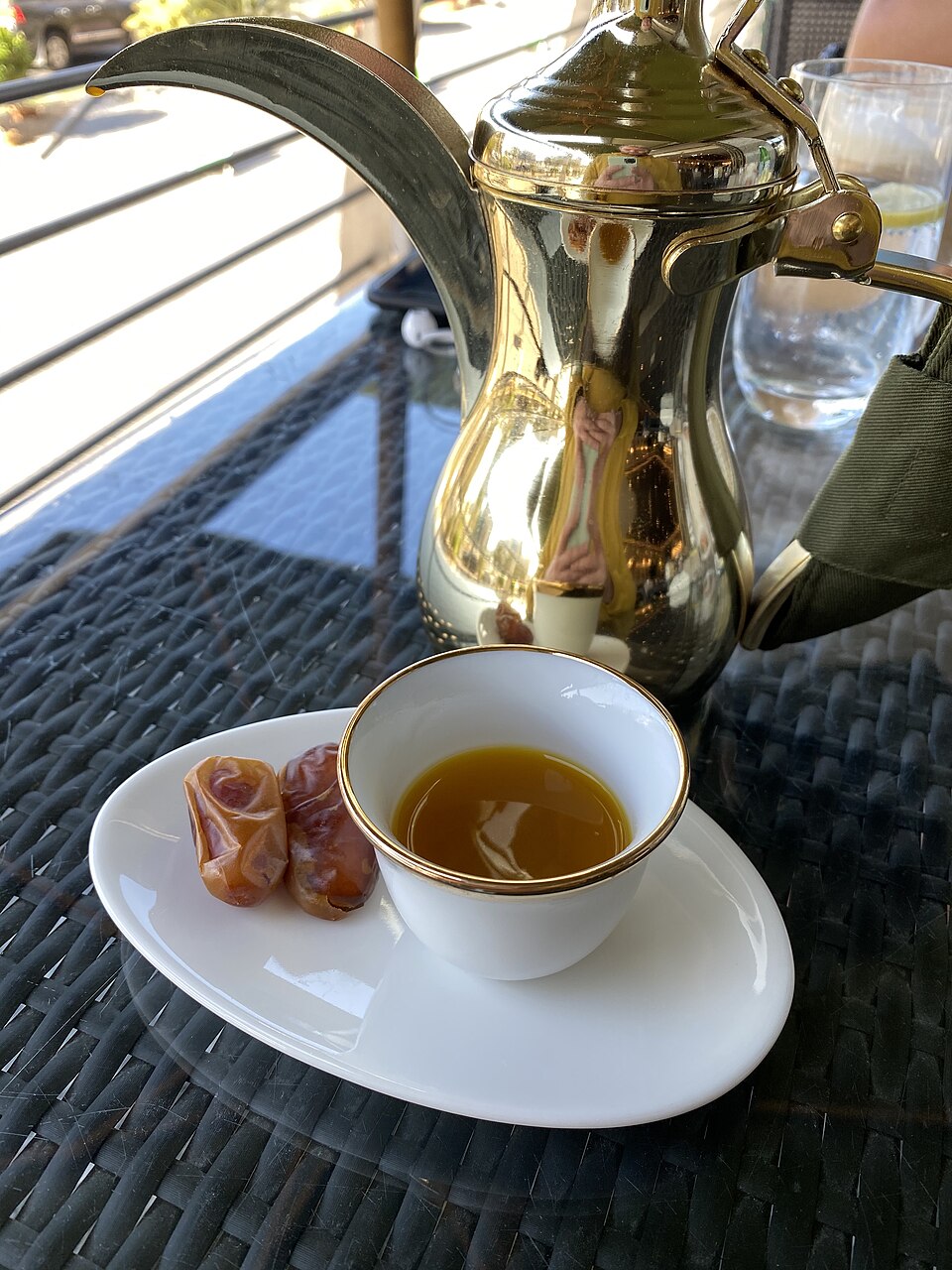
- Serve with Arabic coffee or mint tea after iftar.
- Offer extra syrup at the table for those with a sweet tooth.
Food safety
- Keep this dairy dessert refrigerated and eat it within 2 days; do not leave it out of the fridge for more than 2 hours.
Storage
- Best on the day they are made. Keep leftovers refrigerated (the cream is dairy) for up to 2 days.
Reheating
- Warm in a 160 °C oven for 5–8 minutes to re-crisp the pastry.
Variations
- Warbat bil jibn: Filled with sweet, desalted Akkawi cheese instead of cream.
- Warbat bil joz: Filled with chopped walnuts or pistachios with sugar and cinnamon.
Original editorial recipe · FriendsPantry editorial · source: TasteAtlas (dish facts) · Not yet independently reviewed · Added
Recipe DNA
How this dish is built
Built from the recipe’s own sections. Each band’s width is its share of the dish by weight. Choose a component to see what it does.
The body of the dish
For the ashta cream
- Milk600 ml · 618 g
- Heavy cream200 ml · 200 g
- Cornstarch50 g
- Semolina, fine30 g
- Sugar50 g
- Rose water1 tbsp · 15 g
- Orange blossom water1 tbsp · 15 g
Reviews & corrections
Reviews come from signed-in cooks and appear after a moderator checks them. We never show made-up ratings.
You might also like
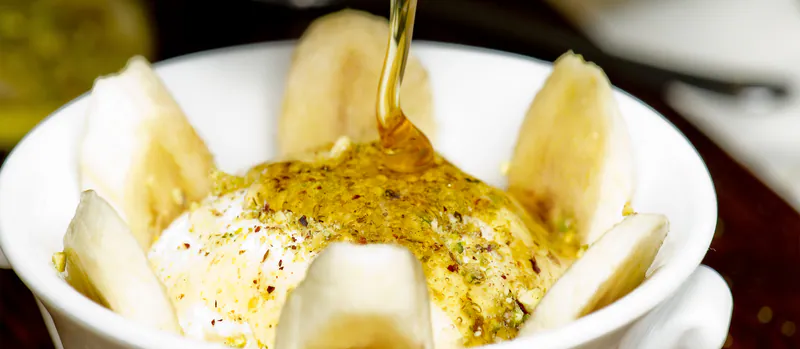
Ashta (Levantine clotted cream)
 Syrian · 2 h 55 min · 383 kcal · Vegetarian
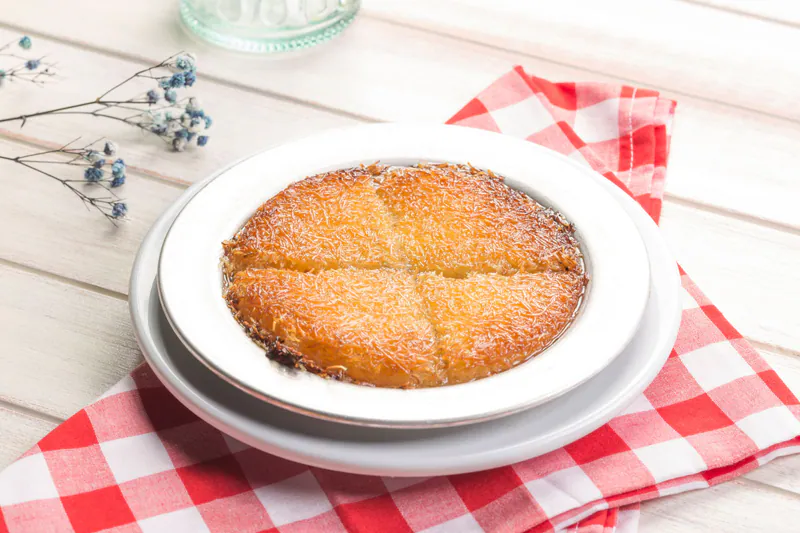
Knafeh
 Palestinian · 1 h 20 min · 436 kcal · Vegetarian
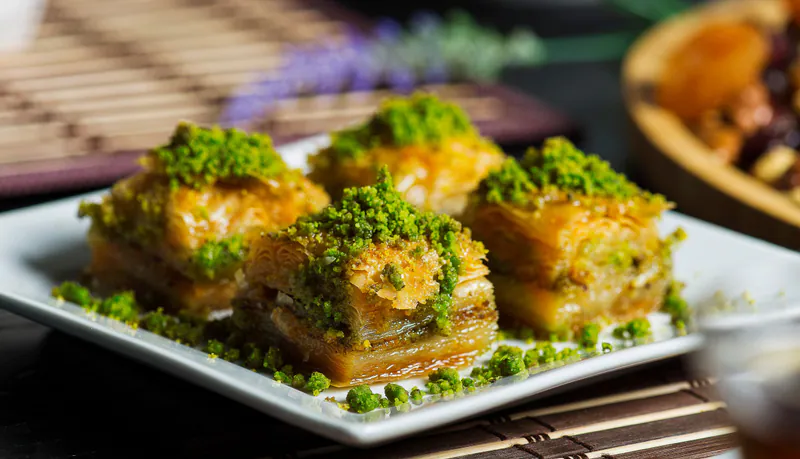
Baklava (pistachio)
 Turkish · 5 h 30 min · 217 kcal · Vegetarian
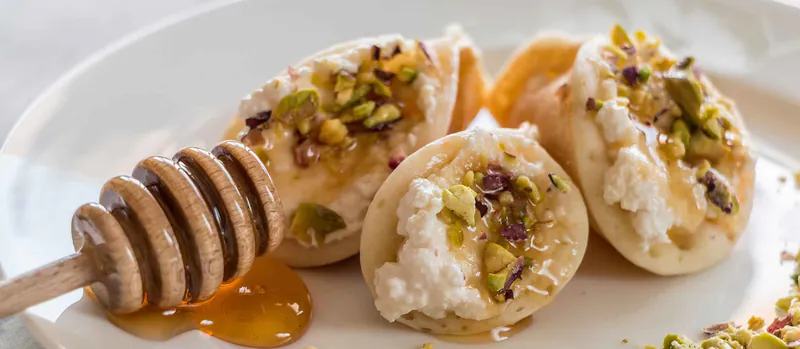
Qatayef (Ramadan stuffed pancakes)
 Egyptian · 2 h · 494 kcal · Vegetarian