
 Sichuan · Chinese · Stews & braises
Sichuan hotpot (mala huoguo)
Non-vegetarian
四川火锅 · Sìchuān huǒguō
A bubbling pot of beef-tallow broth fiery with dried chillies, doubanjiang and numbing Sichuan pepper, set in the middle of the table for everyone to cook thin-sliced meat, offal, tofu, mushrooms, vegetables and noodles in. Each morsel is dipped in a cooling bowl of sesame oil and garlic.
Sichuan hotpot (mala huoguo) is a Sichuan stew from China, ready in about 2 hours 15 minutes and made with beef suet, chilli bean paste (doubanjiang) and dried whole chillies. It serves 6 and is rated intermediate to cook.
No licensed photograph of this dish yet.
- Prep
- 1 h
- Cook
- 1 h 15 min
- Total
- 2 h 15 min
- Serves
- 6
- Level
- Intermediate
- Calories
- —
Main ingredients
Ingredients
For the broth base
To cook in the pot
For the dipping bowls
Method
Broth base
20 minStep 1
Melt the beef tallow with the vegetable oil (opens in a new tab) in a wok (opens in a new tab) over low heat. Add the ginger, garlic (opens in a new tab) and spring onion (opens in a new tab) lengths and fry gently until fragrant and lightly golden, 3–4 minutes.
- 5 min
- low heat
- Wok (opens in a new tab)
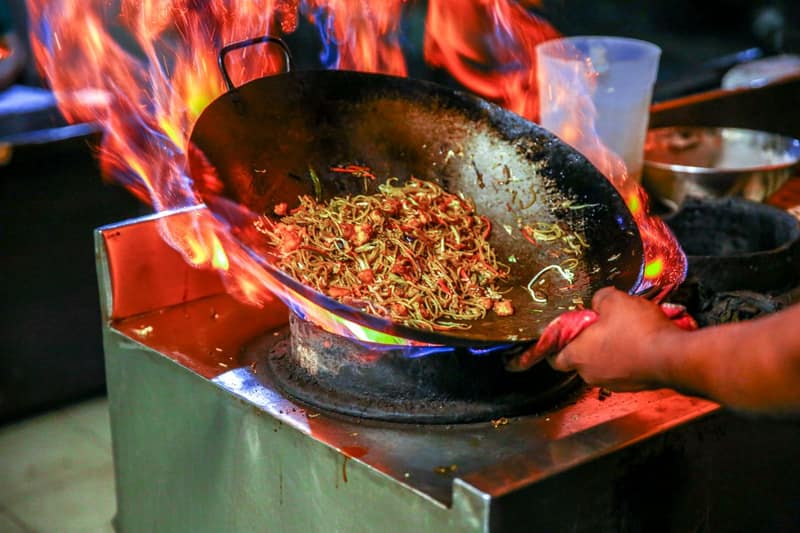
How it looks · Photo: Aesthos AR. Photography on Pexels Step 2
Add the doubanjiang and fermented black beans (opens in a new tab) and fry slowly, stirring constantly, until the oil turns deep red and smells rich, about 8 minutes. Add the drained chillies, Sichuan pepper (opens in a new tab), star anise (opens in a new tab), cinnamon, bay leaves (opens in a new tab), black cardamom (opens in a new tab) and fennel seed (opens in a new tab) and fry for 5 minutes more without letting the chillies burn.
- 13 min
- low heat
Low heat is everything here: scorched chillies and bean paste make the whole pot bitter.
Step 3
Stir in the sugar (opens in a new tab) and Shaoxing wine (opens in a new tab). This is the hotpot base; it can be cooled, set in a container and kept in the fridge for weeks.
- 2 min
To cook in the pot
1 hStep 4
Meanwhile, prepare the dippers: arrange the sliced meats, tripe (opens in a new tab), shrimp (opens in a new tab), tofu (opens in a new tab), mushrooms, lotus root (opens in a new tab), potato (opens in a new tab), greens and soaked noodles on platters. Keep raw meat and seafood on separate plates and in the fridge until needed.
Step 5
Transfer the base to a wide hotpot or stockpot, pour in the stock, add the black pepper (opens in a new tab) and simmer for 20 minutes so the spices infuse. Taste and add salt if needed.
- 20 min
- medium heat
- Stockpot / large pot (opens in a new tab)
Dipping bowls
1 h 5 minStep 6
Give everyone a dipping bowl of sesame oil (opens in a new tab) with crushed garlic (opens in a new tab), a little oyster sauce (opens in a new tab), coriander and spring onion (opens in a new tab).
- 5 min
Step 7
Set the pot on a portable burner in the centre of the table and keep it at a lively simmer. Diners cook their own food: thin meat slices take 10–30 seconds, shrimp (opens in a new tab) 2 minutes, tripe (opens in a new tab) 15 seconds to 2 minutes depending on the cut, potatoes (opens in a new tab) and lotus root (opens in a new tab) 5 minutes, greens and noodles until tender. Fish everything out with slotted spoons (opens in a new tab) and dip it in the oil before eating.
- 60 min
- medium heat
- Slotted spoon (opens in a new tab)
- Ladle (opens in a new tab)
Food safety: Use separate chopsticks or tongs for raw meat and for eating, and make sure meat and seafood are cooked through before eating.
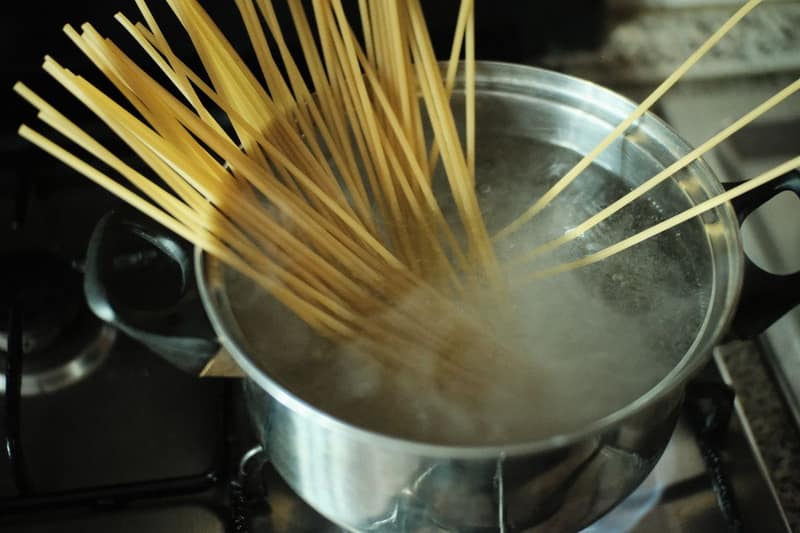
How it looks · Photo: Gianpiero Ferraro on Pexels
At a glance
1 · Broth base in a pot
- Beef suet
 Neutral vegetable oil
 Chilli bean paste (doubanjiang)
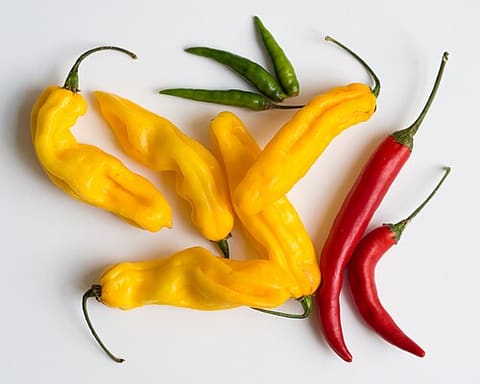 Dried whole chillies
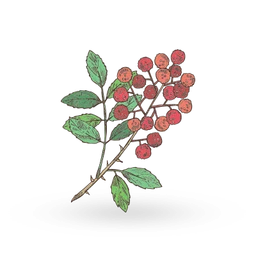 Sichuan peppercorns
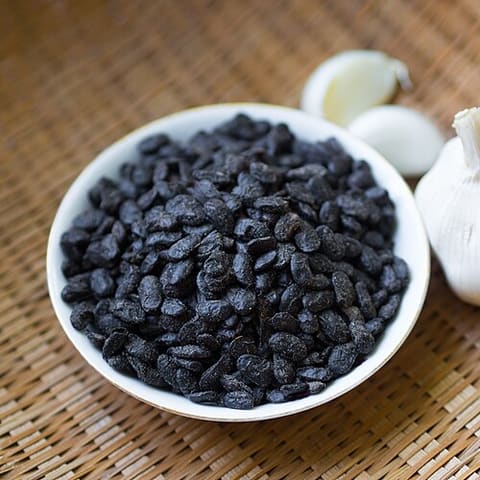 Fermented black beans (douchi)
 Fresh ginger
 Garlic
 Spring onion
 Star anise / anise
 Cinnamon stick
 Bay leaves
- Black cardamom
 Fennel seeds
 Sugar
 Shaoxing wine
 Chicken stock
 Black pepper
 Salt
then prepare
2 · To cook in the pot in a pot
 Beef sirloin steak
 Leg of lamb
- Beef tripe
 Prawns / shrimp
 Tofu
 Enoki mushrooms
 Shiitake mushrooms
- Lotus root (lotus stem)
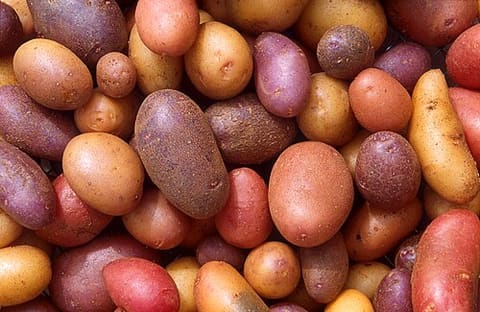 Potato
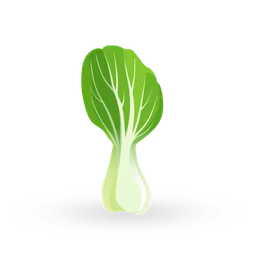 Bok choy
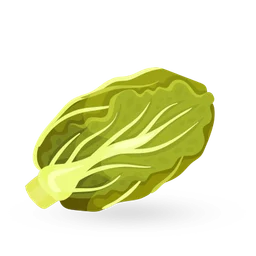 Napa cabbage
 Glass noodles
then give
3 · Dipping bowls in a bowl
 Toasted sesame oil
- Garlic
 Oyster sauce
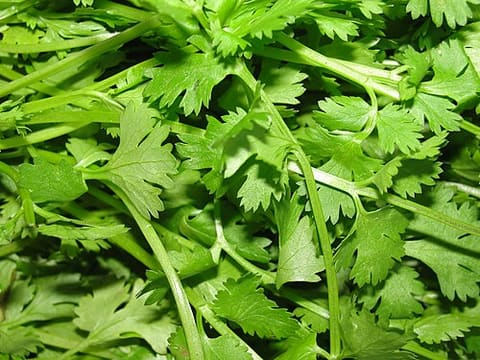 Coriander leaves
- Spring onion
About this dish
- Origin
- Sichuan and Chongqing, China · Commonly attributedUsually traced to the early 20th century, when boatmen and dock workers on the Yangtze in Chongqing cooked cheap offal in spicy broth; Chengdu and Chongqing both claim it.Also popular in Taiwan, Singapore, MalaysiaMore food from China
China - Dish
- Dinner · Stews & braises · Main courses
- Cooking method
- Stir-fried, Simmered, Boiled
- Taste
- spicy (chilli heat), peppery, rich, umami
- Diet
- Dairy-free · No nut ingredientsWorked out from the ingredients. How labels work
All labels
Non-vegetarian · Dairy-free · Egg-free · No nut ingredients · Pork-free - Good for
- Festive & celebration · Make-ahead
- Cook more with
- Beef suet · Chilli bean paste (doubanjiang) · Dried whole chillies · Sichuan peppercorns · Fermented black beans (douchi) · Fresh ginger
- Techniques
- Stir-frying · Boiling · Simmering · Fermentation
Allergens
- Contains, can be adapted: Crustaceansfrom prawns / shrimp, oyster sauce
- Contains, can be adapted: Molluscsfrom oyster sauce
- Contains: Wheatfrom chilli bean paste (doubanjiang), shaoxing wine, oyster sauce
- Contains: Glutenfrom chilli bean paste (doubanjiang), shaoxing wine, oyster sauce
- Contains: Soyfrom chilli bean paste (doubanjiang), fermented black beans (douchi), tofu, oyster sauce
- Contains: Sesamefrom toasted sesame oil
- May contain: Celeryfrom chicken stock
Based on typical versions of these ingredients and not verified allergen-free. Brands differ and cross-contact happens, so always check labels. For severe allergies, follow your clinician’s advice.
Nutrition
Nutrition not available for this recipe
Not enough data to calculate: Sichuan peppercorns. We show nothing rather than a made-up number.
Good to know
Tips
- A divided 'yuanyang' pot lets you serve the spicy broth alongside a mild bone or mushroom broth for those who cannot take the heat.
- Top up with hot stock as the broth reduces and gets saltier.
Common mistakes
- Drinking the broth — in Sichuan the spicy soup is a cooking medium, not a soup.
Serve with
- Serve with cold beer, soy milk or herbal tea to soothe the heat, and plain rice for those who want it.
Food safety
- Keep raw meat, offal and seafood chilled until they go into the pot and cook them until steaming hot right through.
- Bring any leftover broth to a rolling boil before reusing it.
Storage
- The fried base keeps 1 month in the fridge or 3 months frozen. Do not keep the broth after raw meat has been cooked in it for more than a day, refrigerated.
Variations
- Chongqing laohuoguo: The Chongqing style uses even more beef tallow and is served in a pot divided into a nine-square grid.
- Yuanyang guo: A pot split in two, with mala broth on one side and a mild bone or tomato broth on the other.
- Mala xiang guo: The same flavours in a dry stir-fried version, without the broth.
Original editorial recipe · FriendsPantry editorial · source: TasteAtlas (dish facts) · Not yet independently reviewed · Added
Recipe DNA
How this dish is built
Built from the recipe’s own sections. Each band’s width is its share of the dish by weight. Choose a component to see what it does.
The liquid foundation
For the broth base
- Beef suet, rendered beef tallow, or suet chopped and melted250 g
- Neutral vegetable oil100 ml · 20 g
- Chilli bean paste (doubanjiang), Pixian chilli bean paste, chopped120 g
- Dried whole chillies, Sichuan heaven-facing chillies, snipped, soaked 10 minutes in hot water and drained40 g
- Sichuan peppercorns, red, whole3 tbsp · 16 g
- Fermented black beans (douchi), rinsed1 tbsp · 8.9 g
- Fresh ginger, sliced40 g
- Garlic, smashed10 clove · 40 g
- Spring onion, cut into 5 cm lengths4 piece · 60 g
- Star anise / anise3 piece · 1.5 g
- Cinnamon stick1 piece · 3 g
- Bay leaves4 leaf · 0.8 g
- Black cardamom, cracked (optional)1 piece · 1.5 g
- Fennel seeds1 tsp · 2 g
- Sugar1 tbsp · 13 g
- Shaoxing wine3 tbsp · 44 g
- Chicken stock2.5 l · 2500 g
- Black pepper0.5 tsp · 1.2 g
- Saltto taste
Reviews & corrections
Reviews come from signed-in cooks and appear after a moderator checks them. We never show made-up ratings.
You might also like
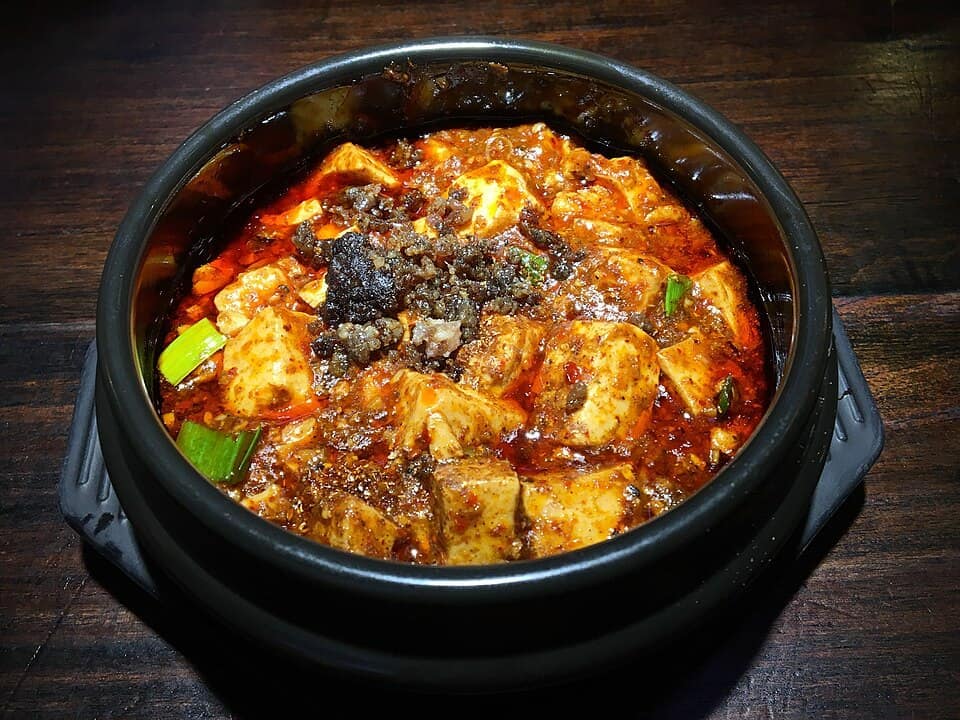
Mapo tofu
Sichuan · 25 min · 253 kcal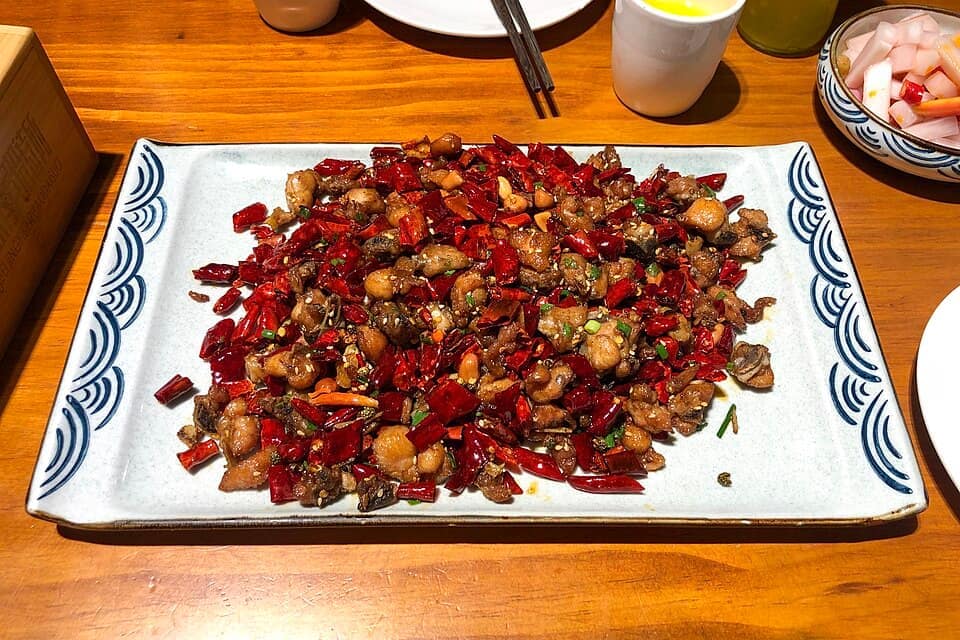
Chongqing chilli chicken
Sichuan · 45 min · 332 kcal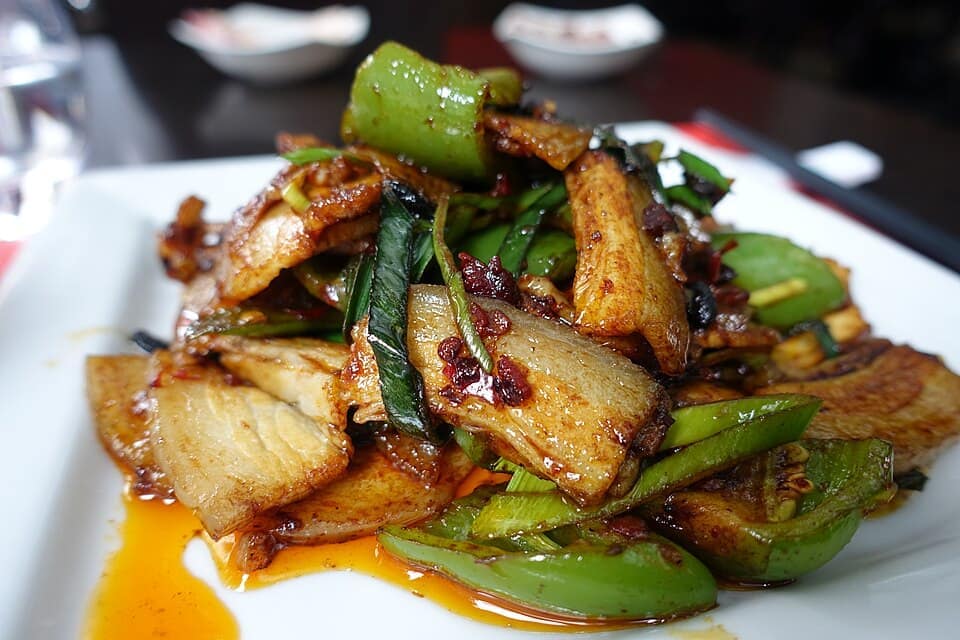
Twice-cooked pork
Sichuan · 1 h · 783 kcal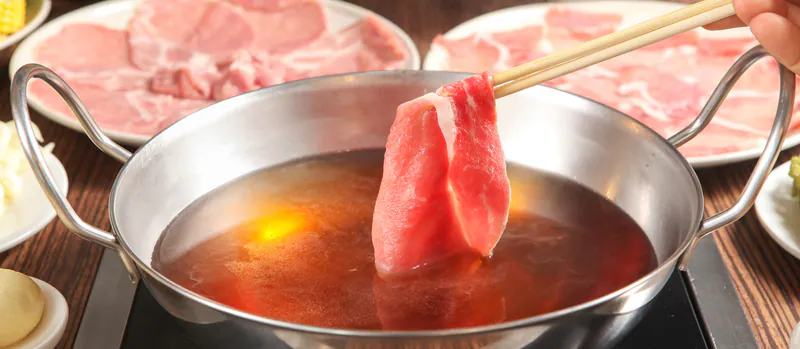
Shabu-shabu (Japanese hot pot)
 Japanese · 1 h 30 min · 492 kcal