
Oils & fats · Animal fats
Beef suet
Hard white fat from around beef kidneys; used for pastry, puddings, dumplings and mincemeat.
Also called: suet, shredded suet, kidney fat
What it is
Suet is the firm, crumbly fat surrounding the kidneys and loins of cattle. It has a high melting point, which gives suet pastry, dumplings and steamed puddings a light, airy texture. It is sold fresh from butchers, or shredded and coated in flour in packets.
How it’s used
- Suet crust pastry for steak and kidney pudding
- Dumplings for stews
- Spotted dick, jam roly-poly and Christmas pudding
- Traditional mincemeat
Characteristics
Storage
Refrigerated. Keep fresh suet in the fridge for up to 1 week or freeze; packet shredded suet keeps in a cool cupboard.
Diet, allergens and safety
No major allergens in typical versions.
- Vegetarian
- Vegan
- Dairy-free
- Egg-free
- Gluten-free
- Nut-free
- Soy-free
- Caffeine-free
- Shredded packet suet is often dusted with wheat flour; check the label if avoiding gluten.
Nutrition per 100 g
- Energy
- 902 kcal
- Protein
- 0 g
- Carbohydrate
- 0 g
- Fat
- 100 g
- Fibre
- 0 g
- Sugars
- 0 g
USDA FoodData Central: Lard (a close stand-in).
Substitutes
Optional — what works if you don’t have it, and how it changes the dish.
- Butter — Frozen and grated; richer and less light.
- Vegetable suet — For vegetarian versions.
Related ingredients
Recipes with beef suet
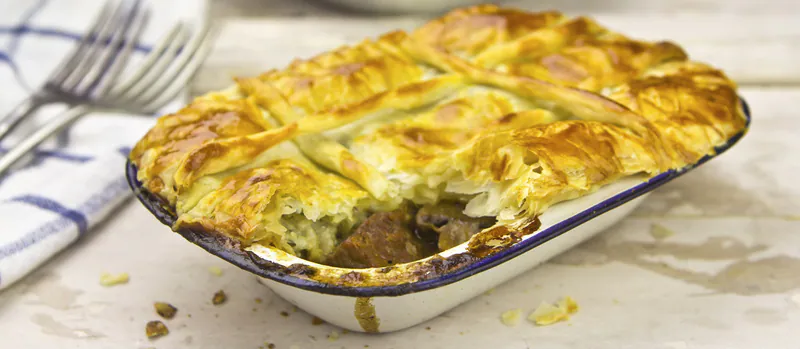
Beef and Guinness pie
 Irish · 4 h 55 min · 752 kcal
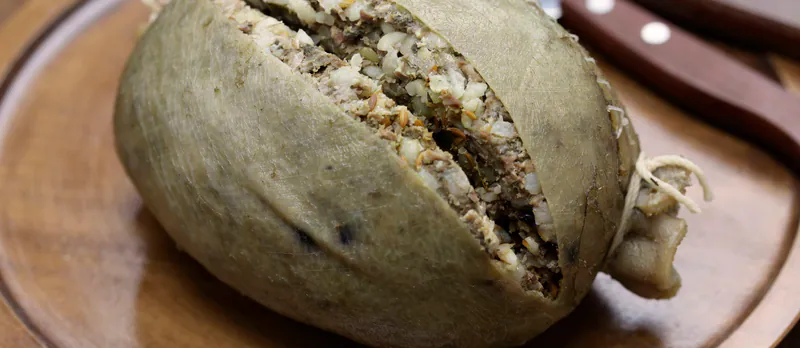
Haggis (home-style, steamed in a basin)
 British · 4 h 15 min · 441 kcal
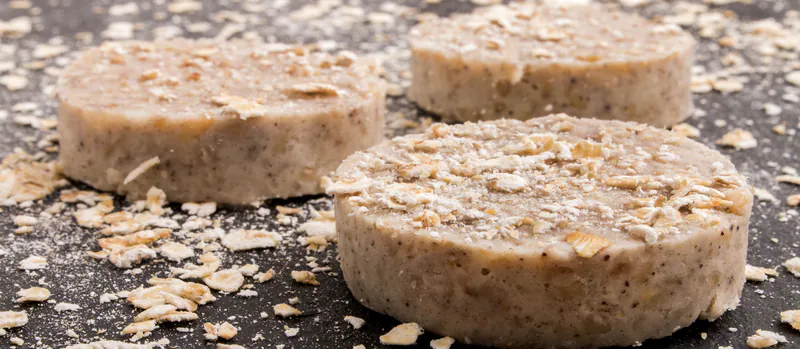
Mealy pudding (Scottish oatmeal white pudding)
British · 1 h 30 min · 385 kcal
Steak and kidney pie
British · 5 h 5 min · 759 kcalSichuan hotpot (mala huoguo)
 Sichuan · 2 h 15 min