
Saba zushi (Kyoto pressed mackerel sushi)
Non-vegetarian
鯖寿司 · sabazushi
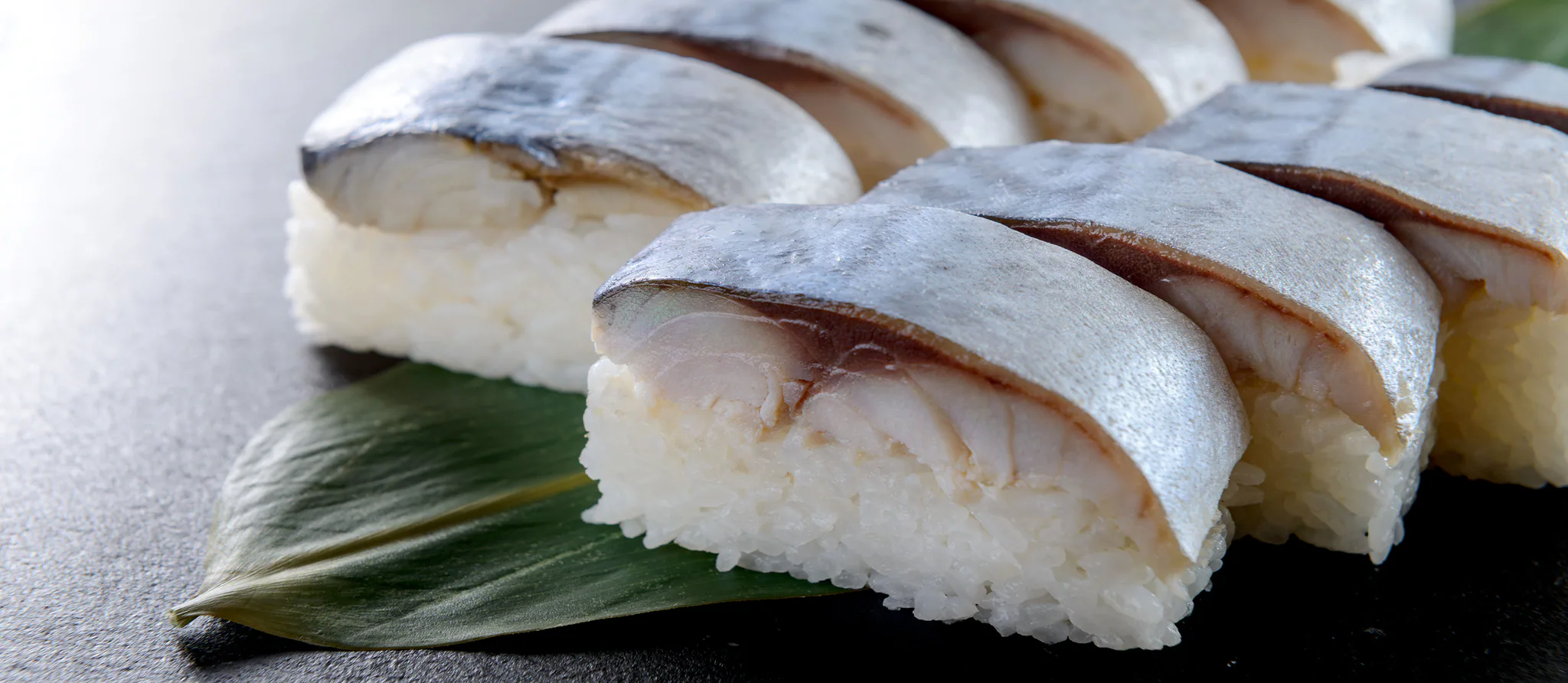
A log of seasoned sushi rice topped with a whole salted and vinegar-cured mackerel fillet and a thin sheet of kombu, wrapped tightly and left to settle before slicing. Kyoto's signature sushi, traditionally wrapped in bamboo leaves for festivals.
Saba zushi (Kyoto pressed mackerel sushi) is a Japanese rice dish, ready in about 6 hours and made with mackerel, rice vinegar and short-grain rice. It serves 4 and is rated advanced to cook.
- Prep
- 40 min
- Cook
- 20 min
- Rest
- 5 h
- Total
- 6 h
- Serves
- 4
- Level
- Advanced
- Calories
- 531
Plus freezing the mackerel beforehand if needed.
Main ingredients
Ingredients
For the mackerel
For the sushi rice
For the topping
To serve
Method
Mackerel
15 minStep 1
Lay the fillets skin side down in a dish and cover completely with the 3 tbsp salt. Refrigerate for 3 hours (up to 5 for large fillets), until the flesh is firm.
- 5 min
Food safety: Only use fish sold for raw eating (sashimi grade), which has been frozen to kill parasites, keep it cold and eat it the day it is cut.
Step 2
Rinse off the salt and pat dry. Mix the 200 ml rice vinegar (opens in a new tab) with 1 tbsp sugar (opens in a new tab), lay the fillets in it and marinate in the fridge for 30–60 minutes, turning once, until the surface turns opaque white. Drain, peel off the thin outer skin from head to tail with your fingers, leaving the silver pattern, and remove any remaining bones.
Sushi rice
35 minStep 3
Cook the rice with the water: bring to the boil, cover and cook on the lowest heat for 13 minutes, then rest 10 minutes off the heat. Dissolve the sugar (opens in a new tab) and salt in the 4 tbsp vinegar and fold it through the hot rice with cutting strokes, fanning to cool it to body temperature.
Food safety: Cooked rice can carry Bacillus cereus spores that survive cooking; cool leftover rice quickly and refrigerate it within an hour.
Step 4
Lay a large sheet of cling film on a bamboo mat or board. Place the mackerel (opens in a new tab) skin side down, trimming the thick part and filling thin gaps with the trimmings to make an even rectangle. Shape the rice with wet hands into a log the length of the fish and press it firmly on top.
Topping
5 minStep 5
Lift the film to roll it over so the fish is on top, lay the kombu (opens in a new tab) over the fish, then wrap tightly in the film, pressing it into a neat, firm bar. Leave in a cool place (not the fridge, which hardens the rice) for 2–4 hours to settle.
- 5 min
To serve
5 minStep 6
Slice through the film with a sharp, wet knife into 2–3 cm pieces, unwrap and serve with pickled ginger (opens in a new tab). Remove the kombu (opens in a new tab) before eating if it is a thick piece.
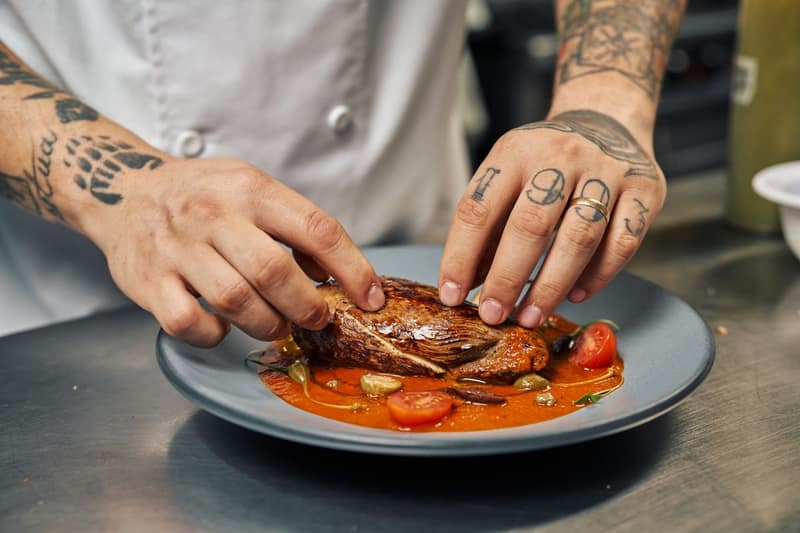
How it looks · Photo: Willians Huerta on Pexels
At a glance
1 · Mackerel in a bowl
 Mackerel
 Salt
 Rice vinegar
 Sugar
then cook
2 · Sushi rice in a pot
 Short-grain rice
- Rice vinegar
- Sugar
- Salt
then lift
3 · Topping in a bowl
 Kombu (dried kelp)
then slice
4 · To serve in a bowl
 Pickled sushi ginger (gari)
About this dish
- Origin
- Kyoto, Japan · Well documentedMackerel salted on the coast of Wakasa Bay was carried inland to Kyoto along the 'Saba Kaidō' (mackerel road); arriving perfectly seasoned, it became the basis of Kyoto's festive bō-zushi.More food from Japan
Japan - Dish
- Lunch · Dinner · Rice dishes · Main courses
- Cooking method
- Marinated / cured, Boiled, Raw
- Taste
- umami, sour, salty, rich
- Diet
- Pescatarian · No gluten ingredients · Dairy-free · No nut ingredients · High-proteinWorked out from the ingredients. How labels work
All labels
Pescatarian · Non-vegetarian · No gluten ingredients · Dairy-free · Egg-free · No nut ingredients · Alcohol-free · Pork-free · Beef-free · High-protein - Good for
- Festive & celebration · Make-ahead
- Cook more with
- Mackerel · Rice vinegar · Short-grain rice · Sugar · Kombu (dried kelp) · Pickled sushi ginger (gari)
- Techniques
- Boiling · Marinating · Pickling · Curing
Allergens
- Contains: Fishfrom mackerel
Based on typical versions of these ingredients and not verified allergen-free. Brands differ and cross-contact happens, so always check labels. For severe allergies, follow your clinician’s advice.
Nutrition
531 kcal per serving
Estimated1 serving ≈ 359 g · recipe makes 4
Where the energy comes from
- Protein 19%
- Carbohydrate 56%
- Fat 26%
| Nutrient | Per serving | Per 100 g* |
|---|---|---|
| Energy | 531 kcal | 148 kcal |
| Protein | 23.7 g | 6.6 g |
| Carbohydrate | 70.8 g | 19.7 g |
| Net carbohydrate | — | — |
| Sugars | — | — |
| Added sugars | — | — |
| Fibre | — | — |
| Fat | 14.4 g | 4 g |
| Saturated fat | 3.4 g | 0.9 g |
| Trans fat | — | — |
| Cholesterol | 70 mg | 19 mg |
| Sodium | 5928 mg | 1650 mg |
| Salt equivalent | 14.8 g | 4.1 g |
Vitamins & minerals per serving
- Potassium
- 417 mg
- Calcium
- 36 mg
- Iron
- 2.4 mg
- Magnesium
- 103 mg
- Vitamin A (RAE)
- —
- Vitamin C
- 1 mg
- Vitamin D
- 16.1 µg
- Vitamin B12
- 8.7 µg
- Folate (DFE)
- 11 µg
How these numbers were made
- Calculated from USDA FoodData Central (SR Legacy) per-100 g values and the listed quantities.
- *Per 100 g of combined raw ingredients; the cooked dish may weigh more or less.
- Rice vinegar: Distilled vinegar (FDC 172237) used as a stand-in for unseasoned rice vinegar.
- Pickled sushi ginger (gari): Raw ginger root used as a stand-in; gari is young ginger thinly sliced and pickled in sweetened rice vinegar, so it carries a little added sugar.
- “—” means the value isn’t known for enough of the ingredients; it is never zero by default.
- Values are estimates for guidance, not for medical dosing. U.S. Department of Agriculture, Agricultural Research Service. FoodData Central, 2019. fdc.nal.usda.gov.
Good to know
Tips
- Saba zushi tastes best after a few hours, when the fish and rice have melded, and it is still good the next day.
- A piece of thin shiraita kombu can be eaten; thicker kombu is removed before serving.
Common mistakes
- Marinating too long in vinegar, which makes the fish dry and chalky right through; the centre should stay rosy.
- Leaving the rice too loose, so the roll falls apart when sliced.
Serve with
- Serve as part of a festive spread with clear soup and pickles, or pack it in a bento box.
Food safety
- Only use fish sold for raw eating (sashimi grade), which has been frozen to kill parasites, keep it cold and eat it the day it is cut.
- Mackerel can carry anisakis parasites that salting and vinegar do not kill; freeze the fish at -20 °C for at least 24 hours (or buy it previously frozen) before curing.
- Cooked rice can carry Bacillus cereus spores that survive cooking; cool leftover rice quickly and refrigerate it within an hour.
Storage
- Keep wrapped in a cool place and eat within 24 hours; refrigerated rice turns hard.
Variations
- Battera (Japan): The Osaka version, pressed in a wooden box (oshibako) and topped with translucent kombu.
- Yaki saba zushi: Made with grilled salted mackerel, a modern version popular in Fukui.
Original editorial recipe · FriendsPantry editorial · source: TasteAtlas (dish facts) · Not yet independently reviewed · Added
Recipe DNA
How this dish is built
Built from the recipe’s own sections. Each band’s width is its share of the dish by weight. Choose a component to see what it does.
The staple
For the sushi rice
- Short-grain rice, Japanese sushi rice, rinsed until the water runs clear300 g
- Water330 ml · 330 g
- Rice vinegar4 tbsp · 59 g
- Sugar2 tbsp · 25 g
- Salt1 tsp · 6 g
Reviews & corrections
Reviews come from signed-in cooks and appear after a moderator checks them. We never show made-up ratings.
You might also like
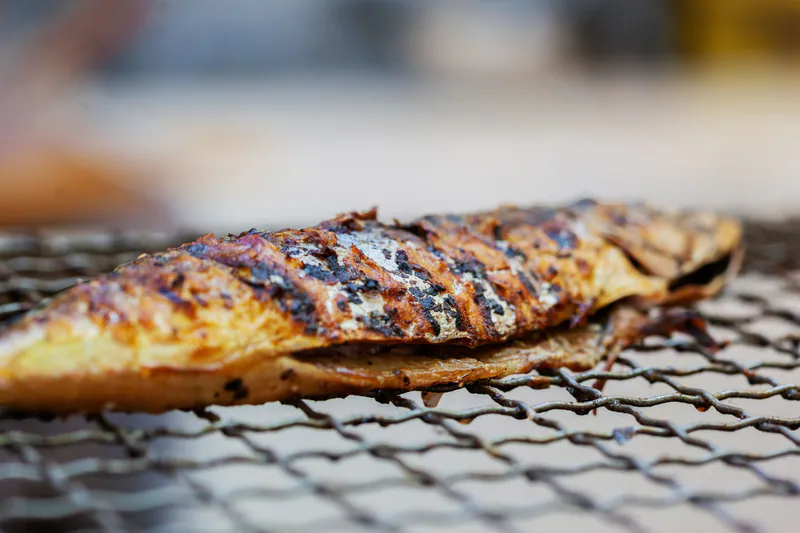
Saba shioyaki
 Japanese · 35 min · 308 kcal
Nigiri sushi
Japanese · 1 h 50 min · 468 kcal
Chirashizushi (scattered sushi bowl)
Japanese · 1 h 20 min · 582 kcal
Salmon nigiri (sake nigiri)
Japanese · 1 h 40 min · 517 kcal