
 Malaysian · Chinese · Noodle soups
Penang Hokkien mee (Penang prawn noodle soup)
Non-vegetarian
檳城福建麵 · Bīnchéng Fújiàn miàn
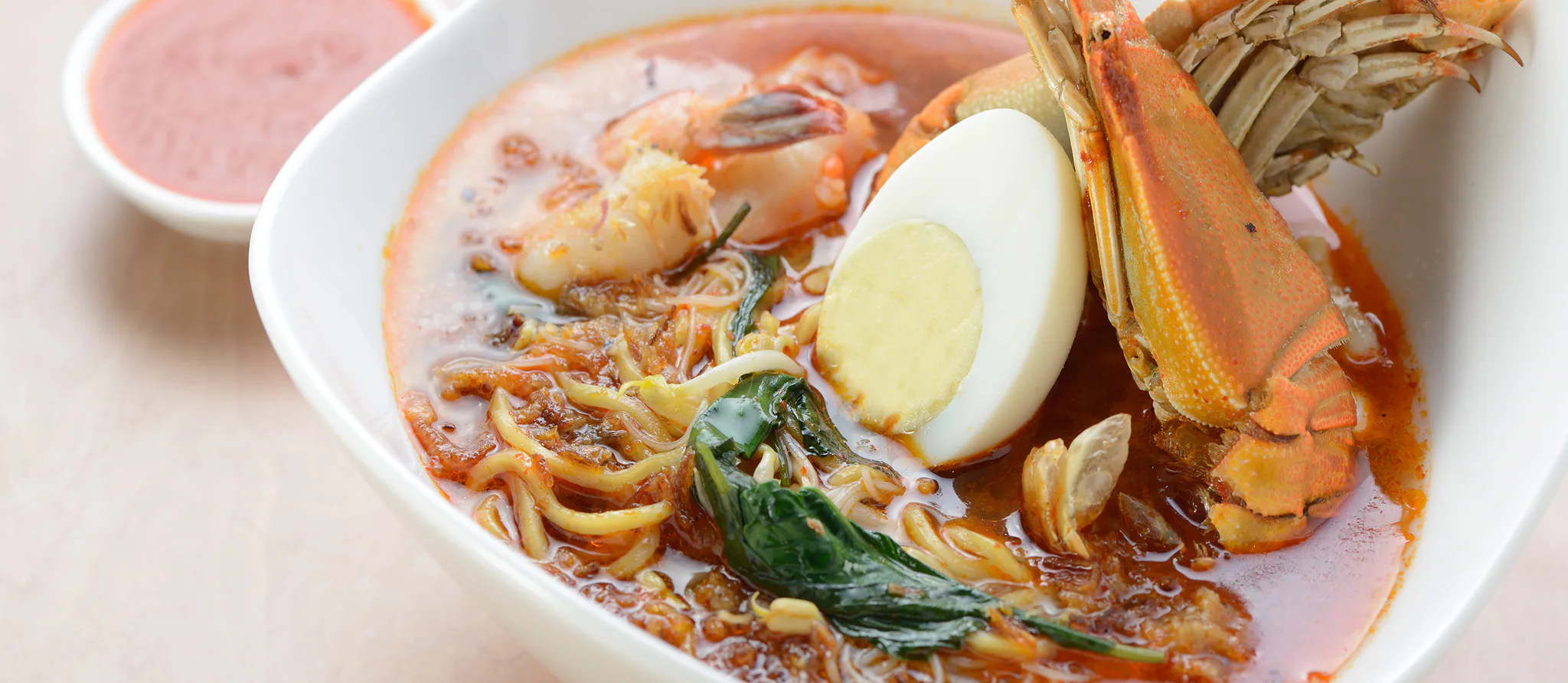
Penang's take on Hokkien mee is a soup, not a stir-fry: yellow egg noodles and rice vermicelli in a deep, red-tinged broth of fried prawn shells and pork ribs, topped with prawns, sliced pork, egg, water spinach and bean sprouts. Crisp fried shallots and a spoon of fried chilli paste finish each bowl.
Penang Hokkien mee (Penang prawn noodle soup) is a Malaysian dish, ready in about 3 hours and made with prawns / shrimp, pork spare ribs and egg noodles. It serves 4 and is rated intermediate to cook.
- Prep
- 30 min
- Cook
- 2 h 30 min
- Total
- 3 h
- Serves
- 4
- Level
- Intermediate
- Calories
- 1677
Main ingredients
Ingredients
For the broth
For the chilli paste
For the fried shallots
To serve
Method
Broth
2 h 6 minStep 1
Blanch the pork bones (opens in a new tab) and ribs in boiling water for 5 minutes, drain and rinse to keep the broth clear.
Step 2
Fry the prawn (opens in a new tab) heads and shells in 3 tbsp oil in a wok (opens in a new tab) over medium-high heat, pressing on the heads, until deep red and fragrant, 5–6 minutes. Tip into the stockpot with the bones, ribs, pork belly (opens in a new tab) and water.
- 8 min
- medium-high heat
- Wok (opens in a new tab)
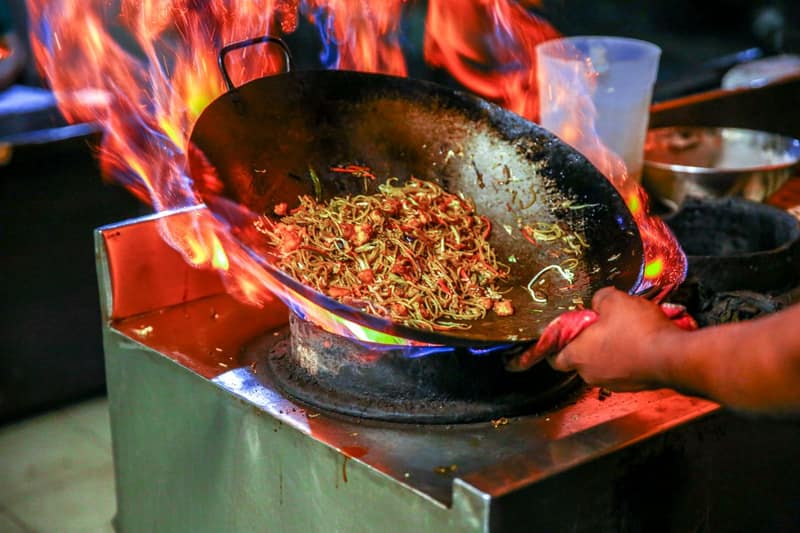
How it looks · Photo: Aesthos AR. Photography on Pexels Step 3
Bring to a boil, skim, then simmer gently, partly covered, for 1½–2 hours. Lift out the pork belly (opens in a new tab) after 40 minutes, cool and slice thinly. Poach the peeled prawns (opens in a new tab) in the broth for 2 minutes, lift out and halve lengthwise.
- 110 min
- low heat
- Slotted spoon (opens in a new tab)
Chilli paste
25 minStep 4
Meanwhile blend the soaked chillies, 50 g shallots (opens in a new tab) and garlic (opens in a new tab) to a paste and fry in 4 tbsp oil over medium-low heat, stirring, for 10 minutes until dark red and the oil separates.
- 12 min
- medium-low heat
- Blender (opens in a new tab)
- Wok (opens in a new tab)
Step 5
Fry the sliced shallots (opens in a new tab) in 150 ml oil over medium heat, stirring, until golden, 6–8 minutes. Drain on paper; they crisp as they cool. Keep the shallot oil.
- 8 min
- medium heat
Food safety: Never fill the pan more than a third full with oil, keep the handle turned in and never leave hot oil unattended; have a lid nearby to smother any flare-up.
Pull them off as soon as they turn light gold; they keep darkening off the heat.
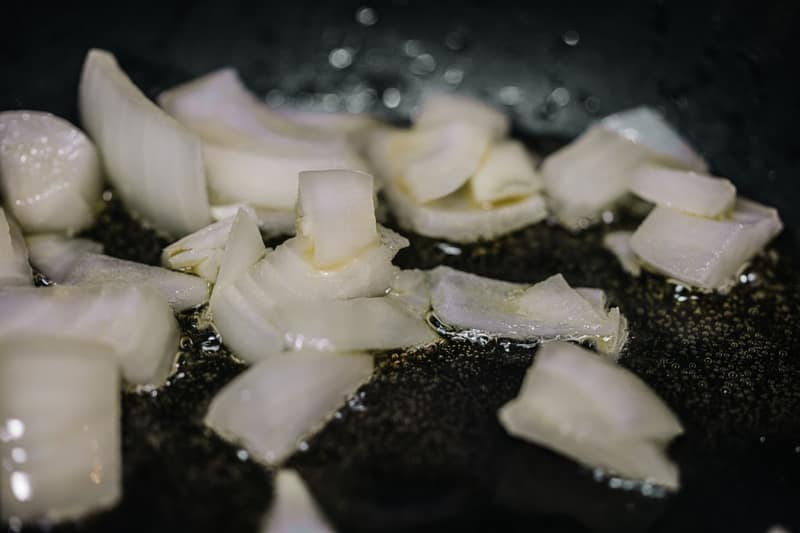
How it looks · Photo: Magda Ehlers on Pexels Step 6
Strain the broth (keep the ribs for serving), season with sugar (opens in a new tab), soy, salt and white pepper (opens in a new tab) and stir in 2 tbsp of the chilli paste for colour.
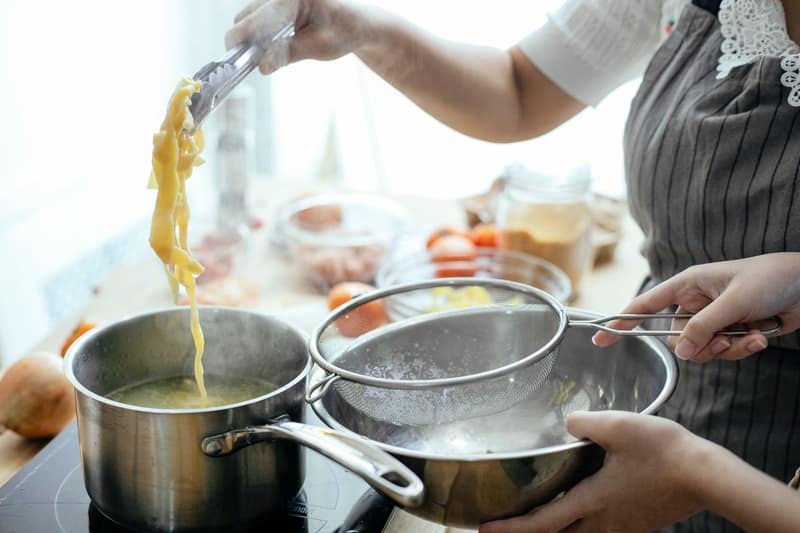
How it looks · Photo: Katerina Holmes on Pexels
To serve
8 minStep 7
For each bowl, blanch a portion of yellow noodles, vermicelli, bean sprouts (opens in a new tab) and water spinach (opens in a new tab) in boiling water for 30 seconds in a sieve. Tip into bowls, top with sliced pork, ribs, prawns (opens in a new tab) and half an egg (opens in a new tab), and ladle (opens in a new tab) over the boiling broth. Finish with fried shallots (opens in a new tab), a drizzle of shallot oil and chilli paste on the side.
At a glance
1 · Broth in a pot
 Prawns / shrimp
 Neutral vegetable oil
 Pork spare ribs
- Pork bones (trotters and neck bones)
 Pork belly
 Sugar
 Soy sauce
 Salt
 White pepper
then blend
2 · Chilli paste in a bowl
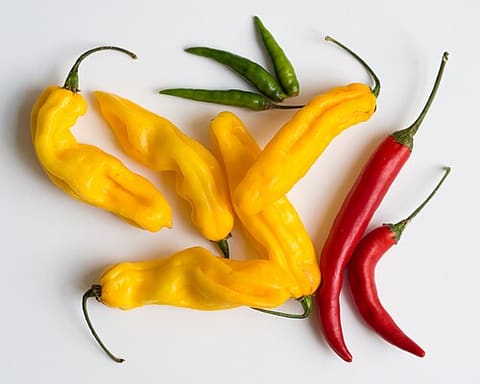 Dried whole chillies
 Shallot
 Garlic
- Neutral vegetable oil
then blanch
3 · To serve in a pot
 Egg noodles
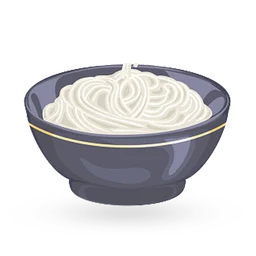 Rice noodles
 Bean sprouts
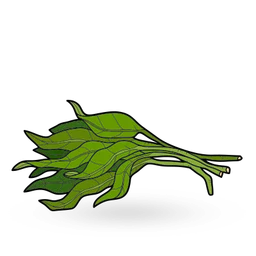 Water spinach
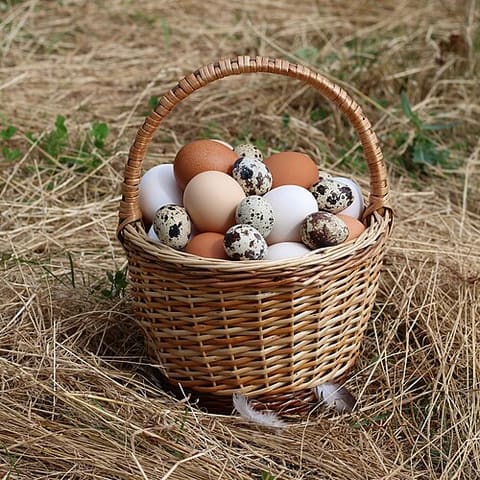 Egg
About this dish
- Origin
- Penang, Malaysia · Well documentedBrought by Hokkien migrants from Fujian; in Kuala Lumpur 'Hokkien mee' means dark soy-fried noodles, and in Singapore a fried prawn noodle, so Penang's soup version is often called prawn mee elsewhere.Also popular in SingaporeMore food from Malaysia
Malaysia - Dish
- Breakfast · Lunch · Dinner · Noodle soups · Street food · Main courses · Breakfast dishes
- Cooking method
- Stir-fried, Simmered, Deep-fried, Blanched
- Taste
- umami, spicy (chilli heat), sweet & savoury, rich
- Diet
- Dairy-free · No nut ingredients · High-proteinWorked out from the ingredients. How labels work
All labels
Non-vegetarian · Dairy-free · No nut ingredients · Alcohol-free · Beef-free · High-protein - Good for
- Street food · Batch cooking
- Cook more with
- Prawns / shrimp · Pork spare ribs · Egg noodles · Pork bones (trotters and neck bones) · Pork belly · Sugar
- Techniques
- Deep-frying · Stir-frying · Boiling · Simmering · Poaching
Allergens
- Contains: Eggsfrom egg noodles, egg
- Contains: Crustaceansfrom prawns / shrimp
- Contains: Wheatfrom soy sauce, egg noodles
- Contains: Glutenfrom soy sauce, egg noodles
- Contains: Soyfrom soy sauce
Based on typical versions of these ingredients and not verified allergen-free. Brands differ and cross-contact happens, so always check labels. For severe allergies, follow your clinician’s advice.
Nutrition
1677 kcal per serving
Estimated1 serving ≈ 1172 g · recipe makes 4
Where the energy comes from
- Protein 18%
- Carbohydrate 24%
- Fat 58%
| Nutrient | Per serving | Per 100 g* |
|---|---|---|
| Energy | 1677 kcal | 143 kcal |
| Protein | 75.5 g | 6.4 g |
| Carbohydrate | 101.8 g | 8.7 g |
| Net carbohydrate | — | — |
| Sugars | — | — |
| Added sugars | 3.1 g | 0.3 g |
| Fibre | — | — |
| Fat | 107.4 g | 9.2 g |
| Saturated fat | 28.7 g | 2.5 g |
| Trans fat | — | — |
| Cholesterol | 604 mg | 52 mg |
| Sodium | 1613 mg | 138 mg |
| Salt equivalent | 4 g | 0.3 g |
Vitamins & minerals per serving
- Potassium
- 1542 mg
- Calcium
- 284 mg
- Iron
- 8.8 mg
- Magnesium
- 194 mg
- Vitamin A (RAE)
- —
- Vitamin C
- —
- Vitamin D
- —
- Vitamin B12
- —
- Folate (DFE)
- —
How these numbers were made
- Calculated from USDA FoodData Central (SR Legacy) per-100 g values and the listed quantities.
- *Per 100 g of combined raw ingredients; the cooked dish may weigh more or less.
- Pork bones (trotters and neck bones): Pork spareribs (FDC 167853) scaled down as a rough estimate of the meat, fat and collagen that boiled pork bones release into a broth.
- “—” means the value isn’t known for enough of the ingredients; it is never zero by default.
- Values are estimates for guidance, not for medical dosing. U.S. Department of Agriculture, Agricultural Research Service. FoodData Central, 2019. fdc.nal.usda.gov.
Good to know
Tips
- The broth tastes even better the next day; make it ahead and reheat with fresh toppings.
Serve with
- Serve with extra chilli paste and a squeeze of lime, as at Penang hawker stalls.
Food safety
- Cook prawns until opaque and pink right through.
- Cook pork until it reaches at least 71 °C; long-simmered ribs are far above this.
Storage
- Broth keeps 3 days refrigerated or 3 months frozen; store toppings separately.
Reheating
- Bring the broth back to a full boil before ladling over freshly blanched noodles.
Variations
- Hokkien mee with pork intestine: Many stalls add braised pig skin, intestines or crispy pork lard.
- Singapore prawn mee soup (Singapore): A clearer, lighter prawn broth served with similar toppings.
Original editorial recipe · FriendsPantry editorial · source: TasteAtlas (dish facts) · Not yet independently reviewed · Added
Recipe DNA
How this dish is built
Built from the recipe’s own sections. Each band’s width is its share of the dish by weight. Choose a component to see what it does.
The spice and seasoning backbone
For the chilli paste
- Dried whole chillies, seeded and soaked in hot water20 g
- Shallot50 g
- Garlic3 clove · 12 g
- Neutral vegetable oil4 tbsp · 54 g
Reviews & corrections
Reviews come from signed-in cooks and appear after a moderator checks them. We never show made-up ratings.
You might also like
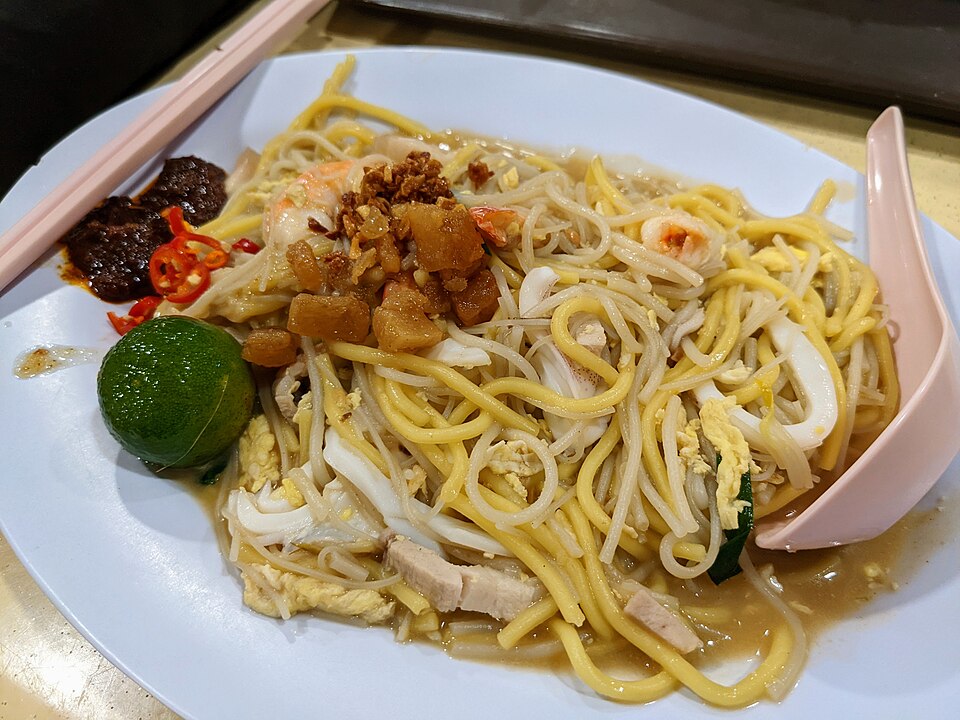
Hokkien prawn mee
 Singaporean · 1 h 15 min · 775 kcal
Penang assam laksa
Malaysian · 1 h 15 min · 673 kcal
Char kway teow
Malaysian · 35 min · 886 kcal
Curry laksa
Malaysian · 1 h 5 min · 950 kcal