
Meat · Pork
Pork bones (trotters and neck bones)
Trotters, neck and back bones of pork, simmered for rich, gelatinous broths and stocks.
Also called: pork trotters, pigs' feet, pork neck bones, pork femur bones, tonkotsu bones, soup bones (pork)
Around the world: 豚骨, tonkotsu (ja)
A kind of pork
What it is
Bony pork pieces sold cheaply for stock and soup: trotters (feet), neck bones and backbones. Long simmering draws out collagen, giving a broth that sets to a jelly when cold. They are the base of Japanese tonkotsu ramen, Korean gamjatang and many Eastern European soups.
How it’s used
- Boiled hard for milky tonkotsu ramen broth
- Simmered for clear stocks and soups
- Braised trotters in Chinese, Korean and European cooking
- Set into aspic and brawn
Characteristics
- Taste
- Rich and porky once simmered; mild on their own.
- When cooked
- Blanch first and discard the scummy water for a cleaner broth; a hard boil emulsifies fat and collagen into a cloudy, creamy stock.
- Sold as
- fresh, frozen
- Cooking uses
- Suitable for boiling, Commonly cooked
Storage
Refrigerated. Refrigerate and use within 2 days, or freeze for up to 3 months.
Diet, allergens and safety
No major allergens in typical versions.
- Vegetarian
- Vegan
- Dairy-free
- Egg-free
- Gluten-free
- Nut-free
- Soy-free
- Caffeine-free
- Bring stock to a full boil and cool it quickly; refrigerate within 2 hours and use within 3–4 days.
- Store raw meat sealed on the bottom shelf of the fridge and keep separate boards for raw meat and ready-to-eat food.
Nutrition per 100 g
- Energy
- 83 kcal
- Protein
- 4.641 g
- Carbohydrate
- 0 g
- Fat
- 7.02 g
- Fibre
- 0 g
- Sugars
- 0 g
USDA FoodData Central: Pork, fresh, spareribs, separable lean and fat, raw × 0.3 (a close stand-in).
Substitutes
Optional — what works if you don’t have it, and how it changes the dish.
- Chicken pieces, skin-on — Chicken wings and backs give a lighter but still gelatinous stock.
Related ingredients
Recipes with pork bones (trotters and neck bones)
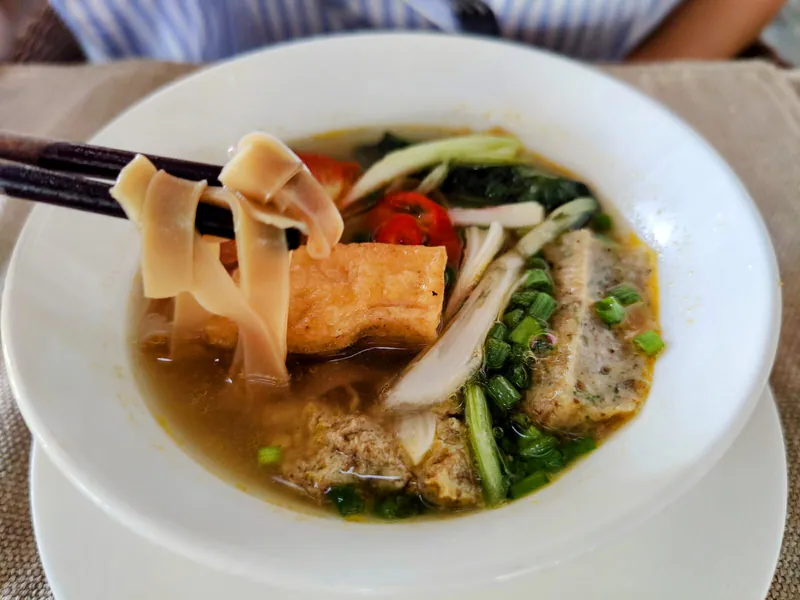
Bánh đa cua (Hai Phong red noodle soup with crab)
 Vietnamese · 2 h 40 min · 1009 kcal
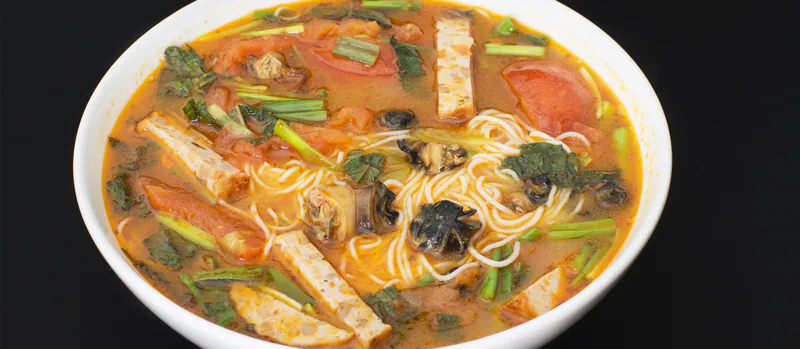
Bún ốc (Hanoi snail noodle soup)
Vietnamese · 2 h 40 min · 1021 kcal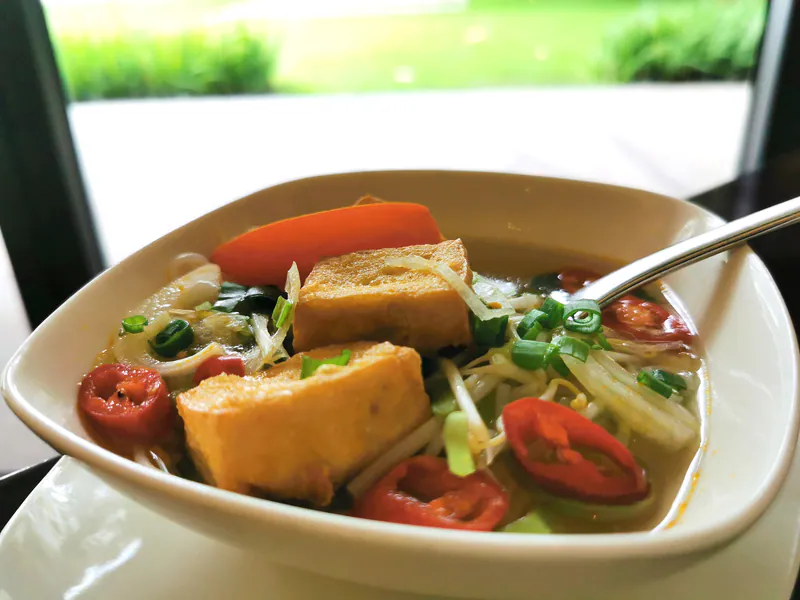
Bún riêu (Vietnamese tomato and crab noodle soup)
Vietnamese · 2 h · 1066 kcal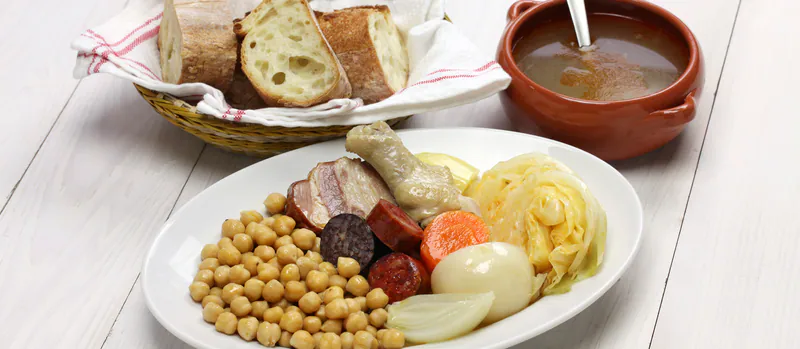
Cocido madrileño (Madrid chickpea and meat stew)
 Spanish · 4 h 30 min · 857 kcal
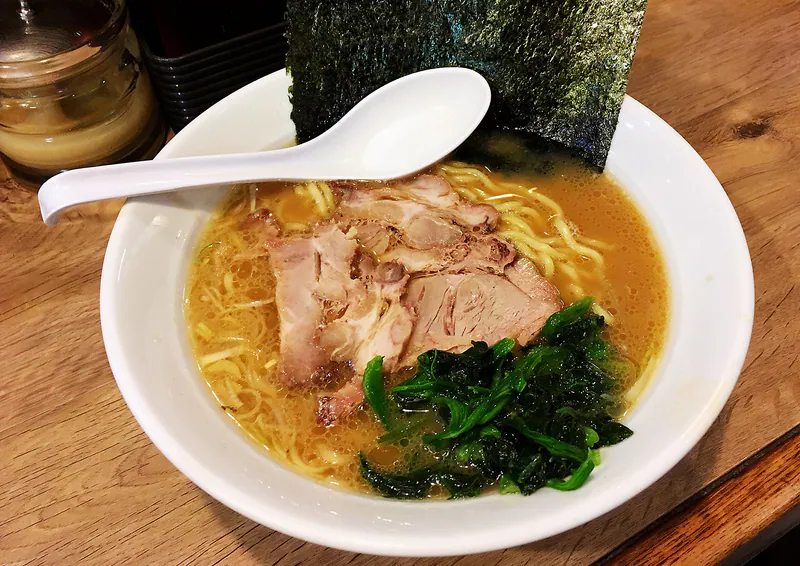
Iekei ramen (Yokohama-style pork and soy ramen)
 Japanese · 7 h 30 min · 1907 kcal
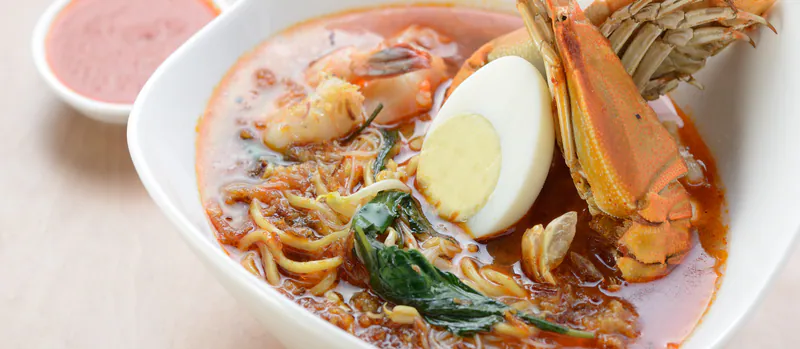
Penang Hokkien mee (Penang prawn noodle soup)
 Malaysian · 3 h · 1677 kcal
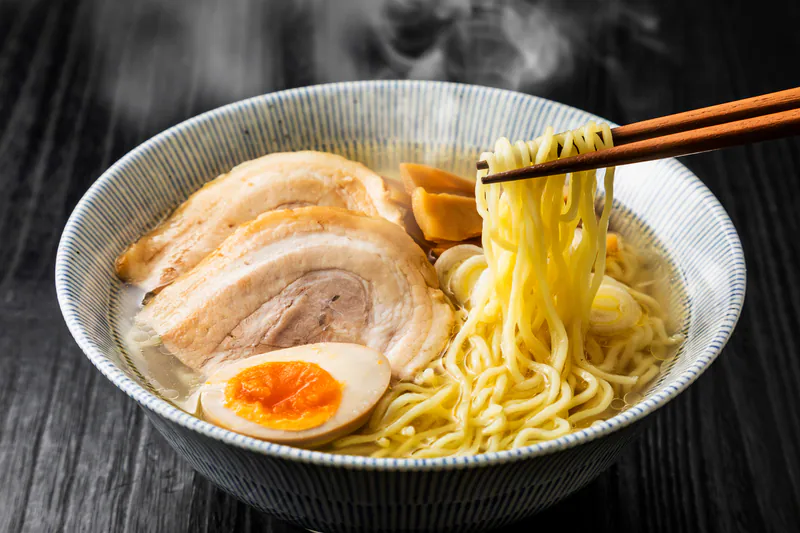
Shio ramen (salt ramen)
Japanese · 4 h 20 min · 1770 kcalSouse (Trinidad pickled pork with cucumber and lime)
 Trinidadian · 3 h 30 min · 169 kcal
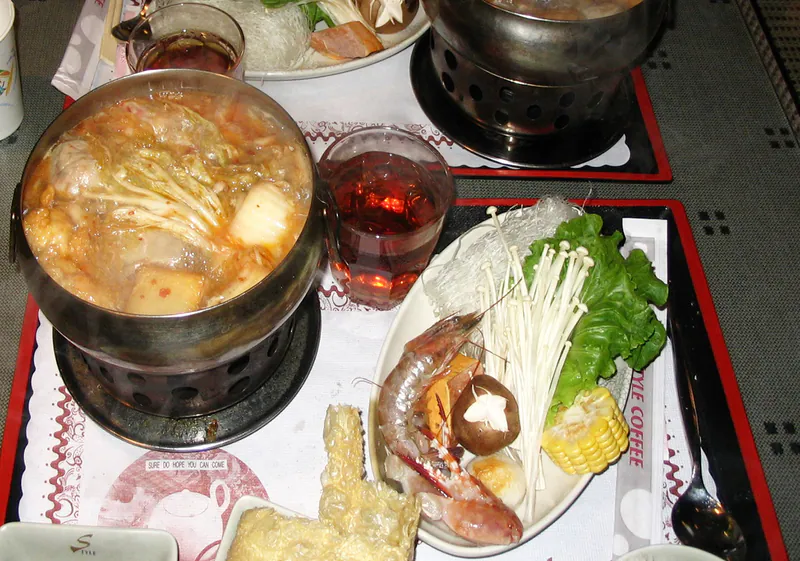
Taiwanese hot pot (huoguo)
 Taiwanese · 3 h 10 min · 940 kcal
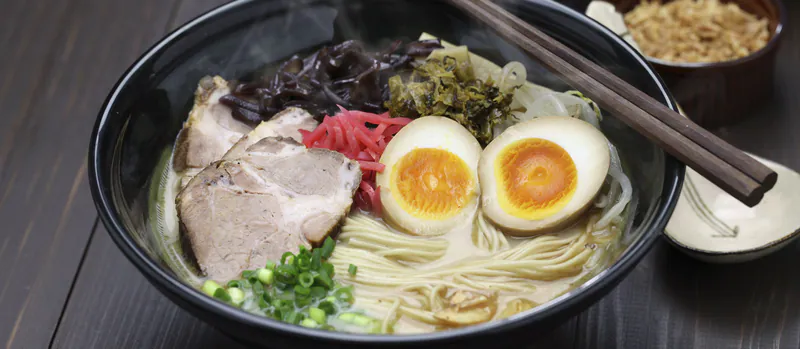
Tonkotsu ramen
Japanese · 13 h 40 min · 1939 kcal
More pork
Pork
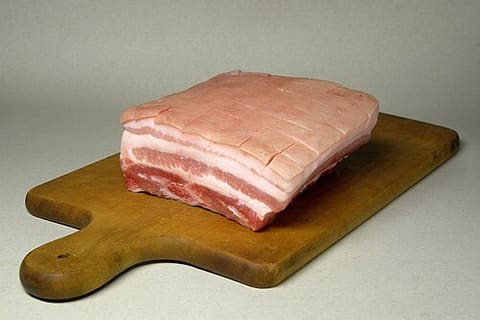
Pork
Meat from pigs: fatty, sweet cuts like belly and shoulder for slow cooking, lean loin and tenderloin for quick cooking.
509 recipes
Pork
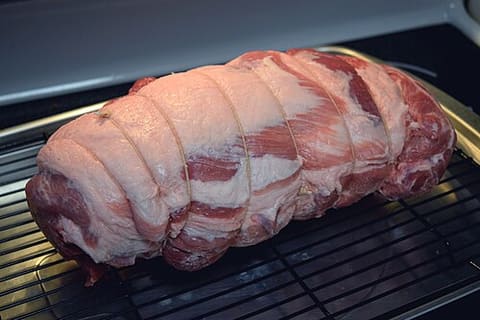
Pork shoulder
Well-marbled pork shoulder (butt, collar): the cut for pulled pork, char siu, carnitas and slow roasts.
99 recipes
Pork
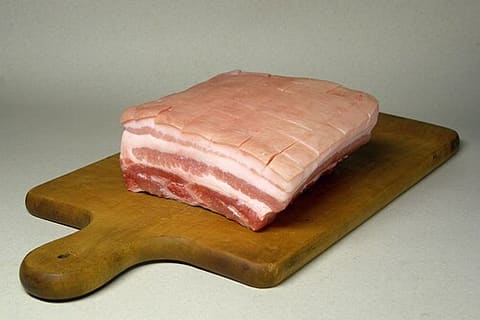
Pork belly
Layers of fat and meat from the pig's underside, with skin; braised, roasted for crackling or grilled in slices.
84 recipes
Pork
Ground pork
Minced pork, mild and fatty; the base of dumplings, mapo tofu, meatballs, larb and sausages.
83 recipes
Pork
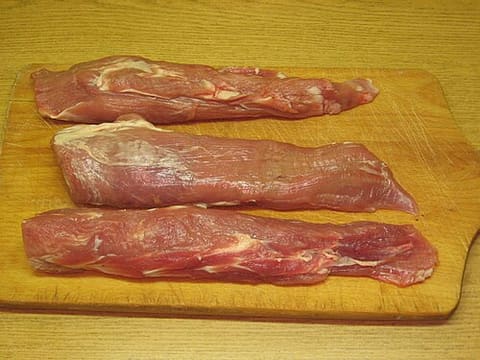
Pork tenderloin
Small, lean, tender pork fillet that roasts or sears in minutes; easily overcooked.
8 recipes
Pork
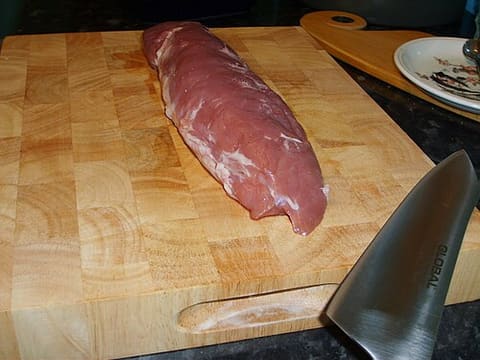
Pork loin
Lean pork from along the back, with a fat cap; sold as roasts and chops, boneless or on the bone.
22 recipes
Pork
Pork spare ribs
Pork ribs with meat between the bones; barbecued, braised, steamed with black bean or cut small for soups.
13 recipes
Pork
Pork knuckle (ham hock, fresh)
The lower leg joint of the pig, rich in skin and collagen; roasted crisp or boiled until falling apart.
8 recipes