
Panettone (home method)
Contains egg (no meat or fish)
Panettone · panettone
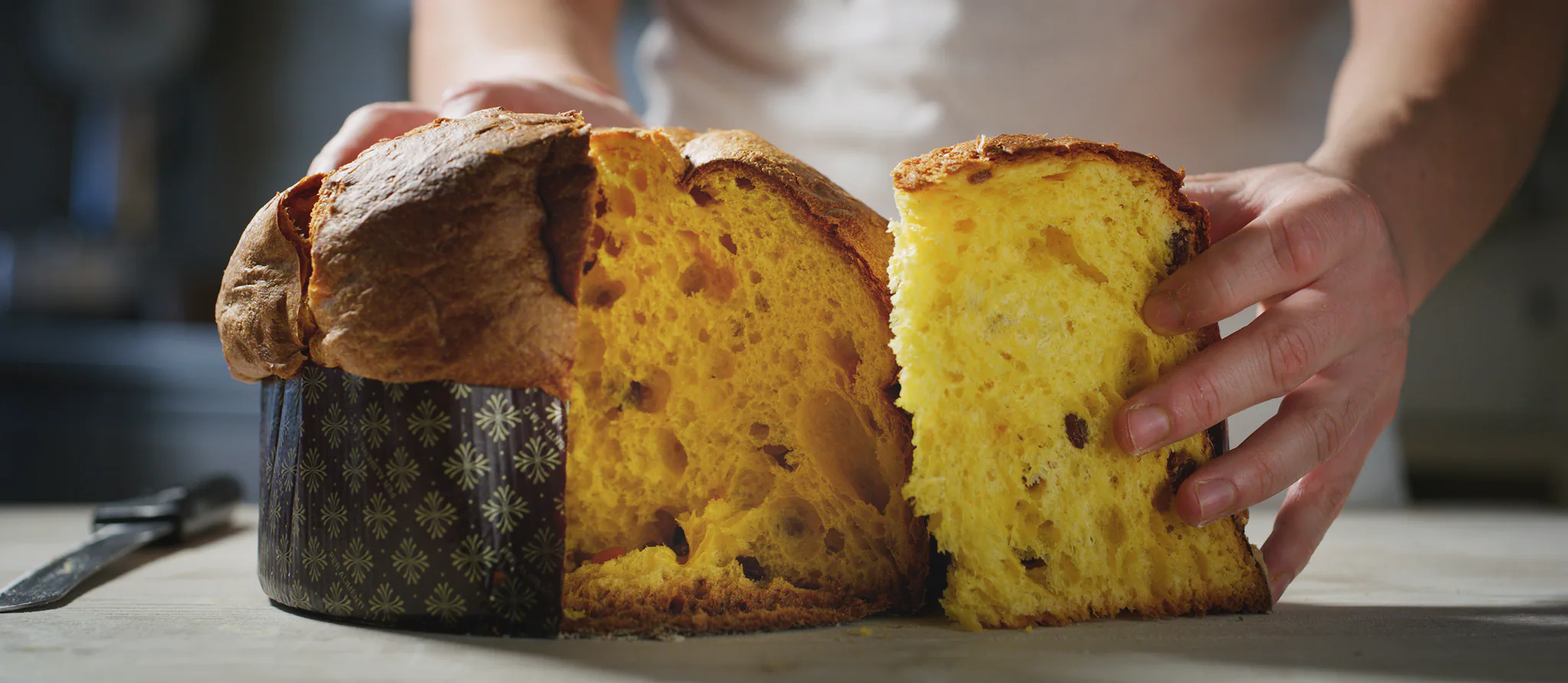
A tall, feather-light Milanese Christmas bread enriched with egg yolks, butter and honey and studded with sultanas and candied orange and lemon peel. This home version uses two doughs and long, slow rises with instant yeast instead of a sourdough mother, and hangs upside down to cool so the dome does not collapse.
Panettone (home method) is an Italian bread from Italy, ready in about 1 hour 50 minutes and made with bread flour, egg yolk and unsalted butter. It serves 10 and is rated advanced to cook.
- Prep
- 1 h
- Cook
- 50 min
- Total
- 1 h 50 min
- Serves
- 10
- Level
- Advanced
- Calories
- 399
Plus about 12 hours for the first dough, 6–8 hours for the final rise and 8 hours hanging upside down to cool.
Main ingredients
Ingredients
For the first dough
For the second dough
For the fruit
To bake
Method
First dough
15 minStep 1
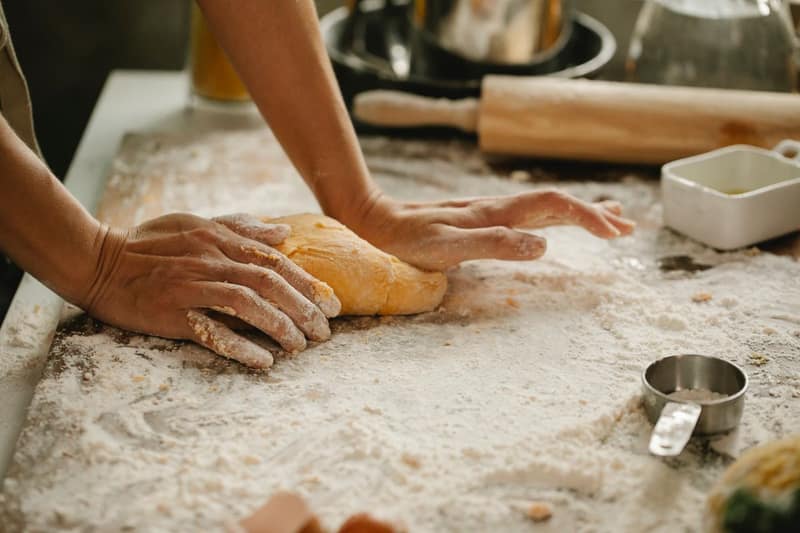
First dough, the evening before: mix the 150 g flour, 2 g yeast, water, 40 g sugar (opens in a new tab) and 2 yolks in a stand mixer (opens in a new tab) with the dough hook until smooth, about 8 minutes. Add the 50 g soft butter bit by bit and knead until the dough is silky and elastic. Cover and leave at warm room temperature (24–26 °C) for about 12 hours, until tripled.
How it looks · Photo: Klaus Nielsen on Pexels
Second dough
30 minStep 2
Second dough: add the 200 g flour, second 2 g yeast, 60 g sugar (opens in a new tab), honey (opens in a new tab) and milk (opens in a new tab) to the first dough and knead for 5 minutes. Add the 4 yolks one at a time, letting each be absorbed. Knead in the salt.
Step 3
Beat the zests and vanilla (opens in a new tab) into the 110 g butter, then add it to the dough a spoonful at a time, kneading until each addition disappears. Knead until the dough is glossy and stretches into a thin, translucent sheet without tearing.
If the dough gets warmer than 26 °C, chill the bowl for 15 minutes before carrying on, or the butter will separate out.
Fruit
1 h 25 minStep 4
Soak the sultanas (opens in a new tab) in warm water or rum (opens in a new tab), then drain and pat dry. Knead them in briefly with the candied peel on low speed, just until evenly spread.
- 5 min
Step 5
Rest the dough covered for 45 minutes, then shape into a taut ball on a buttered surface and drop it into an 18 cm panettone paper case (or a tall 15 cm tin lined with buttered baking paper standing 10 cm above the rim). Cover and rise in a warm place for 6–8 hours, until the dome is just above the rim.
- 10 min
Step 6
Heat the oven (opens in a new tab) to 175 °C. Leave the panettone uncovered for 15 minutes to form a skin, then cut a shallow cross on top and put the knob of butter in the centre.
- 15 min
- 175°C
Step 7
Bake on the lowest shelf for 45–50 minutes until deep brown and the centre reads 94 °C on a thermometer. Cover loosely with foil if it browns too fast.
Step 8
Immediately push two long skewers (opens in a new tab) through the base of the paper case, about 3 cm up, and hang the panettone upside down between two tall pans or chairs. Leave to cool completely, 6–8 hours, before turning it right way up.
Food safety: The skewers go through the paper and the base of the bread; handle the hot panettone with oven gloves.
At a glance
1 · First dough in a bowl
 Bread flour
 Instant yeast
 Sugar
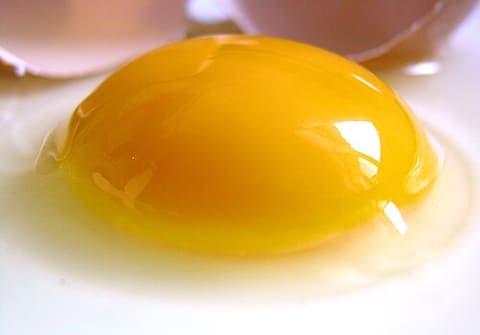 Egg yolk
 Unsalted butter
then second
2 · Second dough in a bowl
- Bread flour
- Instant yeast
- Sugar
 Honey
- Egg yolk
 Milk
- Unsalted butter
 Orange zest
 Lemon zest
 Vanilla extract
 Salt
then soak
3 · Fruit in a pan
 Raisins
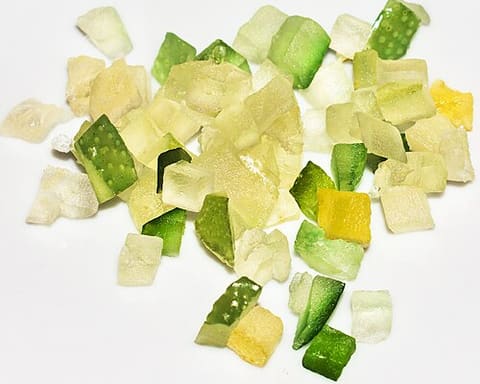 Candied mixed peel
 Rum
About this dish
- Origin
- Milan, Lombardy, Italy · Commonly attributedSweet Christmas breads were baked in Milan by the 15th century; the tall modern form dates from 20th-century Milanese bakers. Several romantic legends about its name ('pan de Toni') are unproven.Also popular in Peru, Brazil, Argentina, SwitzerlandMore food from Italy
Italy - Dish
- Breakfast · Snack · Dessert · Breads & flatbreads · Cakes
- Cooking method
- Oven-baked
- Taste
- sweet, buttery, citrusy, fruity
- Diet
- Vegetarian (lacto-ovo) · No nut ingredientsWorked out from the ingredients. How labels work
All labels
Vegetarian (lacto-ovo) · Eggetarian · Pescatarian · Flexitarian-friendly · No nut ingredients · Pork-free · Beef-free - Good for
- Festive & celebration · Make-ahead
- Cook more with
- Bread flour · Egg yolk · Unsalted butter · Raisins · Instant yeast · Sugar
Allergens
- Contains: Milkfrom unsalted butter, milk
- Contains: Eggsfrom egg yolk
- Contains: Wheatfrom bread flour
- Contains: Glutenfrom bread flour
- May contain: Sulphitesfrom raisins, candied mixed peel
Based on typical versions of these ingredients and not verified allergen-free. Brands differ and cross-contact happens, so always check labels. For severe allergies, follow your clinician’s advice.
Nutrition
399 kcal per serving
Estimated1 serving ≈ 110 g · recipe makes 10
Where the energy comes from
- Protein 7%
- Carbohydrate 55%
- Fat 38%
| Nutrient | Per serving | Per 100 g* |
|---|---|---|
| Energy | 399 kcal | 362 kcal |
| Protein | 6.7 g | 6 g |
| Carbohydrate | 55.7 g | 50.6 g |
| Net carbohydrate | 54 g | 49 g |
| Sugars | 27.9 g | 25.3 g |
| Added sugars | 18.6 g | 16.9 g |
| Fibre | 1.7 g | 1.6 g |
| Fat | 17.2 g | 15.7 g |
| Saturated fat | 9.7 g | 8.8 g |
| Trans fat | — | — |
| Cholesterol | 148 mg | 134 mg |
| Sodium | 177 mg | 161 mg |
| Salt equivalent | 0.4 g | 0.4 g |
Vitamins & minerals per serving
- Potassium
- 156 mg
- Calcium
- 38 mg
- Iron
- 2.1 mg
- Magnesium
- 15 mg
- Vitamin A (RAE)
- 157 µg
- Vitamin C
- 1 mg
- Vitamin D
- 0.6 µg
- Vitamin B12
- 0.2 µg
- Folate (DFE)
- 127 µg
How these numbers were made
- Calculated from USDA FoodData Central (SR Legacy) per-100 g values and the listed quantities.
- *Per 100 g of combined raw ingredients; the cooked dish may weigh more or less.
- Optional ingredients are not included: rum.
- Candied mixed peel: Generic candied fruit data used for candied citrus peel (orange, lemon, citron).
- “—” means the value isn’t known for enough of the ingredients; it is never zero by default.
- Values are estimates for guidance, not for medical dosing. U.S. Department of Agriculture, Agricultural Research Service. FoodData Central, 2019. fdc.nal.usda.gov.
Good to know
Tips
- The flavour improves for a day or two after baking; wrap it airtight once cool.
- Room temperature drives the timings: in a cool kitchen the rises can take twice as long.
Common mistakes
- Adding the butter too fast or to a dough that is not yet developed, which leaves it greasy and heavy.
- Cooling it the right way up: the soft crumb sinks under its own weight.
Serve with
- Cut in tall wedges and serve with sweet wine, spumante, hot chocolate or mascarpone cream.
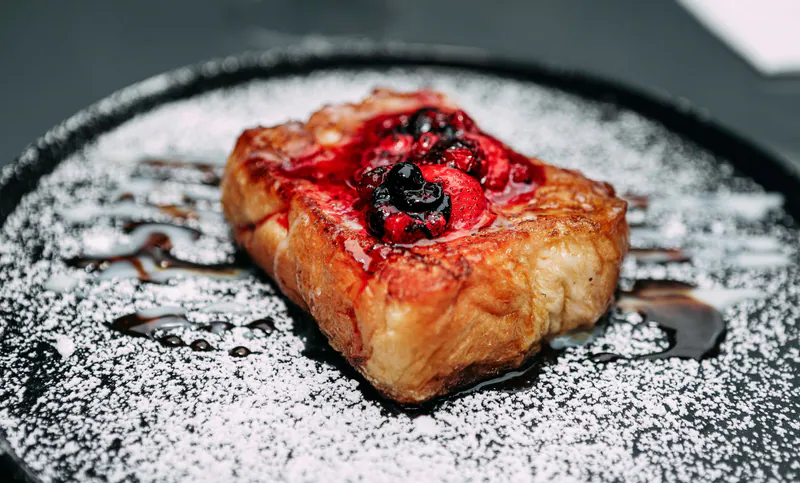
- Stale panettone makes excellent French toast or bread-and-butter pudding.
Storage
- Keeps 1 week in an airtight bag at room temperature, or 2 months frozen.
Variations
- Pandoro: Verona's star-shaped Christmas bread, with no fruit and dusted with icing sugar.
- Panettone al cioccolato: Chocolate chips replace the sultanas and peel.
- Panetón (Peru): Peru's hugely popular version, eaten with hot chocolate at Christmas.
Original editorial recipe · FriendsPantry editorial · source: TasteAtlas (dish facts) · Not yet independently reviewed · Added
Recipe DNA
How this dish is built
Built from the recipe’s own sections. Each band’s width is its share of the dish by weight. Choose a component to see what it does.
Structure
For the first dough
- Bread flour150 g
- Instant yeast2 g
- Water, lukewarm90 ml · 90 g
- Sugar40 g
- Egg yolk2 piece · 34 g
- Unsalted butter, very soft50 g
Reviews & corrections
Reviews come from signed-in cooks and appear after a moderator checks them. We never show made-up ratings.
You might also like
Dresden Christmas stollen
 German · 16 h 45 min · 275 kcal · Vegetarian
Rich Hot Chocolate
International · 10 min · 367 kcal · Vegetarian
Brioche con gelato
 Italian · 4 h · 435 kcal · Contains egg
Hot cross buns
 British · 3 h 10 min · 301 kcal · Contains egg