
Challah (braided Sabbath bread)
Contains egg (no meat or fish)
חלה · ḥallah
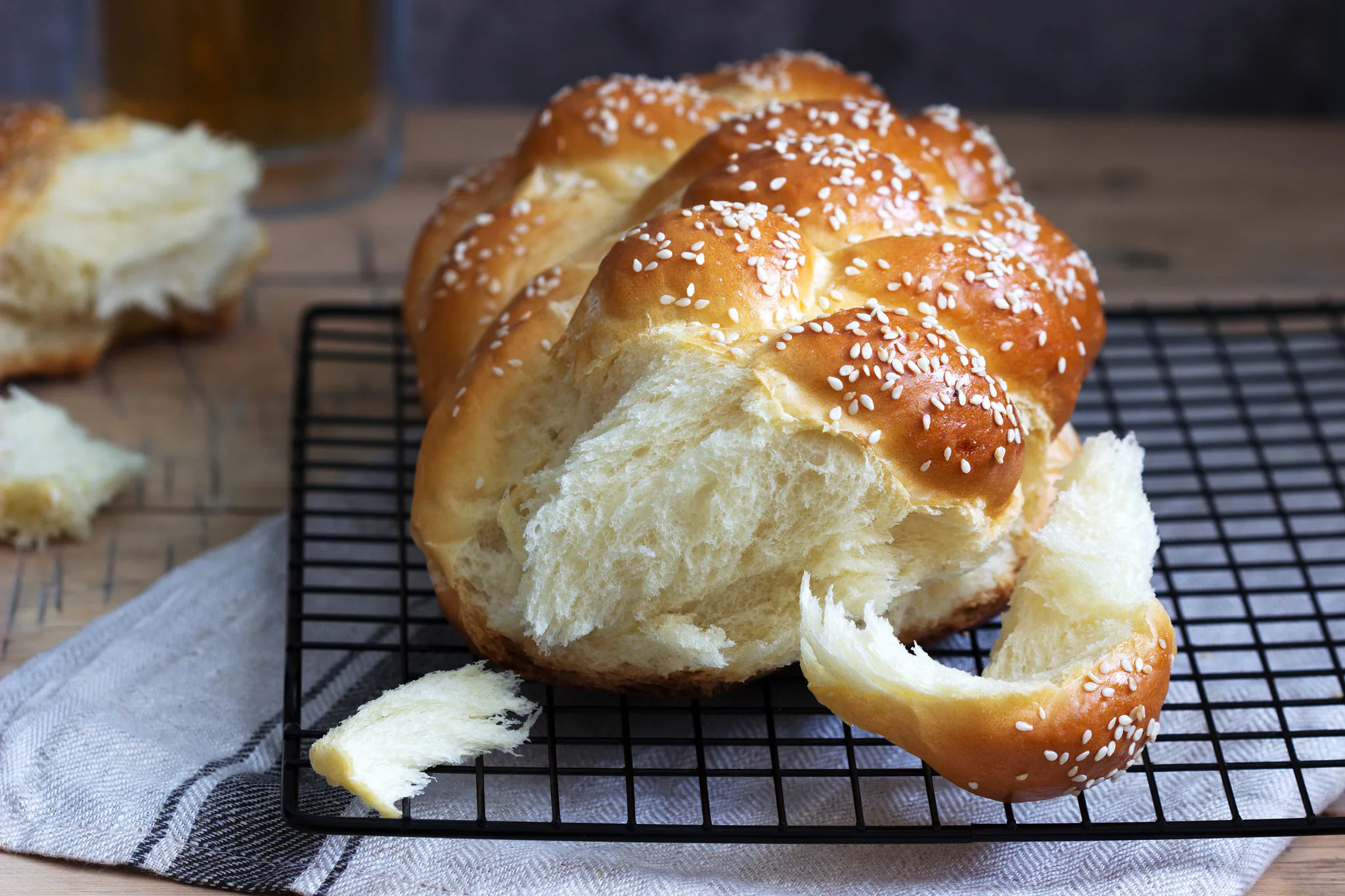
A soft, slightly sweet egg bread enriched with oil, braided into a glossy, golden loaf and scattered with sesame or poppy seeds. Two loaves are blessed and shared at the start of the Sabbath meal and on Jewish holidays.
Challah (braided Sabbath bread) is an Israeli bread, ready in about 3 hours 25 minutes and made with bread flour, egg and neutral vegetable oil. It serves 12 and is rated intermediate to cook.
- Prep
- 40 min
- Cook
- 30 min
- Rest
- 2 h 15 min
- Total
- 3 h 25 min
- Serves
- 12
- Level
- Intermediate
- Calories
- 232
Main ingredients
Method
Dough
35 minStep 1
Mix the flour, yeast, sugar (opens in a new tab) and salt in a large bowl. Add the lukewarm water, 2 eggs (opens in a new tab), the yolk and the oil and mix to a shaggy dough.
Step 2
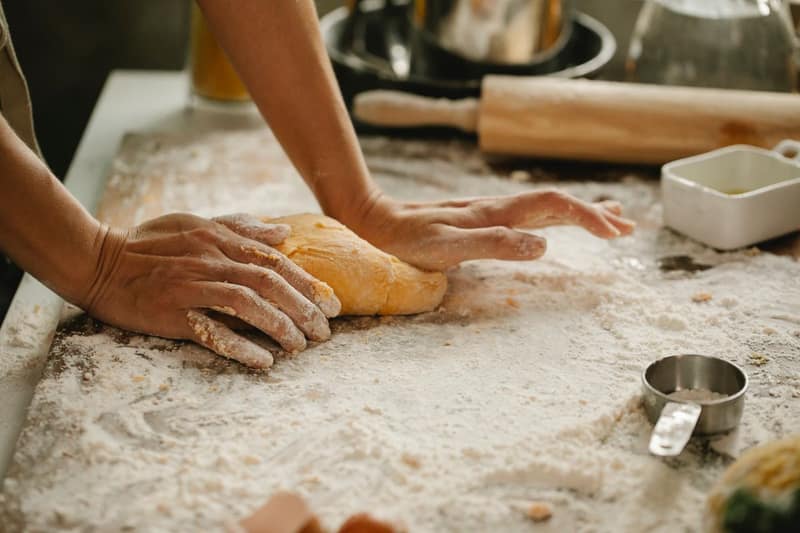
Knead by hand for 10–12 minutes, or 7–8 minutes in a stand mixer (opens in a new tab) with the dough hook, until smooth, soft and elastic. The dough should be only slightly tacky.
How it looks · Photo: Klaus Nielsen on Pexels Step 3
Cover and leave to rise in a warm place for 1½–2 hours, until doubled.
Step 4
Knock back the dough and divide it in half, then each half into 3 equal pieces. Roll each piece into a rope about 40 cm long, thicker in the middle and tapered at the ends.
- 10 min
Step 5
For each loaf, pinch 3 ropes together at one end and braid them tightly, then pinch the other end and tuck both ends under. Set the two loaves on a lined baking tray.
For a taller loaf, braid with 4 or 6 strands.
Glaze
33 minStep 6
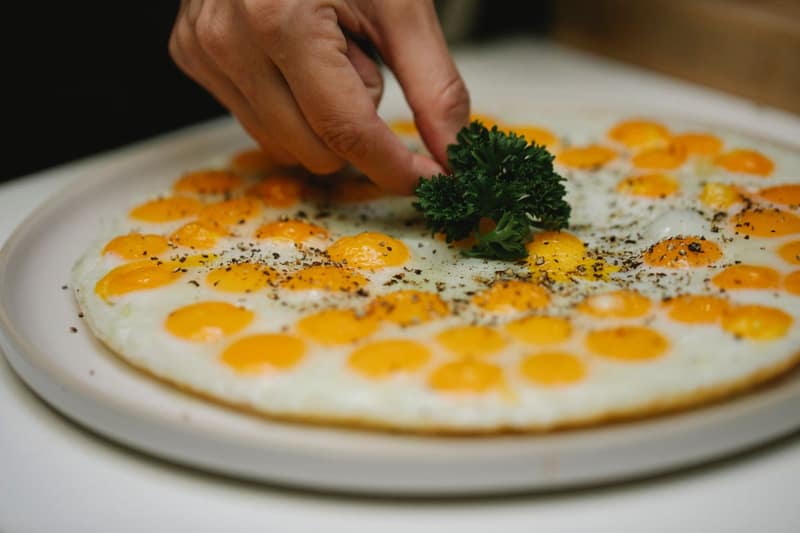
Beat the glaze egg (opens in a new tab) with 1 tbsp water and brush the loaves. Leave to rise, loosely covered, for 45 minutes until puffy. Heat the oven (opens in a new tab) to 180 °C.
Step 7
Brush again with egg (opens in a new tab), sprinkle with sesame (opens in a new tab) or poppy seeds and bake for 28–32 minutes until deep golden and hollow-sounding underneath (88–90 °C inside). Cool on a rack.
If the braids brown too fast, cover loosely with foil for the last 10 minutes.
How it looks · Photo: Klaus Nielsen on Pexels
At a glance
1 · Dough in a bowl
 Bread flour
 Instant yeast
 Sugar
 Salt
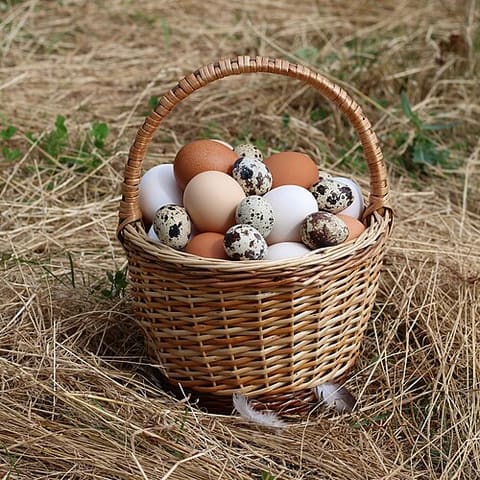 Egg
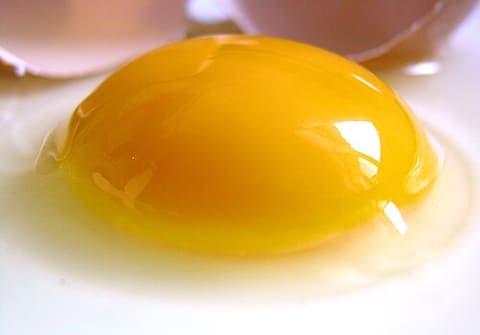 Egg yolk
 Neutral vegetable oil
then beat
2 · Glaze in a pan
- Egg
 Sesame seeds
About this dish
- Origin
- Ashkenazi Jewish communities of Central and Eastern Europe · Commonly attributedThe name refers to the portion of dough set aside as an offering in the Torah; the braided, egg-enriched loaf developed among German and Eastern European Jews in the late Middle Ages and travelled with them to Israel, the Americas and South Africa (where it is called kitke).Also popular in Israel, United States, United Kingdom, South Africa, Canada
- Dish
- Dinner · Breakfast · Breads & flatbreads
- Cooking method
- Oven-baked
- Taste
- sweet, rich, nutty
- Diet
- Vegetarian (lacto-ovo) · Dairy-free · No nut ingredientsWorked out from the ingredients. How labels work
All labels
Vegetarian (lacto-ovo) · Eggetarian · Ovo-vegetarian · Pescatarian · Flexitarian-friendly · Dairy-free · No nut ingredients · Alcohol-free · Pork-free · Beef-free · DASH-style - Good for
- Festive & celebration · Make-ahead · Freezer-friendly
- Cook more with
- Bread flour · Egg · Instant yeast · Sugar · Egg yolk
- Techniques
- Baking · Kneading · Fermentation
Allergens
- Contains: Eggsfrom egg, egg yolk
- Contains: Wheatfrom bread flour
- Contains: Glutenfrom bread flour
- Contains, can be adapted: Sesamefrom sesame seeds
Based on typical versions of these ingredients and not verified allergen-free. Brands differ and cross-contact happens, so always check labels. For severe allergies, follow your clinician’s advice.
Nutrition
232 kcal per serving
Calculated1 serving ≈ 82 g · recipe makes 12
Where the energy comes from
- Protein 12%
- Carbohydrate 61%
- Fat 27%
| Nutrient | Per serving | Per 100 g* |
|---|---|---|
| Energy | 232 kcal | 282 kcal |
| Protein | 7 g | 8.5 g |
| Carbohydrate | 34.8 g | 42.3 g |
| Net carbohydrate | 33.6 g | 40.9 g |
| Sugars | 4.3 g | 5.3 g |
| Added sugars | 4.2 g | 5.1 g |
| Fibre | 1.2 g | 1.4 g |
| Fat | 6.9 g | 8.4 g |
| Saturated fat | 1 g | 1.2 g |
| Trans fat | — | — |
| Cholesterol | 62 mg | 75 mg |
| Sodium | 408 mg | 497 mg |
| Salt equivalent | 1 g | 1.2 g |
Vitamins & minerals per serving
- Potassium
- 66 mg
- Calcium
- 17 mg
- Iron
- 2.1 mg
- Magnesium
- 13 mg
- Vitamin A (RAE)
- 25 µg
- Vitamin C
- 0 mg
- Vitamin D
- 0.3 µg
- Vitamin B12
- 0.1 µg
- Folate (DFE)
- 142 µg
How these numbers were made
- Calculated from USDA FoodData Central (SR Legacy) per-100 g values and the listed quantities.
- *Per 100 g of combined raw ingredients; the cooked dish may weigh more or less.
- Optional ingredients are not included: sesame seeds.
- “—” means the value isn’t known for enough of the ingredients; it is never zero by default.
- Values are estimates for guidance, not for medical dosing. U.S. Department of Agriculture, Agricultural Research Service. FoodData Central, 2019. fdc.nal.usda.gov.
Good to know
Tips
- A double coat of egg wash — before and after the final rise — gives the classic lacquered shine.
- Day-old challah makes the best French toast and bread pudding.
Common mistakes
- Adding too much flour while kneading, which makes the bread dry; the dough should be soft.
- Braiding loosely, so the loaf spreads instead of rising tall.
Serve with
- Torn and dipped in salt (or honey at Rosh Hashanah) after the blessing.
- Toasted for breakfast, or as French toast.
Food safety
- Batter and dough containing raw egg should not be tasted before cooking.
Storage
- Keeps 2 days wrapped at room temperature, or 3 months frozen.
Reheating
- Warm in a 160 °C oven for 5–10 minutes.
Variations
- Round raisin challah: For Rosh Hashanah the dough is enriched with raisins and coiled into a round loaf, symbolising the cycle of the year.
- Kitke (South Africa): The South African name for challah, usually a plaited loaf scattered with poppy seeds.
- Berches (Germany): The German-Jewish Sabbath bread, made without eggs and often with potato in the dough.
- Colaci: Braided Sabbath loaves of the Romanian and Moldovan Jewish tradition.
Original editorial recipe · FriendsPantry editorial · source: TasteAtlas (dish facts) · Not yet independently reviewed · Added
Recipe DNA
How this dish is built
Reviews & corrections
Reviews come from signed-in cooks and appear after a moderator checks them. We never show made-up ratings.
You might also like
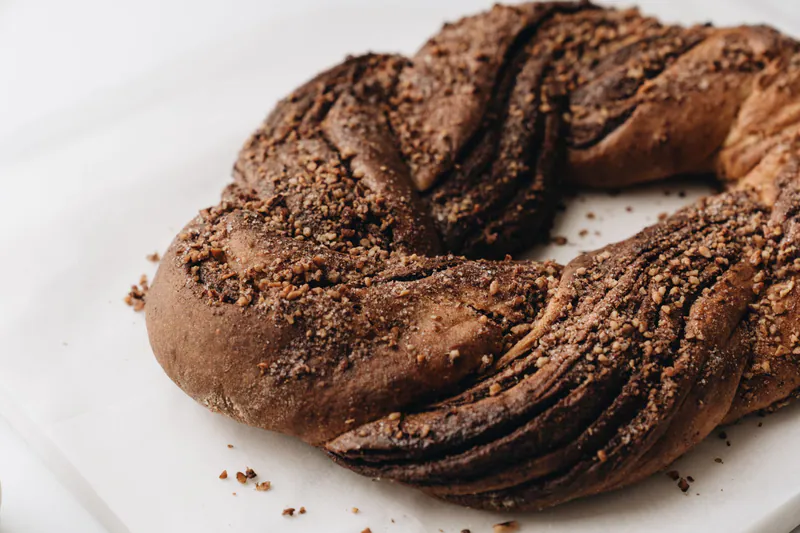
Chocolate babka
 Polish · 15 h 25 min · 349 kcal · Contains egg
Matzo ball soup
 American · 2 h 50 min · 330 kcal
New York-style bagels
American · 14 h 45 min · 233 kcal · Vegetarian
Malawach (Yemenite flaky fried flatbread)
 Israeli · 2 h 40 min · 442 kcal · Contains egg