
 Italian · Mediterranean · Pasta
Linguine allo scoglio (seafood linguine)
Non-vegetarian
Linguine allo scoglio
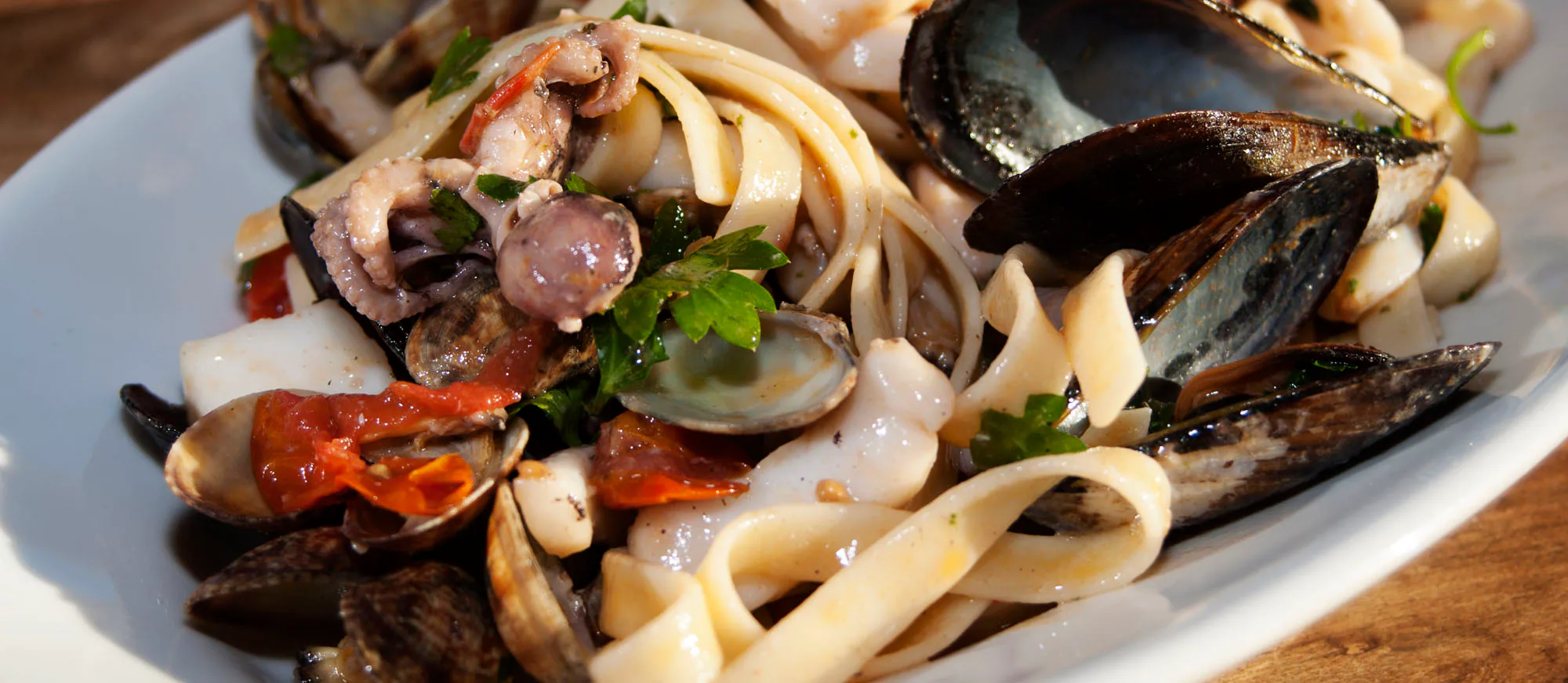
Linguine tossed with mussels, clams, squid and prawns in a light sauce of garlic, chilli, white wine, olive oil and cherry tomatoes, finished in the pan so the pasta soaks up the seafood juices. A southern Italian seaside trattoria classic.
Linguine allo scoglio (seafood linguine) is an Italian pasta dish from Italy, ready in about 1 hour 55 minutes and made with dried pasta, mussels and clams. It serves 4 and is rated intermediate to cook.
- Prep
- 30 min
- Cook
- 25 min
- Rest
- 1 h
- Total
- 1 h 55 min
- Serves
- 4
- Level
- Intermediate
- Calories
- 897
Includes 1 hour purging the clams in salted water.
Main ingredients

Ingredients
For the seafood
For the sauce
Method
Seafood
10 minStep 1
Put the clams (opens in a new tab) in a bowl of cold salted water for 1 hour to release any sand, then rinse. Scrub and debeard the mussels (opens in a new tab).
- 10 min
Food safety: Discard mussels or clams with cracked shells, or any that stay open when tapped before cooking; after cooking, discard any that have not opened.
Sauce
28 minStep 2
Heat 2 tbsp olive oil (opens in a new tab) in a large pan with the 2 crushed garlic cloves (opens in a new tab) and the parsley (opens in a new tab) stalks. Add the mussels (opens in a new tab) and clams (opens in a new tab), splash in half the wine, cover and cook over high heat, shaking the pan, until the shells open, 3–5 minutes. Lift out the shellfish, discarding any that stay closed, and strain the cooking liquid through a fine sieve to remove grit. Take about two-thirds of the mussels out of their shells.
How it looks · Photo: Katerina Holmes on Pexels Step 3
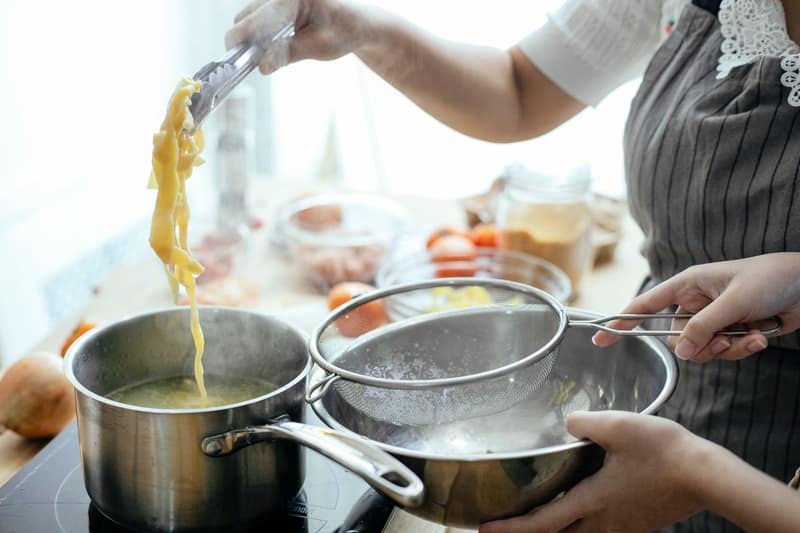
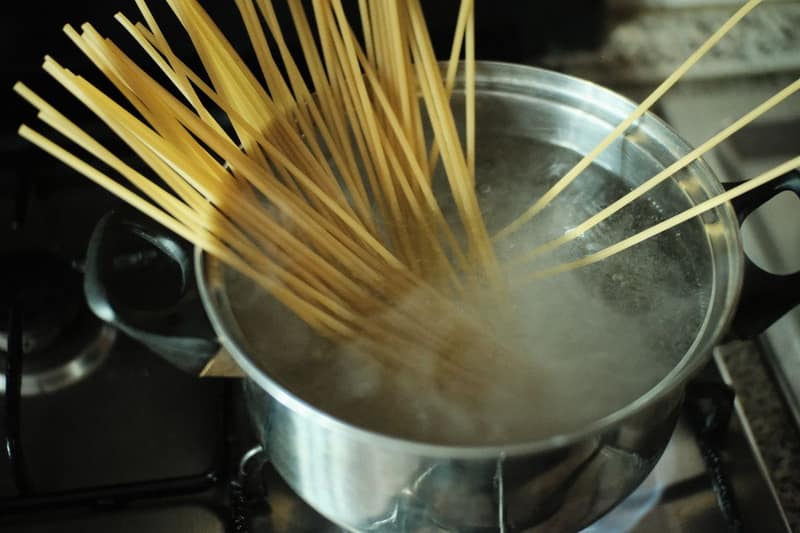
Bring a large pot of water to the boil and salt it. Cook the linguine (opens in a new tab) for 2 minutes less than the packet time.
- 10 min
- high heat
- Stockpot / large pot (opens in a new tab)
How it looks · Photo: Gianpiero Ferraro on Pexels Step 4
While the pasta (opens in a new tab) cooks, wipe out the pan and heat the remaining oil with the sliced garlic (opens in a new tab) and chilli until the garlic is pale golden. Add the squid (opens in a new tab) and prawns (opens in a new tab) and sauté for 1–2 minutes, then pour in the remaining wine and let it bubble for 1 minute. Add the cherry tomatoes (opens in a new tab) and cook for 3 minutes until they soften and release their juices.
- 7 min
- medium-high heat
- Frying pan / skillet (opens in a new tab)
Step 5
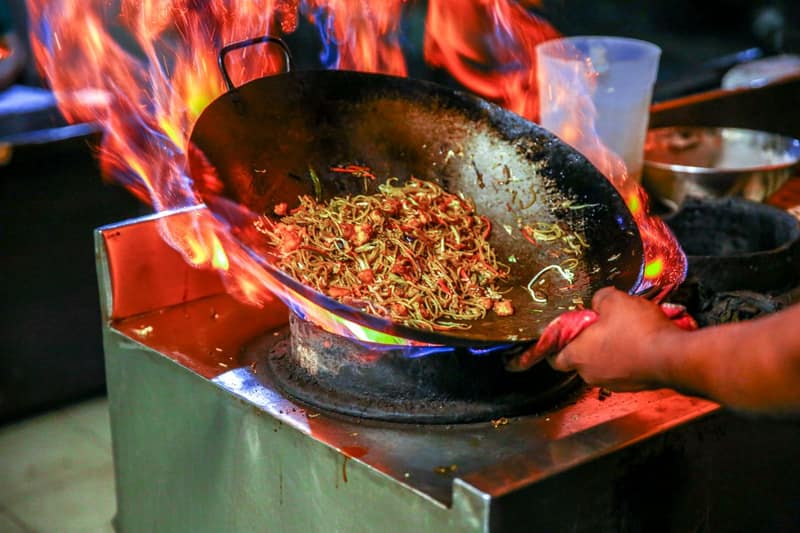
Add the strained shellfish liquid, then the drained linguine (opens in a new tab) with a ladle of pasta water. Toss over high heat for 2 minutes until the pasta is al dente and coated in a glossy sauce. Return all the mussels (opens in a new tab) and clams (opens in a new tab), add the chopped parsley (opens in a new tab) and a grind of pepper (opens in a new tab), toss once more and serve immediately.
- 3 min
- high heat
- Tongs (opens in a new tab)
How it looks · Photo: Aesthos AR. Photography on Pexels
At a glance
1 · Seafood in a bowl
 Mussels
 Clams
 Squid
 Prawns / shrimp
then heat
2 · Sauce in a pan
 Olive oil
 Garlic
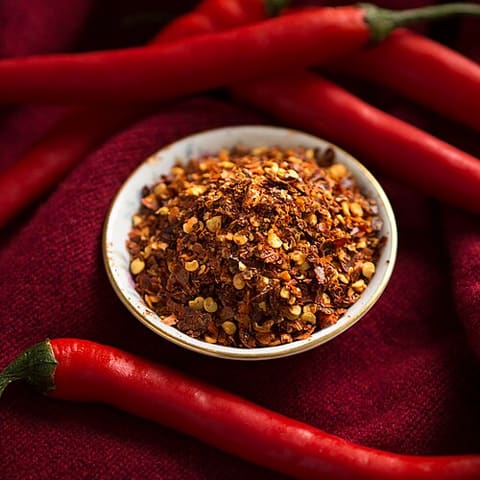 Red chilli flakes
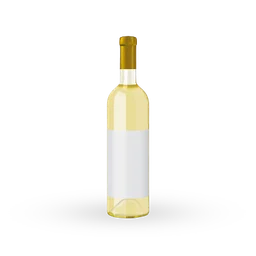 Dry white wine
 Tomato
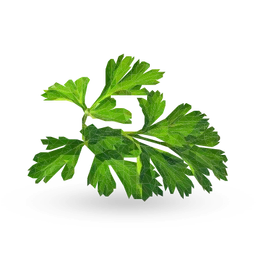 Parsley
About this dish
- Origin
- Campania and the southern Italian coast, Italy · Commonly attributed'Allo scoglio' means 'from the rocks', after the shellfish gathered from coastal reefs; it became a fixture of Neapolitan seaside restaurants in the second half of the 20th century.More food from Italy
Italy - Dish
- Lunch · Dinner · Pasta · Main courses
- Cooking method
- Boiled, Sautéed, Steamed
- Taste
- savoury, garlicky, fresh, umami
- Diet
- Pescatarian · Dairy-free · No nut ingredients · High-proteinWorked out from the ingredients. How labels work
All labels
Pescatarian · Non-vegetarian · Dairy-free · Egg-free · No nut ingredients · No added sugar · Pork-free · Beef-free · High-protein - Good for
- Festive & celebration
- Cook more with
- Dried pasta · Mussels · Clams · Squid · Prawns / shrimp · Garlic
Allergens
- May contain: Eggsfrom dried pasta
- Contains: Crustaceansfrom prawns / shrimp
- Contains: Molluscsfrom mussels, clams, squid
- Contains: Wheatfrom dried pasta
- Contains: Glutenfrom dried pasta
- Contains: Sulphitesfrom dry white wine
Based on typical versions of these ingredients and not verified allergen-free. Brands differ and cross-contact happens, so always check labels. For severe allergies, follow your clinician’s advice.
Nutrition
897 kcal per serving
Estimated1 serving ≈ 571 g · recipe makes 4
Where the energy comes from
- Protein 29%
- Carbohydrate 42%
- Fat 28%
| Nutrient | Per serving | Per 100 g* |
|---|---|---|
| Energy | 897 kcal | 157 kcal |
| Protein | 63 g | 11 g |
| Carbohydrate | 90.7 g | 15.9 g |
| Net carbohydrate | — | — |
| Sugars | — | — |
| Added sugars | 0 g | 0 g |
| Fibre | — | — |
| Fat | 26.9 g | 4.7 g |
| Saturated fat | 4.1 g | 0.7 g |
| Trans fat | — | — |
| Cholesterol | 266 mg | 47 mg |
| Sodium | — | — |
| Salt equivalent | — | — |
Vitamins & minerals per serving
- Potassium
- 1132 mg
- Calcium
- 165 mg
- Iron
- 11.6 mg
- Magnesium
- 164 mg
- Vitamin A (RAE)
- —
- Vitamin C
- —
- Vitamin D
- —
- Vitamin B12
- —
- Folate (DFE)
- —
How these numbers were made
- Calculated from USDA FoodData Central (SR Legacy) per-100 g values and the listed quantities.
- *Per 100 g of combined raw ingredients; the cooked dish may weigh more or less.
- Optional ingredients are not included: red chilli flakes.
- Not counted (tiny amounts or “to taste”): salt, black pepper — so sodium is shown as unknown.
- “—” means the value isn’t known for enough of the ingredients; it is never zero by default.
- Values are estimates for guidance, not for medical dosing. U.S. Department of Agriculture, Agricultural Research Service. FoodData Central, 2019. fdc.nal.usda.gov.
Good to know
Tips
- Taste before adding salt to the sauce: the shellfish liquor is naturally salty.
- Leave some shellfish in their shells for looks and take the rest out so the dish is easy to eat.
Common mistakes
- Overcooking the squid and prawns, which turns them rubbery — they need only a couple of minutes.
- Adding cheese: Italians do not put Parmesan on seafood pasta.
Serve with
- Serve in warm bowls with a chilled Falanghina or Fiano and crusty bread for the sauce.
Food safety
- Discard mussels or clams with cracked shells, or any that stay open when tapped before cooking; after cooking, discard any that have not opened.
Storage
- Best eaten straight away. Leftovers keep 1 day refrigerated.
Reheating
- Warm gently in a pan with a splash of water just until hot; the seafood toughens if overheated.
Variations
- Scoglio in bianco: Made without tomato, relying only on garlic, wine, oil and parsley.
- Scoglio al cartoccio: The almost-cooked pasta and seafood are sealed in a parchment parcel and finished in the oven.
Original editorial recipe · FriendsPantry editorial · source: TasteAtlas (dish facts) · Not yet independently reviewed · Added
Recipe DNA
How this dish is built
Built from the recipe’s own sections. Each band’s width is its share of the dish by weight. Choose a component to see what it does.
Reviews & corrections
Reviews come from signed-in cooks and appear after a moderator checks them. We never show made-up ratings.
You might also like
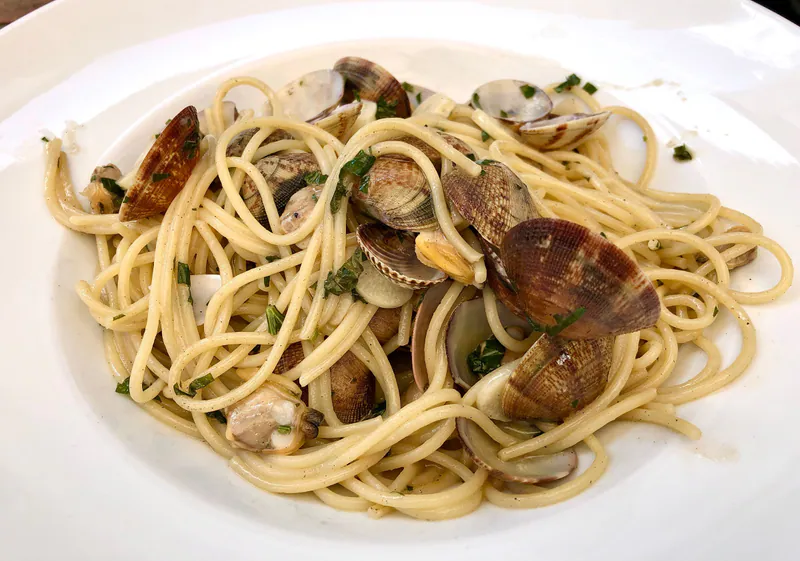
Spaghetti alle vongole
Italian · 1 h · 496 kcal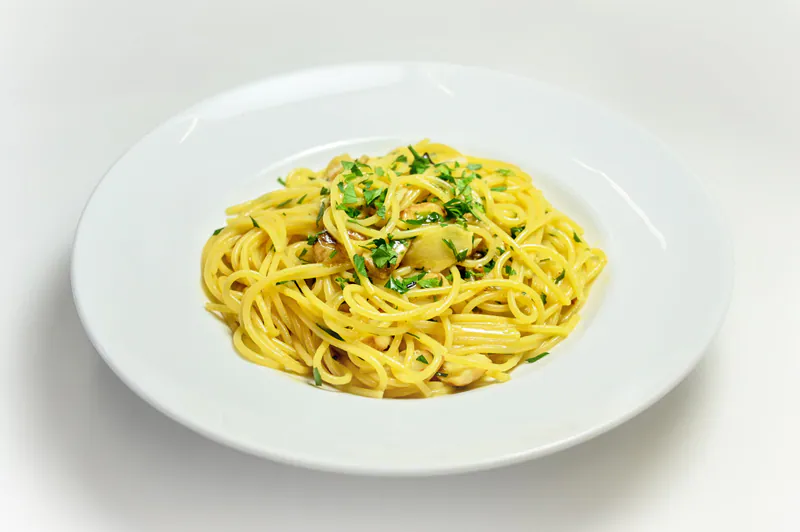
Spaghetti aglio, olio e peperoncino
Italian · 17 min · 582 kcal · Vegan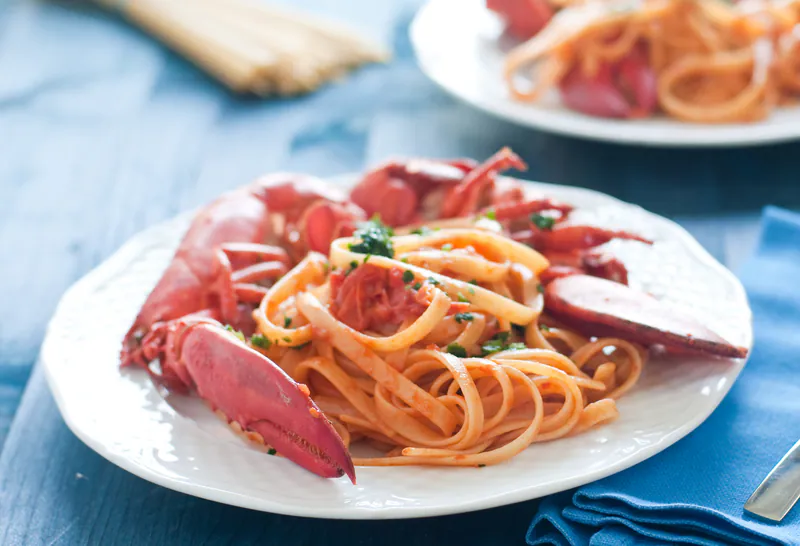
Linguine all'astice (linguine with lobster)
Italian · 1 h 20 min · 803 kcal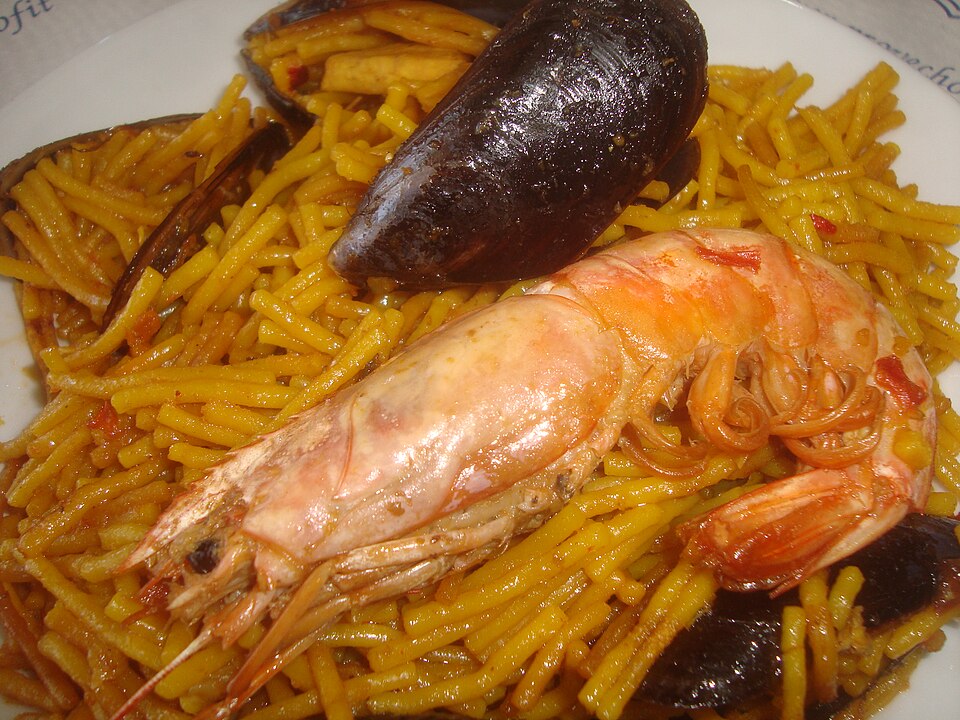
Fideuà (Valencian seafood noodles)
 Spanish · 1 h 5 min · 854 kcal