
Dry-heat cooking · beginner
Broiling
Also: grilling (UK), top-heat grilling, salamander
Cooking food a short distance below an intense overhead heat source.
What it is
Broiling uses radiant heat from an oven's top element or gas flame. It is grilling upside down: fast, intense and good for browning tops, melting cheese and cooking thin cuts.
Why cooks use it: It browns and blisters surfaces in minutes without heating the food much below the surface.
The science
Radiant heat falls off sharply with distance, so moving the rack a few centimetres changes the result a lot. Only the top surface receives strong heat.
Step by step
Set the rack so the food's surface is about 8–15 cm below the element.
Preheat the broiler for 5–10 minutes.
Use a metal tray (not glass that may not be rated for broiling).
Broil, watching constantly; turn thin cuts once.
Remove as soon as the top is browned or the core temperature is reached.
Heat and timing
- Broiling 250–300 °C · Home broilers commonly reach about 250–300 °C at the element; the food surface gets less.
Time: 1–3 minutes to brown a topping; 4–10 minutes for thin cuts.
How you know it’s right
- Bubbling and spotty browning
- Edges just charring
- Cheese molten and freckled
Common mistakes
- Walking away (seconds separate brown from burnt)
- Rack too close for thick food
- Using parchment that can ignite under the element
Troubleshooting
- Top burns before middle is hot
- Heat the dish through in the oven first and broil only to finish, or lower the rack.
- Uneven browning
- Rotate the tray halfway; most elements have hot spots.
Restaurant DNA
How professionals do it
Restaurants use a salamander, a wall-mounted broiler with an adjustable shelf, to glaze, gratinate and finish plates in seconds.
At home
The oven broiler with the rack in the top position does the same job; a kitchen blowtorch works for small areas.
General professional practice — not any particular restaurant’s recipe.
Food safety
- Never use parchment or paper under a broiler.
- Glass bakeware not labelled broiler-safe can shatter.
Practise it
Amritsari kulcha
 Punjabi · 3 h 10 min · 358 kcal · Vegetarian
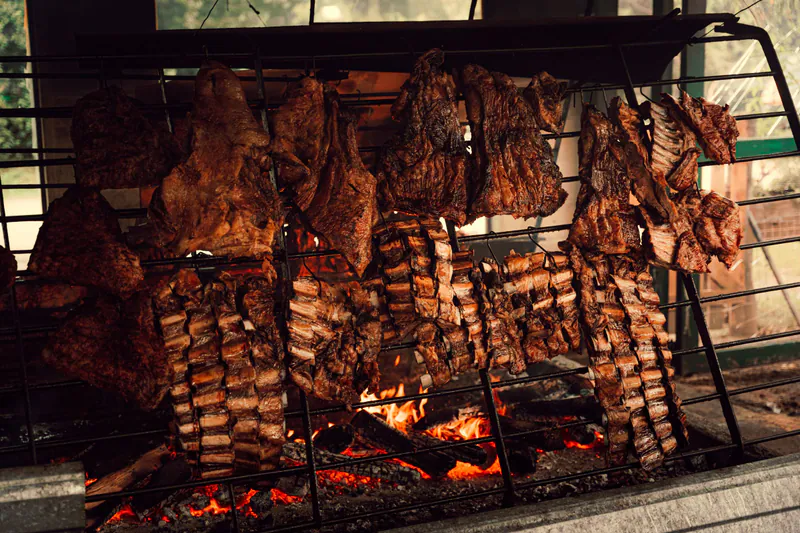
Argentine asado
 Argentine · 2 h 5 min · 653 kcal
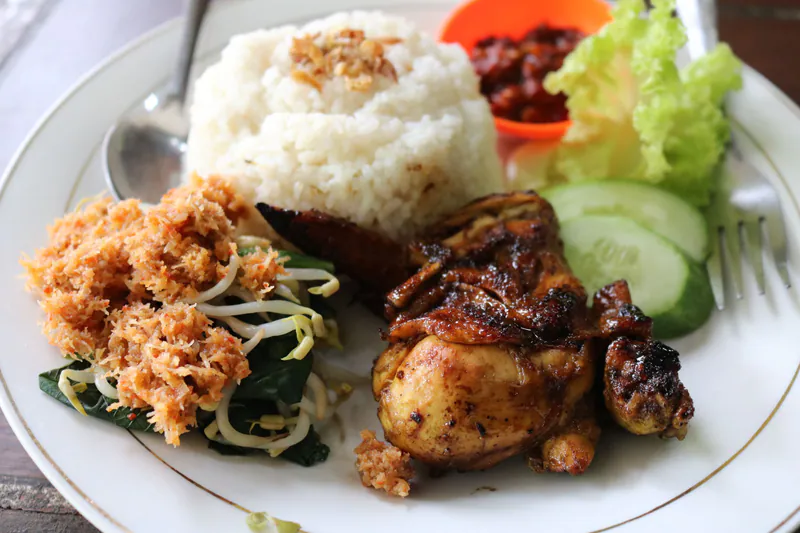
Ayam bakar
 Indonesian · 1 h 15 min · 716 kcal
Baba ghanoush (Lebanese-Syrian chopped style)
 Lebanese · 1 h 5 min · 123 kcal · Vegan
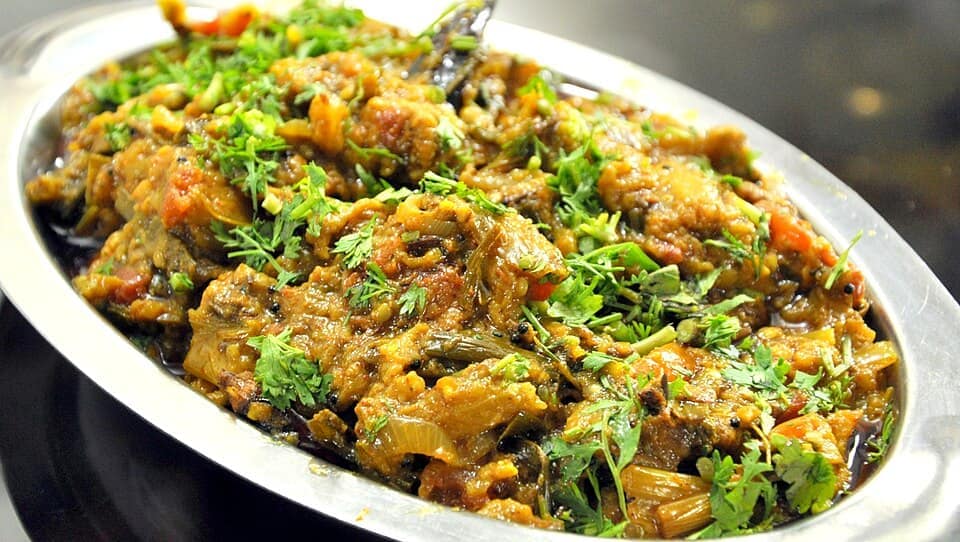
Baingan bharta
Punjabi · 40 min · 167 kcal · Vegan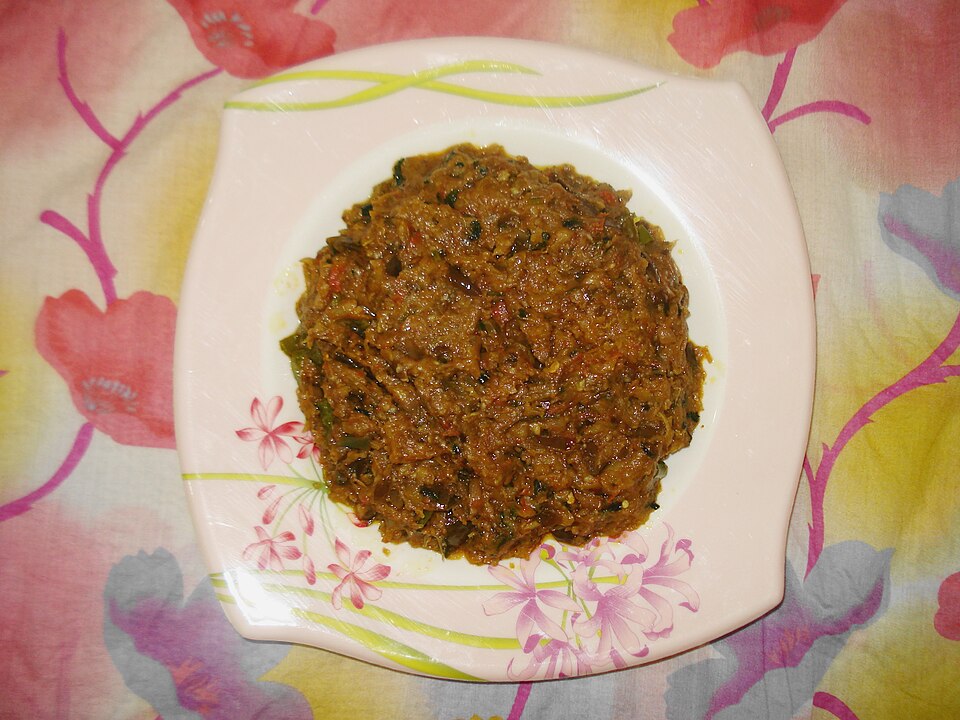
Begun bhorta
 Bangladeshi · 30 min · 94 kcal · Vegan
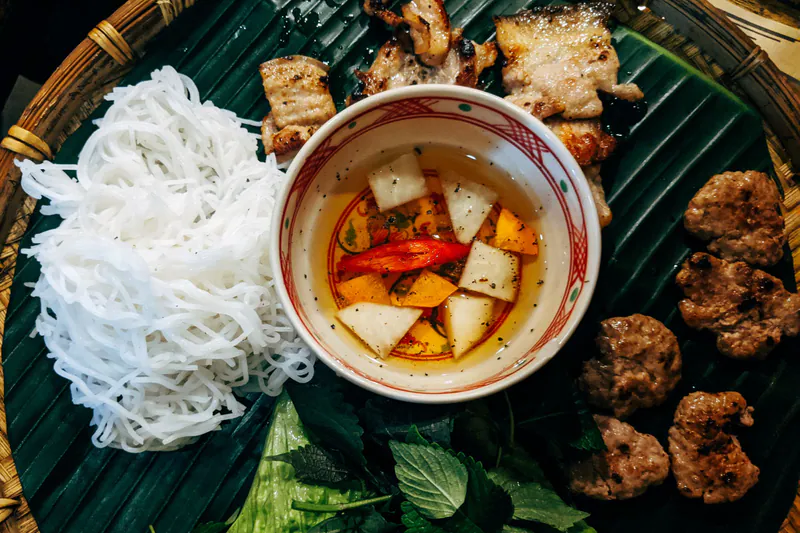
Bún chả
 Vietnamese · 1 h 50 min · 922 kcal
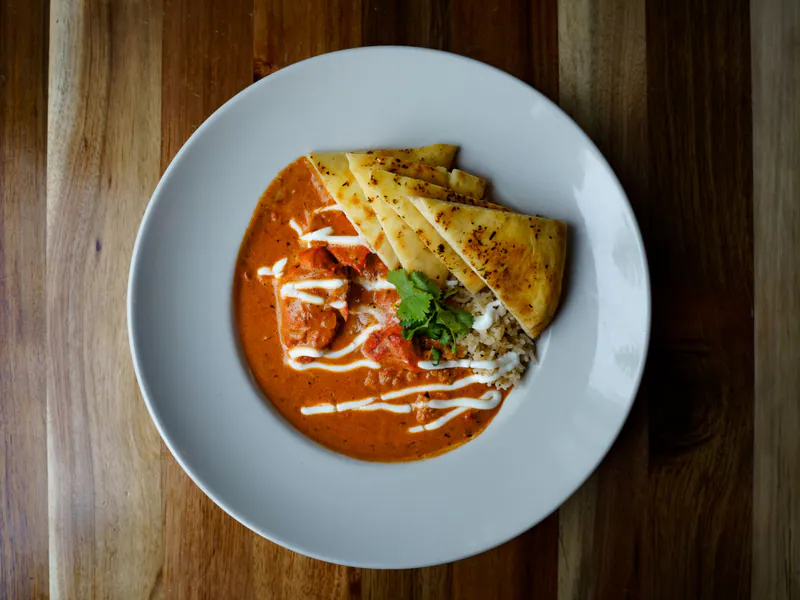
Butter chicken
Punjabi · 2 h 5 min · 559 kcal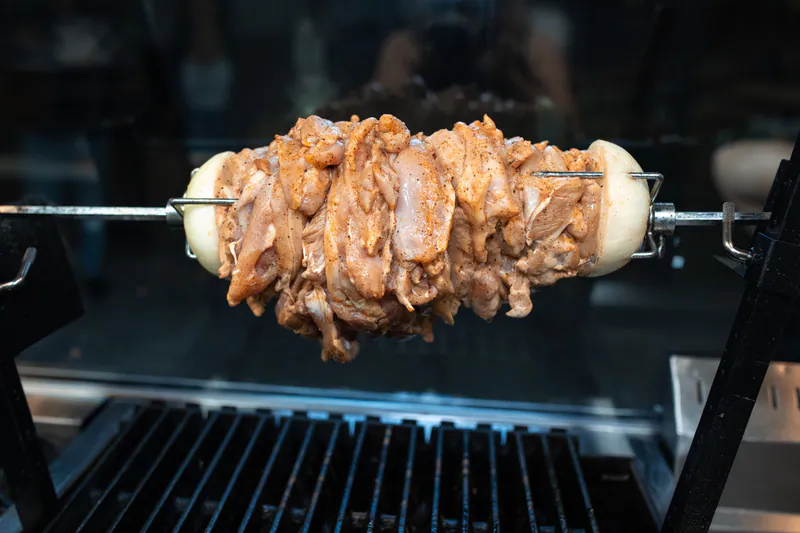
Chicken shawarma
Levantine · 50 min · 528 kcal
41 more
- Chicken tikka masala · Indian
- Chicken yassa · Senegalese
- Chiles en nogada · Mexican
- Chipotle salsa (salsa de chipotle) · Mexican
- Courgette frittata · Italian
- Croque monsieur · French
- Egg Kejriwal · Indian
- Ensaladang talong · Filipino
- Fërgesë (peppers, tomatoes and cheese) · Albanian
- Fırın sütlaç · Turkish
- Francesinha · Portuguese
- French onion soup · French
- Full English breakfast · British
- Goan bebinca · Goan
- Ikan sabuko · Timorese
- Kati kati · Cameroonian
- Kilishi · Nigerien
- Kuku sabzi · Iranian
- Litti chokha · Indian
- Machboos ala dajaj · Kuwaiti
- Mashuai · Omani
- Melitzanosalata (Greek smoky aubergine dip) · Greek
- Milanesa a la napolitana · Argentine
- Mish-mash (Bulgarian peppers, tomatoes and eggs) · Bulgarian
- Molletes · Mexican
- Naan (home-oven method) · Indian
- Nasu dengaku · Japanese
- Paneer tikka · Punjabi
- Peanut Butter Banana Toast · International
- Phở gà · Vietnamese
- Raclette · Swiss
- Saba shioyaki · Japanese
- Salmon onigiri · Japanese
- Seekh kebab · Pakistani
- Seychellois grilled fish with Creole sauce · Seychellois
- Sticky rice with jeow mak len · Lao
- Tamales de rajas con queso · Mexican
- Tandoori roti · Punjabi
- Tortang talong · Filipino
- Welsh rarebit · British
- Yakitori (negima) · Japanese