Eritrean · Ethiopian · Breads & flatbreads
Himbasha (Eritrean celebration bread)
Vegetarian
ሕምባሻ · ḥəmbaša
A broad, round, lightly sweet yeast bread scented with cardamom and sometimes fenugreek or nigella, its top scored into a wheel or geometric pattern before baking. Baked for holidays, weddings and family gatherings in Eritrea and northern Ethiopia, and eaten with tea or coffee.
Himbasha (Eritrean celebration bread) is an Eritrean bread, ready in about 2 hours 45 minutes and made with all-purpose flour and ground cardamom. It serves 10 and is rated intermediate to cook.
No licensed photograph of this dish yet.
- Prep
- 25 min
- Cook
- 35 min
- Rest
- 1 h 45 min
- Total
- 2 h 45 min
- Serves
- 10
- Level
- Intermediate
- Calories
- 276
Main ingredients
Ingredients
For the dough
For the topping
Method
Dough
21 minStep 1
Mix the flour, yeast, sugar (opens in a new tab), salt, cardamom, fenugreek (opens in a new tab) and nigella. Add the oil, warm milk (opens in a new tab) and water and knead for 10 minutes to a soft, smooth dough, working in the raisins (opens in a new tab) at the end. Cover and leave to rise until doubled, about 1 hour.
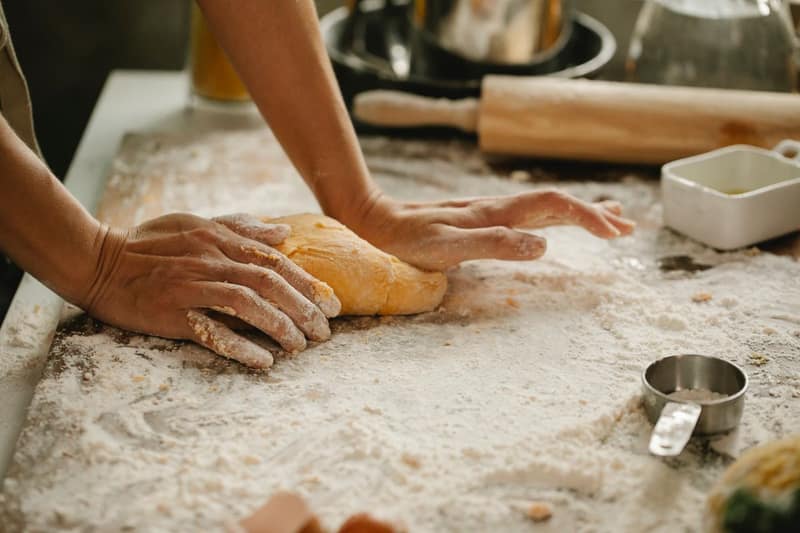
How it looks · Photo: Klaus Nielsen on Pexels Step 2
Knock back the dough and press it into an oiled 28–30 cm round tin or onto a lined tray as a flat disc about 3 cm thick.
Step 3
Score a pattern on top with a sharp knife: a circle in the centre with spokes radiating to the edge like a wheel, then short cross-cuts in each section. Cut about 5 mm deep. Cover and leave to rise for 45 minutes while the oven (opens in a new tab) heats to 180 °C.
- 5 min
- 180°C
Pinching the dough between the cuts with your fingers makes the classic raised pattern.
Topping
35 minStep 4
Brush with oil, sprinkle with sesame seeds (opens in a new tab) and bake for 30–35 minutes until deep golden and hollow-sounding underneath. Cool on a rack before cutting into wedges.
- 35 min
- 180°C
- Oven (opens in a new tab)
- Pastry brush (opens in a new tab)
- Cooling rack (opens in a new tab)
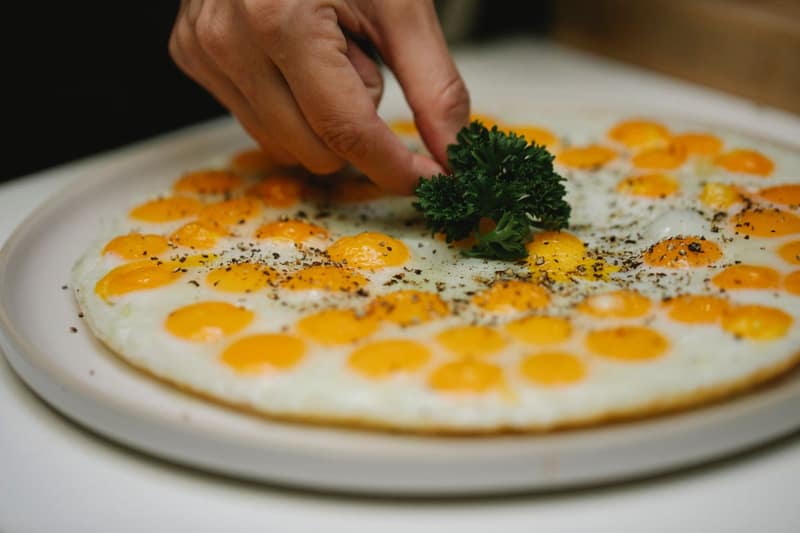
How it looks · Photo: Klaus Nielsen on Pexels
At a glance
1 · Dough in a bowl
 All-purpose flour
 Instant yeast
 Sugar
 Salt
 Ground cardamom
 Fenugreek
 Nigella seeds
 Neutral vegetable oil
 Milk
 Raisins
then brush
2 · Topping in a bowl
- Neutral vegetable oil
 Sesame seeds
About this dish
- Origin
- Eritrea and Tigray (northern Ethiopia), Eritrea · Well documentedAssociated especially with Tigrinya-speaking communities; the decorative cuts vary by family and occasion.Also popular in EthiopiaMore food from Eritrea
Eritrea - Dish
- Breakfast · Snack · Breads & flatbreads
- Cooking method
- Oven-baked
- Taste
- aromatic / warmly spiced, sweet, nutty
- Diet
- Vegetarian (lacto-ovo) · No nut ingredientsWorked out from the ingredients. How labels work
All labels
Vegetarian (lacto-ovo) · Eggetarian · Lacto-vegetarian · Pescatarian · Flexitarian-friendly · Egg-free · No nut ingredients · Alcohol-free · Pork-free · Beef-free · DASH-style - Good for
- Festive & celebration · Make-ahead
- Cook more with
- All-purpose flour · Ground cardamom · Instant yeast · Sugar · Milk · Sesame seeds
- Techniques
- Baking · Kneading · Fermentation
Allergens
- Contains: Milkfrom milk
- Contains: Wheatfrom all-purpose flour
- Contains: Glutenfrom all-purpose flour
- Contains: Sesamefrom sesame seeds
- May contain: Sulphitesfrom raisins
Based on typical versions of these ingredients and not verified allergen-free. Brands differ and cross-contact happens, so always check labels. For severe allergies, follow your clinician’s advice.
Nutrition
276 kcal per serving
Calculated1 serving ≈ 94 g · recipe makes 10
Where the energy comes from
- Protein 9%
- Carbohydrate 64%
- Fat 28%
| Nutrient | Per serving | Per 100 g* |
|---|---|---|
| Energy | 276 kcal | 294 kcal |
| Protein | 6.1 g | 6.5 g |
| Carbohydrate | 43.6 g | 46.5 g |
| Net carbohydrate | 41.9 g | 44.6 g |
| Sugars | 4.9 g | 5.2 g |
| Added sugars | 4 g | 4.3 g |
| Fibre | 1.7 g | 1.8 g |
| Fat | 8.4 g | 8.9 g |
| Saturated fat | 0.9 g | 1 g |
| Trans fat | — | — |
| Cholesterol | 2 mg | 2 mg |
| Sodium | 242 mg | 257 mg |
| Salt equivalent | 0.6 g | 0.6 g |
Vitamins & minerals per serving
- Potassium
- 88 mg
- Calcium
- 37 mg
- Iron
- 2.5 mg
- Magnesium
- 17 mg
- Vitamin A (RAE)
- 7 µg
- Vitamin C
- 0 mg
- Vitamin D
- 0.2 µg
- Vitamin B12
- 0.1 µg
- Folate (DFE)
- 164 µg
How these numbers were made
- Calculated from USDA FoodData Central (SR Legacy) per-100 g values and the listed quantities.
- *Per 100 g of combined raw ingredients; the cooked dish may weigh more or less.
- Optional ingredients are not included: fenugreek, nigella seeds, raisins.
- “—” means the value isn’t known for enough of the ingredients; it is never zero by default.
- Values are estimates for guidance, not for medical dosing. U.S. Department of Agriculture, Agricultural Research Service. FoodData Central, 2019. fdc.nal.usda.gov.
Good to know
Tips
- Wrap the warm loaf in a tea towel as it cools to keep the crust soft.
Common mistakes
- Scoring too shallowly — the pattern disappears as the bread rises in the oven.
Serve with
- Serve in wedges with sweet spiced tea (shahi) or a coffee ceremony, or with butter and honey.
Storage
- Keeps 3 days well wrapped at room temperature; freezes for 2 months.
Reheating
- Warm wedges briefly in a low oven or toaster.
Variations
- Ambasha (Ethiopia) (Ethiopia): The Ethiopian name and version, often richer with niter kibbeh and a sprinkle of berbere-spiced butter on top.
- Plain himbasha: Made without raisins or seeds, flavoured only with cardamom.
History
Himbasha is one of the festive wheat breads of the Eritrean and Ethiopian highlands, where everyday meals rely on injera. Its decorated round shape marks it as a bread for celebrations and for welcoming guests.
Confidence: Commonly attributed
Original editorial recipe · FriendsPantry editorial · source: TasteAtlas (dish facts) · Not yet independently reviewed · Added
Recipe DNA
How this dish is built
Built from the recipe’s own sections. Each band’s width is its share of the dish by weight. Choose a component to see what it does.
Structure
For the dough
- All-purpose flour500 g
- Instant yeast7 g
- Sugar40 g
- Salt1 tsp · 6 g
- Ground cardamom1.5 tsp · 3.1 g
- Fenugreek, ground (optional)0.25 tsp · 0.9 g
- Nigella seeds (optional)0.5 tsp · 1.4 g
- Neutral vegetable oil60 ml · 55 g
- Milk, lukewarm150 ml · 155 g
- Water, lukewarm150 ml · 150 g
- Raisins (optional)50 g
Reviews & corrections
Reviews come from signed-in cooks and appear after a moderator checks them. We never show made-up ratings.
 Ethiopian · 48 h 55 min · 165 kcal ·