
Nature's Pantry
Fenugreek
Also: methi (Hindi) · kasuri methi (dried leaves) · Trigonella foenum-graecum
A bittersweet seed and herb. Studied for blood sugar and breast milk supply, with weak or mixed results.
Overall evidence
Small, mixed-quality studies with inconsistent results.
A few small or low-quality studies, inconsistent results, or mostly lab and animal work. Interesting, but not enough to rely on.
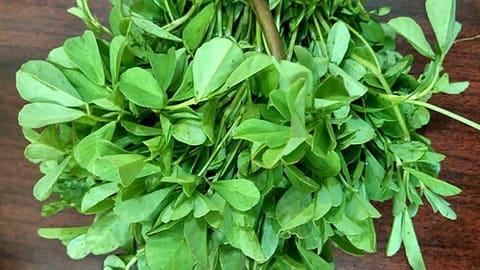
What it is
A legume whose seeds and leaves are used as spice and vegetable. The seeds smell of maple syrup and are slightly bitter.
Traditional use
Tradition, not evidence: how cultures use it, not proof that it works.
India
Seeds are tempered in oil for sambar and pickles; methi leaves are cooked with potatoes or kneaded into theplas. Methi laddoos are traditionally given to new mothers.
Ethiopia and Yemen
Fenugreek is a key ingredient in berbere and in hilbeh, a whipped fenugreek relish.
Middle East
Fenugreek appears in breads and spice mixes and in traditional postpartum foods.
What the research says
Each claim graded on its own evidence.
Fenugreek and blood sugar
Evidence level: Limited or early evidenceResearch suggests fenugreek may lower blood sugar in type 2 diabetes, but many studies were not high quality and NCCIH says there is not enough good evidence to judge.[1]
Fenugreek and breast milk supply
Evidence level: Limited or early evidenceA few studies have had mixed results, so it is unclear whether fenugreek increases milk supply.[1]
In food amounts
A quarter to one teaspoon of seeds per dish, or a tablespoon of dried leaves.
We describe everyday cooking amounts only, never supplement doses.
Safety
- Pregnancy and breastfeeding
- Fenugreek in amounts above normal food levels is not considered safe in pregnancy; its use has been linked with birth defects.[1]
- Medicines
- Large amounts may lower blood sugar too far, which matters if you take diabetes medicines. Talk to your doctor or pharmacist before using supplements.[1]
If you take regular medicines, are pregnant or breastfeeding, or are cooking for a baby or someone who is unwell, check with a doctor, pharmacist or midwife before using any food or supplement for a health reason.
Sources
- [1] Fenugreek — fact sheet — US National Center for Complementary and Integrative Health (NCCIH, NIH)
- [2] Food allergy — NHS (UK)
Sources were checked when this entry was written. Research changes; if you spot something out of date, please tell us.
Cook with fenugreek
- Fenugreek spice guide
- Dried fenugreek leaves spice guide
- Fenugreek: buying & storing
- Dried fenugreek leaves: buying & storing
Aam ki launji (sweet-sour raw mango chutney)
 Indian · 40 min · 85 kcal · Vegan
Adjika (red chilli paste)
 Georgian · 1 h 20 min · 13 kcal · Vegan
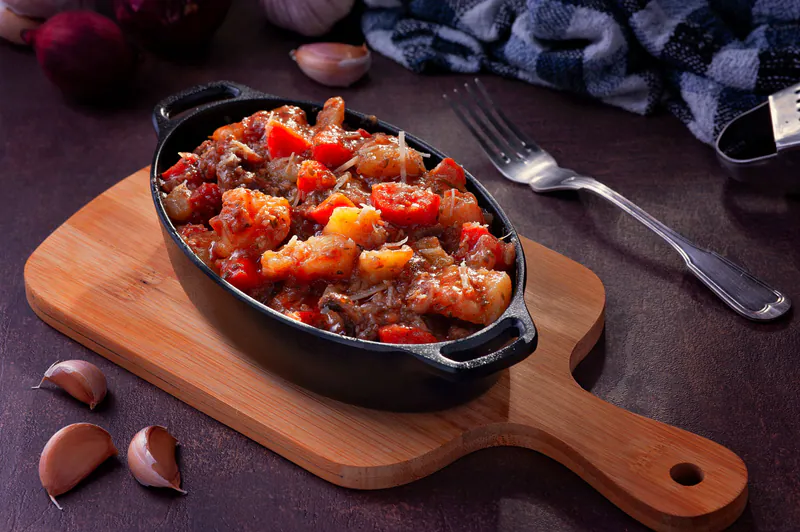
Ajapsandali
Georgian · 1 h 20 min · 325 kcal · VeganAllam pachadi (Andhra ginger chutney)
South Indian · 35 min · 56 kcal · VeganAloo sadeko
 Nepalese · 30 min · 205 kcal · Vegan
Aloo tama
Nepalese · 1 h 15 min · 223 kcal · VeganAmba (Iraqi mango pickle sauce)
 Iraqi · 72 h 45 min · 39 kcal · Vegan
Andhra tomato pachadi
South Indian · 50 min · 56 kcal · VeganAvakaya (Andhra mango pickle)
South Indian · 73 h · 49 kcal · Vegan
60 more
- Badrijani nigvzit · Georgian
- Beerakaya pachadi (ridge gourd chutney) · South Indian
- Bengali tomato-date chutney (tomato khejur chutney) · Bengali
- Berbere spice blend · Ethiopian
- Butter chicken · Punjabi
- Chakhokhbili · Georgian
- Chicken balti · British
- Chicken tikka masala · Indian
- Chole masala · Punjabi
- Dal bhat tarkari · Nepalese
- Dal makhani · Punjabi
- Dalle khursani achar (Sikkimese round chilli pickle) · Indian
- Dalma · Indian
- Everyday curry powder (British-style) · British
- Fahsa · Yemeni
- Georgian tomato and cucumber salad with walnuts · Georgian
- Ghormeh sabzi · Iranian
- Golbheda ko achar · Nepalese
- Gongura pachadi (Andhra sorrel-leaf chutney) · South Indian
- Gujarati dal · Gujarati
- Haryanvi kadhi · Indian
- Idli · South Indian
- Inji puli (Kerala ginger-tamarind relish) · South Indian
- Kadai paneer · Punjabi
- Kadhi pakora · Punjabi
- Kancha aamer chutney (Bengali green mango chutney) · Bengali
- Kara kuzhambu · South Indian
- Kiri hodi · Sri Lankan
- Kori gassi · South Indian
- Kukhura ko masu · Nepalese
- Kuku sabzi · Iranian
- Lobio · Georgian
- Macher jhol · Bengali
- Machha besara · Indian
- Madras curry powder · Indian
- Makhani gravy · Punjabi
- Malai kofta · Indian
- Malvani masala · Indian
- Masala dosa · South Indian
- Masor tenga · Indian
- Methi thepla · Gujarati
- Mirchi ka salan · Indian
- Missi roti · Punjabi
- Onion tomato uttapam · South Indian
- Palak paneer · Punjabi
- Panch phoron · Bengali
- Paneer paratha · Punjabi
- Pulihora (Andhra tamarind rice) · South Indian
- Punjabi mango pickle (aam ka achaar) · Punjabi
- Saltah · Yemeni
- Sambar · South Indian
- Sambar powder · South Indian
- Satsivi · Georgian
- Spinach pkhali · Georgian
- Sri Lankan roasted curry powder · Sri Lankan
- Tandoori chicken · Punjabi
- Tandoori masala · Punjabi
- Tomato khajuri khatta (Odia tomato-date chutney) · Indian
- Tomato thokku · South Indian
- Xaak bhaji (Assamese stir-fried greens) · Indian
Showing 9 of 69 recipes.
More from Nature's Pantry
- Ajwain (carom seeds)Evidence level: Traditional use only
- Amla (Indian gooseberry)Evidence level: Limited or early evidence
- Apple cider vinegarEvidence level: Limited or early evidence
- BarleyEvidence level: Strong evidence
- Beans, lentils and chickpeasEvidence level: Moderate evidence
- BeetrootEvidence level: Moderate evidence