
Grains, rice & flours · Flours
Rye flour
Flour from rye grain; low in gluten-forming ability but rich in gums, giving dense, moist, tangy breads.
Also called: medium rye flour, wholemeal rye flour, dark rye flour
Around the world: ruisjauho (fi) · rudzu milti (lv) · mąka żytnia (pl) · Roggenmehl (de)
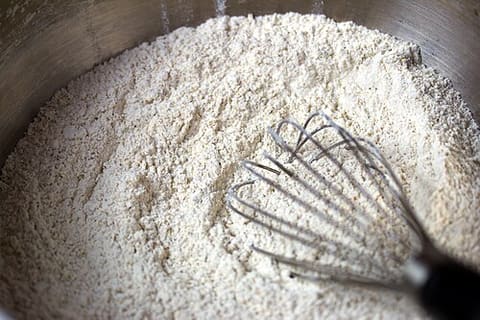
Photo: Veganbaking.net from USA, via Wikimedia Commons (CC-BY-SA-2.0)
What it is
Rye flour ranges from light (sifted) to dark and wholemeal. Rye contains proteins that cannot form a strong gluten network, but it is rich in pentosans, gums that hold water and make dough sticky and paste-like. That is why pure rye breads are dense and usually soured with a starter. It contains gluten-type proteins and is not suitable for coeliacs.
Secale cereale
How it’s used
- Scandinavian, German and Baltic rye breads
- Mixed with wheat for lighter rye loaves
- Feeding sourdough starters
- Crispbread and rye crackers
Characteristics
- Taste
- Earthy, slightly sour and malty.
- When cooked
- Dough is sticky rather than elastic; handle with wet hands and rely on acidity (sourdough) to keep the crumb from turning gummy.
- Sold as
- ground
- Cooking uses
- Suitable for baking
- Common in
- German, Scandinavian, Danish, Finnish, Polish, Russian, Lithuanian, Latvian
Storage
Cool, dry and dark. Airtight in a cool place; dark and wholemeal rye keep better refrigerated.
Diet, allergens and safety
Contains Gluten. May contain Wheat — check the label.
- Vegetarian
- Vegan
- Dairy-free
- Egg-free
- Gluten-free
- Nut-free
- Soy-free
- Caffeine-free
- Contains gluten-type proteins; unsuitable for coeliacs. Often milled alongside wheat.
- Raw flour is not a ready-to-eat food and can carry harmful bacteria; do not taste raw dough or batter, and wash hands and surfaces after handling.
Nutrition per 100 g
- Energy
- 349 kcal
- Protein
- 10.88 g
- Carbohydrate
- 75.43 g
- Fat
- 1.52 g
- Fibre
- 11.8 g
- Sugars
- 1.1 g
USDA FoodData Central: Rye flour, medium.
Substitutes
Optional — what works if you don’t have it, and how it changes the dish.
- Whole-wheat flour — Changes the bread entirely: lighter and less tangy. Only for small rye additions.
Related ingredients
Recipes with rye flour
Broa de milho (Portuguese corn bread)
 Portuguese · 3 h 35 min · 167 kcal · Vegan
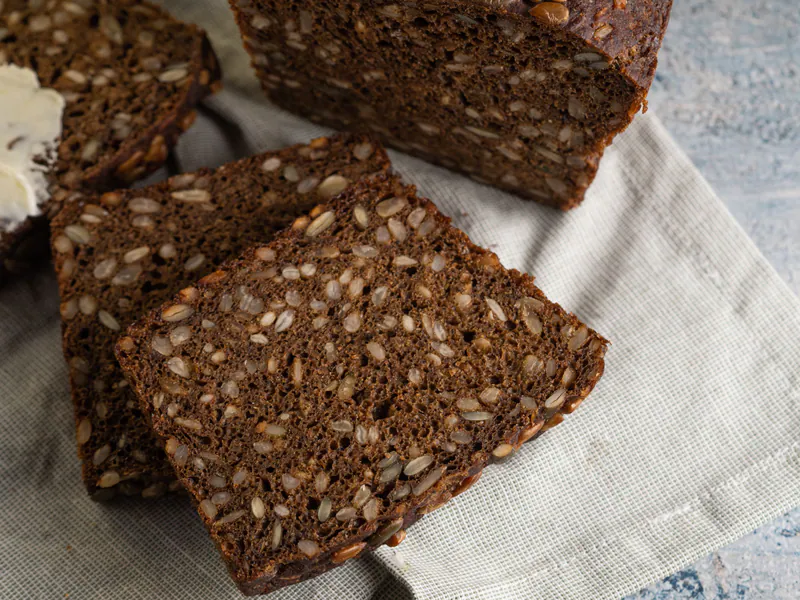
Danish rye bread (rugbrød)
 Danish · 42 h 40 min · 123 kcal · Vegetarian
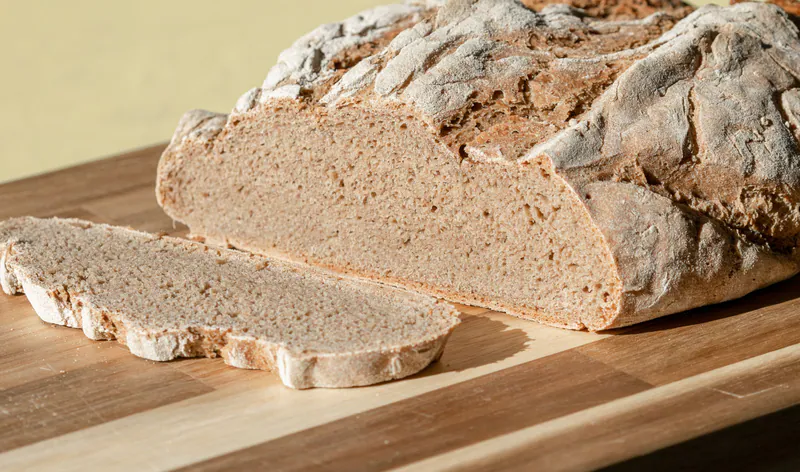
German rye sourdough (Roggenmischbrot)
 German · 39 h 20 min · 101 kcal · Vegan
Karjalanpiirakka
 Finnish · 1 h 50 min · 250 kcal · Vegetarian
Pain de campagne
 French · 18 h · 141 kcal · Vegan
Sklandrausis
 Latvian · 1 h 35 min · 211 kcal · Contains egg
Swedish rye crispbread (knäckebröd)
 Swedish · 2 h 10 min · 134 kcal · Vegan
Westphalian pumpernickel
German · 66 h 50 min · 107 kcal · Vegan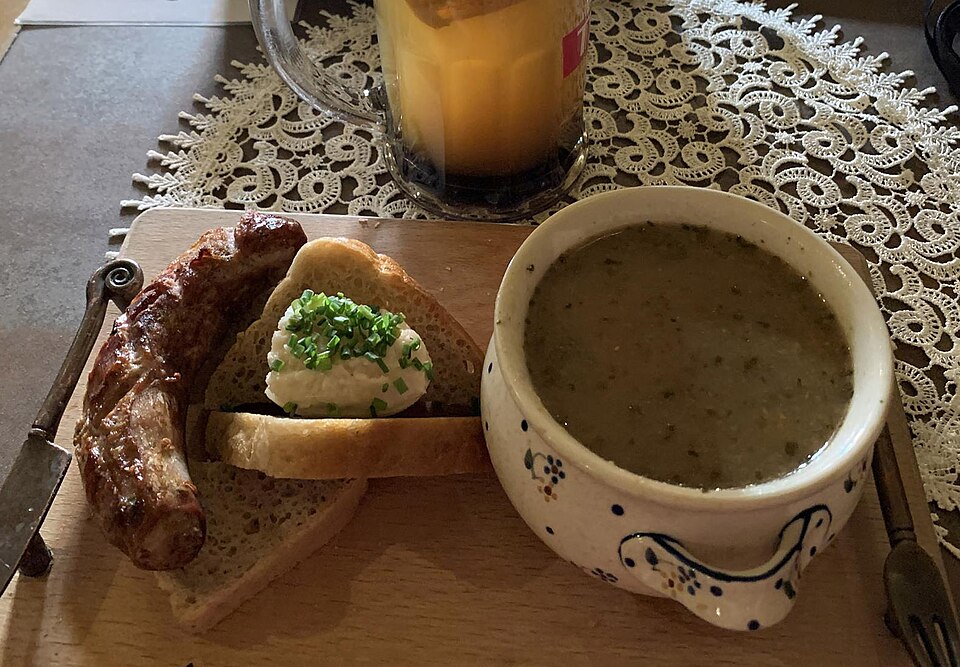
Żurek
 Polish · 1 h · 587 kcal
More flours
Flours
All-purpose flour
Medium-protein refined wheat flour (about 9–12% protein) that suits most cakes, sauces, pastry and everyday bread.
444 recipes
Flours
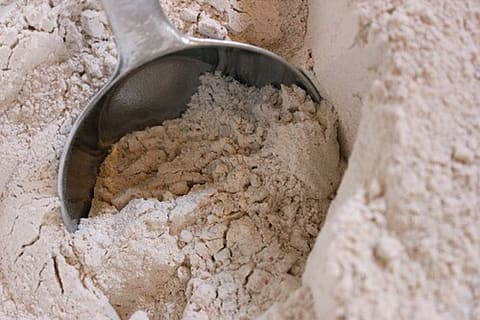
Bread flour
Strong, high-protein wheat flour (about 12–14% protein) that builds elastic gluten for chewy, well-risen yeast breads.
38 recipes
Flours
Whole-wheat flour
Flour milled from the whole wheat kernel, bran and germ included; nuttier, darker and thirstier than white flour. Includes atta.
53 recipes
Flours
Semolina
Coarse, golden granules milled from durum wheat; used for pasta, upma, halwa, puddings and dusting pizza peels.
26 recipes
Flours
Barley flour
Mild, slightly sweet flour from barley with weak gluten; often toasted, as in Tibetan tsampa or Bazin.
1 recipe
Flours
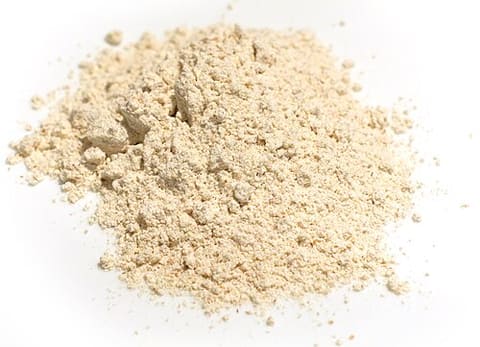
Spelt flour
Flour from spelt, an ancient wheat; sweet and nutty with fragile gluten that over-kneads easily.
No recipes yet
Flours
Finger millet flour (ragi)
Reddish-brown flour of finger millet, used for ragi mudde, dosas, rotis, porridge and malt drinks; naturally gluten-free.
2 recipes