
Saldskābmaize (Latvian sweet-and-sour rye bread)
Vegetarian
Saldskābmaize
A dark, dense Latvian loaf made from scalded rye flour that is kept warm until it turns naturally sweet, then soured overnight and enriched with a little wheat flour, sugar and caraway. The result is moist, glossy-crusted and both sweet and tangy, and it keeps well for days.
Saldskābmaize (Latvian sweet-and-sour rye bread) is a Latvian bread, ready in about 19 hours 25 minutes and made with rye flour, kefir and bread flour. It serves 16 and is rated advanced to cook.
No licensed photograph of this dish yet.
- Prep
- 40 min
- Cook
- 1 h 15 min
- Rest
- 1 h 30 min
- Total
- 19 h 25 min
- Serves
- 16
- Level
- Advanced
- Calories
- 209
Plus about 4 hours keeping the scald warm and 12 hours souring overnight; cool the loaf for several hours before slicing.
Main ingredients
Ingredients
For the scald
For the sour stage
For the dough
For the glaze
Method
Scald
10 minStep 1
Put 250 g rye flour (opens in a new tab) in a large bowl and pour over the boiling water, stirring hard to a smooth, thick paste with no dry lumps.
Food safety: Pour boiling water carefully and keep the bowl steady.
Step 2
Let the scald cool to about 60 °C, then stir in 50 g fresh rye flour (opens in a new tab) and the caraway (opens in a new tab). Cover and keep it warm (55–65 °C) for 3–4 hours, for example in an oven (opens in a new tab) with only the light on, or wrapped in towels. It will loosen and taste distinctly sweet.
- 5 min
- 60°C · keep warm
- Food thermometer (opens in a new tab)
Above about 70 °C the enzymes stop working and the bread will not be sweet.
Sour stage
5 minStep 3
Cool the scald to body temperature (about 30 °C). Stir in the kefir (opens in a new tab), 150 g rye flour (opens in a new tab) and 1 tsp yeast. Cover and leave at room temperature for 10–12 hours, until bubbly and pleasantly sour.
- 5 min
Dough
1 h 28 minStep 4
Add the bread flour (opens in a new tab), remaining 100 g rye flour (opens in a new tab), sugar (opens in a new tab), 1 tsp yeast and salt. Mix with a wet hand or spoon for 5 minutes to a very sticky, heavy dough; rye dough cannot be kneaded like wheat.
- 8 min

How it looks · Photo: Klaus Nielsen on Pexels Step 5
Oil a 1 kg loaf tin (opens in a new tab). Scrape in the dough, smooth the top with a wet hand and leave to rise, covered, until it has grown by about a third and small cracks appear, 1–1½ hours.
Step 6
Heat the oven (opens in a new tab) to 230 °C. Bake for 15 minutes, then reduce to 180 °C and bake 55–60 minutes more, until the loaf sounds hollow when tapped underneath (about 96 °C inside).
- 75 min
- 230°C · then 180 °C
- Oven (opens in a new tab)
Glaze
5 minStep 7
Whisk the cornstarch (opens in a new tab) into the water and simmer briefly until clear. Brush the hot loaf with the glaze, turn it out and cool on a rack wrapped in a towel. Leave at least 6 hours, ideally overnight, before slicing.
Rye crumb is gummy if cut while warm.
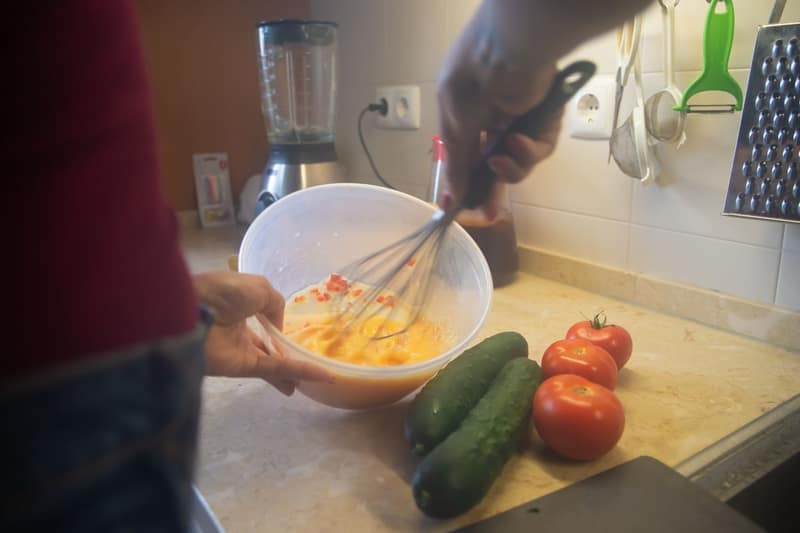
How it looks · Photo: Kampus Production on Pexels
At a glance
1 · Scald in a bowl
 Rye flour
 Caraway seeds
then cool
2 · Sour stage in a bowl
 Kefir
- Rye flour
 Instant yeast
then add
3 · Dough in a bowl
 Bread flour
- Rye flour
 Sugar
- Instant yeast
 Salt
 Neutral vegetable oil
then whisk
4 · Glaze in a pan
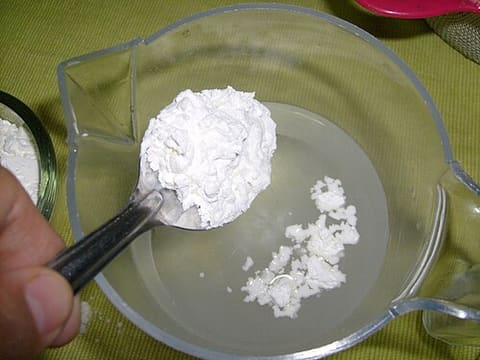 Cornstarch
About this dish
- Origin
- Latvia · Well documentedThe name means 'sweet-sour bread'. Scalding part of the rye flour lets its own enzymes turn starch into sugar; this home version uses kefir and a little yeast in place of a long-kept rye leaven.Also popular in Lithuania, EstoniaMore food from Latvia
Latvia - Dish
- Breakfast · Lunch · Dinner · Breads & flatbreads
- Cooking method
- Fermented, Oven-baked
- Taste
- sweet & sour, earthy, aromatic / warmly spiced
- Diet
- Vegetarian (lacto-ovo) · No nut ingredientsWith the listed swaps: Vegan, Plant-based, Ovo-vegetarian, Dairy-freeWorked out from the ingredients. How labels work
All labels
Vegetarian (lacto-ovo) · Eggetarian · Lacto-vegetarian · Pescatarian · Flexitarian-friendly · Egg-free · No nut ingredients · Alcohol-free · Pork-free · Beef-free · Low-fat · DASH-style - Good for
- Make-ahead
- Cook more with
- Rye flour · Kefir · Bread flour · Caraway seeds · Instant yeast · Sugar
Allergens
- Contains, can be adapted: Milkfrom kefir
- Contains: Wheatfrom rye flour, bread flour
- Contains: Glutenfrom rye flour, bread flour
Based on typical versions of these ingredients and not verified allergen-free. Brands differ and cross-contact happens, so always check labels. For severe allergies, follow your clinician’s advice.
Nutrition
209 kcal per serving
Calculated1 serving ≈ 81 g · recipe makes 16
Where the energy comes from
- Protein 13%
- Carbohydrate 82%
- Fat 6%
| Nutrient | Per serving | Per 100 g |
|---|---|---|
| Energy | 209 kcal | 257 kcal |
| Protein | 6.8 g | 8.4 g |
| Carbohydrate | 43.1 g | 53 g |
| Net carbohydrate | 38.4 g | 47.2 g |
| Sugars | 3.7 g | 4.5 g |
| Added sugars | 2.5 g | 3.1 g |
| Fibre | 4.7 g | 5.8 g |
| Fat | 1.3 g | 1.6 g |
| Saturated fat | 0.2 g | 0.3 g |
| Trans fat | — | — |
| Cholesterol | 1 mg | 1 mg |
| Sodium | 300 mg | 369 mg |
| Salt equivalent | 0.7 g | 0.9 g |
Vitamins & minerals per serving
- Potassium
- 180 mg
- Calcium
- 37 mg
- Iron
- 1.8 mg
- Magnesium
- 30 mg
- Vitamin A (RAE)
- 28 µg
- Vitamin C
- 0 mg
- Vitamin D
- 0.2 µg
- Vitamin B12
- 0 µg
- Folate (DFE)
- 76 µg
How these numbers were made
- Calculated from USDA FoodData Central (SR Legacy) per-100 g values and the listed quantities.
- Optional ingredients are not included: cornstarch.
- “—” means the value isn’t known for enough of the ingredients; it is never zero by default.
- Values are estimates for guidance, not for medical dosing. U.S. Department of Agriculture, Agricultural Research Service. FoodData Central, 2019. fdc.nal.usda.gov.
Good to know
Tips
- Fermented red rye malt (1–2 tbsp) is often added to the scald in Latvia for a darker colour and malty flavour.
- A spoon of honey can stand in for part of the sugar.
Common mistakes
- Letting the scald get too hot or too cold during the sweetening stage, which leaves a flat, sour loaf.
Serve with
- Slice thinly and spread with butter; serve with cheese, smoked fish, cold cuts or Jāņu siers.
- Goes well with grey peas and bacon or a bowl of soup.
Storage
- Keeps 5–7 days wrapped in linen or a paper bag at room temperature, or 3 months frozen in slices.
Variations
- With seeds: Sunflower seeds, flaxseeds or dried fruit such as prunes and cranberries are folded into the dough.
- Sourdough saldskābmaize: Made with a rye leaven (ieraugs) kept from the last bake instead of kefir and yeast.
Original editorial recipe · FriendsPantry editorial · source: TasteAtlas (dish facts) · Not yet independently reviewed · Added
Recipe DNA
How this dish is built
Built from the recipe’s own sections. Each band’s width is its share of the dish by weight. Choose a component to see what it does.
Reviews & corrections
Reviews come from signed-in cooks and appear after a moderator checks them. We never show made-up ratings.
You might also like
Rupjmaize (Latvian wholegrain rye bread)
 Latvian · 4 h 55 min · 181 kcal · Vegetarian
Juoda duona (Lithuanian black rye bread)
 Lithuanian · 4 h 30 min · 175 kcal · Vegan
Maizes zupa (Latvian rye bread soup)
Latvian · 2 h 50 min · 481 kcal · Vegetarian
Sklandrausis
Latvian · 1 h 35 min · 211 kcal · Contains egg