
Baking essentials · Leavening
Sourdough starter
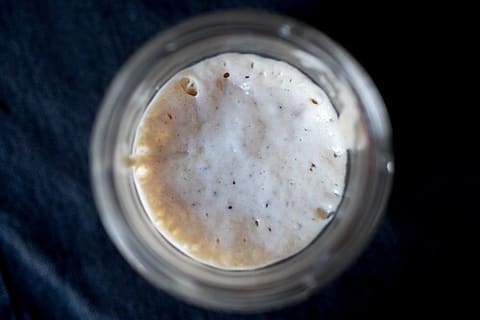
Living culture of flour and water hosting wild yeasts and lactic acid bacteria; leavens and sours bread.
Also called: levain, sourdough culture, mother dough, ekşi maya
Photo: PilotChicago, via Wikimedia Commons (CC-BY-SA-4.0)
What it is
A sourdough starter is a mixture of flour and water fed regularly so wild yeasts and lactic acid bacteria multiply. The yeasts make gas to raise dough; the bacteria produce lactic and acetic acids for tang and better keeping. Hydration is the weight of water as a percentage of flour: a 100% starter uses equal weights of each and is like thick batter, while a stiff starter (around 50–60%) is dough-like and tends to taste more acetic. A levain is a portion built from the starter for a specific bake.
How it’s used
- Sourdough country loaves and baguettes
- Rye breads
- Sourdough pizza and focaccia
- Pancakes, crumpets and waffles from discard
- Panettone (stiff starter)
Characteristics
- Taste
- Tangy, yoghurty or vinegary depending on feeding.
- Aroma
- Pleasantly sour, fruity, beery when active.
- When cooked
- Use when bubbly and roughly doubled after feeding; a spoonful floats in water when well risen. Grey liquid ('hooch') on top means it is hungry.
- Sold as
- fermented
- Cooking uses
- Used for leavening, Suitable for baking
Storage
Refrigerated. Keep at room temperature with daily feedings, or in the fridge fed about weekly. Discard if pink, orange or fuzzy mould appears.
Diet, allergens and safety
Contains Wheat, Gluten.
- Vegetarian
- Vegan
- Dairy-free
- Egg-free
- Gluten-free
- Nut-free
- Soy-free
- Caffeine-free
- Usually made from wheat or rye flour: contains gluten. Do not eat raw starter.
Nutrition per 100 g
- Energy
- 182 kcal
- Protein
- 5.165 g
- Carbohydrate
- 38.155 g
- Fat
- 0.49 g
- Fibre
- 1.35 g
- Sugars
- 0.135 g
USDA FoodData Central: Wheat flour, white, all-purpose, enriched, bleached × 0.5 (a close stand-in).
Substitutes
Optional — what works if you don’t have it, and how it changes the dish.
- Instant yeast — A small amount of yeast plus a long, cool rise gives some depth, but not the sour flavour; reduce flour and water by the starter's weight.
Related ingredients
Recipes with sourdough starter
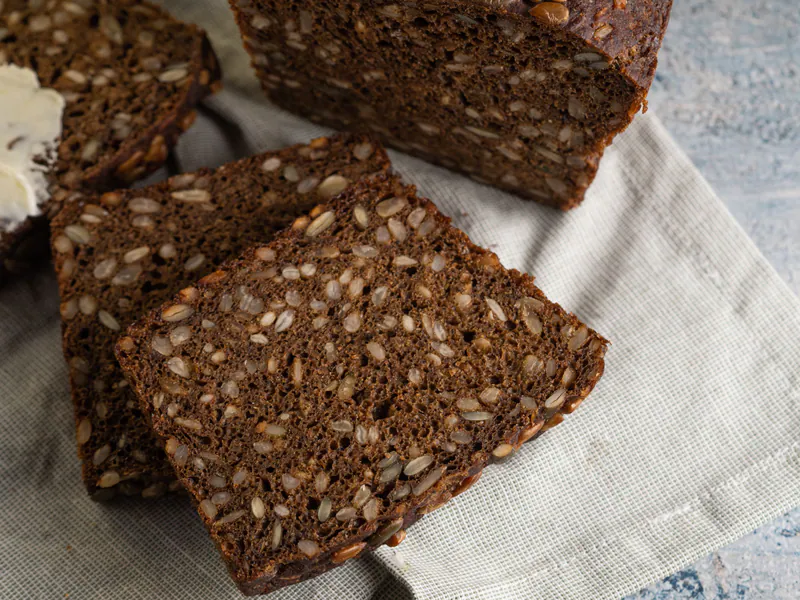
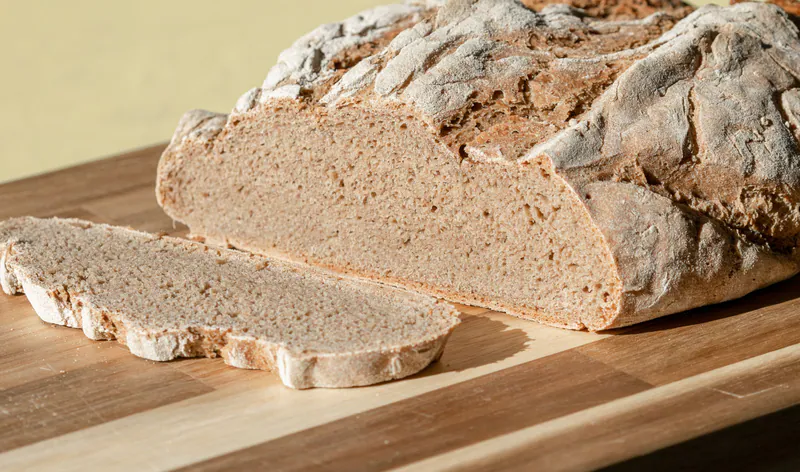
Danish rye bread (rugbrød)
 Danish · 42 h 40 min · 123 kcal · Vegetarian
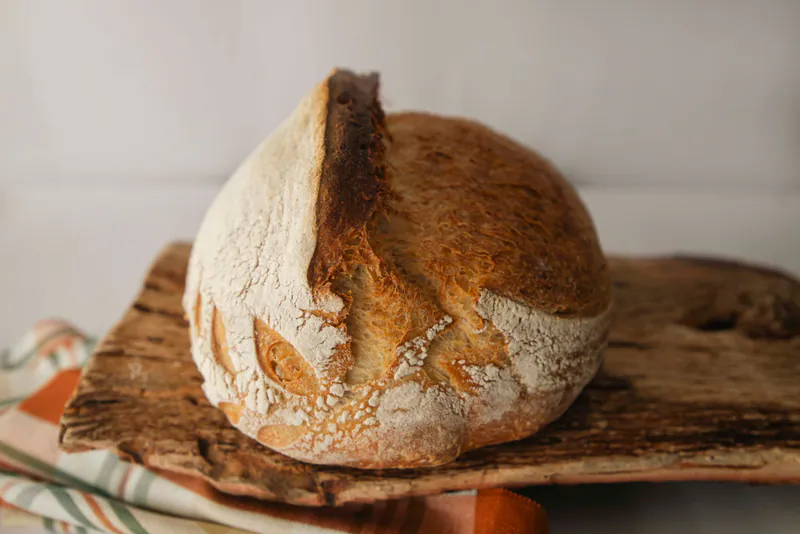
German rye sourdough (Roggenmischbrot)
 German · 39 h 20 min · 101 kcal · Vegan
Sourdough country loaf (pain au levain)
 French · 22 h 55 min · 141 kcal · Vegan
Westphalian pumpernickel
German · 66 h 50 min · 107 kcal · VeganWholegrain sourdough tin loaf
International · 19 h 15 min · 120 kcal · Vegetarian
More leavening
Leavening
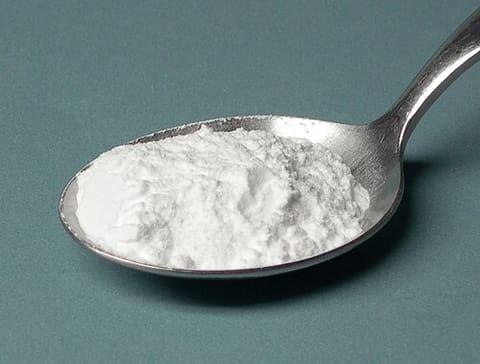
Baking powder
Ready-mixed chemical raising agent of baking soda, a dry acid and starch; needs only moisture and heat to release gas.
77 recipes
Leavening
Baking soda
Pure sodium bicarbonate: a strong alkaline raising agent that needs an acid in the recipe to work. Also browns and tenderises.
55 recipes
Leavening
Dried yeast
Dried baker's yeast granules that ferment sugars into gas and flavour; covers both active dry and instant.
102 recipes
Leavening
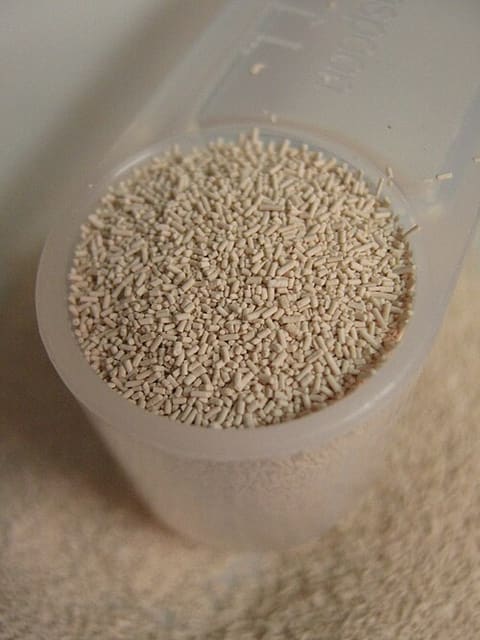
Instant yeast
Fine dried yeast that can be mixed straight into flour; strongest of the dried yeasts and quick to start.
50 recipes
Leavening
Active dry yeast
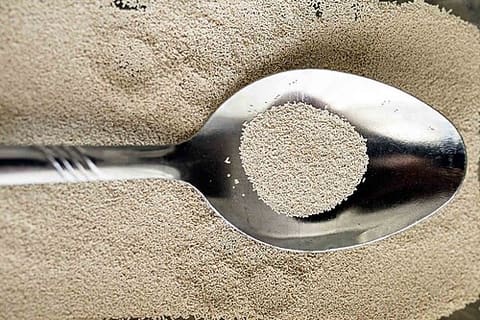
Dried yeast in larger granules, traditionally dissolved in warm water before use; slightly slower than instant.
No recipes yet
Leavening
Fresh yeast
Moist, crumbly, beige blocks of live yeast; perishable but favoured by bakers for flavour and vigorous rise.
No recipes yet
Leavening
Cream of tartar
Acidic white powder (potassium bitartrate) that stabilises egg whites and pairs with baking soda as a leavener.
No recipes yet