
Pempek (Palembang fish cakes with cuko)
Non-vegetarian
Pempek
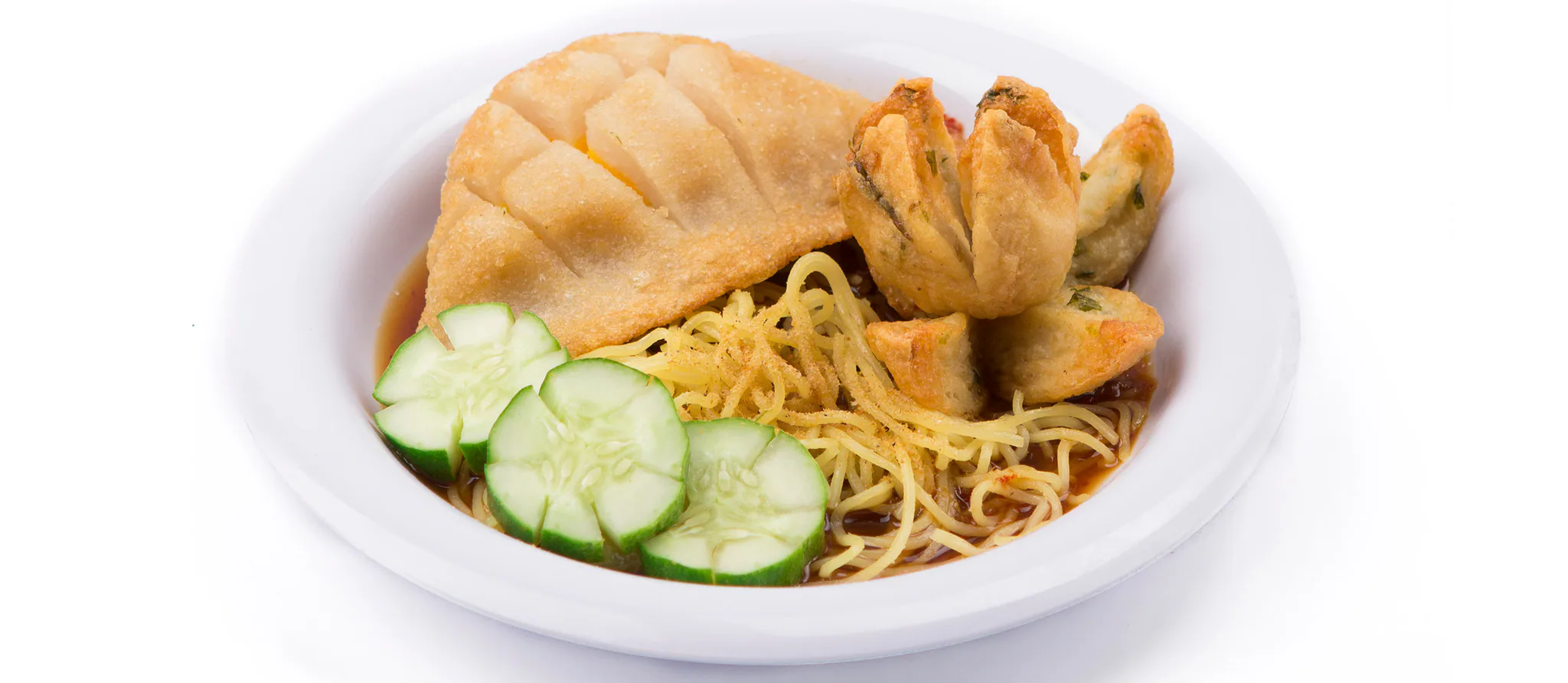
Springy fish cakes made from minced mackerel and tapioca starch, boiled and then fried, served swimming in cuko, a dark, sweet-sour-hot sauce of palm sugar, tamarind, garlic and chilli. The beloved street food of Palembang in South Sumatra.
Pempek (Palembang fish cakes with cuko) is an Indonesian street food, ready in about 1 hour 50 minutes and made with mackerel, tapioca starch and jaggery / palm sugar. It serves 4 and is rated intermediate to cook.
- Prep
- 40 min
- Cook
- 50 min
- Rest
- 20 min
- Total
- 1 h 50 min
- Serves
- 4
- Level
- Intermediate
- Calories
- 958
Main ingredients
Method
Cuko
22 minStep 1
For the cuko, simmer the palm sugar (opens in a new tab), water, tamarind (opens in a new tab), garlic (opens in a new tab), chillies, dried shrimp (opens in a new tab) and salt for 20 minutes until slightly syrupy. Strain, stir in the vinegar and leave to cool; it thickens as it cools.
- 22 min
- medium-low heat
- Saucepan (opens in a new tab)
- Sieve / strainer (opens in a new tab)
Cuko tastes even better the next day.
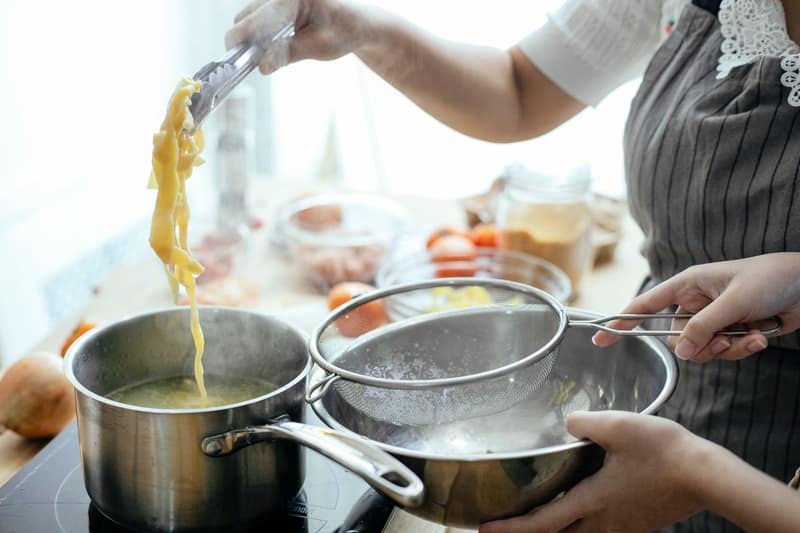
How it looks · Photo: Katerina Holmes on Pexels
Pempek
50 minStep 2
Blend the minced fish with the iced water and salt to a smooth, sticky paste. Transfer to a bowl and mix in the tapioca starch (opens in a new tab) a handful at a time, using a light folding motion, until the dough just comes together and no longer sticks to your hands.
Do not knead hard — overworking makes pempek tough and rubbery.
Step 3
Take a third of the dough and roll it into logs 2 cm thick and 12 cm long (lenjer). With the rest, shape palm-sized cups with thin walls, crack an egg (opens in a new tab) into each, and pinch the edges together to seal into a half-moon (kapal selam).
- 15 min
Wet your hands with salted water so the dough does not stick.
Step 4
Bring a large pot of water to the boil, lower the heat to a simmer and add the pempek. Cook until they float, about 10 minutes for lenjer and 15 for kapal selam. Lift out and drain on a rack for 20 minutes.
Step 5
Heat the oil in a wok (opens in a new tab) to 170 °C and fry the pempek until golden and slightly crisp, 3–5 minutes. Slice into bite-sized pieces.
Food safety: Use a deep, heavy pot no more than one-third full of oil, keep a lid nearby to smother any flare-up, and never leave hot oil unattended.
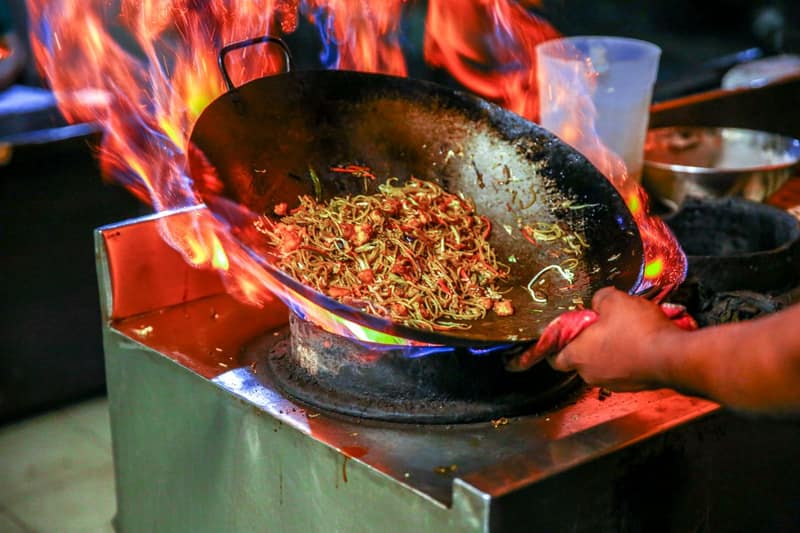
How it looks · Photo: Aesthos AR. Photography on Pexels
To serve
3 minStep 6
Serve in bowls with noodles if using, scatter with diced cucumber (opens in a new tab) and pour over plenty of cuko.
- 3 min
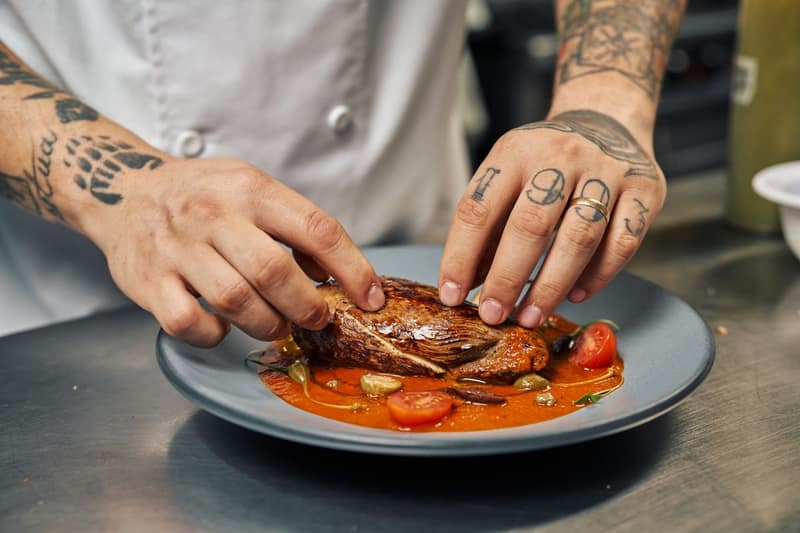
How it looks · Photo: Willians Huerta on Pexels
At a glance
1 · Cuko in a pan
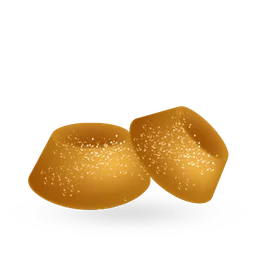 Jaggery / palm sugar
 Tamarind
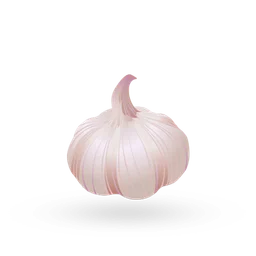 Garlic
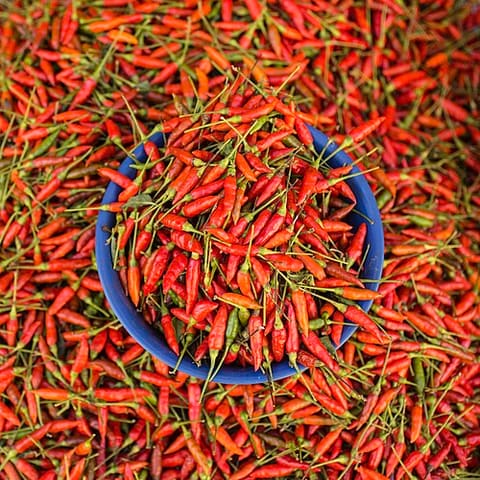 Fresh red chilli
 Dried shrimp
 White vinegar
 Salt
then blend
2 · Pempek in a pan
 Mackerel
- Salt
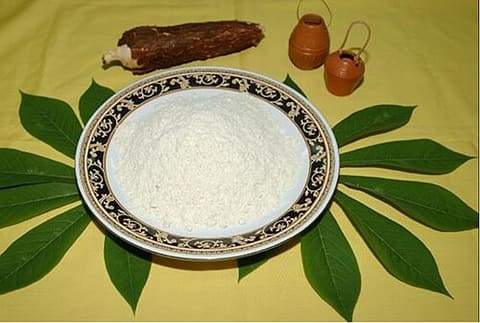 Tapioca starch
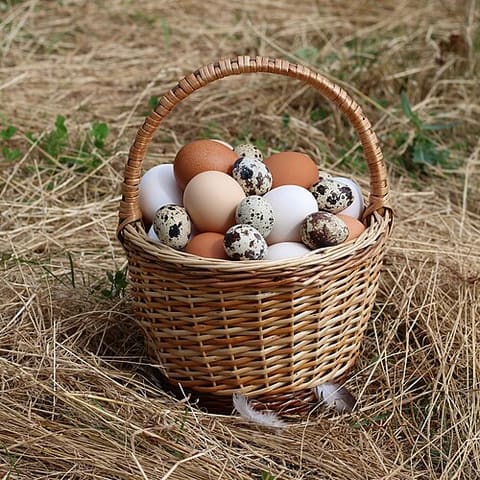 Egg
 Neutral vegetable oil
then serve
3 · To serve in a bowl
 Cucumber
 Egg noodles
About this dish
- Origin
- Palembang, South Sumatra, Indonesia · Well documentedMade with Spanish mackerel (tenggiri) or snakehead fish (ikan gabus) from the Musi River region; shapes include lenjer (logs), kapal selam ('submarine', with an egg inside) and adaan (balls).Also popular in MalaysiaMore food from Indonesia
Indonesia - Dish
- Snack · Lunch · Street food · Finger food
- Cooking method
- Boiled, Deep-fried, Simmered
- Taste
- sweet & sour, spicy (chilli heat), savoury, garlicky
- Diet
- Pescatarian · Dairy-free · No nut ingredients · High-proteinWithout the optional extras: No gluten ingredientsWorked out from the ingredients. How labels work
All labels
Pescatarian · Non-vegetarian · Dairy-free · No nut ingredients · Alcohol-free · Pork-free · Beef-free · High-protein - Good for
- Street food · Make-ahead · Freezer-friendly
- Cook more with
- Mackerel · Tapioca starch · Jaggery / palm sugar · Egg · Tamarind · Garlic
- Techniques
- Deep-frying · Boiling · Simmering · Reduction
Allergens
- Contains: Eggsfrom egg, egg noodles
- Contains: Fishfrom mackerel
- Contains, can be adapted: Crustaceansfrom dried shrimp
- Contains, can be adapted: Wheatfrom egg noodles
- Contains, can be adapted: Glutenfrom egg noodles
Based on typical versions of these ingredients and not verified allergen-free. Brands differ and cross-contact happens, so always check labels. For severe allergies, follow your clinician’s advice.
Nutrition
958 kcal per serving
Estimated1 serving ≈ 539 g · recipe makes 4
Where the energy comes from
- Protein 13%
- Carbohydrate 57%
- Fat 30%
| Nutrient | Per serving | Per 100 g* |
|---|---|---|
| Energy | 958 kcal | 178 kcal |
| Protein | 30.7 g | 5.7 g |
| Carbohydrate | 136.9 g | 25.4 g |
| Net carbohydrate | 135.4 g | 25.1 g |
| Sugars | 67 g | 12.4 g |
| Added sugars | 60.6 g | 11.3 g |
| Fibre | 1.4 g | 0.3 g |
| Fat | 32.3 g | 6 g |
| Saturated fat | 6.4 g | 1.2 g |
| Trans fat | — | — |
| Cholesterol | 274 mg | 51 mg |
| Sodium | 1957 mg | 363 mg |
| Salt equivalent | 4.9 g | 0.9 g |
Vitamins & minerals per serving
- Potassium
- 685 mg
- Calcium
- 152 mg
- Iron
- 5 mg
- Magnesium
- 124 mg
- Vitamin A (RAE)
- 146 µg
- Vitamin C
- 11 mg
- Vitamin D
- 21.1 µg
- Vitamin B12
- 11.3 µg
- Folate (DFE)
- 33 µg
How these numbers were made
- Calculated from USDA FoodData Central (SR Legacy) per-100 g values and the listed quantities.
- *Per 100 g of combined raw ingredients; the cooked dish may weigh more or less.
- Optional ingredients are not included: dried shrimp, egg noodles.
- Tapioca starch: Dry pearl tapioca (FDC 169717) used as a stand-in; both are almost pure cassava starch.
- Jaggery / palm sugar: Brown sugar (FDC 168833) used as a stand-in for unrefined cane jaggery and palm sugar.
- “—” means the value isn’t known for enough of the ingredients; it is never zero by default.
- Values are estimates for guidance, not for medical dosing. U.S. Department of Agriculture, Agricultural Research Service. FoodData Central, 2019. fdc.nal.usda.gov.
Good to know
Tips
- Boiled pempek keep well in the fridge for 3 days; fry them just before serving.
- In Palembang, the cuko is drunk straight from the bowl at the end.
Common mistakes
- Adding all the starch at once and kneading like bread dough, which gives hard pempek.
Serve with
- Serve with cuko in small bowls for dipping, or pour it over, with cucumber and yellow noodles.
Food safety
- Keep the raw fish paste cold while you work and cook the pempek the same day.
Storage
- Boiled pempek keep 3 days refrigerated or 2 months frozen; cuko keeps 2 weeks in a jar in the fridge.
Reheating
- Fry from chilled or thawed until hot and crisp.
Variations
- Pempek lenjer: Long logs of plain fish dough, sliced after frying.
- Pempek adaan: Small round balls with shallots in the dough, fried directly without boiling.
- Tekwan: Small pempek dumplings served in a clear shrimp broth with jicama and glass noodles.
Original editorial recipe · FriendsPantry editorial · source: TasteAtlas (dish facts) · Not yet independently reviewed · Added
Recipe DNA
How this dish is built
Built from the recipe’s own sections. Each band’s width is its share of the dish by weight. Choose a component to see what it does.
Accompaniments
To serve
- Cucumber, finely diced100 g
- Egg noodles, thin yellow noodles, cooked (optional)100 g
Reviews & corrections
Reviews come from signed-in cooks and appear after a moderator checks them. We never show made-up ratings.
You might also like
Nasi goreng
 Indonesian · 22 min · 705 kcal
Siomay Bandung (steamed fish dumplings with peanut sauce)
Indonesian · 1 h 25 min · 1005 kcal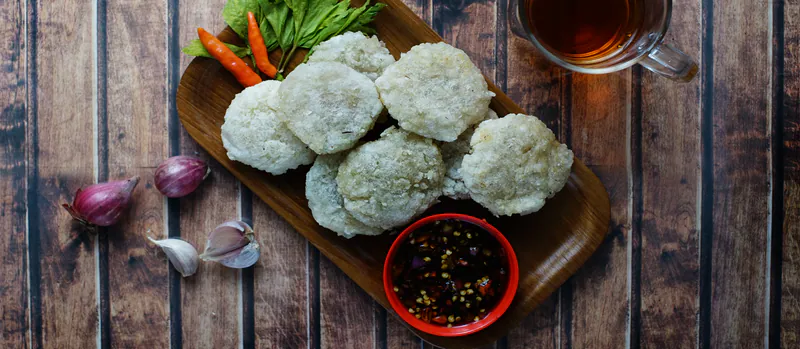
Cireng (Sundanese fried tapioca fritters)
Indonesian · 45 min · 460 kcal · Vegan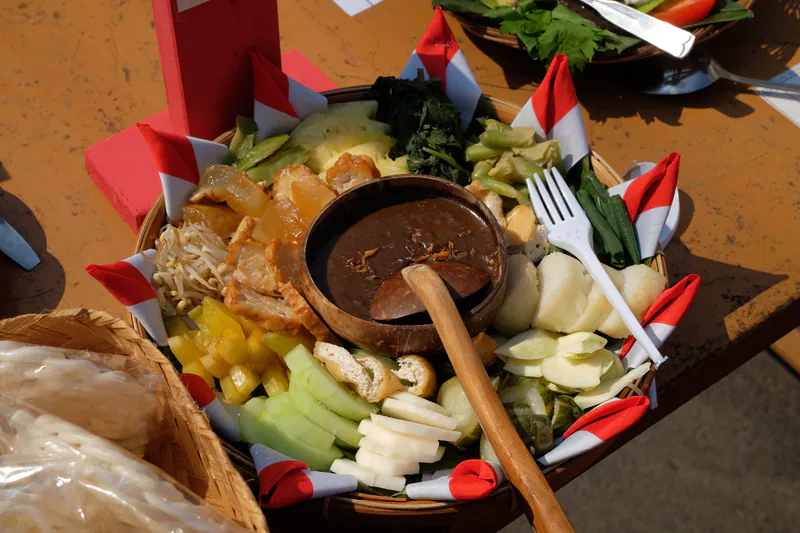
Gado-gado
Indonesian · 55 min · 682 kcal · Contains egg