
Ansim-gui (Korean grilled beef tenderloin)
Non-vegetarian
안심구이 · ansim-gui
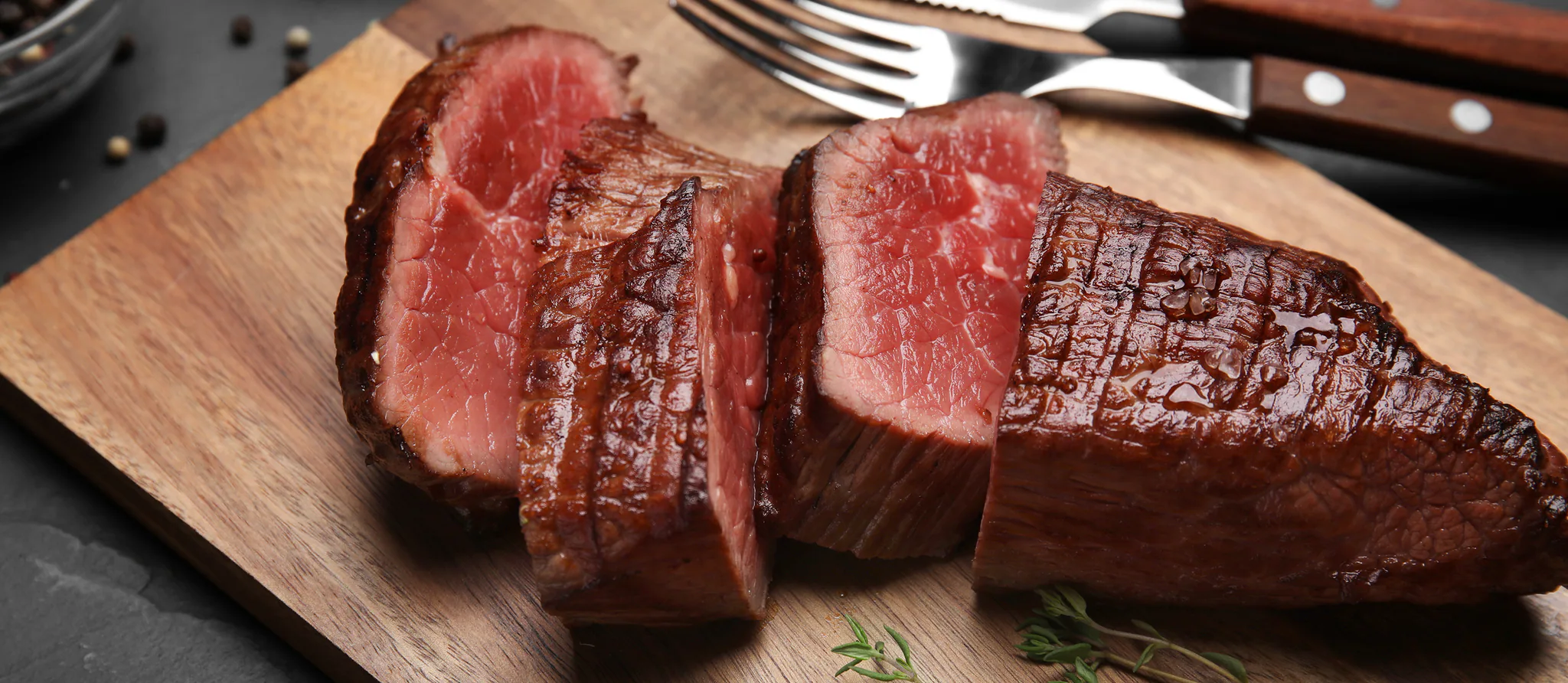
Thick pieces of beef tenderloin (ansim) grilled quickly at the table over charcoal or a hot plate, seasoned only with salt and pepper and dipped in sesame oil and salt. Wrapped in lettuce with grilled garlic and ssamjang, it is the luxurious end of Korean barbecue.
Ansim-gui (Korean grilled beef tenderloin) is a Korean grilled dish from South Korea, ready in about 1 hour and made with beef tenderloin and toasted sesame oil. It serves 4 and is rated easy to cook.
- Prep
- 15 min
- Cook
- 15 min
- Rest
- 30 min
- Total
- 1 h
- Serves
- 4
- Level
- Easy
- Calories
- 402
Main ingredients
Ingredients
For the beef
For the grill
For the sesame dip (gireumjang)
To serve
Method
Beef
2 minStep 1
Take the beef out of the fridge 30 minutes before cooking. Pat dry and season with the coarse salt and pepper (opens in a new tab) just before grilling.
- 2 min
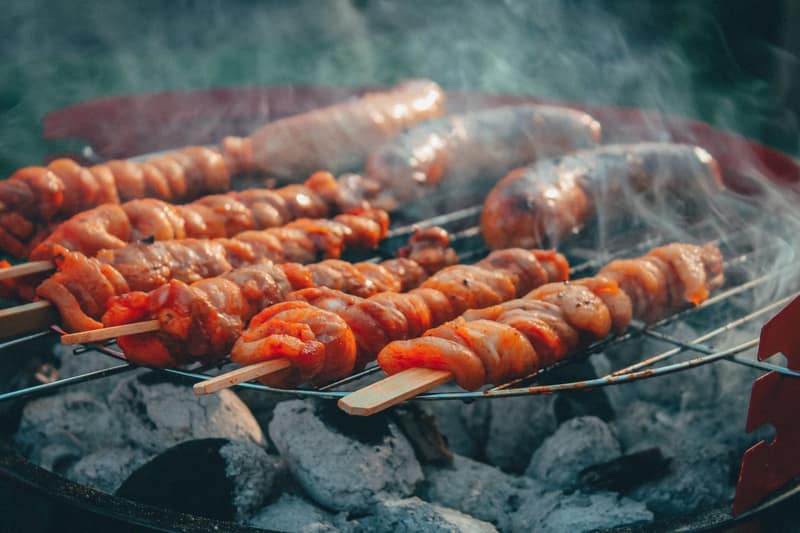
How it looks · Photo: Malte Luk on Pexels
To serve
11 minStep 2
Mix the sesame oil (opens in a new tab), salt and pepper (opens in a new tab) in small dishes, one per person. Mix the gochujang (opens in a new tab) and miso (opens in a new tab) with a teaspoon of the sesame oil for a quick ssamjang.
- 3 min
Step 3
Heat a charcoal grill or a heavy grill pan (opens in a new tab) until very hot and brush with the oil. Grill the steaks for 2–3 minutes per side for medium-rare, turning once and searing the edges too. Rest for 2 minutes.
- 8 min
- high heat
- Grill / barbecue (opens in a new tab)
- Grill pan (opens in a new tab)
- Tongs (opens in a new tab)
Korean diners usually eat ansim medium-rare to medium.
Grill
7 minStep 4
While the beef rests, grill the garlic cloves (opens in a new tab), mushrooms (opens in a new tab) and onion (opens in a new tab) on the side of the grill until browned and soft.
- 5 min
- medium-high heat
Step 5
Cut the beef into bite-sized pieces with scissors or a knife. Dip a piece in the sesame oil (opens in a new tab) and salt, or wrap it in a lettuce (opens in a new tab) leaf with grilled garlic (opens in a new tab), chilli and a dab of ssamjang.
At a glance
1 · Beef in a pan
 Beef tenderloin
 Salt
 Black pepper
 Neutral vegetable oil
then mix
2 · To serve in a bowl
 Lettuce
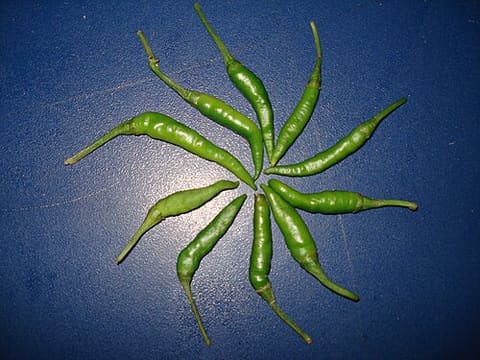 Green chilli
 Gochujang
 Miso
then grill
3 · Grill in a bowl
 Garlic
 Mushrooms
 Onion
About this dish
- Origin
- South Korea · Commonly attributedAnsim is the Korean name for the tenderloin, the most tender cut of the loin, known elsewhere as fillet, filet or eye fillet. In Korea it is prized from hanwoo (native Korean cattle) and grilled unmarinated.More food from South Korea
South Korea - Dish
- Dinner · Grills & kebabs · Main courses
- Cooking method
- Grilled, Barbecued
- Taste
- savoury, nutty, garlicky, umami
- Diet
- Dairy-free · No nut ingredients · Low-carb · High-proteinWorked out from the ingredients. How labels work
All labels
Non-vegetarian · Dairy-free · Egg-free · No nut ingredients · Alcohol-free · Pork-free · Low-carb · High-protein · Calorie-conscious - Good for
- Festive & celebration
- Cook more with
- Beef tenderloin · Toasted sesame oil · Garlic · Mushrooms · Lettuce · Gochujang
- Techniques
- Grilling · Searing · Charcoal grilling
Allergens
- Contains: Wheatfrom gochujang
- Contains: Glutenfrom gochujang, miso
- Contains: Soyfrom gochujang, miso
- Contains: Sesamefrom toasted sesame oil
Based on typical versions of these ingredients and not verified allergen-free. Brands differ and cross-contact happens, so always check labels. For severe allergies, follow your clinician’s advice.
Nutrition
402 kcal per serving
Estimated1 serving ≈ 371 g · recipe makes 4
Where the energy comes from
- Protein 39%
- Carbohydrate 14%
- Fat 47%
| Nutrient | Per serving | Per 100 g* |
|---|---|---|
| Energy | 402 kcal | 108 kcal |
| Protein | 39.2 g | 10.6 g |
| Carbohydrate | 14.4 g | 3.9 g |
| Net carbohydrate | 10 g | 2.7 g |
| Sugars | 3.7 g | 1 g |
| Added sugars | — | — |
| Fibre | 4.4 g | 1.2 g |
| Fat | 21.4 g | 5.8 g |
| Saturated fat | 4.2 g | 1.1 g |
| Trans fat | — | — |
| Cholesterol | 90 mg | 24 mg |
| Sodium | 1912 mg | 515 mg |
| Salt equivalent | 4.8 g | 1.3 g |
Vitamins & minerals per serving
- Potassium
- 1082 mg
- Calcium
- 115 mg
- Iron
- 4.6 mg
- Magnesium
- 69 mg
- Vitamin A (RAE)
- 546 µg
- Vitamin C
- 10 mg
- Vitamin D
- 0.3 µg
- Vitamin B12
- 1.7 µg
- Folate (DFE)
- 202 µg
How these numbers were made
- Calculated from USDA FoodData Central (SR Legacy) per-100 g values and the listed quantities.
- *Per 100 g of combined raw ingredients; the cooked dish may weigh more or less.
- Optional ingredients are not included: onion, green chilli.
- Beef tenderloin: Top sirloin steak, lean only (FDC 174055) used as a stand-in; centre-cut beef tenderloin (fillet) is a similarly lean muscle.
- Gochujang: Miso (FDC 172442) as a stand-in fermented soy paste; gochujang is sweeter (rice syrup) and hotter, so carbohydrate is understated.
- “—” means the value isn’t known for enough of the ingredients; it is never zero by default.
- Values are estimates for guidance, not for medical dosing. U.S. Department of Agriculture, Agricultural Research Service. FoodData Central, 2019. fdc.nal.usda.gov.
Good to know
Tips
- Do not marinate tenderloin like bulgogi; its delicate flavour is the point.
- Cook in small batches at the table so every piece is eaten hot.
Common mistakes
- Cooking past medium, which makes this lean cut dry.
Serve with
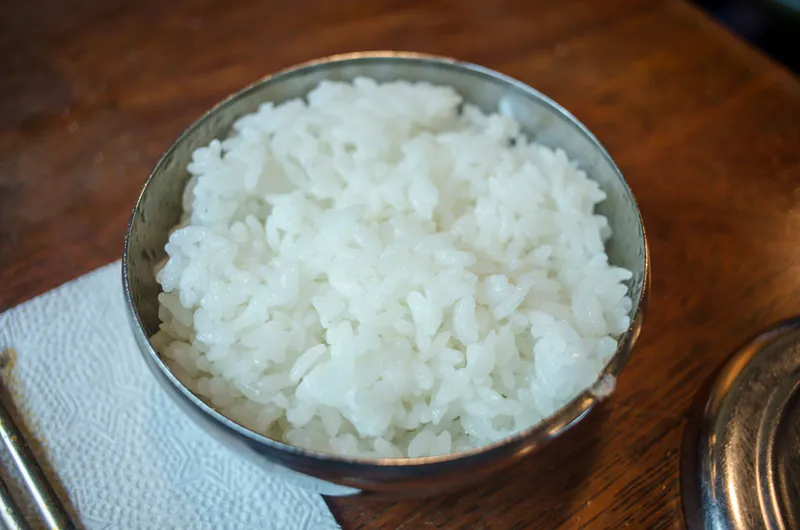
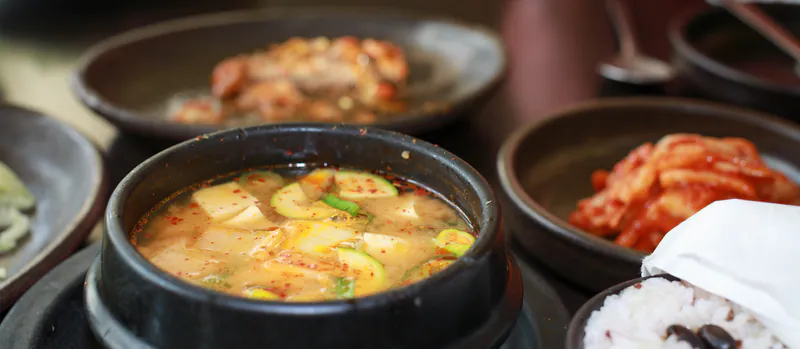
- Serve with kimchi, steamed rice and doenjang jjigae, as Korean barbecue restaurants do.
- Chop and fry the leftover beef with rice and kimchi in the grill pan at the end.
Food safety
- Whole cuts of beef can be served pink; cook to at least 63 °C in the centre for medium-rare if you prefer to check.
Storage
- Leftovers keep 2 days refrigerated.
Reheating
- Warm briefly in a hot pan; avoid overcooking.
Variations
- Chadol-baegi: Paper-thin slices of brisket grilled for seconds, the opposite end of Korean barbecue.
- Filet mignon: The same tenderloin cut as individual steaks, pan-fried and served with a sauce in Western cooking.
Original editorial recipe · FriendsPantry editorial · source: TasteAtlas (dish facts) · Not yet independently reviewed · Added
Sauces, chutneys & dips for this dish
Recipe DNA
How this dish is built
Built from the recipe’s own sections. Each band’s width is its share of the dish by weight. Choose a component to see what it does.
What the dish is built around
For the beef
- Beef tenderloin, trimmed and cut into steaks 3 cm thick, at room temperature600 g
- Salt1 tsp · 6 g
- Black pepper, freshly ground0.5 tsp · 1.2 g
- Neutral vegetable oil1 tbsp · 14 g
Reviews & corrections
Reviews come from signed-in cooks and appear after a moderator checks them. We never show made-up ratings.
You might also like
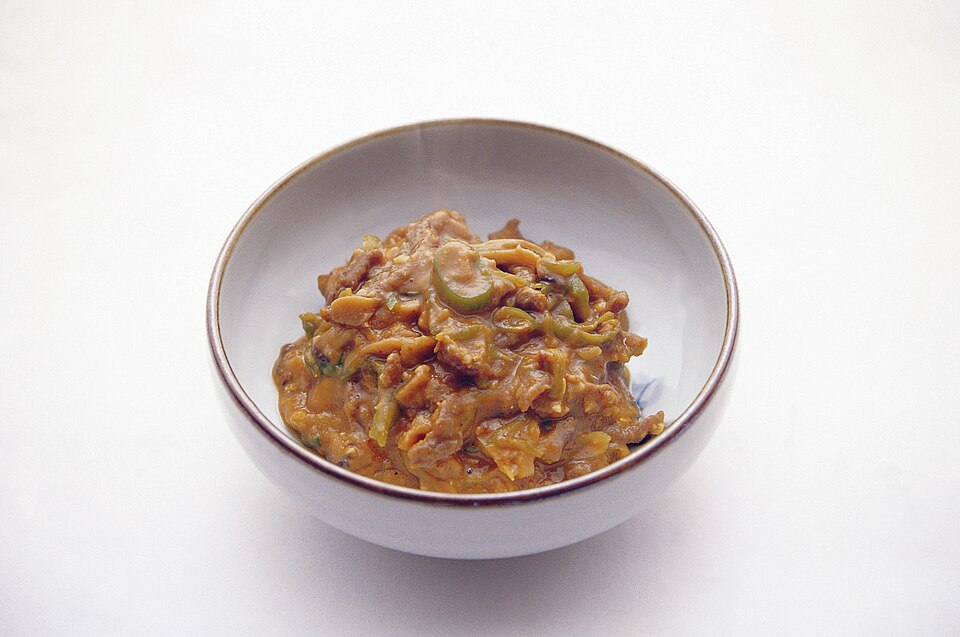
Ssamjang
 Korean · 5 min · 51 kcal · Vegan
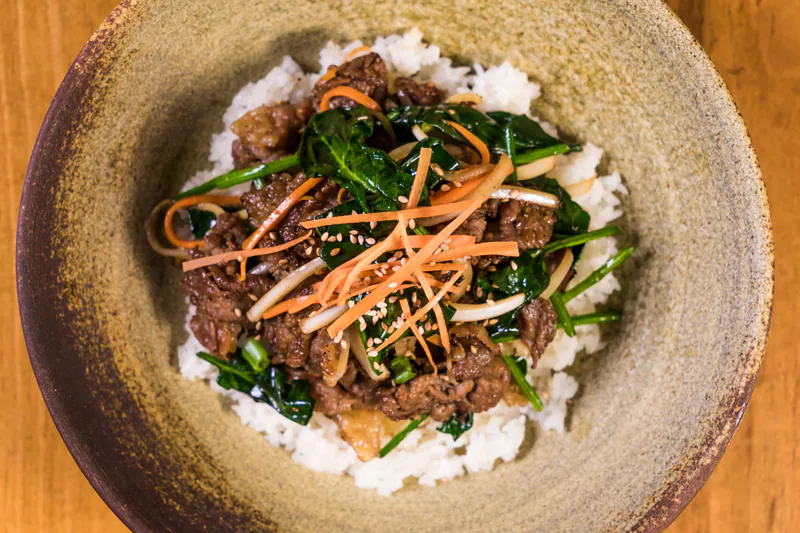
Beef bulgogi
Korean · 55 min · 288 kcal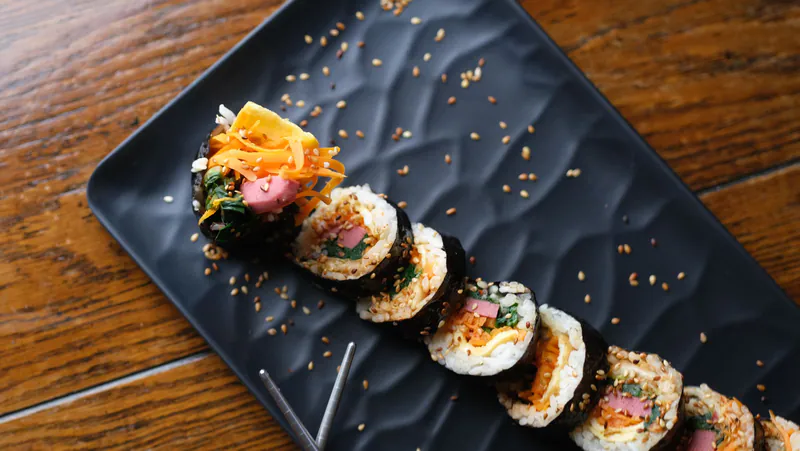
Kimbap
Korean · 1 h · 384 kcal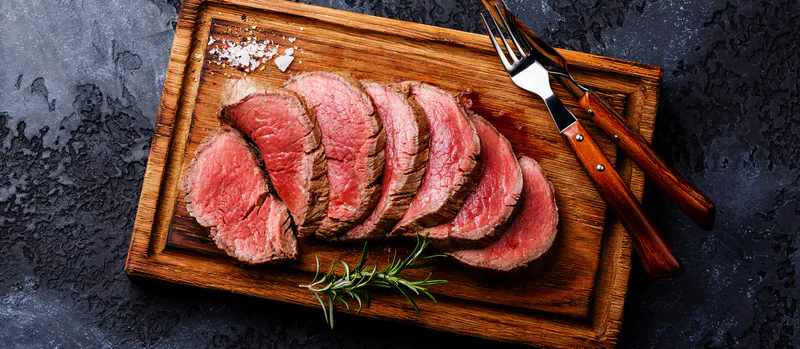
Châteaubriand with béarnaise sauce
 French · 1 h 50 min · 1228 kcal