
Cookware & bakeware · Pan
Grill pan
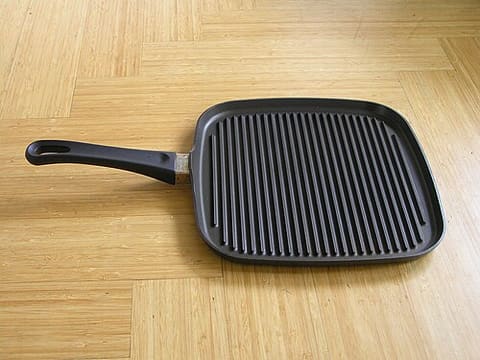
A stovetop pan with raised ridges that sears dark grill marks and lets fat drain away.
Specialist · Used on the stovetop · 3 recipes
Photo: Lymantria, via Wikimedia Commons (CC-BY-SA-3.0)
What it is
A heavy square or round pan, often cast iron, whose base is covered in parallel raised ridges. Food sits on the ridges, which brand it with stripes while fat collects in the channels. It imitates a barbecue indoors but gives no smoky flavour from fire.
What it’s for: Indoor grilling of steaks, chicken, vegetables, halloumi and sandwiches when an outdoor grill is not available.
How to use it
- Heat the empty pan over medium-high heat for several minutes.
- Oil the food rather than the pan.
- Lay food diagonally across the ridges and press lightly; do not move it until it releases.
- Rotate 90° for crosshatch marks, then turn over.
Good to know
- Tasks
- searing steaks and chicken, grilling vegetables, cooking halloumi and paneer, pressing panini
- Cooking methods
- Grilled, Pan-fried, Toasted
- Materials
- cast iron, enamelled cast iron, non-stick aluminium
- Care and cleaning
- Soak briefly and use a stiff brush to clean between the ridges. Season bare cast iron after washing.
- Limitations
- Only the ridges brown the food; less contact means less overall browning than a flat pan, and the ridges are fiddly to clean.
Safety
- Can smoke heavily; use the extractor fan.
- Handles become very hot.
If you don’t have one
- Cast-iron skillet — Better overall browning, without stripes.
- Oven — The overhead grill or broiler chars food from above.
Equipment guide
How it works: Raised ridges carry heat into the food along narrow lines, giving char marks, while fat and juices drain into the channels. Because only the ridges touch the food, overall browning is less than in a flat pan; the food is mostly cooked by the hot ridges and by heat radiating from the pan base.
| Material | Good | Watch out |
|---|---|---|
| Cast iron (bare, seasoned) | Very high heat capacity, so it holds temperature when cold food goes in; excellent for searing; oven-safe; lasts generations. | Heavy and slow to heat; heats unevenly on small burners; needs seasoning and drying; long simmering of acidic sauces can strip seasoning and give a metallic taste. |
| Enamelled cast iron | Heat retention of cast iron with a non-reactive glass surface that needs no seasoning; good for acidic braises. | Very heavy; enamel can chip or craze with thermal shock or metal utensils; light interiors stain. |
| Non-stick (PTFE or ceramic sol-gel coating on aluminium) | Eggs, fish and pancakes release with little fat; easy to clean; forgiving for beginners. | Coatings wear out (ceramic often faster than PTFE); PTFE should not be heated empty or above about 260 °C; poor at building fond; needs non-metal utensils. |
- Square or round single-burner grill pan
- Steaks, vegetables, paneer and halloumi.
- Reversible grill-griddle plate
- Spans two burners; ridged one side, flat the other.
- Panini press set
- A heavy ridged weight that presses down from the top.
Buying guidance
Starting out: A pre-seasoned cast-iron grill pan about 26 cm square.
- Ridges at least 5 mm tall so food sits above the fat
- Pour spouts for draining fat
- Heavy cast iron for good marks
- Fits your burner
No brands or prices — check current reviews before buying.
Techniques:GrillingSearingCharcoal grilling
Related tools
Recipes that use it
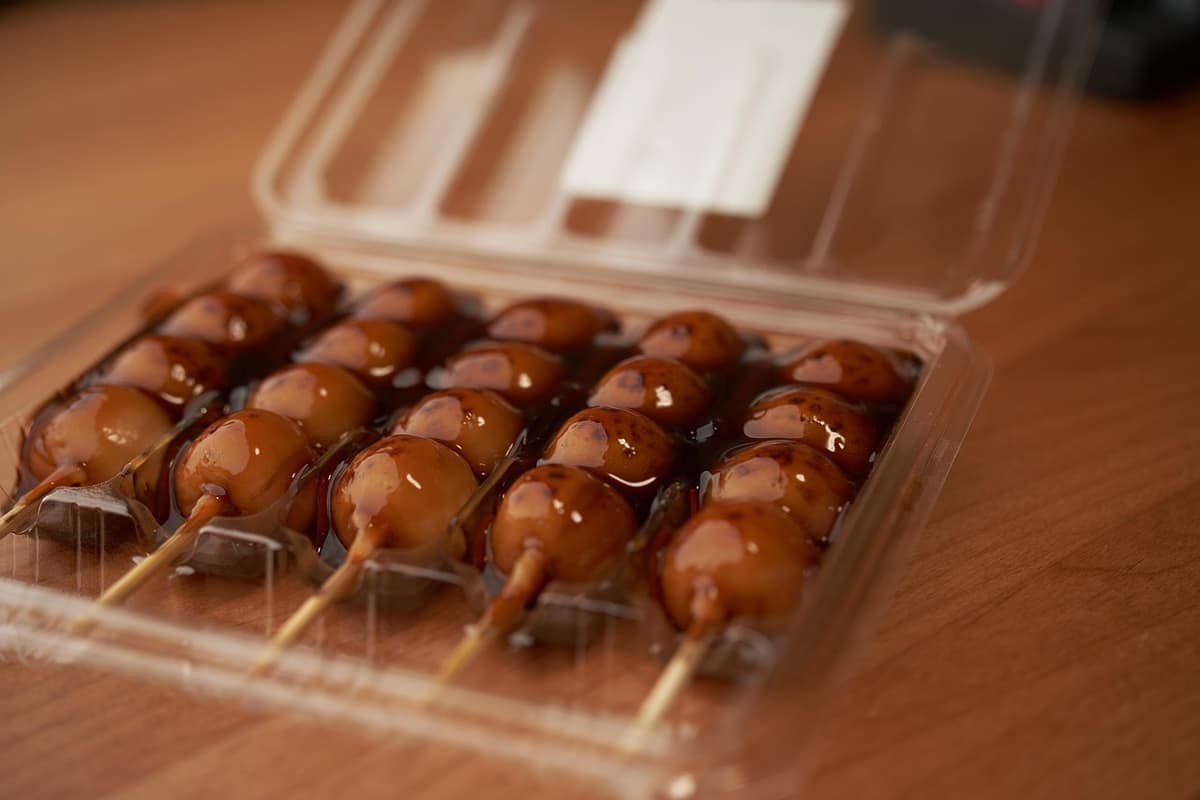
Mitarashi dango
 Japanese · 30 min · 249 kcal · Vegan
Smashed avocado on toast
 Australian · 12 min · 573 kcal · Vegetarian
Yakitori tare
Japanese · 40 min · 40 kcal