
 Levantine · Lebanese · Palestinian
Za'atar
Vegetarian
زعتر · zaʿtar
Dried wild-thyme-style herbs mixed with tart sumac, toasted sesame and salt. The Levant's everyday table blend, stirred into olive oil for bread, sprinkled on labneh and baked onto manakish.
Za'atar is a Levantine condiment from Lebanon, ready in about 19 minutes and made with dried thyme, sumac and sesame seeds. It serves 10 and is rated beginner to cook.
No licensed photograph of this dish yet.
- Prep
- 5 min
- Cook
- 4 min
- Rest
- 10 min
- Total
- 19 min
- Serves
- 10
- Level
- Beginner
- Calories
- 22
Method
Step 1
Roast the sesame seeds (opens in a new tab) in a dry pan over medium-low heat for 3–4 minutes, stirring, until pale golden and starting to jump. Tip onto a plate and cool completely, about 10 minutes.
- 4 min
- medium-low heat
- Frying pan / skillet (opens in a new tab)
Step 2
Crush the thyme (opens in a new tab), oregano (opens in a new tab) and marjoram (opens in a new tab) with the salt in a mortar for a minute so the herbs break into fine flakes — do not grind to dust.
Step 3
Mix the herbs with the sumac (opens in a new tab) and the cooled sesame seeds (opens in a new tab) in a bowl. Leave the sesame whole.
About this dish
- Origin
- The Levant, Lebanon · Well documentedZa'atar is both a wild herb (Origanum syriacum) and this blend. Outside the region a mix of dried thyme, oregano and marjoram stands in for the herb.Also popular in Syria, Palestine, Jordan, IsraelMore food from Lebanon
- Dish
- Condiments, chutneys & relishes
- Cooking method
- Toasted, No-cook
- Taste
- herby, tangy, nutty, salty
- Diet
- Vegan · No gluten ingredients · Dairy-free · No nut ingredients · Low-carbWorked out from the ingredients. How labels work
All labels
Vegan · Plant-based · Vegetarian (lacto-ovo) · Eggetarian · Lacto-vegetarian · Ovo-vegetarian · Pescatarian · Flexitarian-friendly · Whole-food focused · Paleo-style · No gluten ingredients · Dairy-free · Egg-free · No nut ingredients · No added sugar · Alcohol-free · Pork-free · Beef-free · Low-carb · DASH-style - Good for
- Make-ahead · Budget-friendly
- Cook more with
- Dried thyme · Sumac · Sesame seeds · Dried oregano · Dried marjoram
- Techniques
- Toasting · Spice roasting (dry-roasting)
Allergens
- Contains: Sesamefrom sesame seeds
Based on typical versions of these ingredients and not verified allergen-free. Brands differ and cross-contact happens, so always check labels. For severe allergies, follow your clinician’s advice.
Nutrition
22 kcal per serving
Estimated1 serving ≈ 6 g · recipe makes 10
Where the energy comes from
- Protein 12%
- Carbohydrate 42%
- Fat 46%
| Nutrient | Per serving | Per 100 g |
|---|---|---|
| Energy | 22 kcal | 361 kcal |
| Protein | 0.8 g | 13 g |
| Carbohydrate | 2.7 g | 45 g |
| Net carbohydrate | 1.1 g | 18 g |
| Sugars | 0.2 g | 3.7 g |
| Added sugars | 0 g | 0 g |
| Fibre | 1.6 g | 27 g |
| Fat | 1.3 g | 22.2 g |
| Saturated fat | 0.2 g | 3.6 g |
| Trans fat | — | — |
| Cholesterol | 0 mg | 0 mg |
| Sodium | 157 mg | 2623 mg |
| Salt equivalent | 0.4 g | 6.6 g |
Vitamins & minerals per serving
- Potassium
- 67 mg
- Calcium
- 63 mg
- Iron
- 2.6 mg
- Magnesium
- 15 mg
- Vitamin A (RAE)
- 41 µg
- Vitamin C
- 1 mg
- Vitamin D
- 0 µg
- Vitamin B12
- 0 µg
- Folate (DFE)
- 8 µg
How these numbers were made
- Calculated from USDA FoodData Central (SR Legacy) per-100 g values and the listed quantities.
- Sumac: Paprika (FDC 171329) as a stand-in dried ground red spice; values are approximate.
- “—” means the value isn’t known for enough of the ingredients; it is never zero by default.
- Values are estimates for guidance, not for medical dosing. U.S. Department of Agriculture, Agricultural Research Service. FoodData Central, 2019. fdc.nal.usda.gov.
Good to know
Tips
- For manakish, mix 1 part za'atar with about 1.5 parts olive oil to a loose paste.
- Palestinian blends are greener and more herb-heavy; Lebanese blends often use more sumac.
Common mistakes
- Adding the sesame while warm, which makes the herbs damp and clumpy.
Serve with
- Manakish za'atar, ka'ak al-Quds, labneh with olive oil, fattoush, roast chicken and eggs.
Food safety
- Store in a clean, completely dry, airtight jar away from light and heat; always use a dry spoon. Ground blends lose aroma steadily after the first month.
- Contains sesame.
Storage
- Airtight jar, cool and dark, up to 3 months (the toasted sesame eventually goes stale).
Variations
- Za'atar halabi (Aleppo style) (Syria): Adds Aleppo pepper and sometimes cumin and roasted chickpea for a redder, spicier mix.
Original editorial recipe · FriendsPantry editorial · Not yet independently reviewed · Added · Updated
About this masala
- Type
- Dry spice blend
- Texture
- Coarse powder
- One batch makes
- about 60 g
- Keeps
- about 3 months
- Store
- Airtight jar, cool dark cupboard
- Recipe
- Traditional
The Levant. Makes Za'atar, the ingredient our dish recipes list. All masalas
Used in
Amounts are each dish’s own quantity, for the servings it is written for. “Make enough” opens this recipe scaled for that dish.
- Ka'ak al-Quds4 tbsp · 21 g for 6 rings · optionalMake enough
- Labneh with za'atar and olive oil6 g · 6 g for 4 servings (about 70 g with garnish)Make enough
- Manakish za'atar6 tbsp · 31 g for 6 flatbreadsMake enough
- Taboon bread2 tbsp · 10 g for 6 breads · optionalMake enough
Recipe DNA
How this dish is built
Grouped by each ingredient’s role in the dish. Each band’s width is its share of the dish by weight. Choose a component to see what it does.
The spice and seasoning backbone
Spices, masalas & pastes
- Dried thyme, raw, rubbed between your palms12 g
- Dried oregano, dried, raw, rubbed6 g
- Dried marjoram, dried, raw, rubbed4 g
- Sumac, raw15 g
- Salt, raw, fine4 g
Reviews & corrections
Reviews come from signed-in cooks and appear after a moderator checks them. We never show made-up ratings.
You might also like
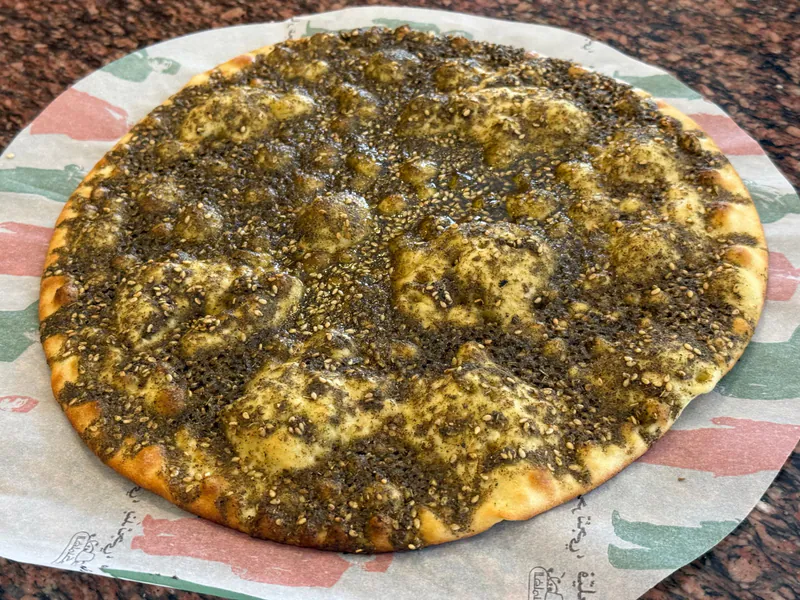
Manakish za'atar
Lebanese · 1 h 41 min · 424 kcal · VegetarianKa'ak al-Quds
 Palestinian · 2 h 18 min · 502 kcal · Vegetarian
Taboon bread
Palestinian · 2 h 40 min · 344 kcal · Vegan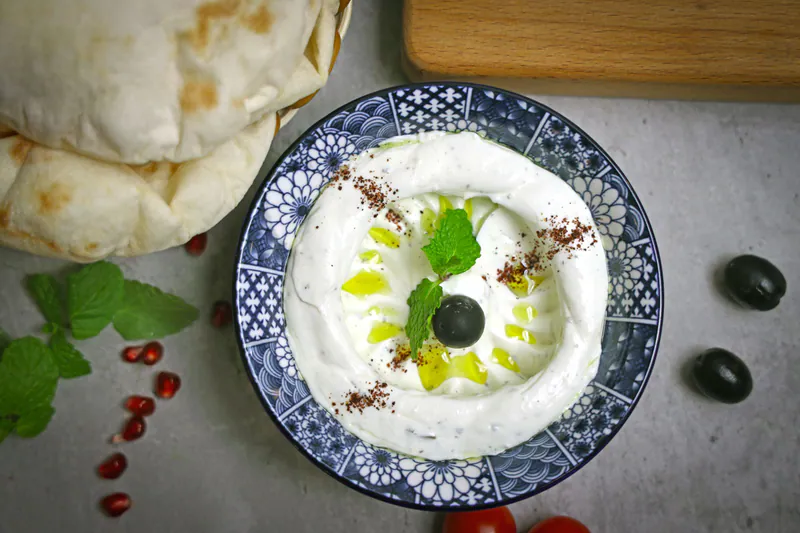
Labneh (strained yoghurt cheese)
Levantine · 24 h 10 min · 73 kcal · Vegetarian