
Yakitori tare
Non-vegetarian
焼き鳥のタレ · yakitori no tare
Soy sauce, mirin, sake and sugar slowly reduced with charred chicken wings and spring onion into a thick, glossy, savoury-sweet basting sauce for grilled skewers.
Yakitori tare is a Japanese sauce, ready in about 40 minutes and made with soy sauce and mirin. It serves 12 and is rated easy to cook.
No licensed photograph of this dish yet.
- Prep
- 5 min
- Cook
- 35 min
- Total
- 40 min
- Serves
- 12
- Level
- Easy
- Calories
- 40
Method
Step 1
If using the wings (opens in a new tab), sear them in a dry grill pan (opens in a new tab) over medium-high heat for 8–10 minutes, turning with tongs (opens in a new tab), until well charred and the fat has rendered.
- 10 min
- medium-high heat
- Grill pan (opens in a new tab)
- Tongs (opens in a new tab)
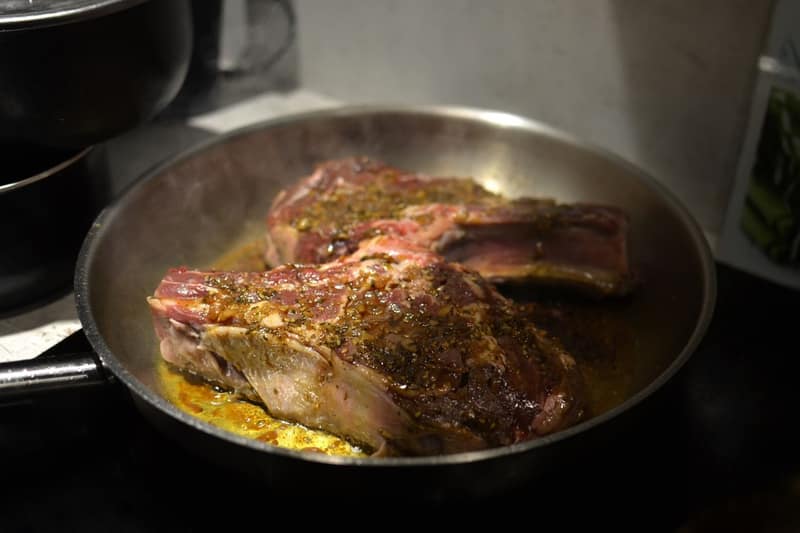
How it looks · Photo: Skylar Kang on Pexels Step 2
Put the soy sauce (opens in a new tab), mirin (opens in a new tab), sake (opens in a new tab), sugar (opens in a new tab), spring onion (opens in a new tab) and the charred wings (opens in a new tab) into a saucepan (opens in a new tab). Bring to the boil over medium heat, stirring until the sugar dissolves.
- 4 min
- medium heat
- Saucepan (opens in a new tab)
Step 3
Lower the heat and simmer gently, uncovered, for 20–25 minutes until reduced by about a third and syrupy: it should coat a spoon in a glossy film and form slow, thick bubbles. Watch closely at the end, because the sugar (opens in a new tab) can catch.
- 22 min
- low heat
- Saucepan (opens in a new tab)
Step 4
Strain into a clean jar, discarding the wings (opens in a new tab) and onion. The tare thickens as it cools.

How it looks · Photo: Katerina Holmes on Pexels Step 5
To use, brush or dip skewers into the tare two or three times during the last minutes of grilling, letting each coat caramelise until glossy before the next.
- 1 min
- medium-high heat
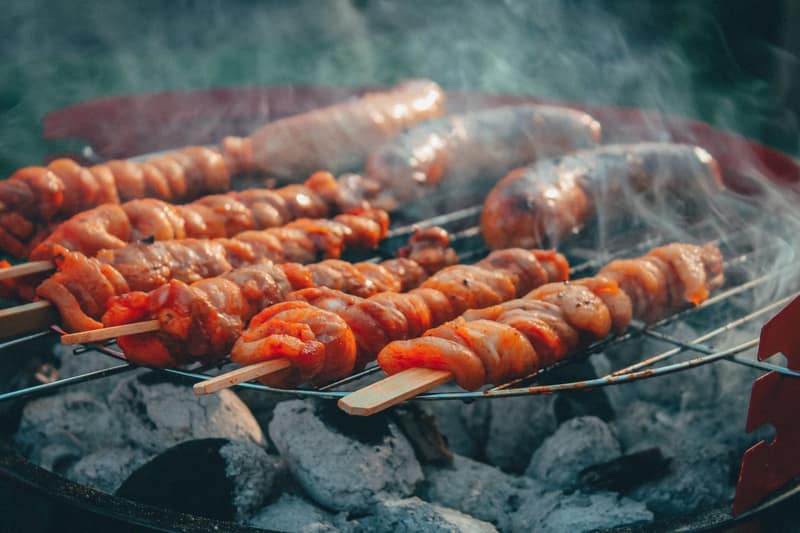
How it looks · Photo: Malte Luk on Pexels
About this dish
- Origin
- Japan · Well documentedYakitori shops keep a master tare that is topped up and reboiled for years, often enriched by dipping grilled chicken into it. This is a home version with charred wings for the same depth.More food from Japan
- Dish
- Dinner · Snack · Sauces
- Cooking method
- Simmered, Grilled
- Taste
- sweet & savoury, umami, smoky
- Diet
- Dairy-free · No nut ingredients · Low-carbWithout the optional extras: Vegan, Plant-based, Vegetarian (lacto-ovo), Eggetarian, Lacto-vegetarian, Ovo-vegetarian, PescatarianWorked out from the ingredients. How labels work
All labels
Non-vegetarian · Flexitarian-friendly · Dairy-free · Egg-free · No nut ingredients · Pork-free · Beef-free · Low-carb · Low-fat - Good for
- Make-ahead
- Cook more with
- Soy sauce · Mirin · Sake · Sugar · Spring onion
- Techniques
- Grilling · Searing · Charcoal grilling · Boiling · Simmering
Allergens
- Contains: Wheatfrom soy sauce
- Contains: Glutenfrom soy sauce
- Contains: Soyfrom soy sauce
Based on typical versions of these ingredients and not verified allergen-free. Brands differ and cross-contact happens, so always check labels. For severe allergies, follow your clinician’s advice.
Nutrition
40 kcal per serving
Estimated1 serving ≈ 22 g · recipe makes 12
Where the energy comes from
- Protein 17%
- Carbohydrate 80%
- Fat 4%
| Nutrient | Per serving | Per 100 g |
|---|---|---|
| Energy | 40 kcal | 186 kcal |
| Protein | 1 g | 4.8 g |
| Carbohydrate | 4.8 g | 22.1 g |
| Net carbohydrate | 4.7 g | 21.5 g |
| Sugars | 3.4 g | 15.7 g |
| Added sugars | — | — |
| Fibre | 0.1 g | 0.6 g |
| Fat | 0.1 g | 0.3 g |
| Saturated fat | 0 g | 0 g |
| Trans fat | — | — |
| Cholesterol | 0 mg | 0 mg |
| Sodium | 632 mg | 2918 mg |
| Salt equivalent | 1.6 g | 7.3 g |
Vitamins & minerals per serving
- Potassium
- 59 mg
- Calcium
- 6 mg
- Iron
- 0.2 mg
- Magnesium
- 10 mg
- Vitamin A (RAE)
- 1 µg
- Vitamin C
- 0 mg
- Vitamin D
- 0 µg
- Vitamin B12
- 0 µg
- Folate (DFE)
- 3 µg
How these numbers were made
- Calculated from USDA FoodData Central (SR Legacy) per-100 g values and the listed quantities.
- Optional ingredients are not included: chicken wings.
- Mirin: Sake (FDC 167723) used as a stand-in; true mirin is sweeter, so sugar is underestimated.
- “—” means the value isn’t known for enough of the ingredients; it is never zero by default.
- Values are estimates for guidance, not for medical dosing. U.S. Department of Agriculture, Agricultural Research Service. FoodData Central, 2019. fdc.nal.usda.gov.
Good to know
Tips
- Keep topping up the jar with fresh soy, mirin and sugar and reboiling it, as yakitori shops do; the flavour deepens with time.
Common mistakes
- Brushing on tare from the start of grilling, which burns the sugar before the chicken is cooked.
Serve with
- Yakitori (negima, tsukune, chicken thigh).
- Grilled eel or salmon (kabayaki style).
- Drizzle over rice bowls of grilled chicken or pork.
Food safety
- If chicken is used for flavour or skewers are dipped into the jar, reboil the tare before storing and keep it refrigerated.
- Never dip raw-meat skewers into the main jar; pour off what you need.
Storage
- Refrigerate in a clean jar for up to 2 weeks; bring to the boil before reusing if you have dipped cooked meat into it.
Variations
- Unagi tare (Japan): Thicker and sweeter, enriched by grilled eel heads and bones.
Original editorial recipe · FriendsPantry editorial · Not yet independently reviewed · Added · Updated
Goes with
Recipe DNA
How this dish is built
Grouped by each ingredient’s role in the dish. Each band’s width is its share of the dish by weight. Choose a component to see what it does.
What the dish is built around
Main ingredient
- Chicken wings, 2 wings, patted dry and grilled or pan-seared until charred all over (optional)150 g
Make it milder, swap ingredients for your diet, change the batch size or thickness — the original stays as it is.
Customise in Sauce & DrizzleReviews & corrections
Reviews come from signed-in cooks and appear after a moderator checks them. We never show made-up ratings.
You might also like
Teriyaki sauce
 Japanese · 10 min · 46 kcal · Vegan
Mentsuyu (noodle soup base)
Japanese · 55 min
Oyakodon
Japanese · 25 min · 598 kcal
Chicken teriyaki
Japanese · 25 min · 188 kcal