
Oyakodon
Non-vegetarian
親子丼 · oyakodon
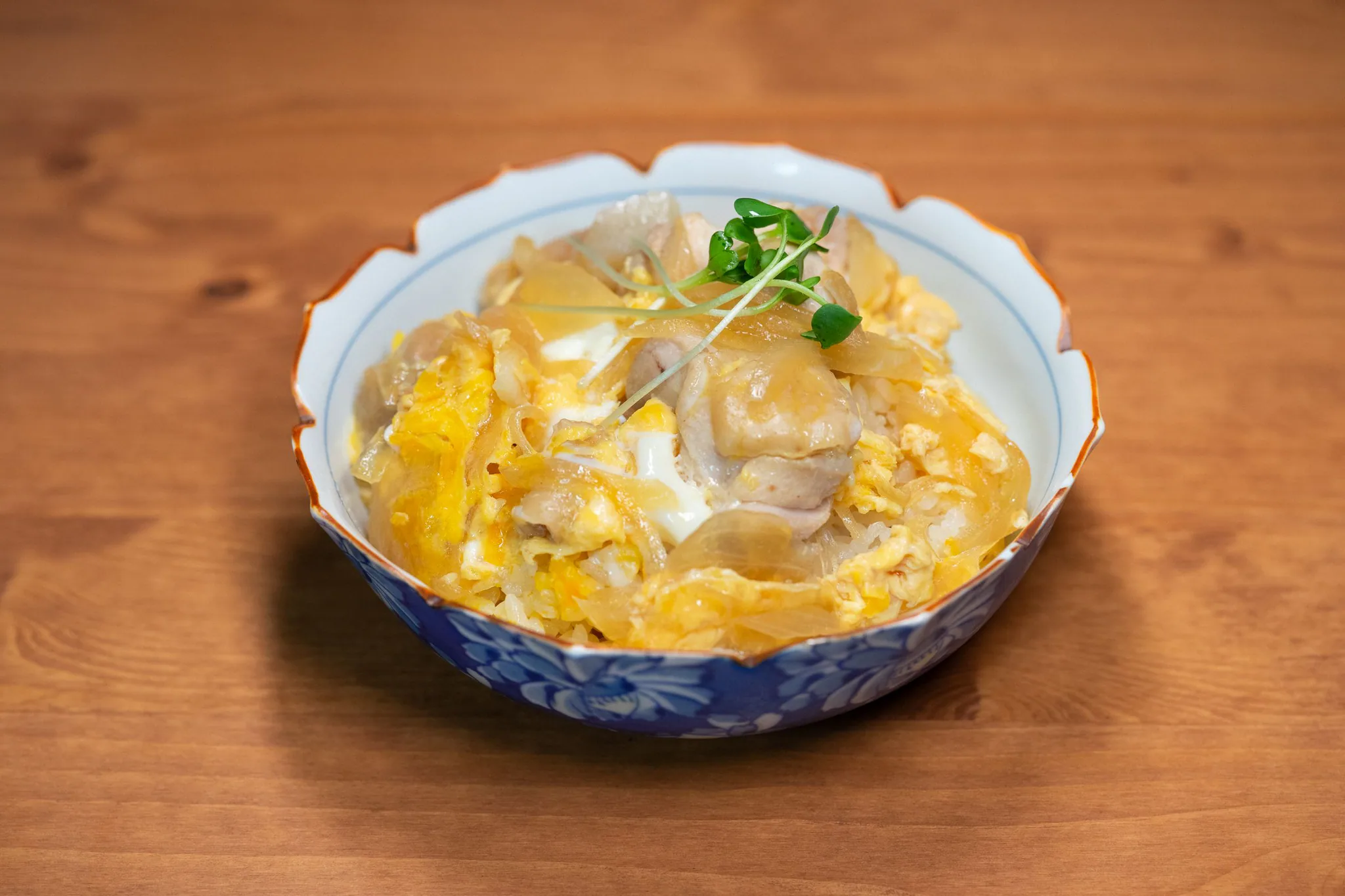
Chicken and onion simmered in sweet-savoury dashi, then softly set with egg and slid over a bowl of rice. The name means 'parent and child'.
Oyakodon is a Japanese rice dish, ready in about 25 minutes and made with chicken thigh and egg. It serves 2 and is rated easy to cook.
- Prep
- 10 min
- Cook
- 15 min
- Total
- 25 min
- Serves
- 2
- Level
- Easy
- Calories
- 598
Plus cooking the rice.
Method
Step 1
Rinse the rice until the water runs nearly clear and cook it in a rice cooker (opens in a new tab) or covered pan until tender; keep warm.
Step 2
Bring the dashi (opens in a new tab), soy sauce (opens in a new tab), mirin (opens in a new tab) and sugar (opens in a new tab) to a simmer in a small frying pan. Add the onion (opens in a new tab) and simmer until soft.
- 3 min
- medium heat
- Frying pan / skillet (opens in a new tab)
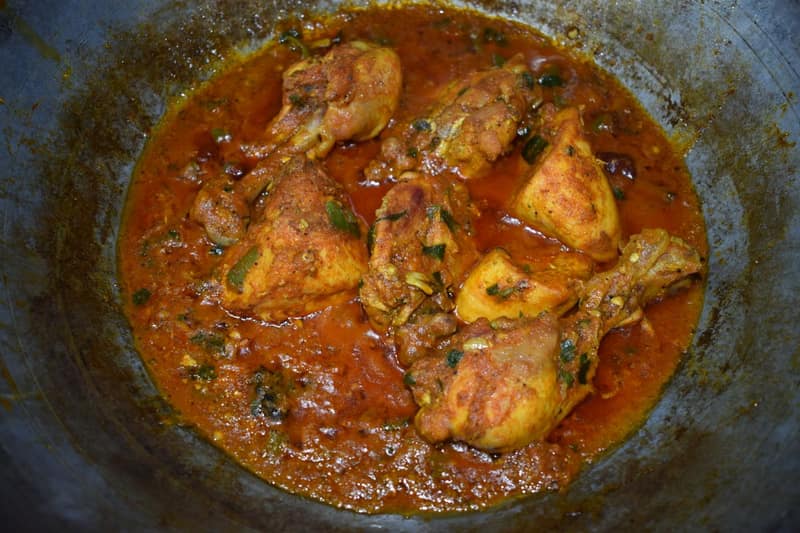
How it looks · Photo: Bachir Mamud on Pexels Step 3
Add the chicken in one layer and simmer, turning once, until cooked through.
- 6 min
- medium heat
Food safety: Chicken should reach 74 °C before the egg goes in.
Step 4
Pour two-thirds of the egg (opens in a new tab) over the chicken, cover and cook for 1 minute. Add the rest, scatter with spring onion (opens in a new tab), cover and cook 30 seconds more so the top stays soft.
- 2 min
- medium-low heat
Food safety: Japanese oyakodon is often served with softly set egg; cook longer if serving vulnerable people.
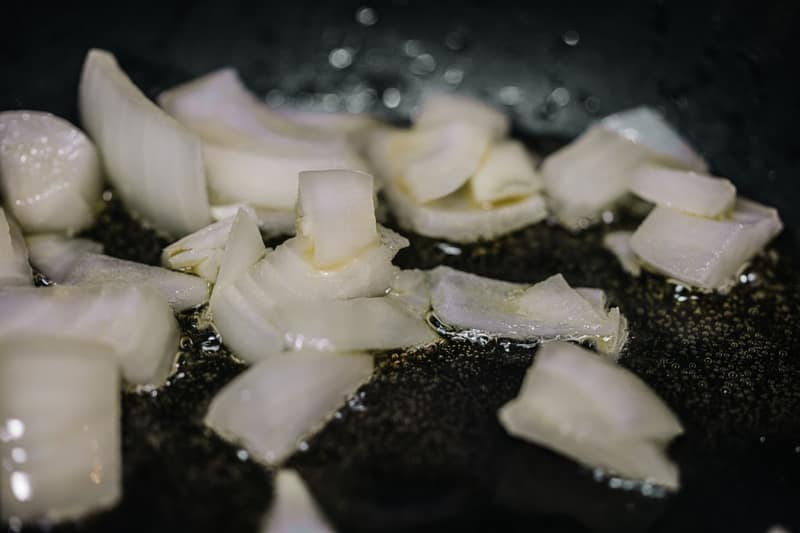
How it looks · Photo: Magda Ehlers on Pexels Step 5
Divide the rice between bowls and slide the chicken and egg (opens in a new tab) on top with some of the sauce. Top with nori (opens in a new tab).
- 1 min
About this dish
- Origin
- Japan · Well documentedMore food from Japan
- Dish
- Lunch · Dinner · Rice dishes · Main courses
- Cooking method
- Simmered
- Taste
- sweet & savoury, umami, mild
- Diet
- Dairy-free · No nut ingredients · High-proteinWorked out from the ingredients. How labels work
All labels
Non-vegetarian · Dairy-free · No nut ingredients · Pork-free · Beef-free · High-protein - Good for
- Everyday · Child-friendly
- Cook more with
- Chicken thigh · Egg · Short-grain rice · Dashi · Soy sauce · Mirin
- Techniques
- Simmering
Allergens
- Contains: Eggsfrom egg
- Contains: Fishfrom dashi
- Contains, can be adapted: Wheatfrom soy sauce
- Contains, can be adapted: Glutenfrom soy sauce
- Contains: Soyfrom soy sauce
Based on typical versions of these ingredients and not verified allergen-free. Brands differ and cross-contact happens, so always check labels. For severe allergies, follow your clinician’s advice.
Nutrition
598 kcal per serving
Estimated1 serving ≈ 422 g · recipe makes 2
Where the energy comes from
- Protein 30%
- Carbohydrate 49%
- Fat 21%
| Nutrient | Per serving | Per 100 g* |
|---|---|---|
| Energy | 598 kcal | 142 kcal |
| Protein | 42.5 g | 10.1 g |
| Carbohydrate | 68.8 g | 16.3 g |
| Net carbohydrate | — | — |
| Sugars | — | — |
| Added sugars | — | — |
| Fibre | — | — |
| Fat | 13.4 g | 3.2 g |
| Saturated fat | 4 g | 0.9 g |
| Trans fat | — | — |
| Cholesterol | 397 mg | 94 mg |
| Sodium | 1280 mg | 303 mg |
| Salt equivalent | 3.2 g | 0.8 g |
Vitamins & minerals per serving
- Potassium
- 710 mg
- Calcium
- 73 mg
- Iron
- 3.4 mg
- Magnesium
- 78 mg
- Vitamin A (RAE)
- —
- Vitamin C
- 4 mg
- Vitamin D
- 1.5 µg
- Vitamin B12
- 1.9 µg
- Folate (DFE)
- 59 µg
How these numbers were made
- Calculated from USDA FoodData Central (SR Legacy) per-100 g values and the listed quantities.
- *Per 100 g of combined raw ingredients; the cooked dish may weigh more or less.
- Optional ingredients are not included: nori.
- Dashi: Home-prepared fish stock (FDC 172885) used as a stand-in for katsuobushi-kombu dashi; both are very low in energy.
- Mirin: Sake (FDC 167723) used as a stand-in; true mirin is sweeter, so sugar is underestimated.
- “—” means the value isn’t known for enough of the ingredients; it is never zero by default.
- Values are estimates for guidance, not for medical dosing. U.S. Department of Agriculture, Agricultural Research Service. FoodData Central, 2019. fdc.nal.usda.gov.
Good to know
Tips
- Cooking one portion at a time in a small pan makes it easy to slide neatly onto the rice.
Common mistakes
- Beating the egg smooth: leave streaks of white and yolk so the topping sets in soft, marbled curds.
- Cooking the egg until firm — it should be just set and still a little runny when it reaches the rice.
Serve with
- Serve with miso soup and pickles.
Storage
- Best eaten fresh.
Original editorial recipe · FriendsPantry editorial · Not yet independently reviewed · Added · Updated
Recipe DNA
How this dish is built
Grouped by each ingredient’s role in the dish. Each band’s width is its share of the dish by weight. Choose a component to see what it does.
What the dish is built around
Main ingredient
- Short-grain rice, cooked (about 400 g cooked)150 g
- Chicken thigh, boneless, cut into bite-size pieces250 g
- Egg, lightly beaten, a few streaks left3 piece · 150 g
- Nori, cut into thin strips (optional)1 sheet · 3 g
Reviews & corrections
Reviews come from signed-in cooks and appear after a moderator checks them. We never show made-up ratings.
You might also like
Chicken teriyaki
 Japanese · 25 min · 188 kcal
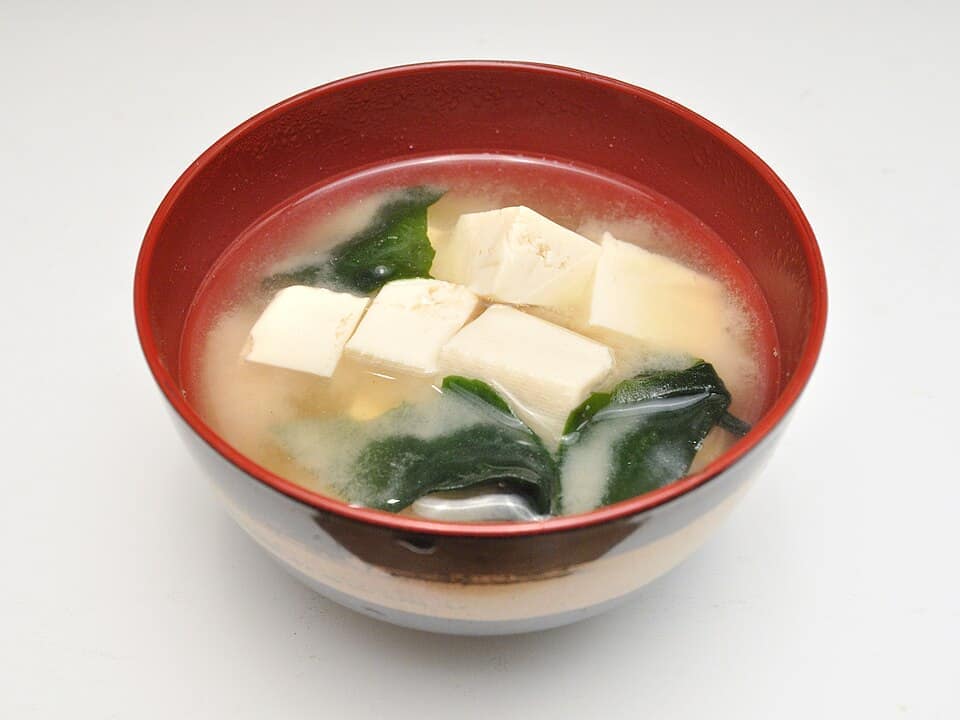
Miso soup with tofu and wakame
Japanese · 13 min · 84 kcal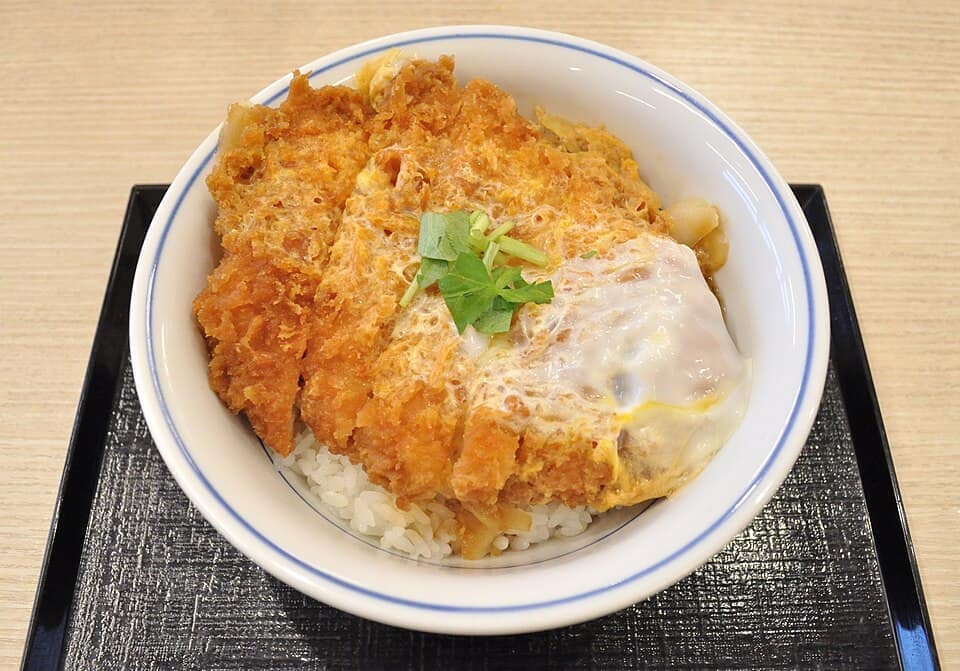
Katsudon
Japanese · 40 min · 1003 kcal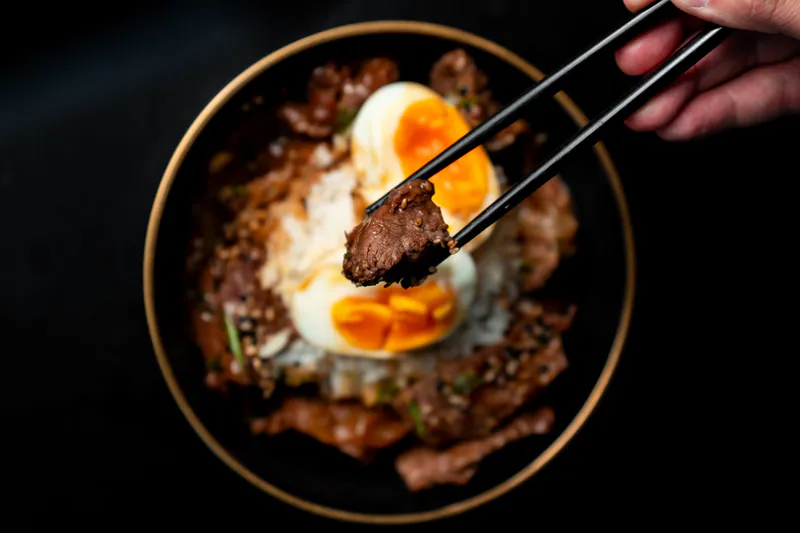
Gyudon
Japanese · 25 min · 548 kcal