
 Guatemalan · Central American · Stews & braises
Subanik (Kaqchikel three-meat stew steamed in leaves)
Non-vegetarian
Beef, pork and chicken coated in a thick red recado of roasted tomatoes, tomatillos, sweet pepper and dried chillies, wrapped in large leaves and steamed until the meat is falling-apart tender. A ceremonial Kaqchikel Maya dish from San Martín Jilotepeque, served with rice and tamalitos.
Subanik (Kaqchikel three-meat stew steamed in leaves) is a Guatemalan stew, ready in about 3 hours 40 minutes and made with beef chuck, pork shoulder and chicken pieces, skin-on. It serves 8 and is rated advanced to cook.
No licensed photograph of this dish yet.
- Prep
- 45 min
- Cook
- 2 h 45 min
- Rest
- 10 min
- Total
- 3 h 40 min
- Serves
- 8
- Level
- Advanced
- Calories
- 492
Main ingredients

Ingredients
For the meat
For the recado
For wrapping
For steaming
Method
Meat
3 minStep 1
Season the beef, pork and chicken with 1½ tsp salt in a large bowl.
Food safety: Wash hands, boards and knives after handling raw meat, and keep it apart from salad and other ready-to-eat food.
Recado
23 minStep 2
On a dry griddle or comal, roast the tomatoes (opens in a new tab), tomatillos (opens in a new tab), red pepper (opens in a new tab), onion (opens in a new tab) and garlic (opens in a new tab), turning, until blistered and blackened in spots, 12–15 minutes. Toast the dried chillies for a few seconds a side until fragrant, then soak them in hot water for 15 minutes.
- 18 min
- medium-high heat
- Griddle / tawa (opens in a new tab)
Toasted chillies burn in seconds and turn bitter; pull them off as soon as they smell toasty.
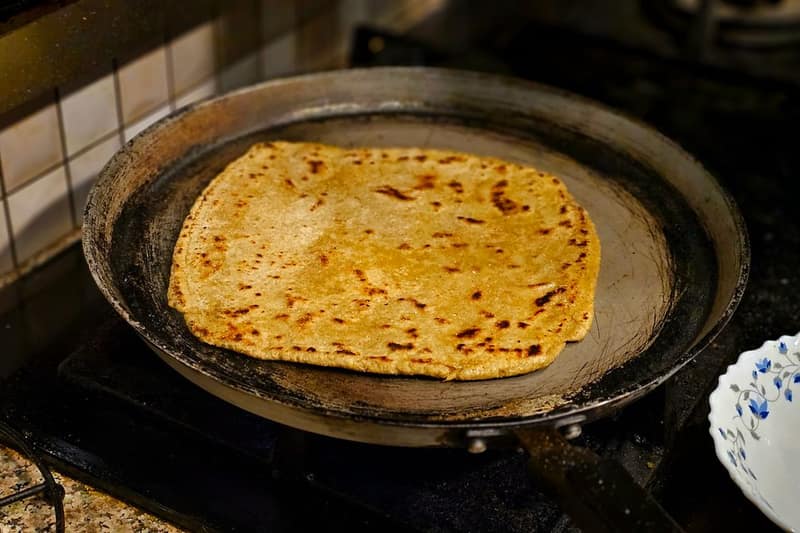
How it looks · Photo: Muhammad Khawar Nazir on Pexels Step 3
Peel the garlic (opens in a new tab) and seed the pepper (opens in a new tab). Blend the roasted vegetables and drained chillies with the masa harina (opens in a new tab), thyme (opens in a new tab) leaves, stock, achiote (opens in a new tab), salt and pepper to a thick, smooth recado.
Wrapping
15 minStep 4
Pass the banana leaves (opens in a new tab) briefly over a flame or dip in hot water to make them pliable. Mix the meat with the recado and the bay leaves (opens in a new tab), then lay overlapping leaves in a large bowl, pile in the meat and sauce, fold the leaves over and tie into one large bundle (or several smaller ones) with kitchen string.
- 15 min
Steaming
2 h 47 minStep 5
Set the bundle on a rack or steamer (opens in a new tab) basket over the boiling water in a large pot, cover tightly and steam for 2½–3 hours, topping up with boiling water as needed, until the beef is very tender.
- 165 min
- medium heat
- Stockpot / large pot (opens in a new tab)
- Steamer (opens in a new tab)
Food safety: Cook chicken until the juices run clear and the thickest part reaches 74 °C; refrigerate leftovers within 2 hours.
Step 6
Rest for 10 minutes, then open the bundle at the table and serve the meat with plenty of sauce.
- 2 min
Food safety: Open the leaves away from your face; a lot of hot steam escapes.
At a glance
1 · Meat in a pan
 Beef chuck
 Pork shoulder
 Chicken pieces, skin-on
 Salt
then roast
2 · Recado in a pan
 Tomato
 Tomatillo
 Red bell pepper
 Onion
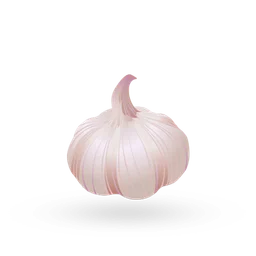 Garlic
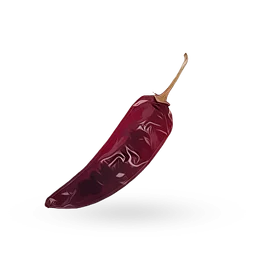 Guajillo chile
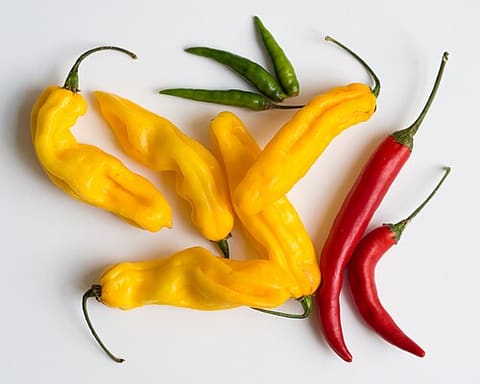 Ancho chile (dried poblano)
- Chile de árbol
 Masa harina
 Thyme (fresh)
 Bay leaves
 Beef stock
- Achiote paste
- Salt
 Black pepper
then pass
3 · Wrapping in a bowl
 Banana leaves
then set
4 · Steaming in a pot
About this dish
- Origin
- San Martín Jilotepeque, Chimaltenango, Guatemala · Well documentedTraditionally wrapped in mashan (Calathea lutea) leaves and tied with a cibaque fibre; declared part of Guatemala's intangible cultural heritage.More food from Guatemala
Guatemala - Dish
- Lunch · Dinner · Stews & braises · Main courses
- Cooking method
- Roasted, Blended, Steamed
- Taste
- savoury, smoky, spicy (chilli heat), earthy
- Diet
- No gluten ingredients · Dairy-free · No nut ingredients · Low-carb · High-proteinWorked out from the ingredients. How labels work
All labels
Non-vegetarian · No gluten ingredients · Dairy-free · Egg-free · No nut ingredients · No added sugar · Alcohol-free · Low-carb · High-protein · Calorie-conscious - Good for
- Festive & celebration · Batch cooking
- Cook more with
- Beef chuck · Pork shoulder · Chicken pieces, skin-on · Tomato · Tomatillo · Red bell pepper
- Techniques
- Roasting · Boiling · Steaming · Spice roasting (dry-roasting) · Wet grinding
Allergens
- May contain: Celeryfrom beef stock
Based on typical versions of these ingredients and not verified allergen-free. Brands differ and cross-contact happens, so always check labels. For severe allergies, follow your clinician’s advice.
Nutrition
492 kcal per serving
Estimated1 serving ≈ 392 g · recipe makes 8
Where the energy comes from
- Protein 36%
- Carbohydrate 10%
- Fat 53%
| Nutrient | Per serving | Per 100 g* |
|---|---|---|
| Energy | 492 kcal | 126 kcal |
| Protein | 44.5 g | 11.4 g |
| Carbohydrate | 12.8 g | 3.3 g |
| Net carbohydrate | 9.4 g | 2.4 g |
| Sugars | 4.5 g | 1.1 g |
| Added sugars | 0 g | 0 g |
| Fibre | 3.4 g | 0.9 g |
| Fat | 29.1 g | 7.4 g |
| Saturated fat | 9.2 g | 2.4 g |
| Trans fat | — | — |
| Cholesterol | 155 mg | 39 mg |
| Sodium | 943 mg | 240 mg |
| Salt equivalent | 2.4 g | 0.6 g |
Vitamins & minerals per serving
- Potassium
- 1099 mg
- Calcium
- 58 mg
- Iron
- 4.2 mg
- Magnesium
- 71 mg
- Vitamin A (RAE)
- 157 µg
- Vitamin C
- 38 mg
- Vitamin D
- 1.3 µg
- Vitamin B12
- 2.2 µg
- Folate (DFE)
- 46 µg
How these numbers were made
- Calculated from USDA FoodData Central (SR Legacy) per-100 g values and the listed quantities.
- *Per 100 g of combined raw ingredients; the cooked dish may weigh more or less.
- Optional ingredients are not included: chile de árbol, achiote paste.
- Not counted (tiny amounts or “to taste”): banana leaves.
- Guajillo chile: Dried ancho chile (FDC 169396) used as a stand-in: no guajillo entry in FDC SR Legacy; both are large dried Mexican Capsicum annuum pods.
- “—” means the value isn’t known for enough of the ingredients; it is never zero by default.
- Values are estimates for guidance, not for medical dosing. U.S. Department of Agriculture, Agricultural Research Service. FoodData Central, 2019. fdc.nal.usda.gov.
Good to know
Tips
- Lining the bundle with an outer layer of foil helps if your banana leaves tear.
- The beef takes the longest; cut it smaller than the chicken so everything finishes together.
Common mistakes
- Letting the steamer boil dry — check the water level every 45 minutes.
Serve with
- Serve with white rice and plain corn tamalitos (tamalitos de masa) or chuchitos, and tortillas.
Food safety
- Cook chicken until the juices run clear and the thickest part reaches 74 °C; refrigerate leftovers within 2 hours.
- Cook pork until it reaches at least 63 °C in the centre and refrigerate leftovers within 2 hours.
Storage
- Keeps 3 days refrigerated; the flavour improves overnight. Freezes well for 2 months.
Reheating
- Reheat covered in a pan with a splash of water, or steam again in the leaves, until piping hot.
Variations
- Vegetarian subanik: Mushrooms, aubergine and chayote replace the meat; steam for about 1 hour.
- Subanik in individual bundles: Portioned into small leaf parcels, each with a piece of every meat, for parties.
History
Subanik is a Kaqchikel Maya dish whose name is usually explained as 'food of the gods' or 'God's meal'. It is prepared for weddings, religious festivals and community celebrations in San Martín Jilotepeque, where the mashan-leaf bundle tied with cibaque is part of the ritual.
Confidence: Commonly attributed
Original editorial recipe · FriendsPantry editorial · source: TasteAtlas (dish facts) · Not yet independently reviewed · Added
Recipe DNA
How this dish is built
Built from the recipe’s own sections. Each band’s width is its share of the dish by weight. Choose a component to see what it does.
What the dish is built around
For the meat
- Beef chuck, in 5 cm chunks500 g
- Pork shoulder, in 5 cm chunks500 g
- Chicken pieces, skin-on, bone-in750 g
- Salt1.5 tsp · 9 g
Masalas in this recipe
Make the masala first, then come back to finish the dish.
Wet masala
Recado rojo (Yucatecan achiote paste)
This recipe uses 1 tbsp (16 g for 8 servings).
Reviews & corrections
Reviews come from signed-in cooks and appear after a moderator checks them. We never show made-up ratings.
You might also like
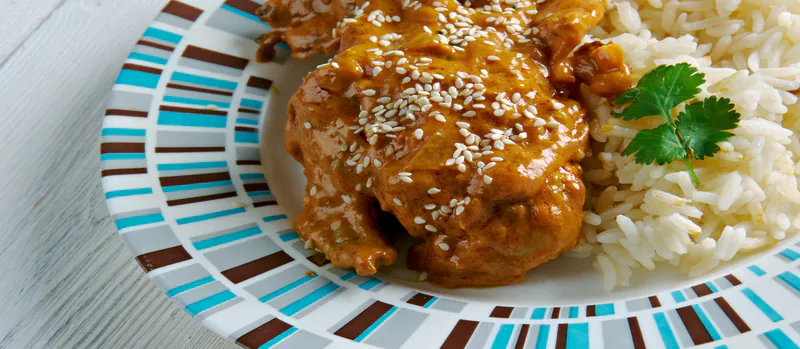
Pepián de pollo
Guatemalan · 1 h 45 min · 712 kcal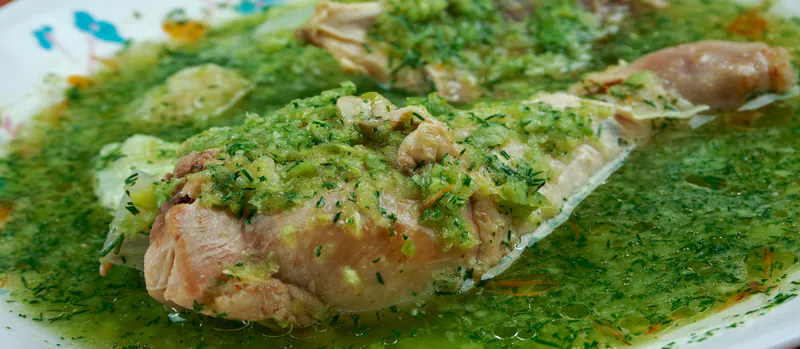
Jocón de pollo (Guatemalan green chicken stew)
Guatemalan · 1 h 20 min · 571 kcalChuchitos
Guatemalan · 2 h 5 min · 524 kcal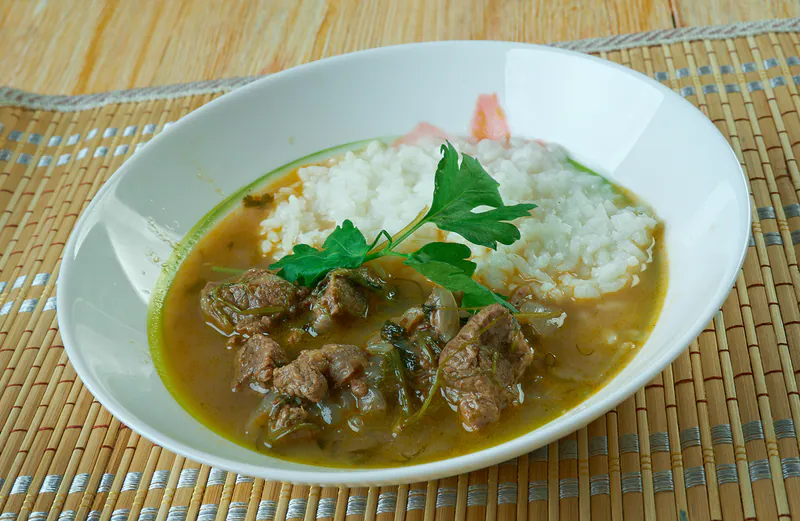
Hilachas (Guatemalan shredded beef stew)
Guatemalan · 2 h 55 min · 440 kcal