
Sinigang na baboy (Filipino sour pork soup)
Non-vegetarian
Sinigang na baboy
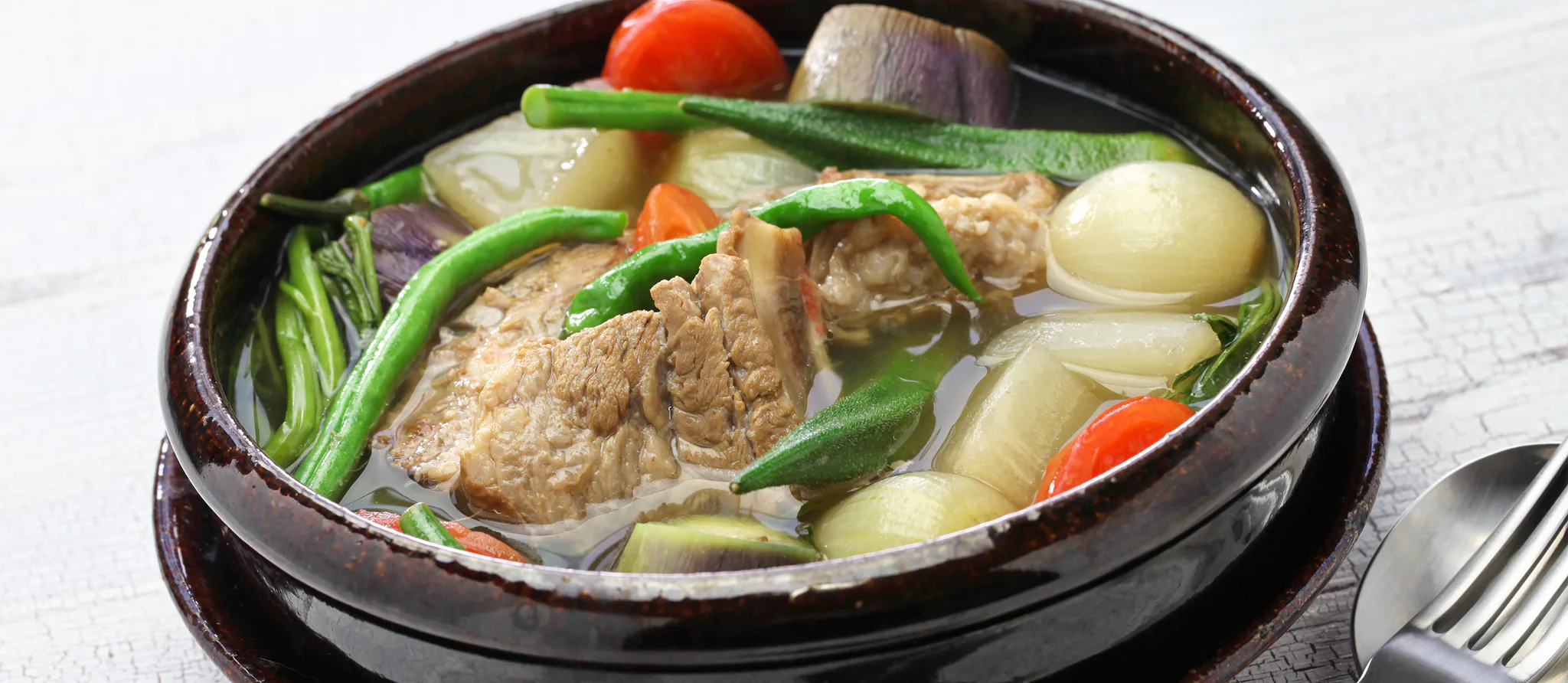
Tender pork ribs simmered in a tamarind-soured broth with tomato, onion, taro, radish, okra, long beans and water spinach. Bracingly sour and deeply comforting, it is one of the Philippines' best-loved home dishes.
Sinigang na baboy (Filipino sour pork soup) is a Filipino soup from Philippines, ready in about 1 hour 50 minutes and made with pork spare ribs, tamarind and water spinach. It serves 6 and is rated easy to cook.
- Prep
- 20 min
- Cook
- 1 h 30 min
- Total
- 1 h 50 min
- Serves
- 6
- Level
- Easy
- Calories
- 593
Main ingredients
Method
Step 1
Put the pork in a pot, cover with cold water and bring to the boil for 5 minutes. Drain and rinse the pork and pot to remove the scum for a clear broth.
- 10 min
- high heat
- Stockpot / large pot (opens in a new tab)
Step 2
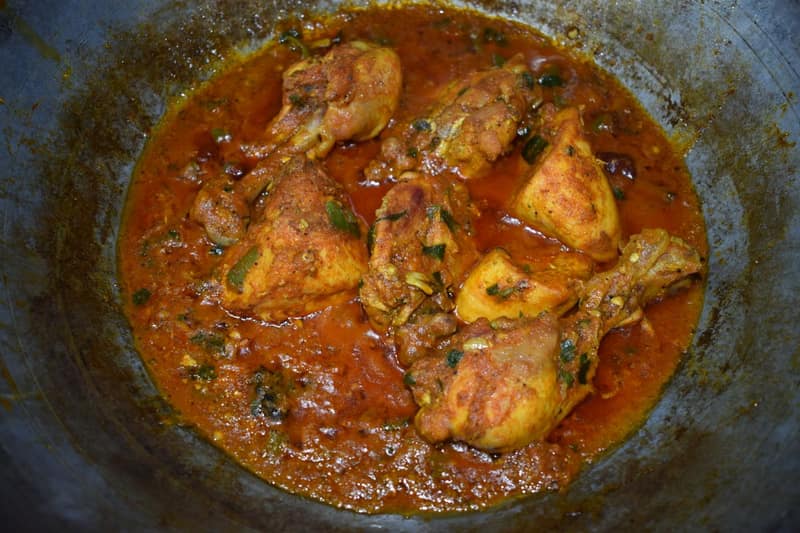
Return the pork to the pot with 2 litres of fresh water, the onion (opens in a new tab) and tomato (opens in a new tab). Bring to the boil, then simmer, partly covered, for about 1 hour until the pork is tender. Season with the fish sauce (opens in a new tab).
How it looks · Photo: Bachir Mamud on Pexels Step 3
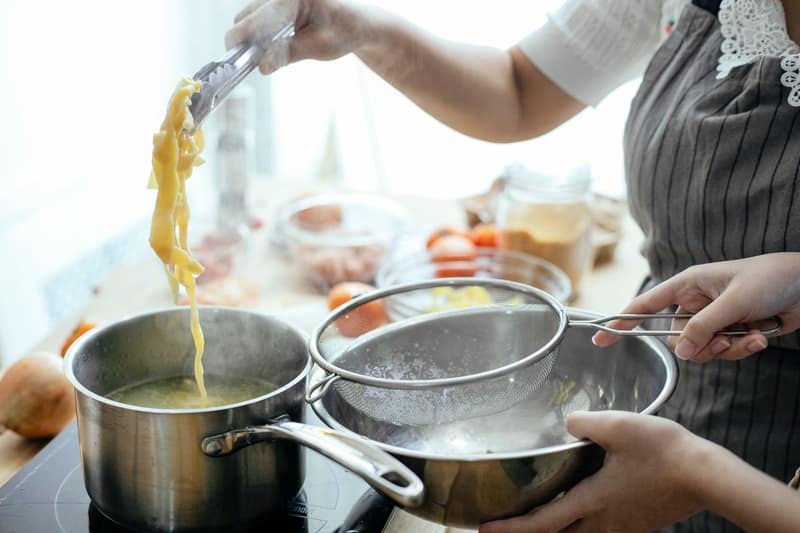
Meanwhile, squeeze the soaked tamarind (opens in a new tab) well in its water and press through a sieve; discard the seeds and fibres.
How it looks · Photo: Katerina Holmes on Pexels Step 4
Add the taro (opens in a new tab) and simmer for 10 minutes until soft — some will break down and thicken the broth. Pour in the tamarind (opens in a new tab) extract, add the radish and simmer for 5 minutes, then add the long beans, okra (opens in a new tab) and chillies and cook for 4 minutes more.
- 19 min
- medium-low heat
Step 5
Taste: the broth should be distinctly sour and savoury. Adjust with more tamarind (opens in a new tab), fish sauce (opens in a new tab) or salt. Turn off the heat, push the water spinach (opens in a new tab) into the hot broth and let it wilt for 1 minute. Serve at once.
- 2 min
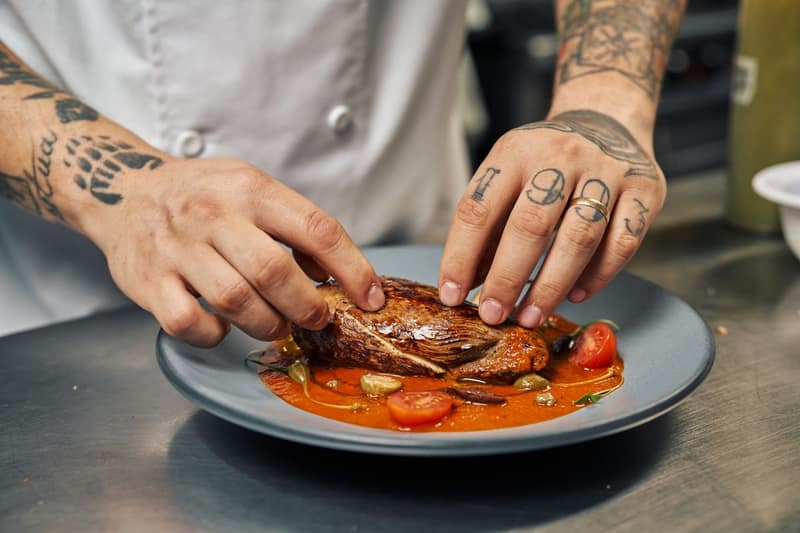
How it looks · Photo: Willians Huerta on Pexels
At a glance
 Pork spare ribs
 Onion
 Tomato
 Fish sauce
 Tamarind
 Taro
 Daikon
 Green beans
 Okra
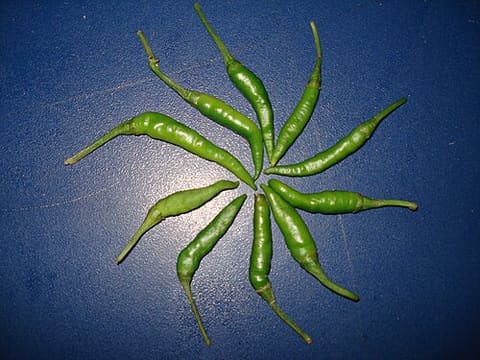 Green chilli
 Water spinach
 Salt
About this dish
- Origin
- Philippines · Well documentedSinigang is a family of sour Filipino soups; tamarind (sampalok) is the classic souring agent, though guava, calamansi, kamias and green mango are also used.More food from Philippines
Philippines - Dish
- Lunch · Dinner · Soups · Main courses
- Cooking method
- Simmered, Boiled
- Taste
- sour, savoury, fresh, umami
- Diet
- No gluten ingredients · Dairy-free · No nut ingredients · High-proteinWorked out from the ingredients. How labels work
All labels
Non-vegetarian · No gluten ingredients · Dairy-free · Egg-free · No nut ingredients · No added sugar · Alcohol-free · Beef-free · High-protein · Carb-conscious - Good for
- One-pot · Everyday · Uses leftovers
- Cook more with
- Pork spare ribs · Tamarind · Water spinach · Onion · Tomato · Fish sauce
Allergens
- Contains: Fishfrom fish sauce
- May contain: Crustaceansfrom fish sauce
Based on typical versions of these ingredients and not verified allergen-free. Brands differ and cross-contact happens, so always check labels. For severe allergies, follow your clinician’s advice.
Nutrition
593 kcal per serving
Calculated1 serving ≈ 761 g · recipe makes 6
Where the energy comes from
- Protein 20%
- Carbohydrate 20%
- Fat 60%
| Nutrient | Per serving | Per 100 g* |
|---|---|---|
| Energy | 593 kcal | 78 kcal |
| Protein | 29.9 g | 3.9 g |
| Carbohydrate | 30.5 g | 4 g |
| Net carbohydrate | 24.4 g | 3.2 g |
| Sugars | 10.5 g | 1.4 g |
| Added sugars | 0 g | 0 g |
| Fibre | 6.2 g | 0.8 g |
| Fat | 39.5 g | 5.2 g |
| Saturated fat | 12.7 g | 1.7 g |
| Trans fat | 0.4 g | 0 g |
| Cholesterol | 133 mg | 18 mg |
| Sodium | 1085 mg | 143 mg |
| Salt equivalent | 2.7 g | 0.4 g |
Vitamins & minerals per serving
- Potassium
- 1231 mg
- Calcium
- 162 mg
- Iron
- 3.4 mg
- Magnesium
- 129 mg
- Vitamin A (RAE)
- 123 µg
- Vitamin C
- 55 mg
- Vitamin D
- 3.8 µg
- Vitamin B12
- 0.7 µg
- Folate (DFE)
- 78 µg
How these numbers were made
- Calculated from USDA FoodData Central (SR Legacy) per-100 g values and the listed quantities.
- *Per 100 g of combined raw ingredients; the cooked dish may weigh more or less.
- “—” means the value isn’t known for enough of the ingredients; it is never zero by default.
- Values are estimates for guidance, not for medical dosing. U.S. Department of Agriculture, Agricultural Research Service. FoodData Central, 2019. fdc.nal.usda.gov.
Good to know
Tips
- Add the vegetables in stages so each one is just cooked.
- Many Filipino families add a little more tamarind than they think they need — sinigang should make you pucker.
Common mistakes
- Adding the water spinach too early, which turns it dark and slimy.
Serve with
- Serve with plenty of steamed white rice and a small dish of fish sauce with crushed chilli for dipping the pork.
Food safety
- Cool the soup quickly and refrigerate within 2 hours.
Storage
- Keeps 3 days refrigerated; the leafy greens soften but the flavour deepens.
Reheating
- Reheat until boiling; add fresh greens if you have them.
Variations
- Sinigang na hipon: Prawns instead of pork, cooked for only a few minutes in the sour broth.
- Sinigang sa bayabas: Soured with ripe guava for a sweeter, fruity broth.
- Sinigang na baka: Made with beef ribs or shank, simmered longer.
Original editorial recipe · FriendsPantry editorial · source: TasteAtlas (dish facts) · Not yet independently reviewed · Added
Recipe DNA
How this dish is built
Built from the recipe’s own sections. Each band’s width is its share of the dish by weight. Choose a component to see what it does.
The liquid foundation
For the soup
- Pork spare ribs, cut into 5 cm pieces1000 g
- Water2000 ml · 2000 g
- Onion, quartered150 g
- Tomato, quartered300 g
- Fish sauce3 tbsp · 53 g
- Tamarind, pulp, soaked in 250 ml hot water80 g
- Taro, gabi, peeled and halved250 g
- Daikon, labanos, sliced on the diagonal250 g
- Green beans, sitaw (yard-long beans), cut into 5 cm lengths150 g
- Okra, trimmed150 g
- Green chilli, 3 long green chillies (siling haba)30 g
- Water spinach, kangkong, tough stems removed150 g
- Salt0.5 tsp · 3 g
Reviews & corrections
Reviews come from signed-in cooks and appear after a moderator checks them. We never show made-up ratings.
You might also like
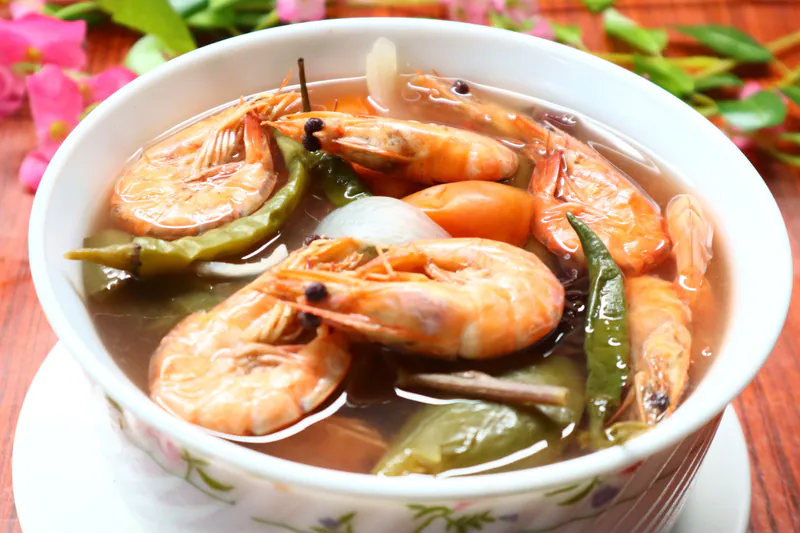
Sinigang na hipon
 Filipino · 40 min · 220 kcal
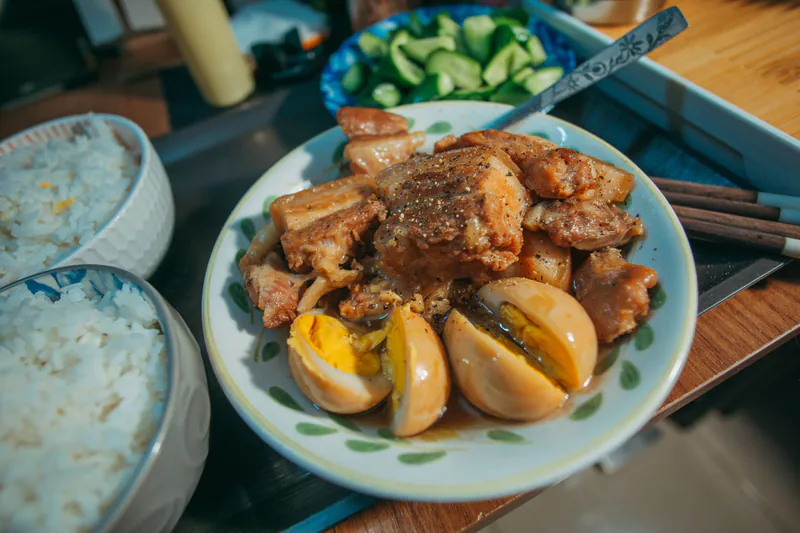
Chicken adobo
Filipino · 1 h 30 min · 529 kcal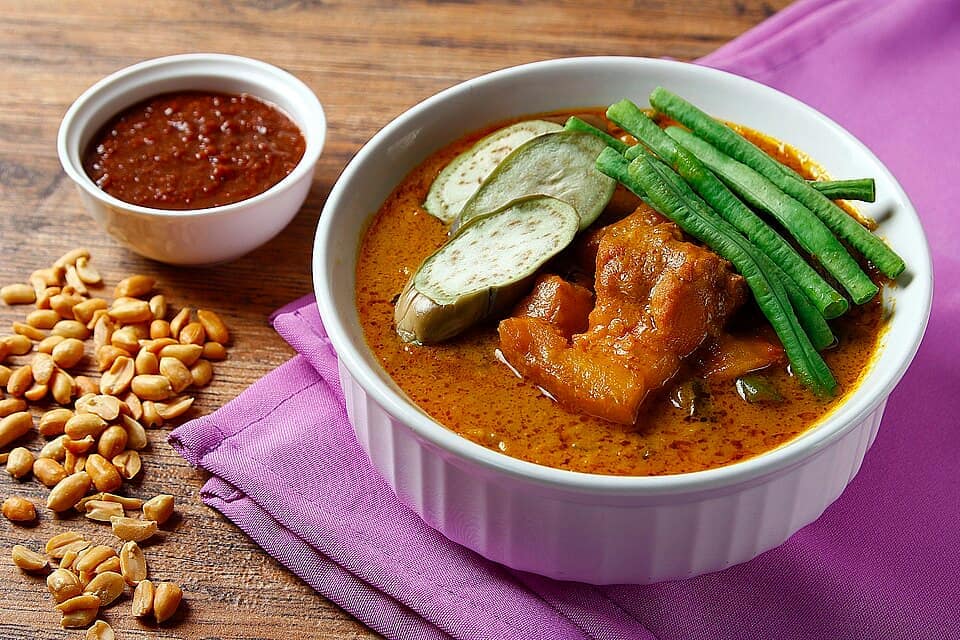
Kare-kare
Filipino · 3 h 5 min · 441 kcal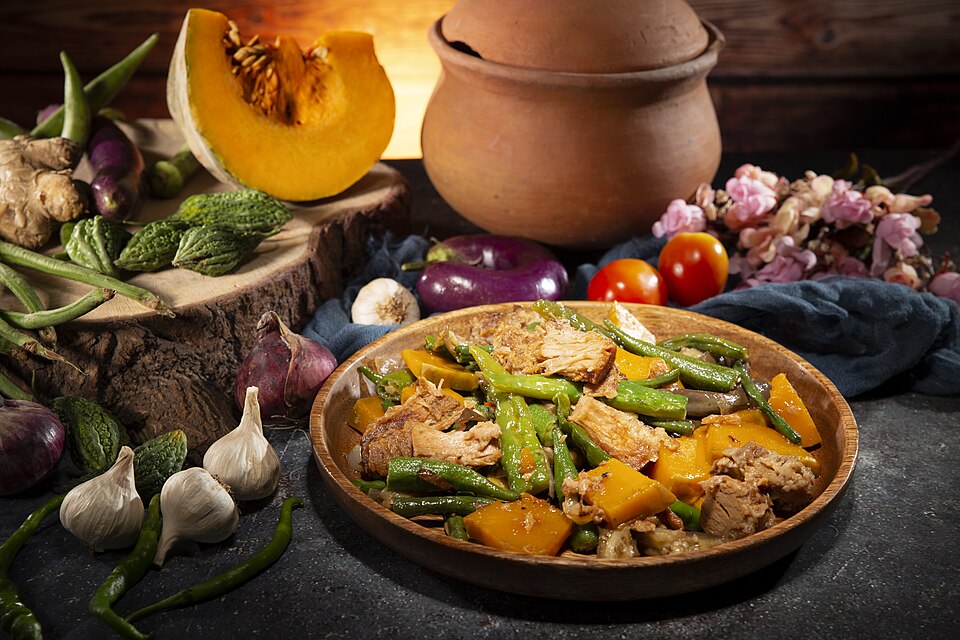
Pinakbet
Filipino · 50 min · 355 kcal