
Vegetables · Root vegetables
Taro
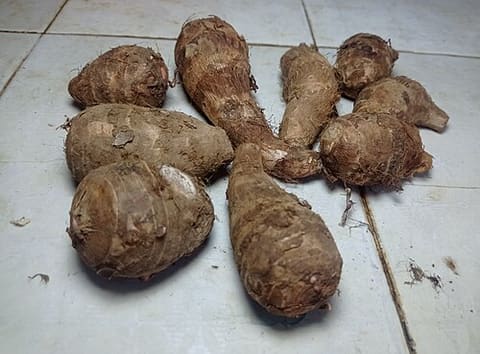
Hairy brown corm with speckled white or lilac flesh that turns creamy when cooked; must not be eaten raw.
Also called: arbi, dasheen, eddo, gabi, old cocoyam
Photo: စာကလေး, via Wikimedia Commons (CC0-1.0)
What it is
Taro corms have rough, ringed, brown skin and white flesh often flecked with purple. Small eddoes (arbi) are used in Indian cooking; larger dasheen corms in the Caribbean and Pacific. Cooked taro is creamy, slightly slippery and nutty. Malanga (yautia) looks similar but is a different plant.
Colocasia esculenta
How it’s used
- Spiced and fried (arbi fry)
- Simmered in stews and soups
- Steamed and mashed into poi
- Sweet taro desserts and bubble-tea paste
- Fried as chips or in cakes
Characteristics
- Taste
- Nutty, earthy and slightly sweet.
- Texture
- Creamy and a little sticky when cooked.
- When cooked
- Becomes slimy when cut and wet; its sap can irritate skin, so oil hands or wear gloves when peeling.
- Sold as
- fresh, frozen
- Cooking uses
- Commonly cooked, Suitable for boiling, Suitable for frying
Storage
Cool, dry and dark. Keep in a cool, dry, airy place and use within a week or so; do not refrigerate whole corms for long.
Diet, allergens and safety
No major allergens in typical versions.
- Vegetarian
- Vegan
- Dairy-free
- Egg-free
- Gluten-free
- Nut-free
- Soy-free
- Caffeine-free
- Contains calcium oxalate crystals that irritate the mouth; always cook thoroughly.
- Raw sap can itch on skin; wear gloves when peeling.
Nutrition per 100 g
- Energy
- 112 kcal
- Protein
- 1.5 g
- Carbohydrate
- 26.46 g
- Fat
- 0.2 g
- Fibre
- 4.1 g
- Sugars
- 0.4 g
USDA FoodData Central: Taro, raw.
Substitutes
Optional — what works if you don’t have it, and how it changes the dish.
- Malanga / yautia (tannia root) — Very close in Caribbean dishes.
- Potato — Waxy potatoes for curries and stews; less creamy.
Related ingredients
Recipes with taro
Kenchin-jiru
 Japanese · 1 h 20 min · 247 kcal · Vegan
Metemgee
 Guyanese · 1 h 20 min · 660 kcal
Olla de carne
 Costa Rican · 2 h 45 min · 365 kcal
Oven mumu
 Papua New Guinean · 3 h 35 min · 646 kcal
Tonjiru (pork and vegetable miso soup)
Japanese · 40 min · 439 kcal
More root vegetables
Root vegetables
Potato
Starchy tuber with thin skin and pale flesh, eaten boiled, mashed, roasted, fried or simmered in curries worldwide.
225 recipes
Root vegetables
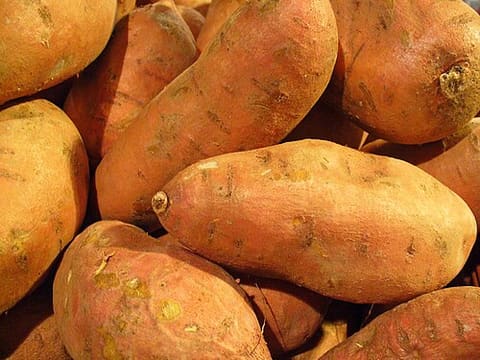
Sweet potato
Sweet, orange- or pale-fleshed root that roasts, mashes and bakes well; not a true yam despite the US nickname.
19 recipes
Root vegetables
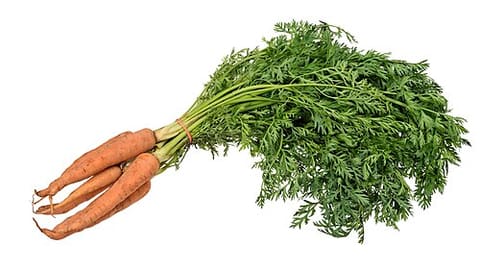
Carrot
Crunchy orange root, sweet raw or cooked, used in salads, stews, stocks, curries and cakes.
183 recipes
Root vegetables
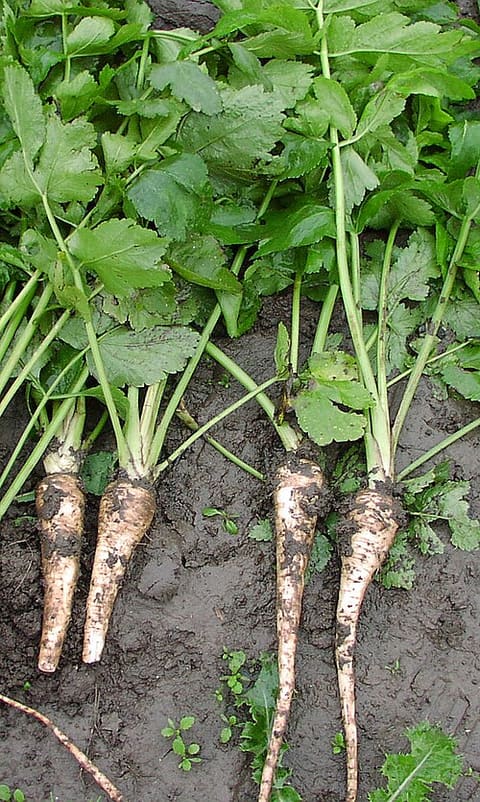
Parsnip
Cream-coloured carrot-like root with sweet, nutty, aromatic flesh; best roasted, mashed or in soups.
11 recipes
Root vegetables
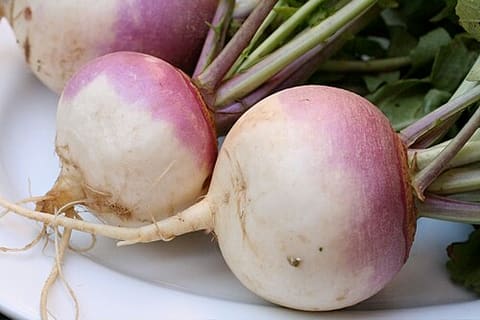
Turnip
Round white root with a purple top and peppery flesh, cooked in stews, curries and pickles.
9 recipes
Root vegetables
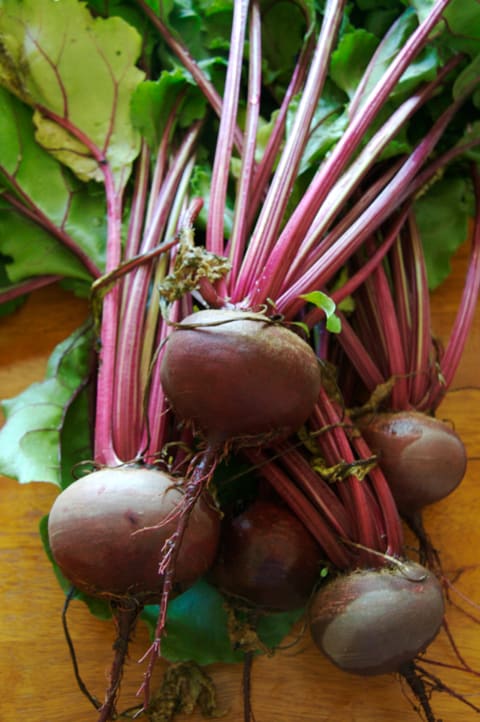
Beetroot
Earthy, sweet root with deep red flesh, roasted, boiled, pickled or grated raw into salads.
12 recipes
Root vegetables
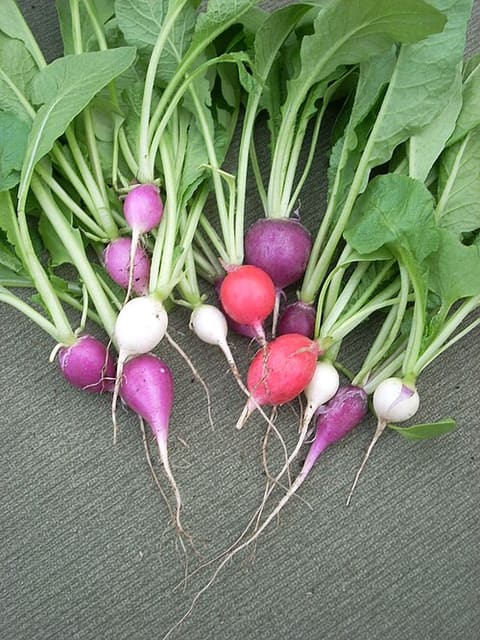
Radish
Small, crisp red or pink root with a peppery bite, mostly eaten raw in salads or as a crunchy garnish.
27 recipes
Root vegetables
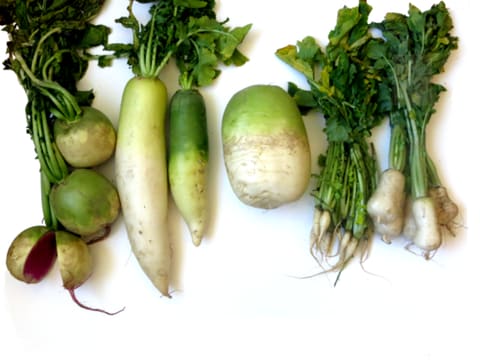
Daikon
Long white radish (mooli) with juicy, mildly peppery flesh, eaten raw, pickled, braised or stuffed into parathas.
23 recipes