
Bap (soft Scottish morning roll)
Non-vegetarian
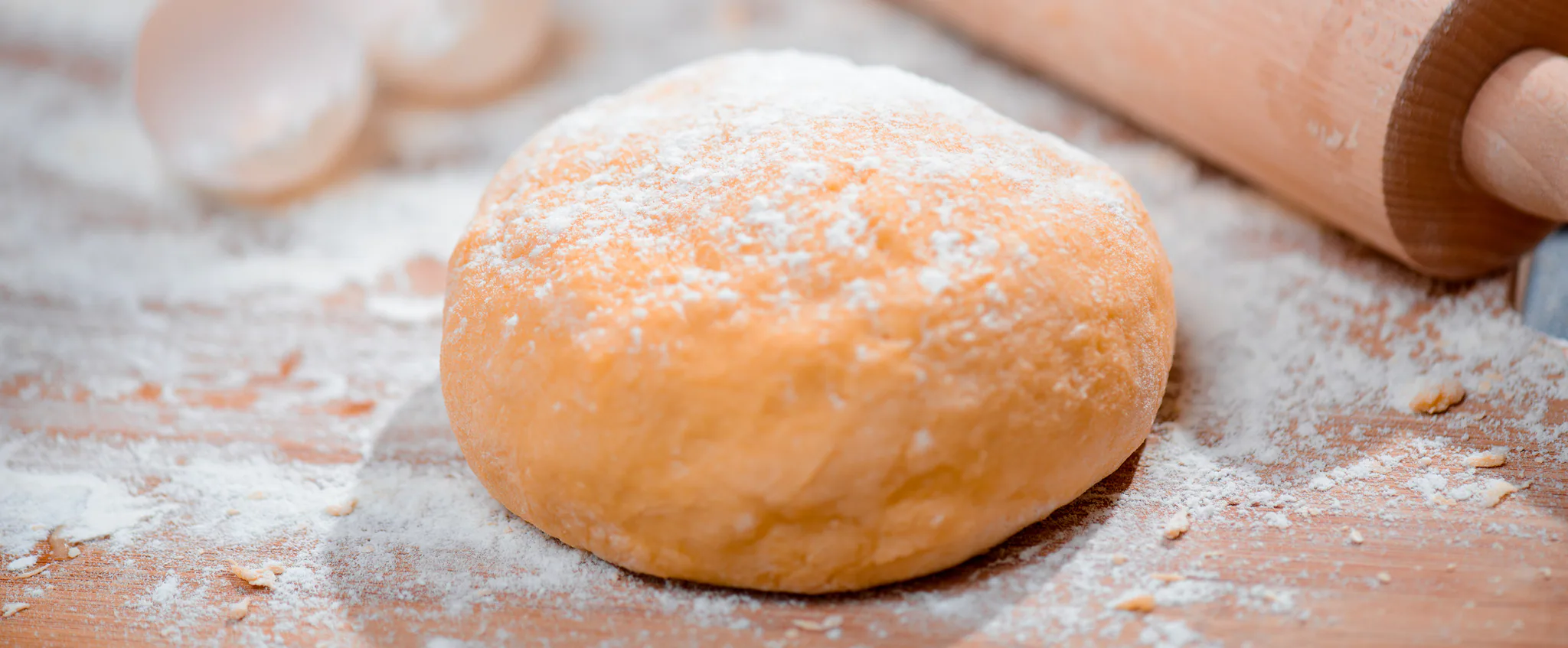
A soft, round, flour-dusted white roll enriched with milk and a little lard or butter, baked pale so the crust stays tender. Scotland's breakfast roll, split and filled with bacon, sausage or egg.
Bap (soft Scottish morning roll) is a British bread from United Kingdom, ready in about 2 hours 28 minutes and made with bread flour, milk and lard. It serves 8 and is rated easy to cook.
- Prep
- 25 min
- Cook
- 18 min
- Rest
- 1 h 45 min
- Total
- 2 h 28 min
- Serves
- 8
- Level
- Easy
- Calories
- 286
Main ingredients
Method
Step 1
Mix the flour, yeast, salt and sugar (opens in a new tab) in a large bowl. Rub in the lard (opens in a new tab) with your fingertips, then add the warm milk (opens in a new tab) and water and bring together into a soft, slightly sticky dough.
Step 2
Knead on a lightly floured surface for 8–10 minutes until smooth and springy. Return to the bowl, cover and leave somewhere warm until doubled, about 1 hour.
- 10 min
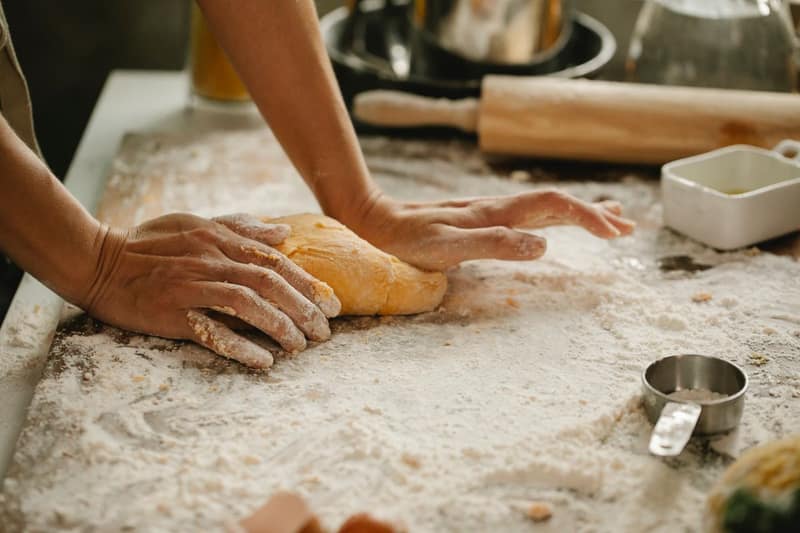
How it looks · Photo: Klaus Nielsen on Pexels Step 3
Knock back the dough and divide into 8 pieces. Shape each into a ball, then flatten with your palm into a round about 10 cm across and 1.5 cm thick. Set well apart on a floured baking tray.
Step 4
Brush the tops with milk (opens in a new tab) and sift over a generous dusting of flour. Cover loosely and leave to rise for 30–45 minutes until puffy. Heat the oven (opens in a new tab) to 200 °C. Just before baking, press your thumb into the centre of each bap to stop it doming.
- 3 min
Step 5
Bake for 15–18 minutes until risen and only lightly coloured; they should sound hollow underneath. Cool on a rack under a clean tea towel to keep the crust soft.
At a glance
 Bread flour
 Instant yeast
 Salt
 Sugar
 Milk
 Lard
- All-purpose flour
About this dish
- Origin
- Scotland, United Kingdom · Commonly attributedThe word bap is recorded in Scotland from the 16th century; the soft, floury roll is now eaten throughout the UK, and in Scottish pubs is often filled with sausage and fried onions.Also popular in IrelandMore food from United Kingdom
United Kingdom - Dish
- Breakfast · Lunch · Breads & flatbreads
- Cooking method
- Oven-baked
- Taste
- mild, buttery
- Diet
- No nut ingredientsWith the listed swaps: Vegetarian (lacto-ovo), Eggetarian, Lacto-vegetarian, Pescatarian, Pork-freeWorked out from the ingredients. How labels work
All labels
Non-vegetarian · Flexitarian-friendly · Egg-free · No nut ingredients · Alcohol-free · Beef-free · DASH-style - Good for
- Make-ahead · Freezer-friendly
- Cook more with
- Bread flour · Milk · Lard · Instant yeast · Sugar · All-purpose flour
- Techniques
- Baking · Kneading · Fermentation
Allergens
- Contains: Milkfrom milk
- Contains: Wheatfrom bread flour, all-purpose flour
- Contains: Glutenfrom bread flour, all-purpose flour
Based on typical versions of these ingredients and not verified allergen-free. Brands differ and cross-contact happens, so always check labels. For severe allergies, follow your clinician’s advice.
Nutrition
286 kcal per serving
Calculated1 serving ≈ 113 g · recipe makes 8
Where the energy comes from
- Protein 13%
- Carbohydrate 70%
- Fat 18%
| Nutrient | Per serving | Per 100 g* |
|---|---|---|
| Energy | 286 kcal | 254 kcal |
| Protein | 8.8 g | 7.8 g |
| Carbohydrate | 48.8 g | 43.4 g |
| Net carbohydrate | 47 g | 41.8 g |
| Sugars | 1.9 g | 1.7 g |
| Added sugars | 0.5 g | 0.5 g |
| Fibre | 1.8 g | 1.6 g |
| Fat | 5.6 g | 5 g |
| Saturated fat | 2.1 g | 1.8 g |
| Trans fat | — | — |
| Cholesterol | 6 mg | 5 mg |
| Sodium | 449 mg | 399 mg |
| Salt equivalent | 1.1 g | 1 g |
Vitamins & minerals per serving
- Potassium
- 104 mg
- Calcium
- 38 mg
- Iron
- 2.9 mg
- Magnesium
- 19 mg
- Vitamin A (RAE)
- 11 µg
- Vitamin C
- 0 mg
- Vitamin D
- 0.4 µg
- Vitamin B12
- 0.1 µg
- Folate (DFE)
- 207 µg
How these numbers were made
- Calculated from USDA FoodData Central (SR Legacy) per-100 g values and the listed quantities.
- *Per 100 g of combined raw ingredients; the cooked dish may weigh more or less.
- “—” means the value isn’t known for enough of the ingredients; it is never zero by default.
- Values are estimates for guidance, not for medical dosing. U.S. Department of Agriculture, Agricultural Research Service. FoodData Central, 2019. fdc.nal.usda.gov.
Good to know
Tips
- Covering the warm baps with a cloth as they cool is the trick for a soft, floury crust.
- For lighter baps, use half plain and half strong flour.
Common mistakes
- Baking until deep brown; a bap should be pale and soft.
- Skipping the thumb press, which gives round buns instead of flat baps.
Serve with
- Fill with crispy bacon, square (Lorne) sausage or a fried egg and brown sauce.
- Split and fill with sausages and caramelised onions, pub-style.
Storage
- Keeps 2 days in a bread bag; freeze for up to 1 month.
Reheating
- Warm briefly in a low oven, wrapped in foil.
Variations
- Morning roll (Glasgow): A related, crustier roll baked close together in batches; also called a softie when soft.
- Wholemeal bap: Half the white flour replaced with wholemeal.
Original editorial recipe · FriendsPantry editorial · source: TasteAtlas (dish facts) · Not yet independently reviewed · Added
Recipe DNA
How this dish is built
Built from the recipe’s own sections. Each band’s width is its share of the dish by weight. Choose a component to see what it does.
Reviews & corrections
Reviews come from signed-in cooks and appear after a moderator checks them. We never show made-up ratings.
You might also like
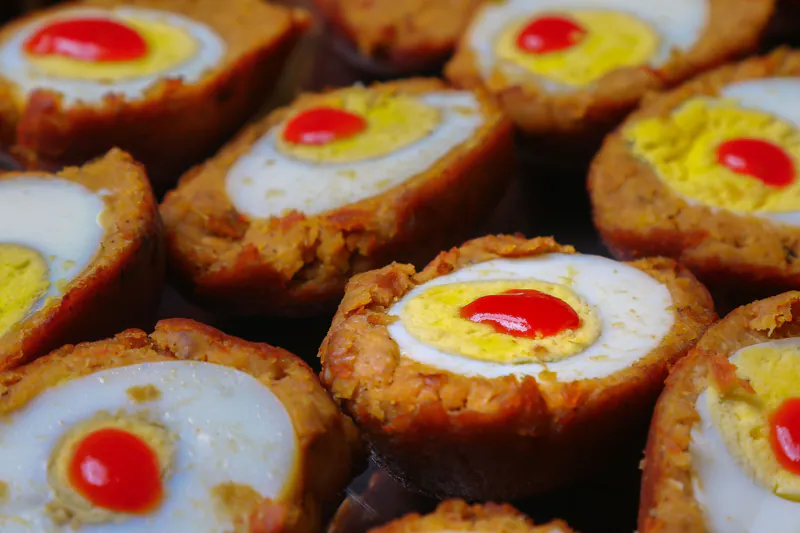
Scotch eggs
 British · 1 h 20 min · 599 kcal
Breakfast roll (Irish breakfast in a roll)
 Irish · 25 min · 1594 kcal
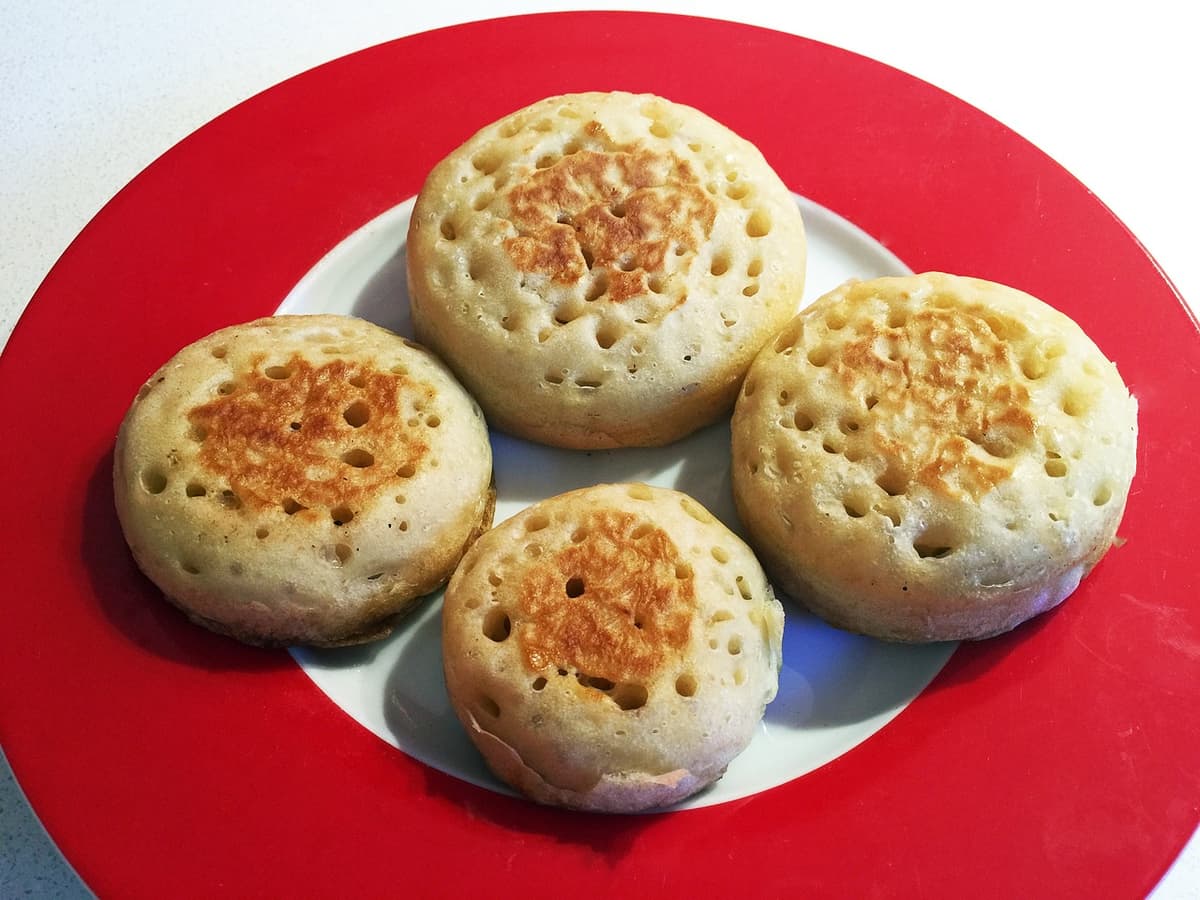
Crumpets
British · 2 h 5 min · 135 kcal · Vegetarian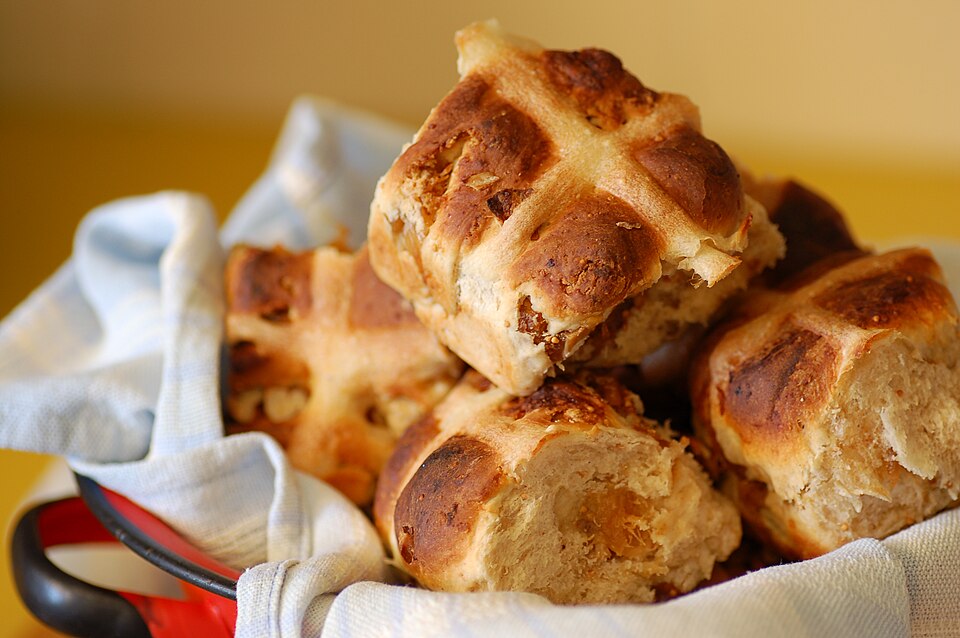
Hot cross buns
British · 3 h 10 min · 301 kcal · Contains egg