
 Colombian · Breads & flatbreads
Pan de queso (Colombian cheese bread)
Contains egg (no meat or fish)
Pan de queso
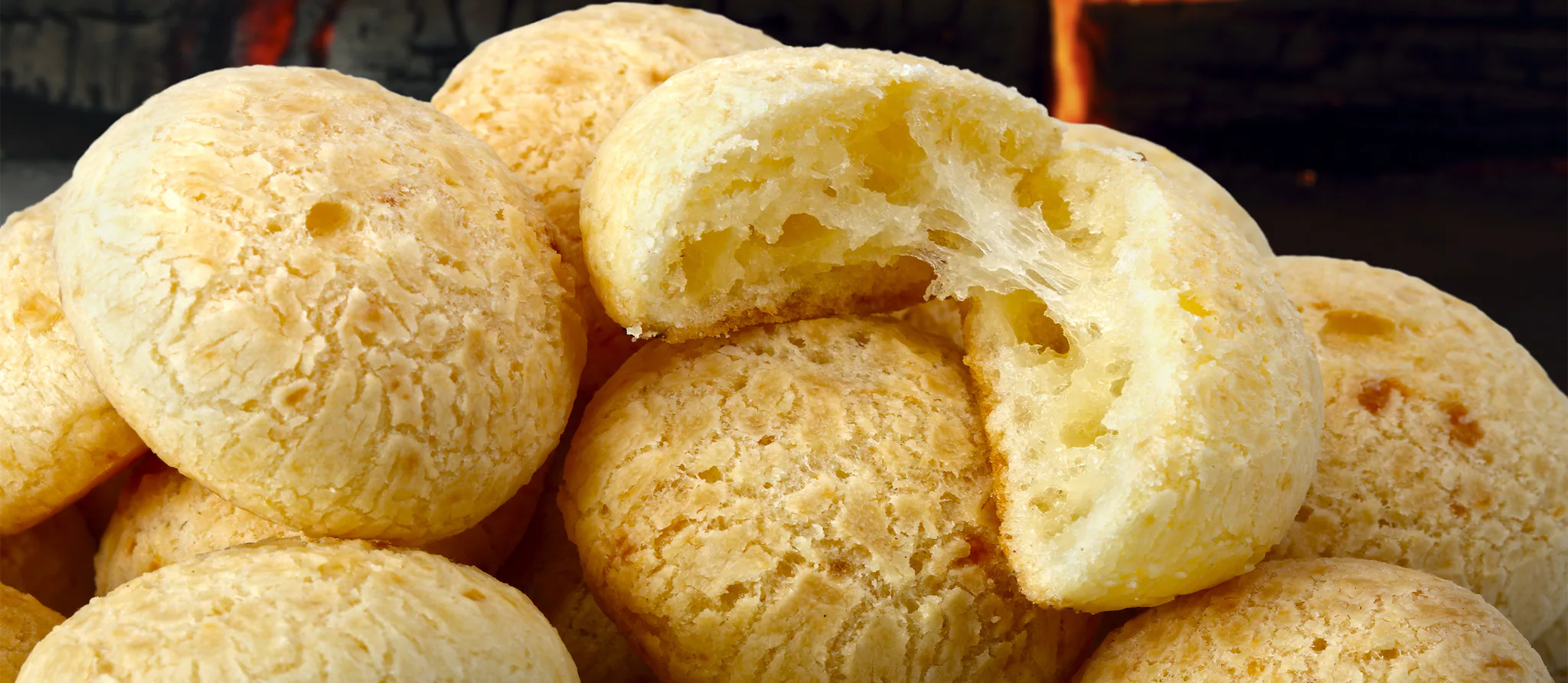
Small, puffy cheese rolls made from sour and sweet cassava starch kneaded with plenty of grated fresh cheese, egg and butter, baked until golden with a crisp shell and a chewy, stretchy centre. A breakfast and 'parva' favourite of Antioquia, usually eaten warm with hot chocolate or coffee.
Pan de queso (Colombian cheese bread) is a Colombian bread, ready in about 45 minutes and made with tapioca starch and queso fresco. It serves 6 and is rated easy to cook.
- Prep
- 20 min
- Cook
- 20 min
- Rest
- 5 min
- Total
- 45 min
- Serves
- 6
- Level
- Easy
- Calories
- 381
Main ingredients
Method
Step 1
Heat the oven (opens in a new tab) to 220 °C and line a tray with baking paper. Mix the starches, baking powder (opens in a new tab), sugar (opens in a new tab) and salt in a bowl, or pulse them in a food processor (opens in a new tab).
Step 2
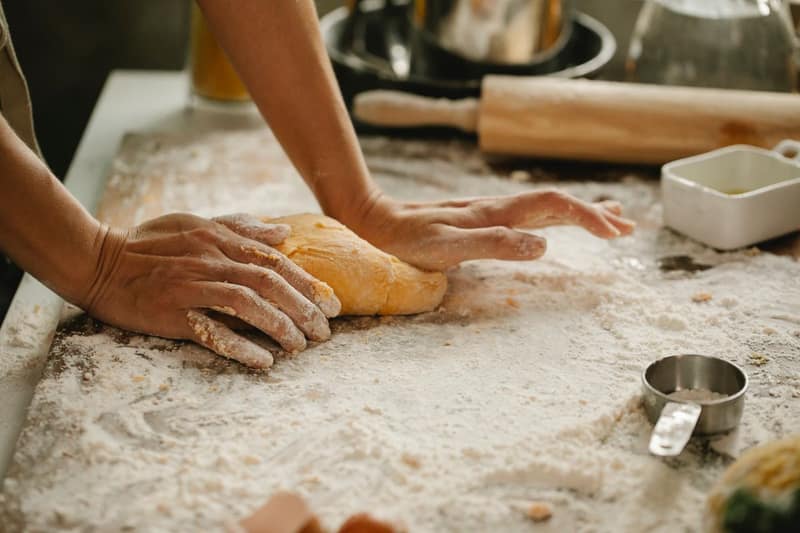
Add both cheeses and the butter (opens in a new tab) and rub or pulse until the mixture looks like coarse sand. Add the egg (opens in a new tab), then knead in milk (opens in a new tab) a spoonful at a time until you have a smooth, soft dough that does not crack when pressed.
- 8 min
How it looks · Photo: Klaus Nielsen on Pexels Step 3
Roll the dough into balls of about 35 g, or shape small rings or horseshoes as in Antioquia, and set them 4 cm apart on the tray.
Step 4
Bake until puffed and golden, 15–20 minutes. Cool for 5 minutes and eat warm.
- 18 min
- 220°C
- Oven (opens in a new tab)
Do not open the oven during the first 10 minutes or they will not puff.
At a glance
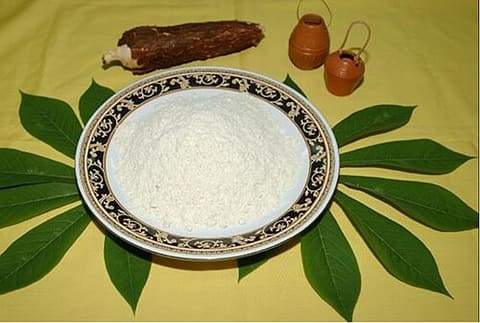 Tapioca starch
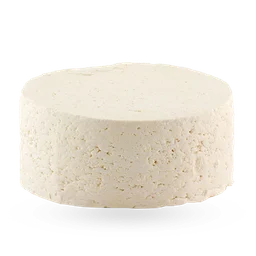 Queso fresco
 Mozzarella
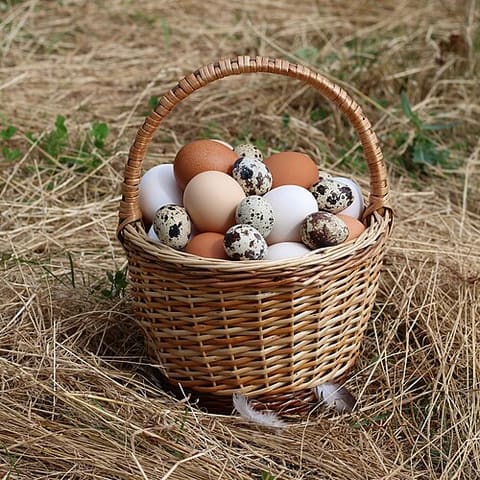 Egg
 Butter
 Milk
 Baking powder
 Sugar
 Salt
About this dish
- Origin
- Antioquia (Paisa region), Colombia · Commonly attributedMade with almidón agrio, a naturally fermented cassava starch that gives the rolls their lift. Related to Brazilian pão de queijo and Colombian pandebono.More food from Colombia
Colombia - Dish
- Breakfast · Snack · Breads & flatbreads
- Cooking method
- Oven-baked
- Taste
- savoury, salty, tangy
- Diet
- Vegetarian (lacto-ovo) · No nut ingredientsWorked out from the ingredients. How labels work
All labels
Vegetarian (lacto-ovo) · Eggetarian · Pescatarian · Flexitarian-friendly · No nut ingredients · Alcohol-free · Pork-free · Beef-free - Good for
- Child-friendly · Freezer-friendly · Portable / lunchbox
- Cook more with
- Tapioca starch · Queso fresco · Mozzarella · Egg · Butter · Milk
Allergens
- Contains: Milkfrom queso fresco, mozzarella, butter, milk
- Contains: Eggsfrom egg
- May contain: Wheatfrom baking powder
- May contain: Glutenfrom baking powder
Based on typical versions of these ingredients and not verified allergen-free. Brands differ and cross-contact happens, so always check labels. For severe allergies, follow your clinician’s advice.
Nutrition
381 kcal per serving
Estimated1 serving ≈ 126 g · recipe makes 6
Where the energy comes from
- Protein 13%
- Carbohydrate 42%
- Fat 44%
| Nutrient | Per serving | Per 100 g* |
|---|---|---|
| Energy | 381 kcal | 303 kcal |
| Protein | 12.7 g | 10.1 g |
| Carbohydrate | 40.1 g | 31.9 g |
| Net carbohydrate | 39.7 g | 31.6 g |
| Sugars | 3.6 g | 2.9 g |
| Added sugars | 0.7 g | 0.6 g |
| Fibre | 0.4 g | 0.3 g |
| Fat | 18.8 g | 15 g |
| Saturated fat | 10.7 g | 8.5 g |
| Trans fat | — | — |
| Cholesterol | 85 mg | 67 mg |
| Sodium | 715 mg | 570 mg |
| Salt equivalent | 1.8 g | 1.4 g |
Vitamins & minerals per serving
- Potassium
- 97 mg
- Calcium
- 389 mg
- Iron
- 1 mg
- Magnesium
- 16 mg
- Vitamin A (RAE)
- 175 µg
- Vitamin C
- 0 mg
- Vitamin D
- 1.5 µg
- Vitamin B12
- 1.2 µg
- Folate (DFE)
- 10 µg
How these numbers were made
- Calculated from USDA FoodData Central (SR Legacy) per-100 g values and the listed quantities.
- *Per 100 g of combined raw ingredients; the cooked dish may weigh more or less.
- Tapioca starch: Dry pearl tapioca (FDC 169717) used as a stand-in; both are almost pure cassava starch.
- “—” means the value isn’t known for enough of the ingredients; it is never zero by default.
- Values are estimates for guidance, not for medical dosing. U.S. Department of Agriculture, Agricultural Research Service. FoodData Central, 2019. fdc.nal.usda.gov.
Good to know
Tips
- If the dough cracks when you roll it, knead in a little more milk; if it is sticky, add a spoon of starch.
Common mistakes
- Using a dry aged cheese only; fresh, moist cheese is what binds the dough.
Serve with
- Serve warm with hot chocolate and a slice of fresh cheese, or with tinto (black coffee).
- Split and fill with cream cheese or guava jelly (bocadillo).
Storage
- Best on the day. Freeze shaped, unbaked rolls for up to 2 months and bake from frozen, adding 5 minutes.
Reheating
- Warm in a 180 °C oven for 5 minutes.
Variations
- Pandebono: A cousin from Valle del Cauca made with cassava starch and pre-cooked corn flour.
- Pão de queijo (Brazil): The Brazilian version, made with a scalded dough of polvilho, milk and oil.
Original editorial recipe · FriendsPantry editorial · source: TasteAtlas (dish facts) · Not yet independently reviewed · Added
Recipe DNA
How this dish is built
Grouped by each ingredient’s role in the dish. Each band’s width is its share of the dish by weight. Choose a component to see what it does.
What the dish is built around
Main ingredient
- Queso fresco, finely grated or crumbled250 g
- Mozzarella, grated100 g
- Egg1 piece · 50 g
- Butter, softened30 g
- Milk60 ml · 62 g
Reviews & corrections
Reviews come from signed-in cooks and appear after a moderator checks them. We never show made-up ratings.
You might also like
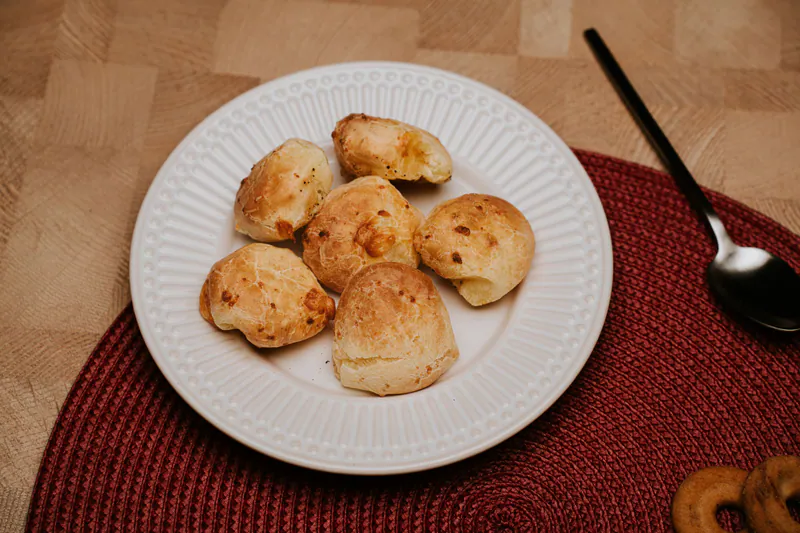
Pão de queijo
 Brazilian · 55 min · 86 kcal · Contains egg
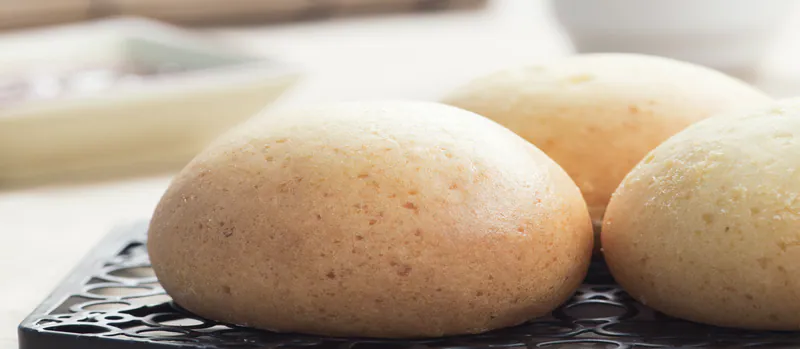
Almojábanas (Colombian corn and cheese rolls)
Colombian · 40 min · 176 kcal · Contains eggArepa de queso (Colombian cheese arepa)
Colombian · 40 min · 833 kcal · Vegetarian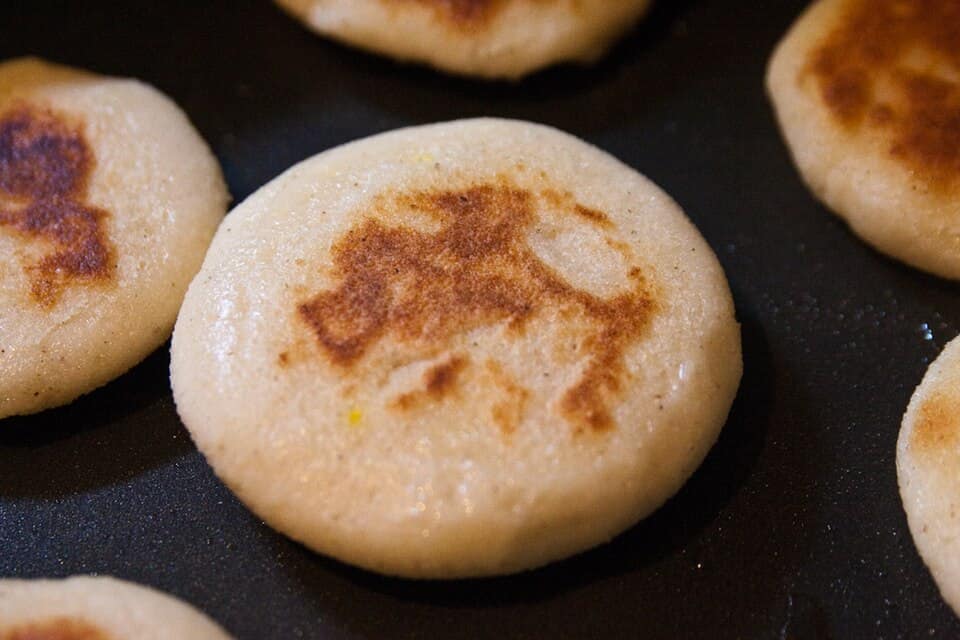
Arepas
 Venezuelan · 40 min · 348 kcal · Vegetarian