
Gnocco fritto (Emilian fried dough puffs)
Non-vegetarian
Gnocco fritto
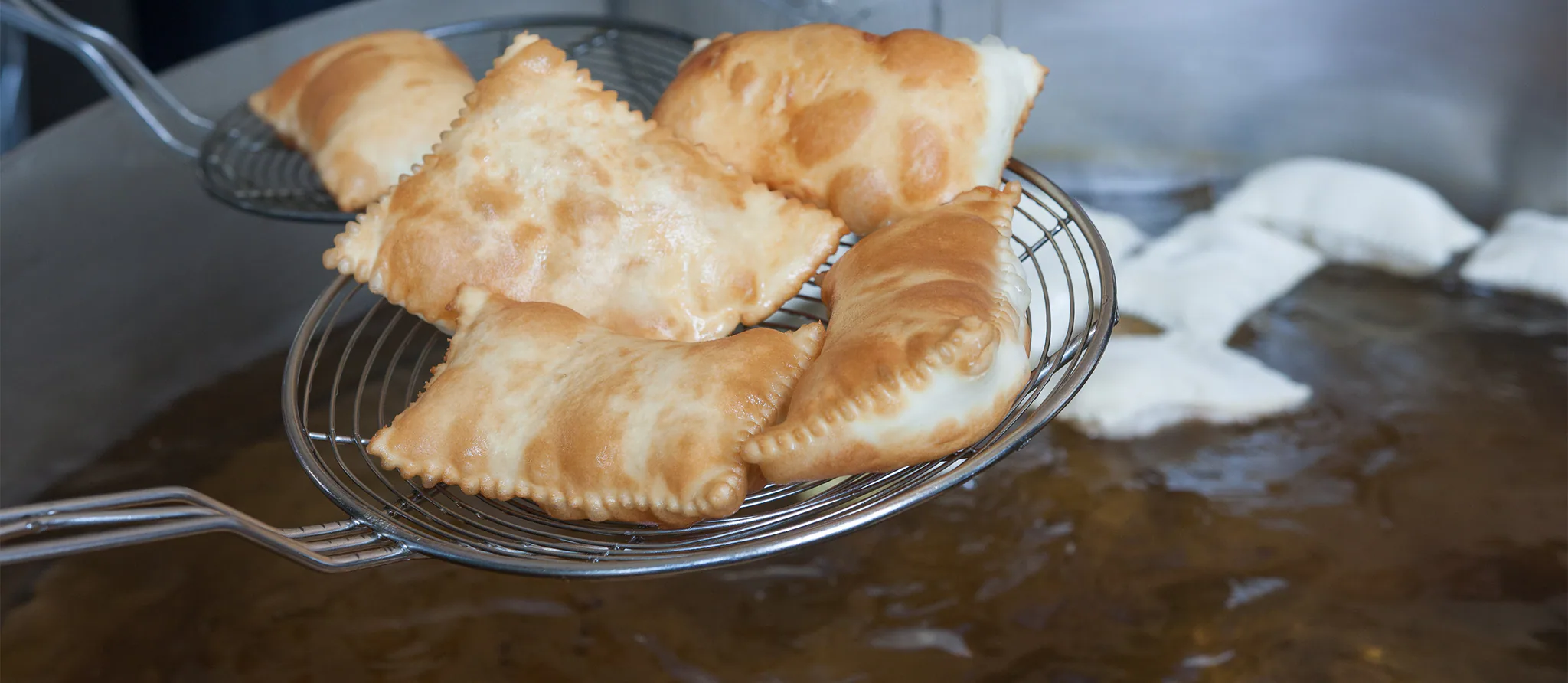
Diamonds of lard-enriched dough fried until they puff up into hollow, golden pillows, then eaten hot with prosciutto, salami, mortadella and soft cheese. A farmhouse snack of Emilia-Romagna, called torta fritta around Parma.
Gnocco fritto (Emilian fried dough puffs) is an Italian bread from Italy, ready in about 2 hours 15 minutes and made with all-purpose flour and lard. It serves 6 and is rated easy to cook.
- Prep
- 25 min
- Cook
- 20 min
- Rest
- 1 h 30 min
- Total
- 2 h 15 min
- Serves
- 6
- Level
- Easy
- Calories
- 545
Includes about 1½ hours rising.
Main ingredients
Ingredients
For the dough
For frying
To serve
Method
Dough
35 minStep 1
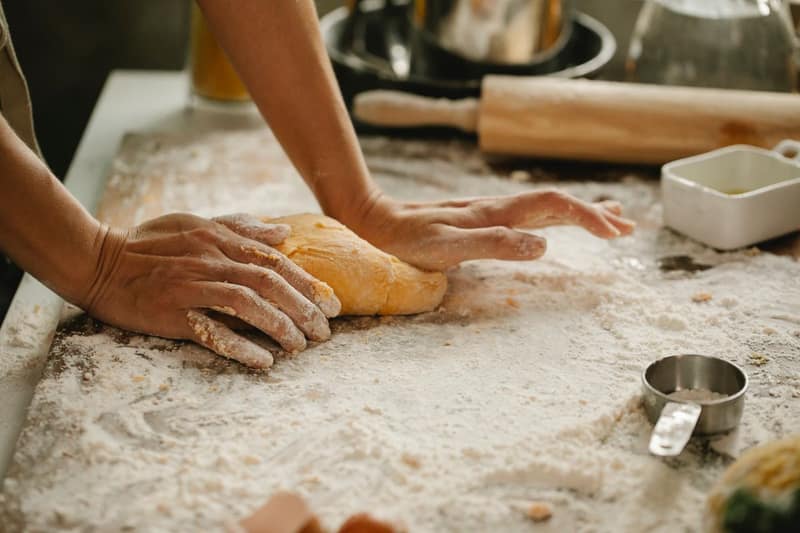
Mix the flour and yeast, rub in the softened lard (opens in a new tab), then add the milk (opens in a new tab), water and salt and knead for 8–10 minutes to a smooth, soft dough. Cover and leave to rise for about 1½ hours until puffy.
How it looks · Photo: Klaus Nielsen on Pexels Step 2
Roll the dough out thinly, about 3 mm, and cut into diamonds or rectangles about 8 × 6 cm with a fluted pastry wheel or knife.
Step 3
Heat the frying lard (opens in a new tab) to 180 °C in a deep pan. Fry a few pieces at a time, spooning hot fat over them, until they puff up and turn golden, about 1 minute per side. Drain on paper.
- 15 min
- 180°C
- Stockpot / large pot (opens in a new tab)
- Food thermometer (opens in a new tab)
- Slotted spoon (opens in a new tab)
Food safety: Never leave hot oil unattended, keep it below its smoke point and have a lid ready to smother a fire; never use water.
To serve
2 minStep 4
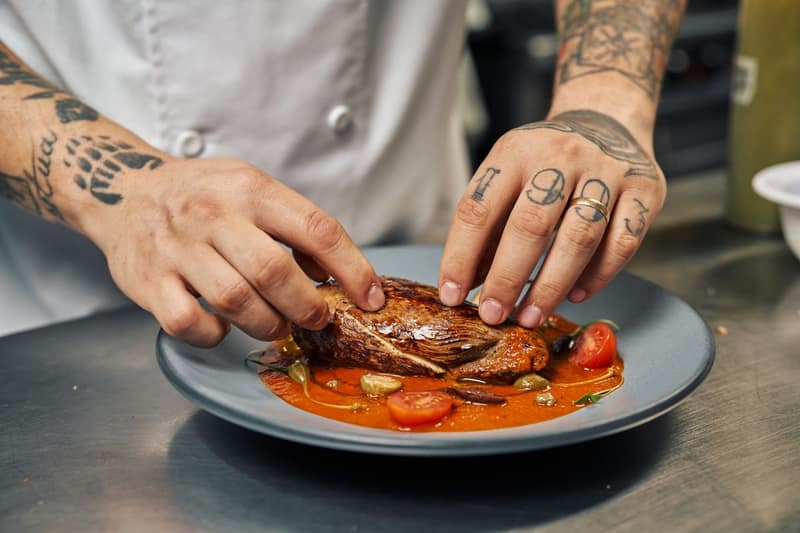
Serve immediately, hot, in a basket with the cured meats and cheese for everyone to fill their own.
- 2 min
How it looks · Photo: Willians Huerta on Pexels
At a glance
1 · Dough in a bowl
 All-purpose flour
 Lard
 Instant yeast
 Milk
 Salt
then serve
2 · To serve in a bowl
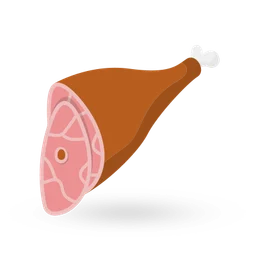 Prosciutto / dry-cured ham
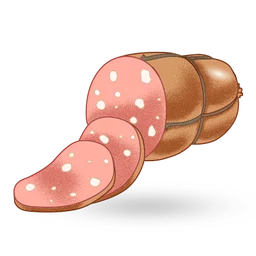 Mortadella
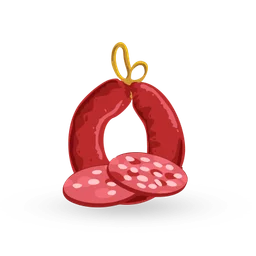 Salami (cooked, beef and pork)
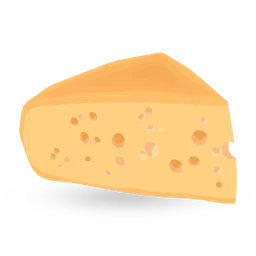 Crescenza (stracchino)
About this dish
- Origin
- Emilia-Romagna (Modena, Reggio Emilia, Parma, Bologna), Italy · Well documentedNamed gnocco fritto in Modena and Reggio Emilia, torta fritta in Parma, crescentina in Bologna and chisolini around Piacenza; once a breakfast for farm workers, now a staple of village festivals (sagre).More food from Italy
Italy - Dish
- Snack · Lunch · Dinner · Breads & flatbreads · Appetizers & starters · Finger food · Fried dough & doughnuts
- Cooking method
- Deep-fried
- Taste
- savoury, salty, rich
- Diet
- No main diet labelsWithout the optional extras: No nut ingredients, Beef-freeWith the listed swaps: Flexitarian-friendlyWorked out from the ingredients. How labels work
All labels
Non-vegetarian · Egg-free · No added sugar · Alcohol-free - Good for
- Festive & celebration · Street food
- Cook more with
- All-purpose flour · Lard · Instant yeast · Milk · Prosciutto / dry-cured ham
- Techniques
- Deep-frying · Kneading
Allergens
- Contains: Milkfrom milk, mortadella, salami (cooked, beef and pork), crescenza (stracchino)
- May contain: Tree nutsfrom mortadella
- Contains: Wheatfrom all-purpose flour, salami (cooked, beef and pork)
- Contains: Glutenfrom all-purpose flour, salami (cooked, beef and pork)
- May contain: Soyfrom salami (cooked, beef and pork)
Based on typical versions of these ingredients and not verified allergen-free. Brands differ and cross-contact happens, so always check labels. For severe allergies, follow your clinician’s advice.
Nutrition
545 kcal per serving
Estimated1 serving ≈ 171 g · recipe makes 6
Where the energy comes from
- Protein 11%
- Carbohydrate 48%
- Fat 41%
| Nutrient | Per serving | Per 100 g* |
|---|---|---|
| Energy | 545 kcal | 318 kcal |
| Protein | 14.2 g | 8.3 g |
| Carbohydrate | 64.9 g | 37.9 g |
| Net carbohydrate | 62.5 g | 36.5 g |
| Sugars | 1.3 g | 0.8 g |
| Added sugars | 0 g | 0 g |
| Fibre | 2.4 g | 1.4 g |
| Fat | 24.5 g | 14.3 g |
| Saturated fat | 9.4 g | 5.5 g |
| Trans fat | — | — |
| Cholesterol | 34 mg | 20 mg |
| Sodium | 979 mg | 571 mg |
| Salt equivalent | 2.4 g | 1.4 g |
Vitamins & minerals per serving
- Potassium
- 201 mg
- Calcium
- 41 mg
- Iron
- 4.1 mg
- Magnesium
- 25 mg
- Vitamin A (RAE)
- 10 µg
- Vitamin C
- 9 mg
- Vitamin D
- —
- Vitamin B12
- 0.3 µg
- Folate (DFE)
- 259 µg
How these numbers were made
- Calculated from USDA FoodData Central (SR Legacy) per-100 g values and the listed quantities.
- *Per 100 g of combined raw ingredients; the cooked dish may weigh more or less.
- Optional ingredients are not included: mortadella, salami (cooked, beef and pork), crescenza (stracchino).
- Prosciutto / dry-cured ham: Cured ham, lean and fat, unheated (FDC 167875) used as a stand-in for air-dried prosciutto/jamón; real dry-cured ham is drier and saltier.
- “—” means the value isn’t known for enough of the ingredients; it is never zero by default.
- Values are estimates for guidance, not for medical dosing. U.S. Department of Agriculture, Agricultural Research Service. FoodData Central, 2019. fdc.nal.usda.gov.
Good to know
Tips
- Rolling the dough thin is what makes the pieces puff into hollow pillows.
Common mistakes
- Frying too cool, which gives flat, greasy pieces.
Serve with
- Serve with Lambrusco and a board of local salumi.
- Some like them sweet, dusted with sugar or spread with jam or Nutella.
Food safety
- Never leave hot oil unattended, keep it below its smoke point and have a lid ready to smother a fire; never use water.
Storage
- Best eaten freshly fried; the raw dough keeps 1 day refrigerated.
Variations
- Gnocco al forno: A baked flatbread version from Modena, split and filled with cured meats.
- Tigelle (crescentine): Related Modenese flatbreads cooked between hot discs instead of fried.
Original editorial recipe · FriendsPantry editorial · source: TasteAtlas (dish facts) · Not yet independently reviewed · Added
Recipe DNA
How this dish is built
Built from the recipe’s own sections. Each band’s width is its share of the dish by weight. Choose a component to see what it does.
Structure
For the dough
- All-purpose flour500 g
- Lard, softened50 g
- Instant yeast4 g
- Milk125 ml · 129 g
- Water125 ml · 125 g
- Salt10 g
Reviews & corrections
Reviews come from signed-in cooks and appear after a moderator checks them. We never show made-up ratings.
You might also like
Pinzini ferraresi (Ferrara fried dough diamonds)
 Italian · 2 h 15 min · 481 kcal
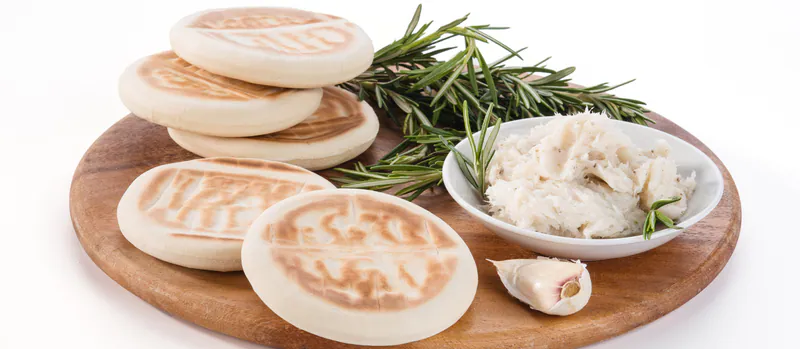
Crescentina modenese (tigelle) with cunza
Italian · 3 h · 624 kcal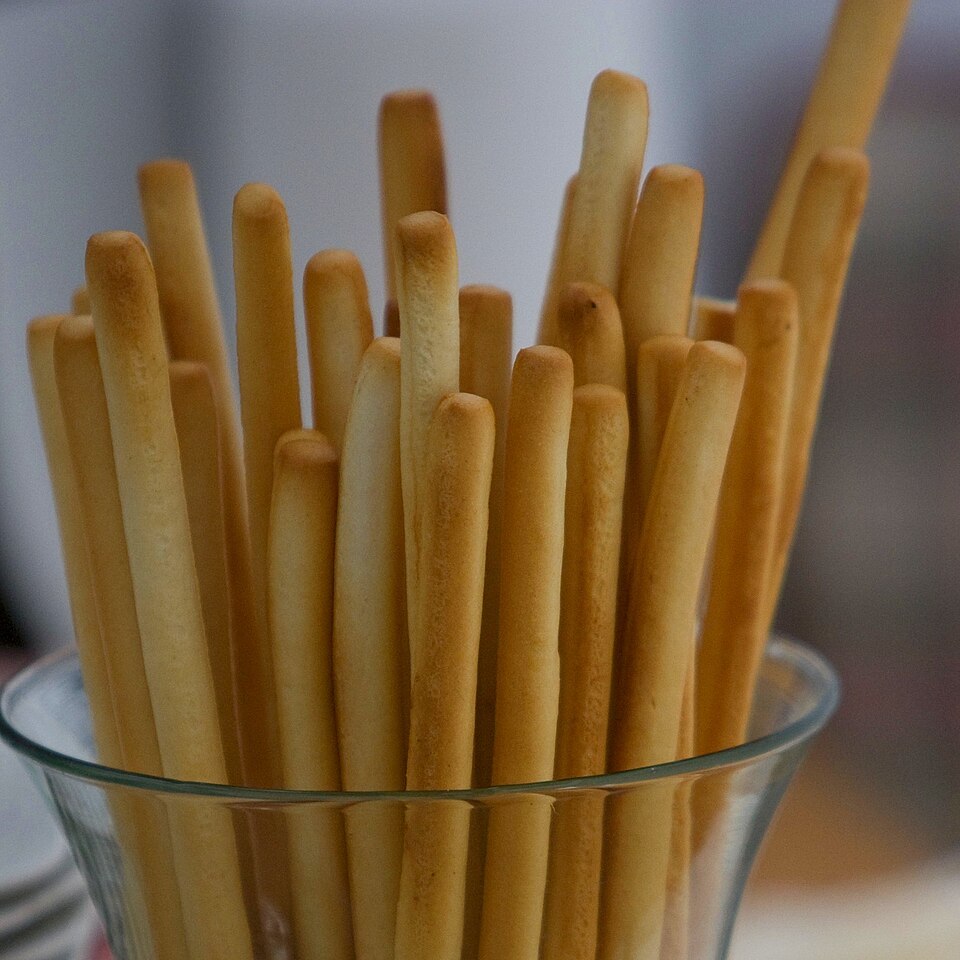
Grissini torinesi
Italian · 2 h 18 min · 55 kcal · Vegan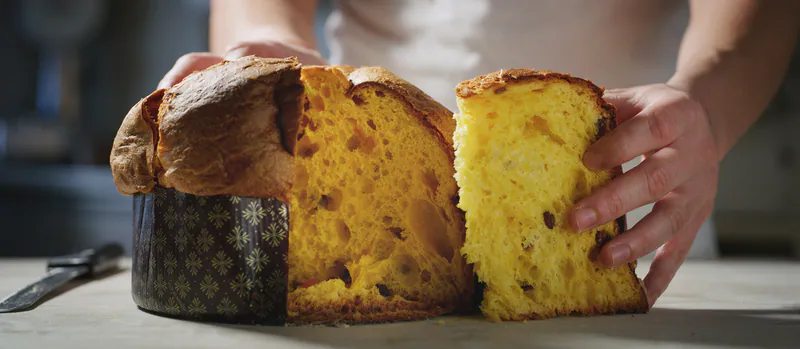
Panettone (home method)
Italian · 1 h 50 min · 399 kcal · Contains egg