

Cruffin (croissant muffin)
Contains egg (no meat or fish)
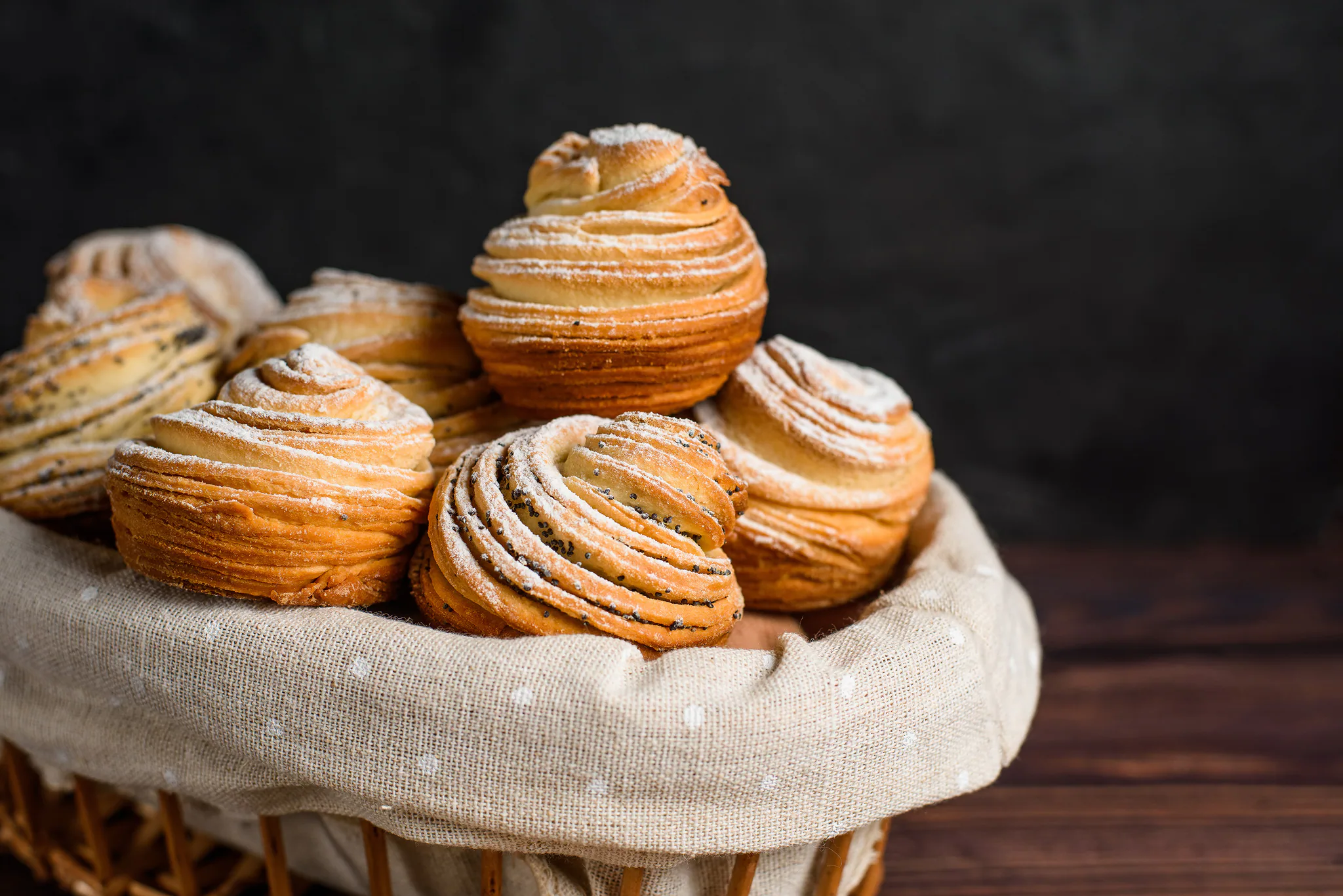
Buttery laminated croissant dough rolled up and coiled into a muffin tin, baked until flaky and tall, then tossed in sugar and piped full of a filling such as vanilla custard or jam. A modern Melbourne bakery creation.
Cruffin (croissant muffin) is an Australian pastry, ready in about 4 hours 50 minutes and made with bread flour and unsalted butter. It serves 12 and is rated advanced to cook.
- Prep
- 1 h 15 min
- Cook
- 35 min
- Rest
- 3 h
- Total
- 4 h 50 min
- Serves
- 12
- Level
- Advanced
- Calories
- 456
Plus overnight chilling of the rolled dough logs (8–12 hours).
Main ingredients
Ingredients
For the dough
For laminating
For the custard filling
For the coating
Method
Dough
57 minStep 1
Mix the flour, lukewarm milk (opens in a new tab) and water, yeast, 55 g sugar (opens in a new tab), salt and 40 g softened butter in a stand mixer (opens in a new tab) with the dough hook for 8–10 minutes until smooth and elastic. Cover and leave to rise for 1 hour, then chill for 1 hour.
Step 2
Divide the dough into 4 pieces. On a lightly oiled worktop, roll and then stretch each piece by hand into a very thin rectangle about 30 × 50 cm, thin enough to almost see through.
Let the dough relax for 5 minutes if it springs back.
Step 3
Spread a quarter of the very soft laminating butter evenly over each sheet. Roll each sheet up tightly from the long side into a thin log, wrap and chill overnight.
- 15 min
Step 4
Next day, butter a 12-hole muffin tin (opens in a new tab). Cut each log in half lengthways to expose the layers, then cut each half into 3 lengths. Coil each strip into a spiral, layers facing outwards, tuck the end underneath and set in a muffin hole.
Step 5
Cover loosely and prove at warm room temperature (about 26 °C, not hotter or the butter melts) for 1½–2 hours, until puffy and wobbly.
Custard filling
52 minStep 6
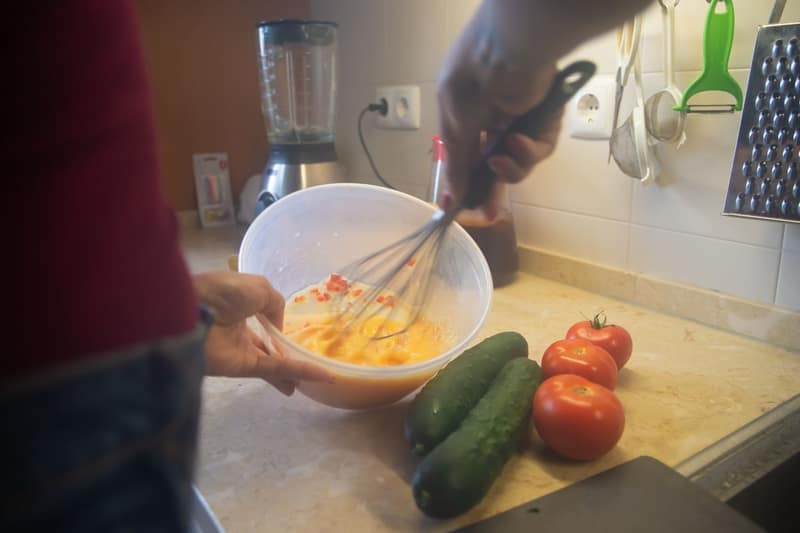
Meanwhile, make the custard: heat the milk (opens in a new tab) until steaming. Whisk (opens in a new tab) the yolks, 80 g sugar (opens in a new tab) and cornstarch (opens in a new tab), whisk in the hot milk, return to the pan and cook, whisking, until thick and bubbling for 1 minute. Stir in the vanilla (opens in a new tab), cover the surface and chill.
- 12 min
- medium heat
- Saucepan (opens in a new tab)
- Whisk (opens in a new tab)
How it looks · Photo: Kampus Production on Pexels Step 7
Bake the cruffins at 190 °C for 25–30 minutes until deep golden and crisp. Cool for 5 minutes, then roll them in the coating sugar (opens in a new tab) while still warm and cool on a rack.
Step 8
Beat the cold custard smooth and spoon it into a piping bag (opens in a new tab) with a small round nozzle. Poke the nozzle into the top of each cooled cruffin and pipe in a little jam (opens in a new tab) first if using, then fill with custard until it peeks out.
At a glance
1 · Dough in a bowl
 Bread flour
 Milk
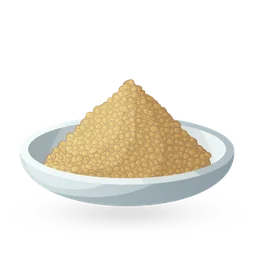 Instant yeast
 Sugar
 Salt
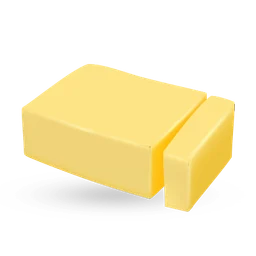 Unsalted butter
then make
2 · Custard filling in a bowl
- Milk
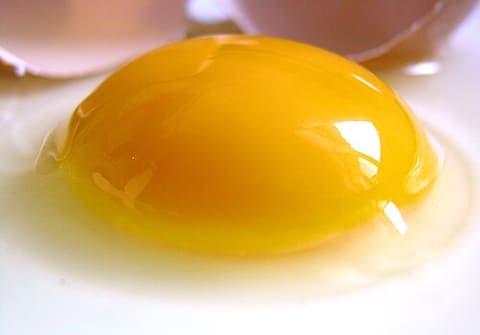 Egg yolk
- Sugar
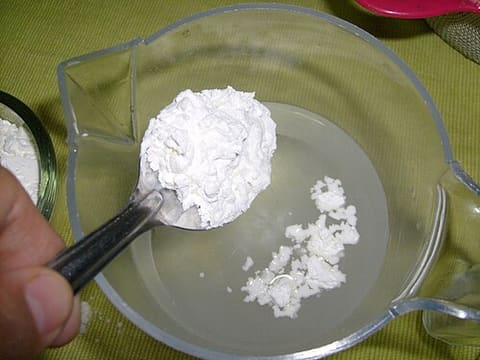 Cornstarch
 Vanilla extract
 Jam
About this dish
- Origin
- Melbourne, Victoria, Australia · Commonly attributedUsually credited to Kate Reid of Lune Croissanterie in Melbourne around 2013; it then spread to bakeries in San Francisco and around the world.Also popular in United States, United KingdomMore food from Australia
Australia - Dish
- Breakfast · Brunch · Snack · Pastries · Sweets & confectionery
- Cooking method
- Oven-baked, Simmered
- Taste
- buttery, sweet, creamy, rich
- Diet
- Vegetarian (lacto-ovo) · No nut ingredientsWorked out from the ingredients. How labels work
All labels
Vegetarian (lacto-ovo) · Eggetarian · Pescatarian · Flexitarian-friendly · No nut ingredients · Pork-free · Beef-free - Good for
- Festive & celebration · Make-ahead
- Cook more with
- Bread flour · Unsalted butter · Milk · Instant yeast · Sugar · Egg yolk
Allergens
- Contains: Milkfrom milk, unsalted butter
- Contains: Eggsfrom egg yolk
- Contains: Wheatfrom bread flour
- Contains: Glutenfrom bread flour
Based on typical versions of these ingredients and not verified allergen-free. Brands differ and cross-contact happens, so always check labels. For severe allergies, follow your clinician’s advice.
Nutrition
456 kcal per serving
Calculated1 serving ≈ 149 g · recipe makes 12
Where the energy comes from
- Protein 7%
- Carbohydrate 48%
- Fat 46%
| Nutrient | Per serving | Per 100 g* |
|---|---|---|
| Energy | 456 kcal | 306 kcal |
| Protein | 7.7 g | 5.2 g |
| Carbohydrate | 54.6 g | 36.6 g |
| Net carbohydrate | 53.5 g | 35.9 g |
| Sugars | 21.9 g | 14.7 g |
| Added sugars | 19.6 g | 13.1 g |
| Fibre | 1.2 g | 0.8 g |
| Fat | 23.2 g | 15.6 g |
| Saturated fat | 13.7 g | 9.2 g |
| Trans fat | — | — |
| Cholesterol | 118 mg | 79 mg |
| Sodium | 349 mg | 234 mg |
| Salt equivalent | 0.9 g | 0.6 g |
Vitamins & minerals per serving
- Potassium
- 117 mg
- Calcium
- 70 mg
- Iron
- 2 mg
- Magnesium
- 16 mg
- Vitamin A (RAE)
- 207 µg
- Vitamin C
- 0 mg
- Vitamin D
- 0.9 µg
- Vitamin B12
- 0.3 µg
- Folate (DFE)
- 145 µg
How these numbers were made
- Calculated from USDA FoodData Central (SR Legacy) per-100 g values and the listed quantities.
- *Per 100 g of combined raw ingredients; the cooked dish may weigh more or less.
- Optional ingredients are not included: jam.
- “—” means the value isn’t known for enough of the ingredients; it is never zero by default.
- Values are estimates for guidance, not for medical dosing. U.S. Department of Agriculture, Agricultural Research Service. FoodData Central, 2019. fdc.nal.usda.gov.
Good to know
Tips
- Keep the kitchen cool while laminating; if the butter starts to melt, chill the dough for 15 minutes.
- Unfilled, sugared cruffins can also be split and filled with whipped cream and berries, salted caramel or chocolate ganache.
Common mistakes
- Proving in too warm a place, which melts the butter out of the layers and gives heavy, greasy pastries.
- Filling the cruffins while warm, which makes the custard run out.


Food safety
- Keep custard, cream and fresh-cheese desserts refrigerated and do not leave them out for more than 2 hours.
Storage
- Best on the day of baking. Unfilled cruffins keep 1 day in an airtight tin; filled ones should be eaten within a few hours or refrigerated.
Reheating
- Warm unfilled cruffins in a 170 °C oven for 4–5 minutes, cool slightly, then fill.
Variations
- Shop-bought dough cruffins: A quick home version made by rolling strips of ready-made croissant or puff pastry into spirals in a muffin tin.
- Peanut butter and jelly cruffin: Filled with peanut butter custard and a centre of raspberry jam.
Original editorial recipe · FriendsPantry editorial · source: TasteAtlas (dish facts) · Not yet independently reviewed · Added
Recipe DNA
How this dish is built
Built from the recipe’s own sections. Each band’s width is its share of the dish by weight. Choose a component to see what it does.
Structure
For the dough
- Bread flour500 g
- Milk150 ml · 155 g
- Water130 ml · 130 g
- Instant yeast7 g
- Sugar55 g
- Salt10 g
- Unsalted butter, softened40 g
Reviews & corrections
Reviews come from signed-in cooks and appear after a moderator checks them. We never show made-up ratings.
You might also like
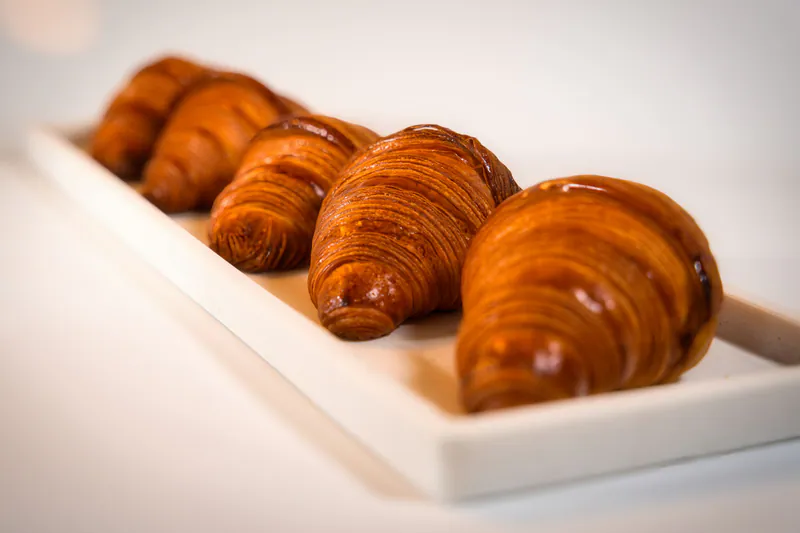
Croissants
 French · 19 h 20 min · 281 kcal · Contains egg

Kouign-amann
French · 4 h 33 min · 284 kcal · Vegetarian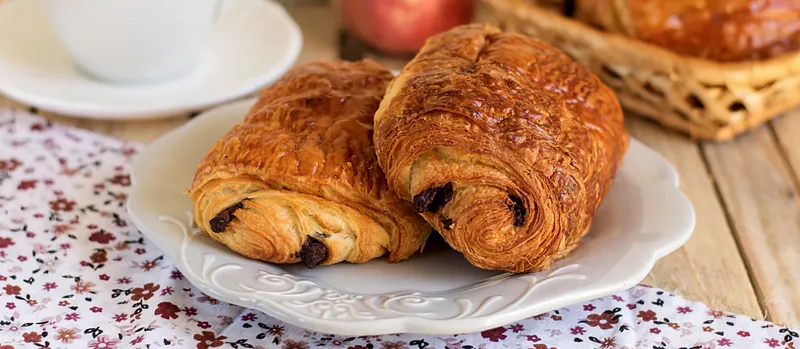
Pain au chocolat
French · 19 h 20 min · 356 kcal · Contains egg
Bola de Berlim (Portuguese custard doughnuts)
 Portuguese · 3 h 40 min · 530 kcal · Contains egg