
Bánh đa cua (Hai Phong red noodle soup with crab)
Non-vegetarian
Bánh đa cua
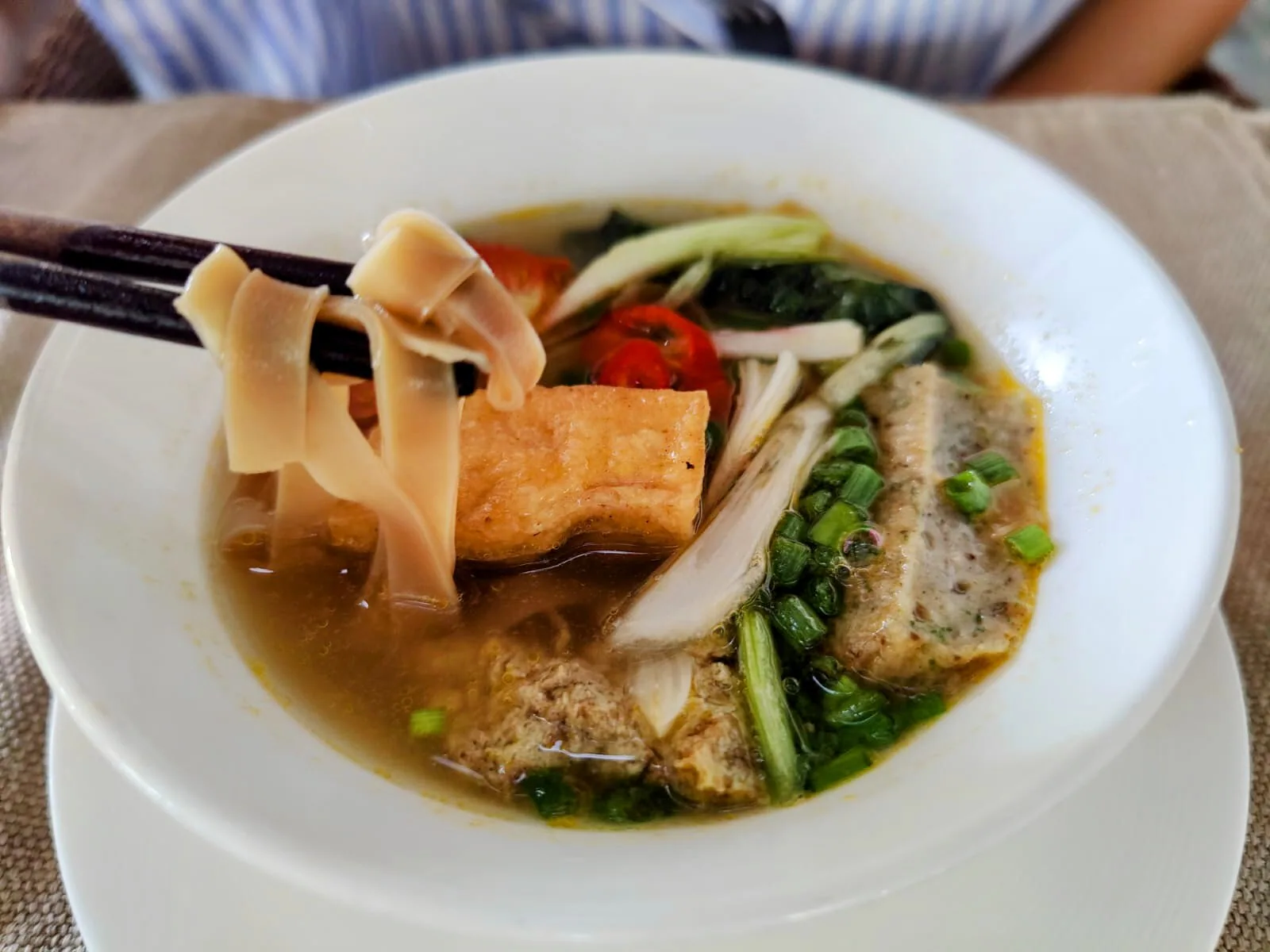
Hai Phong's signature noodle soup: flat, reddish-brown rice noodles in a sweet pork-bone and crab broth crowned with soft crab curds, pork and betel-leaf rolls and leafy greens. Lime, chilli and fresh perilla are added at the table.
Bánh đa cua (Hai Phong red noodle soup with crab) is a Vietnamese dish, ready in about 2 hours 40 minutes and made with crab meat and rice noodles. It serves 4 and is rated intermediate to cook.
- Prep
- 40 min
- Cook
- 2 h
- Total
- 2 h 40 min
- Serves
- 4
- Level
- Intermediate
- Calories
- 1009
Main ingredients
Ingredients
For the broth
For the crab curds
For the pork and betel rolls
For the annatto oil and topping
To serve
Method
Broth
1 h 30 minStep 1
Put the blanched pork bones (opens in a new tab) in a stockpot with the water and charred shallots (opens in a new tab). Bring to the boil, skim, then simmer gently for 1½ hours. Season with the fish sauce (opens in a new tab), sugar (opens in a new tab) and salt and strain.
Pork and betel rolls
15 minStep 2
Mix the ground pork (opens in a new tab) with the fish sauce (opens in a new tab), garlic (opens in a new tab) and pepper (opens in a new tab). Place a teaspoon on the shiny side of each betel leaf near the stem, roll up tightly and tuck in the ends.
Annatto oil and topping
14 minStep 3
Heat 1 tbsp oil in a frying pan and fry the betel rolls, seam side down first, turning, until cooked through and fragrant, about 8 minutes. Set aside.
- 8 min
- medium heat
- Frying pan / skillet (opens in a new tab)
Food safety: Minced meat must be cooked through to 71 °C in the centre, with no pink juices.
Step 4
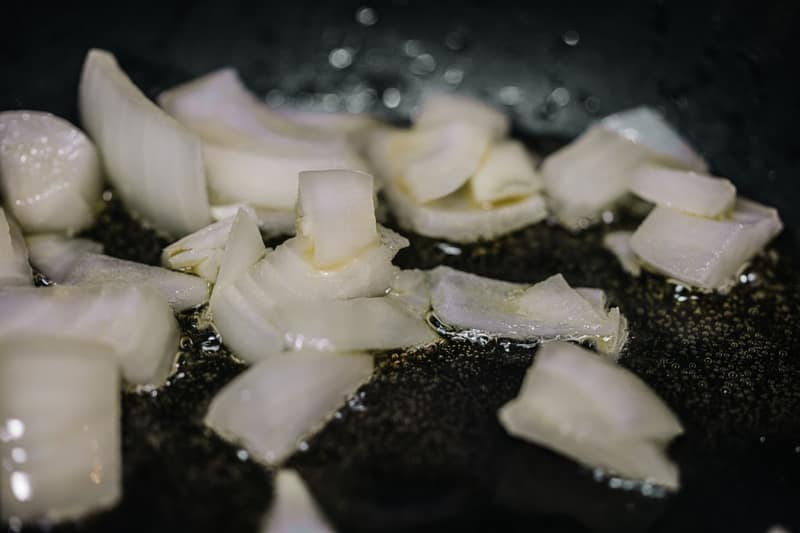
Warm the remaining oil with the annatto seeds (opens in a new tab) over low heat until deep red, then remove the seeds. Fry the sliced shallots (opens in a new tab) in the red oil until golden, add the tomato (opens in a new tab) wedges and cook for 2 minutes.
- 6 min
- low heat
- Frying pan / skillet (opens in a new tab)
How it looks · Photo: Magda Ehlers on Pexels
Crab curds
6 minStep 5
Beat the crab meat (opens in a new tab) with the dried shrimp (opens in a new tab), eggs (opens in a new tab) and shrimp paste (opens in a new tab). Bring the broth to a gentle simmer and spoon in the crab mixture in small mounds. Do not stir; let the curds float to the surface and set, 3–4 minutes. Add the tomatoes (opens in a new tab) and red oil.
- 6 min
- medium-low heat
- Ladle (opens in a new tab)
Stirring breaks the curds into cloudy shreds; keep the broth barely bubbling.
To serve
11 minStep 6
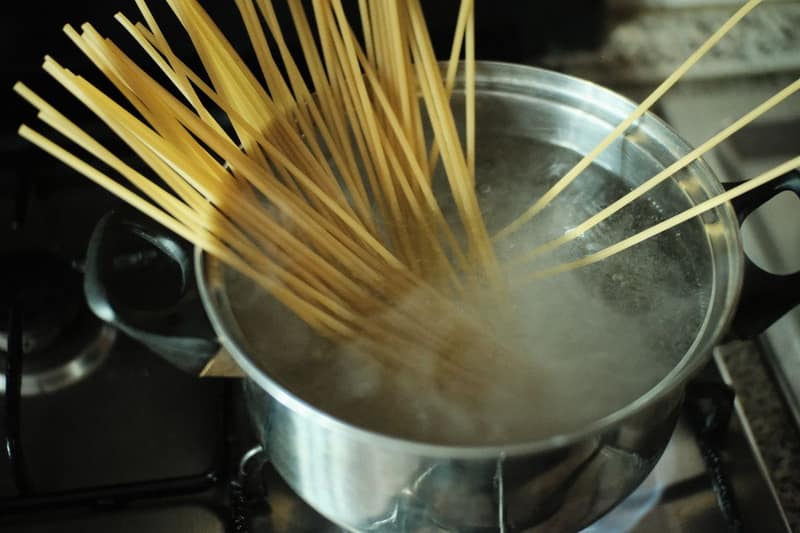
Cook the noodles in boiling water according to the packet, usually 5–7 minutes, adding the water spinach (opens in a new tab) for the last minute. Drain and divide between deep bowls.
- 8 min
- high heat
- Saucepan (opens in a new tab)
How it looks · Photo: Gianpiero Ferraro on Pexels Step 7
Ladle (opens in a new tab) the hot broth with crab (opens in a new tab) curds and tomatoes (opens in a new tab) over the noodles, add the betel rolls and serve with perilla, lime (opens in a new tab) and chilli.
- 3 min

How it looks · Photo: Willians Huerta on Pexels
At a glance
1 · Broth in a pot
 Pork bones (trotters and neck bones)
 Shallot
 Fish sauce
 Sugar
 Salt
then mix
2 · Pork and betel rolls in a pan
 Ground pork
- Lá lốt leaves (wild betel leaves)
- Fish sauce
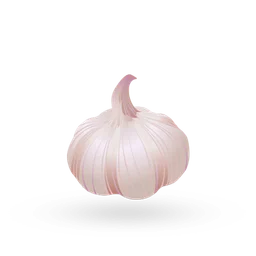 Garlic
 Black pepper
then heat
3 · Annatto oil and topping in a bowl
 Neutral vegetable oil
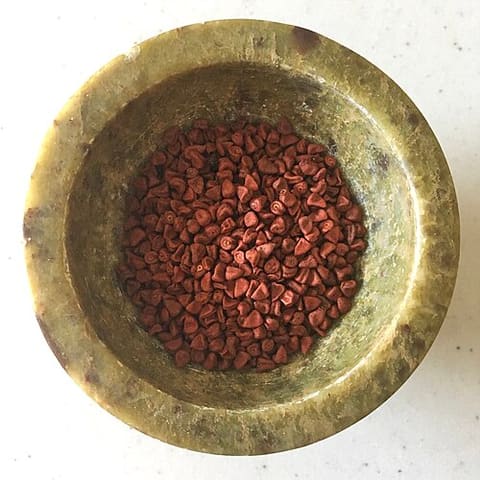 Annatto (achiote) seeds / ground
- Shallot
 Tomato
then beat
4 · Crab curds in a bowl
 Crab meat
 Dried shrimp
 Egg
 Shrimp paste
then cook
5 · To serve in a pot
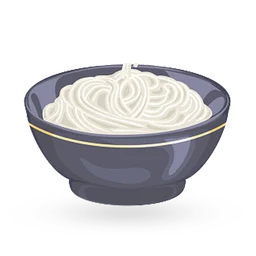 Rice noodles
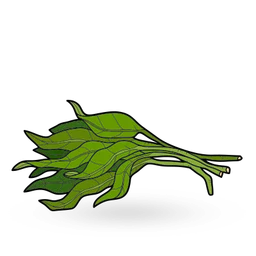 Water spinach
 Shiso leaves
 Lime
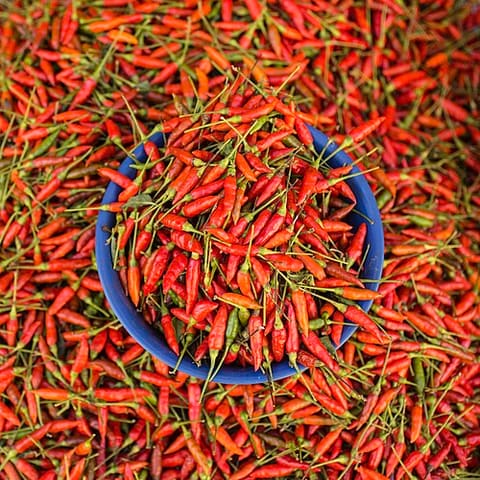 Fresh red chilli
About this dish
- Origin
- Hai Phong, Vietnam · Well documentedThe noodles (bánh đa đỏ) are coloured with molasses or cane sugar in Hai Phong; the broth traditionally uses pounded freshwater paddy crabs.More food from Vietnam
Vietnam - Dish
- Breakfast · Lunch · Noodle soups · Main courses · Breakfast dishes
- Cooking method
- Simmered, Boiled, Pan-fried
- Taste
- umami, savoury, fresh, sweet
- Diet
- No gluten ingredients · Dairy-free · No nut ingredients · High-proteinWorked out from the ingredients. How labels work
All labels
Non-vegetarian · No gluten ingredients · Dairy-free · No nut ingredients · Alcohol-free · Beef-free · High-protein - Good for
- Street food
- Cook more with
- Crab meat · Rice noodles · Pork bones (trotters and neck bones) · Shallot · Fish sauce · Sugar
- Techniques
- Pan-frying · Boiling · Simmering · Blanching · Slow-cooked gravy
Allergens
- Contains: Eggsfrom egg
- Contains: Fishfrom fish sauce
- Contains: Crustaceansfrom fish sauce, crab meat, dried shrimp, shrimp paste
Based on typical versions of these ingredients and not verified allergen-free. Brands differ and cross-contact happens, so always check labels. For severe allergies, follow your clinician’s advice.
Nutrition
1009 kcal per serving
Estimated1 serving ≈ 1481 g · recipe makes 4
Where the energy comes from
- Protein 20%
- Carbohydrate 39%
- Fat 41%
| Nutrient | Per serving | Per 100 g* |
|---|---|---|
| Energy | 1009 kcal | 68 kcal |
| Protein | 50.1 g | 3.4 g |
| Carbohydrate | 97.8 g | 6.6 g |
| Net carbohydrate | 91.4 g | 6.2 g |
| Sugars | — | — |
| Added sugars | 1 g | 0.1 g |
| Fibre | 6.4 g | 0.4 g |
| Fat | 45.2 g | 3.1 g |
| Saturated fat | 12.5 g | 0.8 g |
| Trans fat | — | — |
| Cholesterol | 254 mg | 17 mg |
| Sodium | 3118 mg | 211 mg |
| Salt equivalent | 7.8 g | 0.5 g |
Vitamins & minerals per serving
- Potassium
- 1240 mg
- Calcium
- 297 mg
- Iron
- 5.1 mg
- Magnesium
- 168 mg
- Vitamin A (RAE)
- 253 µg
- Vitamin C
- 57 mg
- Vitamin D
- —
- Vitamin B12
- 7.2 µg
- Folate (DFE)
- 116 µg
How these numbers were made
- Calculated from USDA FoodData Central (SR Legacy) per-100 g values and the listed quantities.
- *Per 100 g of combined raw ingredients; the cooked dish may weigh more or less.
- Optional ingredients are not included: shrimp paste.
- Not counted (tiny amounts or “to taste”): annatto (achiote) seeds / ground.
- Pork bones (trotters and neck bones): Pork spareribs (FDC 167853) scaled down as a rough estimate of the meat, fat and collagen that boiled pork bones release into a broth.
- Dried shrimp: Dried salted cod (FDC 174190) used as a stand-in: both are dried, very protein-dense seafood; no dried-shrimp entry exists in FDC SR Legacy.
- Lá lốt leaves (wild betel leaves): Raw grape leaves used as a stand-in; lá lốt (Piper sarmentosum) is a tender, heart-shaped, peppery leaf used as a wrapper in Vietnamese, Thai and Malay cooking.
- Shiso leaves: Fresh basil (FDC 172232) used as a stand-in: no shiso entry in FDC SR Legacy; both are tender mint-family leaves used in small amounts.
- “—” means the value isn’t known for enough of the ingredients; it is never zero by default.
- Values are estimates for guidance, not for medical dosing. U.S. Department of Agriculture, Agricultural Research Service. FoodData Central, 2019. fdc.nal.usda.gov.
Good to know
Tips
- Frozen crab meat works; add a spoonful of jarred crab paste in soybean oil (gạch cua) to boost the flavour.
Serve with
- Serve with a dish of extra lime, chilli and a little shrimp paste for those who like it stronger.
Food safety
- Buy shellfish from a reputable fishmonger, keep it chilled and cook it the day you buy it; discard any that smell of ammonia.
- Minced meat must be cooked through to 71 °C in the centre, with no pink juices.
Storage
- Store broth, noodles and toppings separately; the broth keeps 2 days refrigerated.
Reheating
- Bring the broth back to a gentle simmer before pouring over freshly blanched noodles.
Variations
- Bánh đa cua with chả lụa: Slices of Vietnamese pork roll and fish cake are added on top.
- Bún riêu cua: The Hanoi cousin: the same crab curds in a tomato broth with round rice vermicelli.
Original editorial recipe · FriendsPantry editorial · source: TasteAtlas (dish facts) · Not yet independently reviewed · Added
Recipe DNA
How this dish is built
Built from the recipe’s own sections. Each band’s width is its share of the dish by weight. Choose a component to see what it does.
What the dish is built around
For the pork and betel rolls
- Ground pork250 g
- Lá lốt leaves (wild betel leaves)20 leaf · 30 g
- Fish sauce1 tbsp · 18 g
- Garlic, minced2 clove · 8 g
- Black pepper0.5 tsp · 1.2 g
Reviews & corrections
Reviews come from signed-in cooks and appear after a moderator checks them. We never show made-up ratings.
You might also like
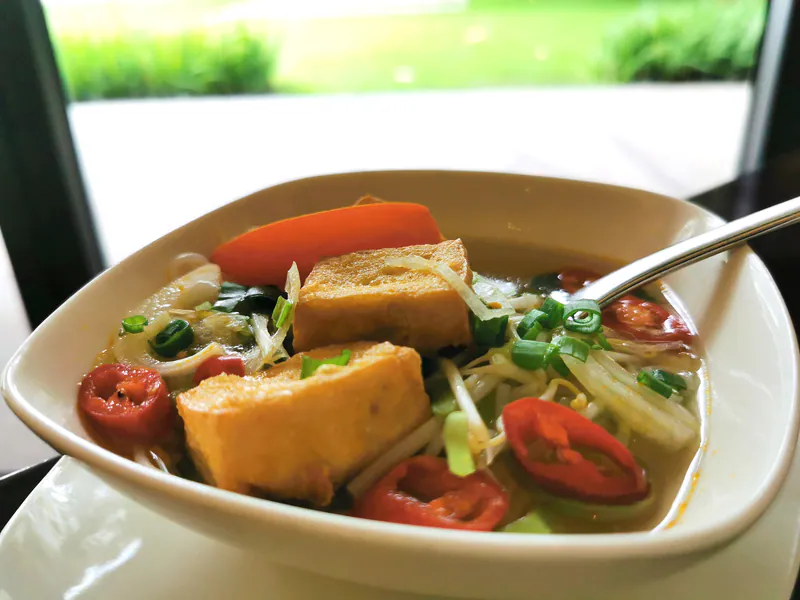
Bún riêu (Vietnamese tomato and crab noodle soup)
 Vietnamese · 2 h · 1066 kcal
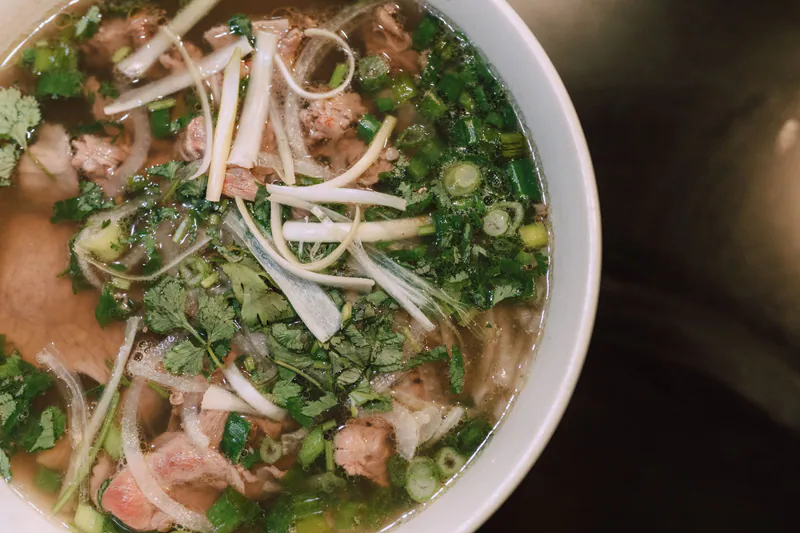
Phở bò (beef pho)
Vietnamese · 1 h 15 min · 624 kcal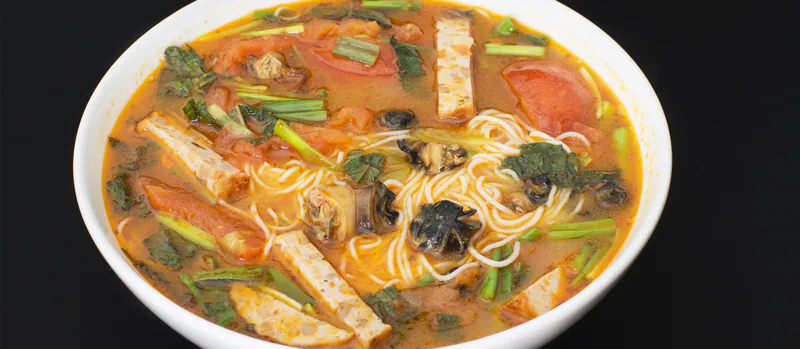
Bún ốc (Hanoi snail noodle soup)
Vietnamese · 2 h 40 min · 1021 kcal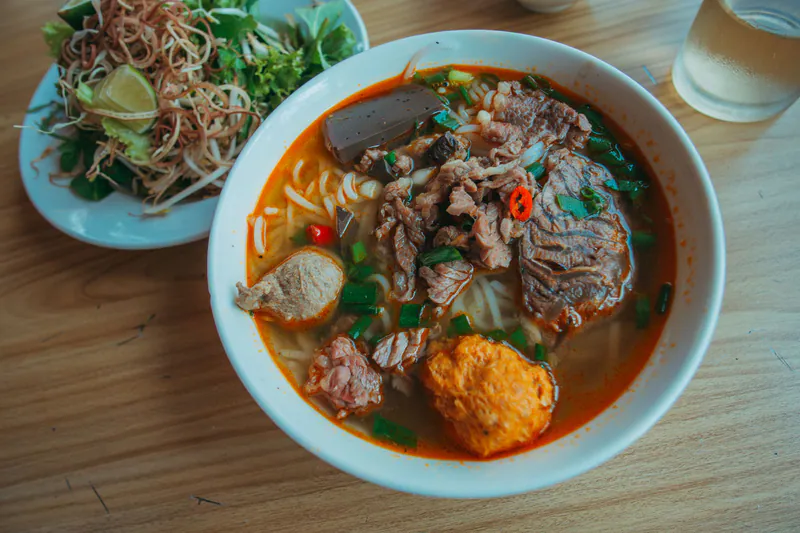
Bún bò Huế
Vietnamese · 3 h · 669 kcal