
Cookware & bakeware · Bakeware
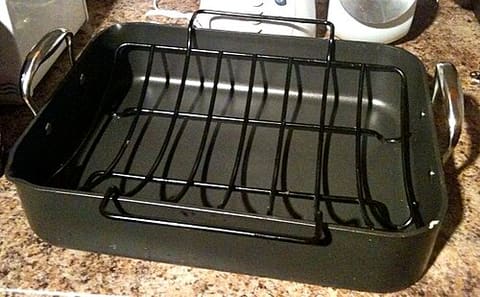
Roasting pan
A large, deep, sturdy metal pan for roasting joints of meat, poultry and vegetables in the oven.
Useful to have · No power needed · 10 recipes
Photo: OttawaAC, via Wikimedia Commons (CC-BY-SA-3.0)
What it is
A rectangular or oval pan with sides about 5–8 cm high, strong handles and often a removable rack that lifts meat out of its juices. It is far deeper and sturdier than a baking tray, so it contains fat and juices; heavier versions can go on the hob to make gravy from the drippings.
What it’s for: Roasting large pieces of food while collecting juices for gravy.
How to use it
- Set the rack in place, or lay a bed of sliced onions and vegetables.
- Place the seasoned meat on top and roast in a preheated oven.
- Baste with pan juices during cooking if the recipe says so.
- Rest the meat, then set the pan over a burner and deglaze to make gravy.
Good to know
- Tasks
- roasting chicken, turkey and joints, roasting potatoes and vegetables, making gravy from drippings, holding a water bath for custards
- Cooking methods
- Roasted, Oven-baked, Braised
- Materials
- stainless steel, anodised aluminium, enamelled steel, non-stick steel
- Care and cleaning
- Soak to soften stuck-on fat. Pour fat into a container to cool and bin it rather than down the sink.
- Limitations
- High sides reduce browning of small vegetables; bulky to store.
Safety
- Hot fat is heavy and splashes; lift with both hands and level.
- Check it is hob-safe before putting it on a burner.
If you don’t have one
- Baking tray / sheet — A rimmed tray works for smaller roasts; juices may smoke.
- Dutch oven / casserole pot — Roasts small birds and joints, uncovered or covered.
Equipment guide
How it works: A large, sturdy pan with low-to-medium sides holds a joint or bird and collects juices. Low sides let hot air reach the meat for browning; a rack lifts the meat so air circulates underneath. The heavy base can go on the hob afterwards to make gravy from the browned juices.
| Material | Good | Watch out |
|---|---|---|
| Stainless steel, clad (tri-ply or multi-ply) | Non-reactive with acids, takes high heat, dishwasher-tolerant; the aluminium or copper core spreads heat evenly; builds fond for pan sauces. | Food sticks unless the pan is preheated with fat; heavier and slower to respond than bare aluminium. |
| Enamelled steel | Light, inexpensive, non-reactive and easy to clean. | Thin, so hot spots and scorching are common; enamel chips and exposed steel rusts. |
| Anodised or plain aluminium | Light and heats evenly. | Reacts with acidic juices if uncoated. |
| Enamelled cast iron | Heat retention of cast iron with a non-reactive glass surface that needs no seasoning; good for acidic braises. | Very heavy; enamel can chip or craze with thermal shock or metal utensils; light interiors stain. |
- Roasting pan with rack
- Joints and whole birds.
- Shallow roasting tin
- Vegetables and smaller roasts.
- Lidded roaster
- Self-basting for tougher cuts.
Buying guidance
Starting out: A heavy pan of about 35 × 25 cm with a removable V-rack.
- Size to leave about 5 cm around the food
- Sides 5–8 cm high
- Hob-safe base for gravy
- Upright handles you can grip with oven gloves
No brands or prices — check current reviews before buying.
Techniques:RoastingBakingDeglazingStock making
Related tools
Recipes that use it
Baguettes with poolish
 French · 17 h 15 min · 304 kcal · Vegan
Bolillos (Mexican crusty rolls)
 Mexican · 2 h 52 min · 247 kcal
Ciabatta
 Italian · 16 h 55 min · 237 kcal · Vegan
Fougasse
French · 3 h 13 min · 277 kcal · Vegan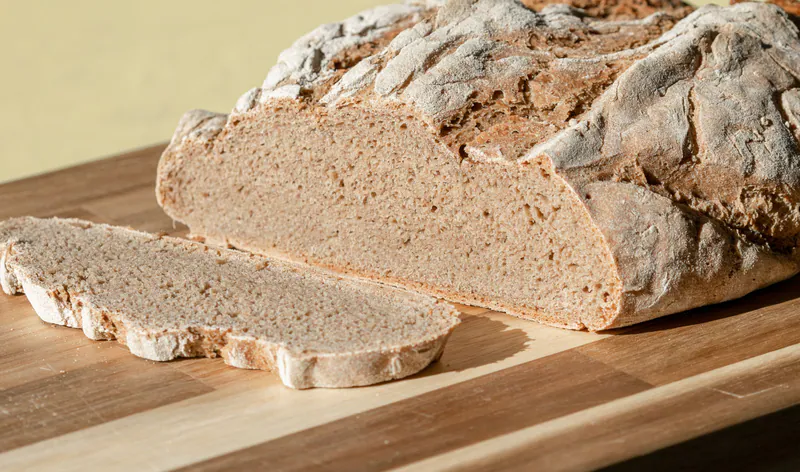
German rye sourdough (Roggenmischbrot)
 German · 39 h 20 min · 101 kcal · Vegan
Pain de campagne
French · 18 h · 141 kcal · VeganPane toscano (unsalted Tuscan bread)
Italian · 12 h 5 min · 151 kcal · Vegan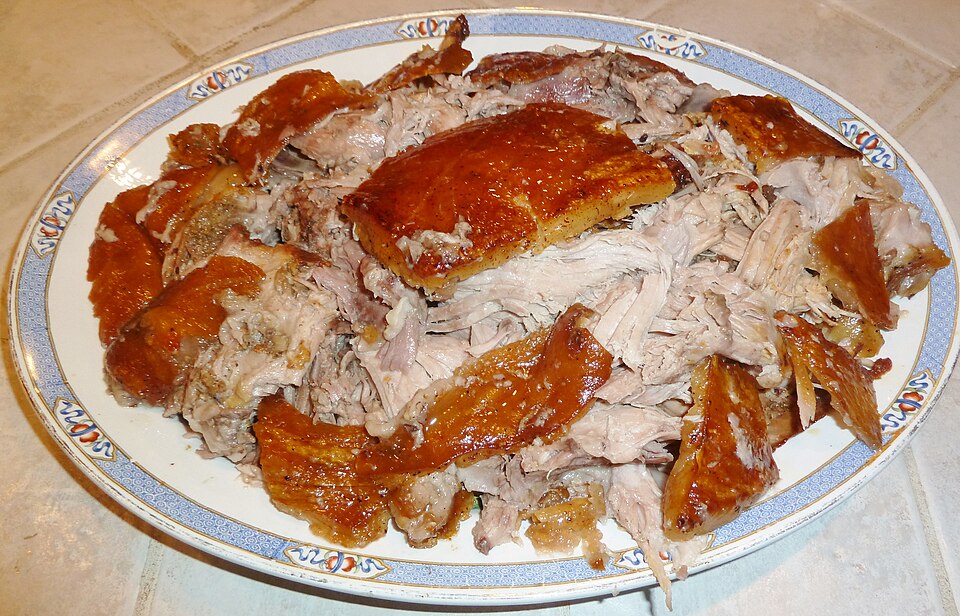
Pernil
 Puerto Rican · 6 h 20 min · 728 kcal
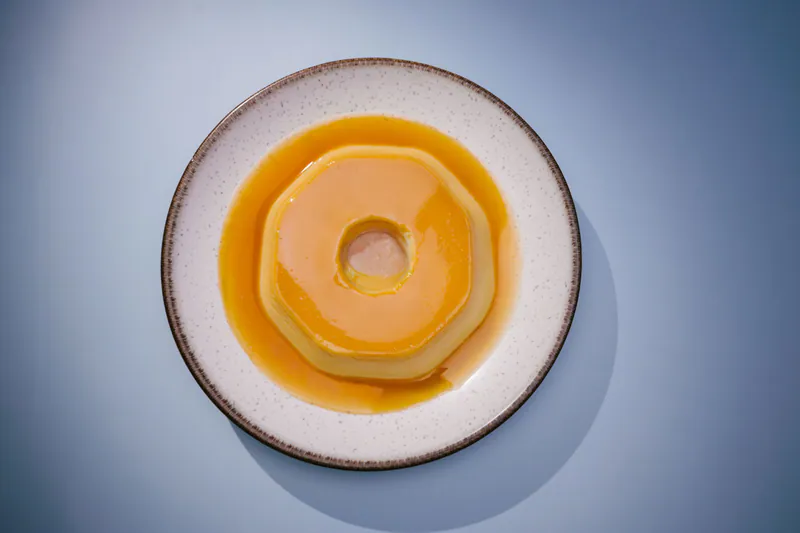
Pudim de leite condensado
 Brazilian · 5 h 15 min · 289 kcal · Contains egg
Westphalian pumpernickel
German · 66 h 50 min · 107 kcal · Vegan