
Nikuman (Japanese steamed pork buns)
Non-vegetarian
肉まん · nikuman
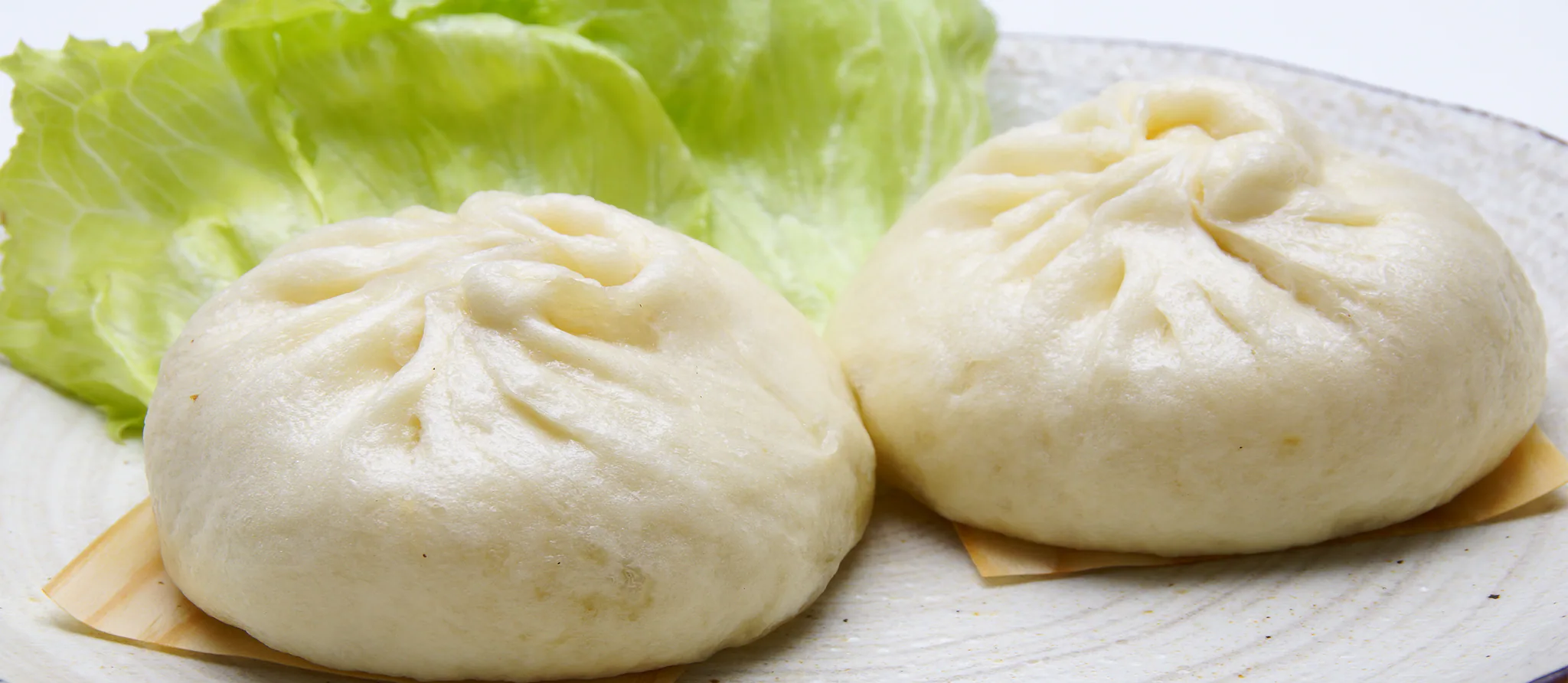
Fluffy, slightly sweet steamed buns filled with a juicy mixture of minced pork, shiitake, cabbage and spring onion seasoned with soy, sake and sesame. Japan's take on the Chinese baozi, sold piping hot from steamers in convenience stores all winter.
Nikuman (Japanese steamed pork buns) is a Japanese dumpling dish, ready in about 2 hours 10 minutes and made with all-purpose flour and ground pork. It serves 8 and is rated intermediate to cook.
- Prep
- 40 min
- Cook
- 15 min
- Rest
- 1 h 15 min
- Total
- 2 h 10 min
- Serves
- 8
- Level
- Intermediate
- Calories
- 301
Main ingredients
Ingredients
For the dough
For the filling
Method
Dough
10 minStep 1
Mix the flour, yeast, baking powder (opens in a new tab), sugar (opens in a new tab) and salt. Add the water and oil and knead for 8–10 minutes to a smooth, soft dough. Cover and leave in a warm place until doubled, about 1 hour.

How it looks · Photo: Klaus Nielsen on Pexels
Filling
45 minStep 2
Mix the pork with the soy sauce (opens in a new tab), sake (opens in a new tab), oyster sauce (opens in a new tab), sugar (opens in a new tab), salt and pepper (opens in a new tab) and stir hard in one direction until sticky. Work in the cabbage (opens in a new tab), shiitake (opens in a new tab), spring onion (opens in a new tab), ginger, cornstarch (opens in a new tab) and sesame oil (opens in a new tab). Chill while the dough rises.
Chilled filling is much easier to wrap.
Step 3
Knock back the dough and divide it into 8 pieces. Roll each into a 12 cm round, thinner at the edges than in the middle.
Step 4
Put a portion of filling in the centre of each round and pleat the edges up and around it, pinching and twisting the top to seal. Set each bun on a square of baking paper.
- 12 min
Step 5
Leave the buns to rise in the steamer (opens in a new tab) basket, covered, for 15 minutes, until slightly puffy.
Step 6
Steam over rapidly boiling water for 15 minutes. Turn off the heat and leave the lid on for 2 minutes before opening, so the buns do not collapse.
- 15 min
- high heat
- Steamer (opens in a new tab)
Food safety: Cook pork until the juices run clear and the centre reaches at least 71 °C (63 °C with a 3-minute rest for whole cuts).
At a glance
1 · Dough in a bowl
 All-purpose flour
 Instant yeast
 Baking powder
 Sugar
 Salt
 Neutral vegetable oil
then mix
2 · Filling in a bowl
 Ground pork
 Cabbage
 Shiitake mushrooms
 Spring onion
 Fresh ginger
 Soy sauce
 Sake
 Oyster sauce
 Toasted sesame oil
- Sugar
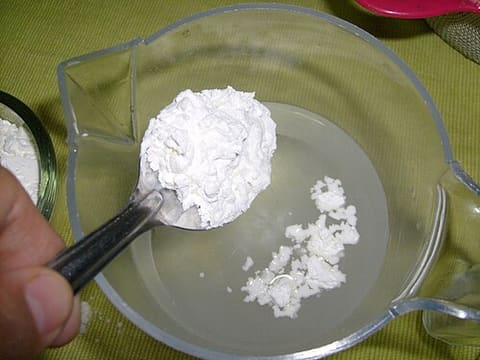 Cornstarch
 Black pepper
- Salt
About this dish
- Origin
- Yokohama and Kobe Chinatowns, Japan · Commonly attributedAdapted from Chinese baozi in the early 20th century; in the Kansai region they are usually called butaman.More food from Japan
Japan - Dish
- Snack · Lunch · Dumplings · Street food · Breads & flatbreads
- Cooking method
- Steamed
- Taste
- savoury, umami, sweet, mild
- Diet
- Dairy-free · No nut ingredientsWorked out from the ingredients. How labels work
All labels
Non-vegetarian · Flexitarian-friendly · Dairy-free · Egg-free · No nut ingredients · Beef-free - Good for
- Freezer-friendly · Make-ahead · Portable / lunchbox · Child-friendly
- Cook more with
- All-purpose flour · Ground pork · Instant yeast · Baking powder · Sugar · Cabbage
- Techniques
- Boiling · Steaming · Kneading · Fermentation
Allergens
- May contain: Crustaceansfrom oyster sauce
- Contains, can be adapted: Molluscsfrom oyster sauce
- Contains: Wheatfrom all-purpose flour, baking powder, soy sauce, oyster sauce
- Contains: Glutenfrom all-purpose flour, baking powder, soy sauce, oyster sauce
- Contains: Soyfrom soy sauce, oyster sauce
- Contains: Sesamefrom toasted sesame oil
Based on typical versions of these ingredients and not verified allergen-free. Brands differ and cross-contact happens, so always check labels. For severe allergies, follow your clinician’s advice.
Nutrition
301 kcal per serving
Calculated1 serving ≈ 141 g · recipe makes 8
Where the energy comes from
- Protein 15%
- Carbohydrate 49%
- Fat 36%
| Nutrient | Per serving | Per 100 g* |
|---|---|---|
| Energy | 301 kcal | 213 kcal |
| Protein | 11.2 g | 7.9 g |
| Carbohydrate | 36.5 g | 25.8 g |
| Net carbohydrate | 34.5 g | 24.5 g |
| Sugars | — | — |
| Added sugars | 4.3 g | 3 g |
| Fibre | 1.9 g | 1.4 g |
| Fat | 11.9 g | 8.4 g |
| Saturated fat | — | — |
| Trans fat | — | — |
| Cholesterol | — | — |
| Sodium | 479 mg | 340 mg |
| Salt equivalent | 1.2 g | 0.8 g |
Vitamins & minerals per serving
- Potassium
- 238 mg
- Calcium
- 57 mg
- Iron
- 2.4 mg
- Magnesium
- 24 mg
- Vitamin A (RAE)
- —
- Vitamin C
- —
- Vitamin D
- —
- Vitamin B12
- —
- Folate (DFE)
- 133 µg
How these numbers were made
- Calculated from USDA FoodData Central (SR Legacy) per-100 g values and the listed quantities.
- *Per 100 g of combined raw ingredients; the cooked dish may weigh more or less.
- Optional ingredients are not included: oyster sauce.
- “—” means the value isn’t known for enough of the ingredients; it is never zero by default.
- Values are estimates for guidance, not for medical dosing. U.S. Department of Agriculture, Agricultural Research Service. FoodData Central, 2019. fdc.nal.usda.gov.
Good to know
Tips
- Wrap the steamer lid in a tea towel so condensation does not drip onto the buns and pock the surface.
Common mistakes
- Opening the steamer straight away, which makes the buns wrinkle as they cool.
- Leaving the cabbage wet, which makes the filling soggy and the bases split.
Serve with
- Eat hot with Japanese mustard (karashi) and soy sauce mixed with a little vinegar; in Kyushu they come with vinegared soy, in Kansai with karashi.
Food safety
- Cook pork until the juices run clear and the centre reaches at least 71 °C (63 °C with a 3-minute rest for whole cuts).
Storage
- Keeps 2 days refrigerated or 2 months frozen.
Reheating
- Steam from chilled for 8 minutes or from frozen for 15 minutes; or wrap in damp kitchen paper and microwave.
Variations
- Anman: Filled with sweet red bean paste instead of pork.
- Pizzaman: A Japanese convenience-store invention filled with tomato sauce and cheese.
- Kakuni man: A folded bun holding a slab of soy-braised pork belly, a Nagasaki speciality.
Original editorial recipe · FriendsPantry editorial · source: TasteAtlas (dish facts) · Not yet independently reviewed · Added
Recipe DNA
How this dish is built
Built from the recipe’s own sections. Each band’s width is its share of the dish by weight. Choose a component to see what it does.
Structure
For the dough
- All-purpose flour300 g
- Instant yeast4 g
- Baking powder1 tsp · 4.4 g
- Sugar30 g
- Salt0.5 tsp · 3 g
- Water170 ml · 170 g
- Neutral vegetable oil1 tbsp · 14 g
Reviews & corrections
Reviews come from signed-in cooks and appear after a moderator checks them. We never show made-up ratings.
You might also like
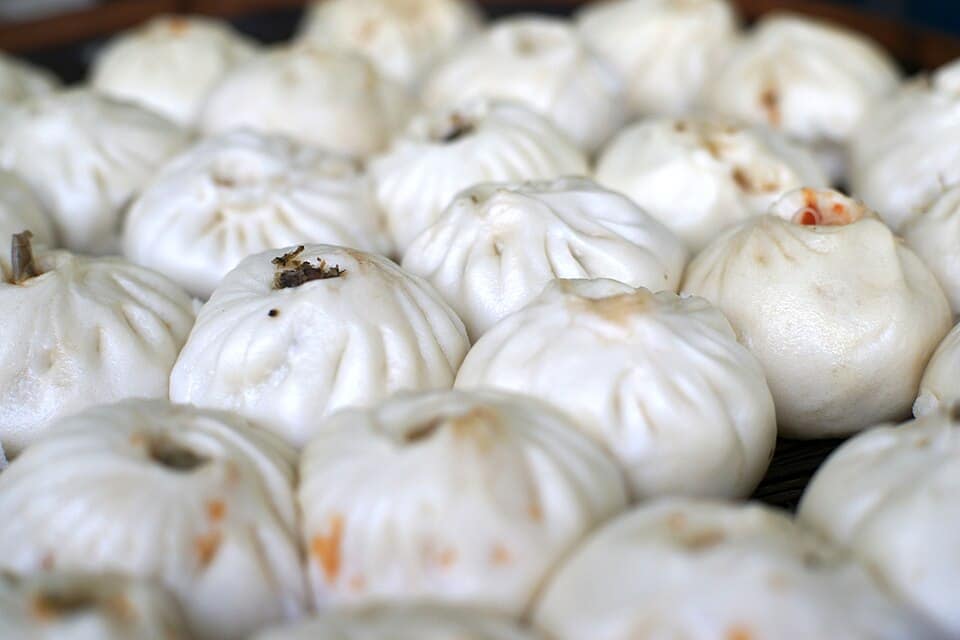
Pork baozi (steamed pork buns)
 Chinese · 2 h 25 min · 244 kcal
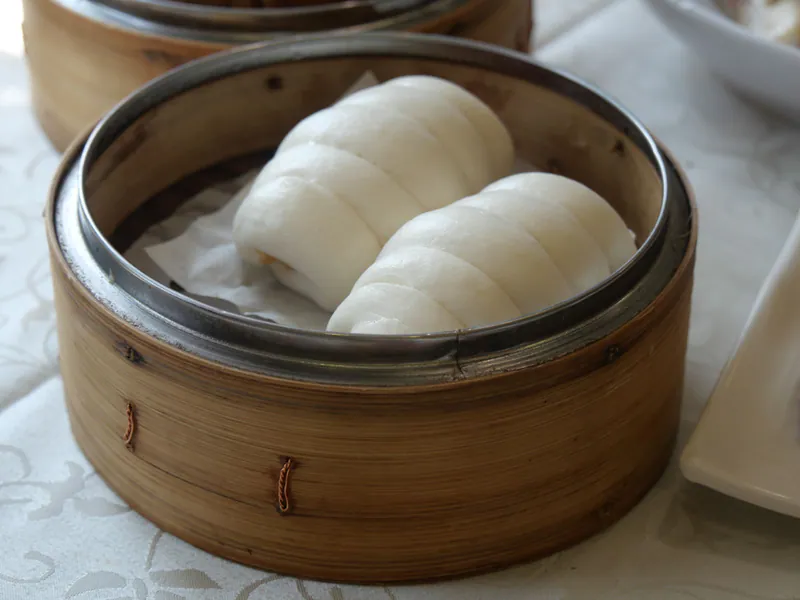
Mantou (steamed buns)
Chinese · 2 h 10 min · 205 kcal · Vegan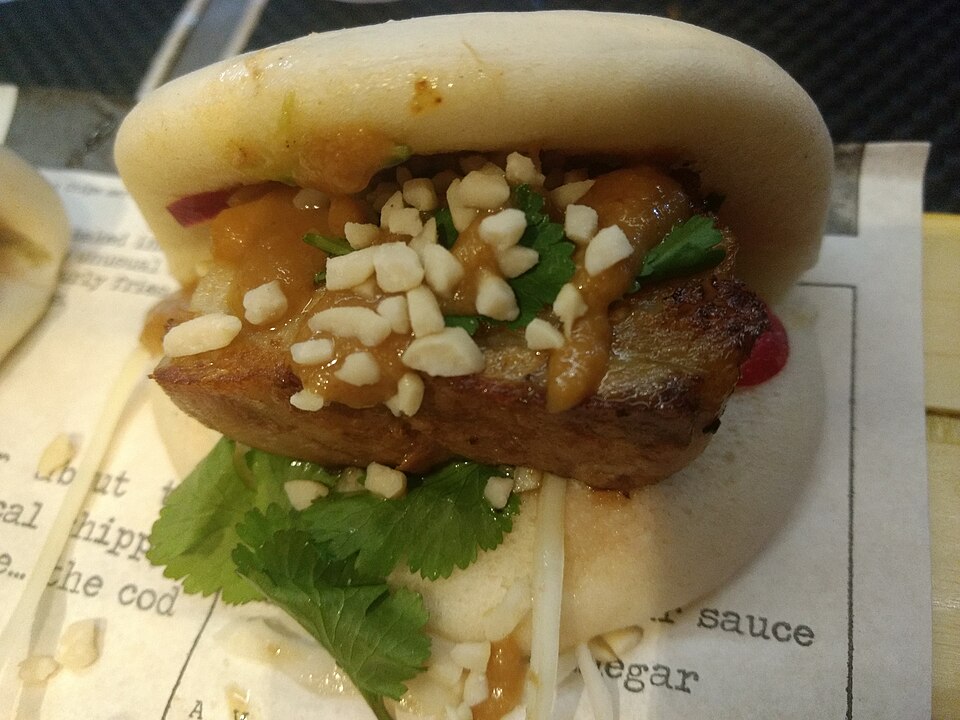
Gua bao (Taiwanese pork belly buns)
 Taiwanese · 3 h 10 min · 773 kcal
Gyoza (pan-fried pork dumplings)
 Japanese · 55 min · 447 kcal